Japanese - Family and Home

Lesson 52 of 168

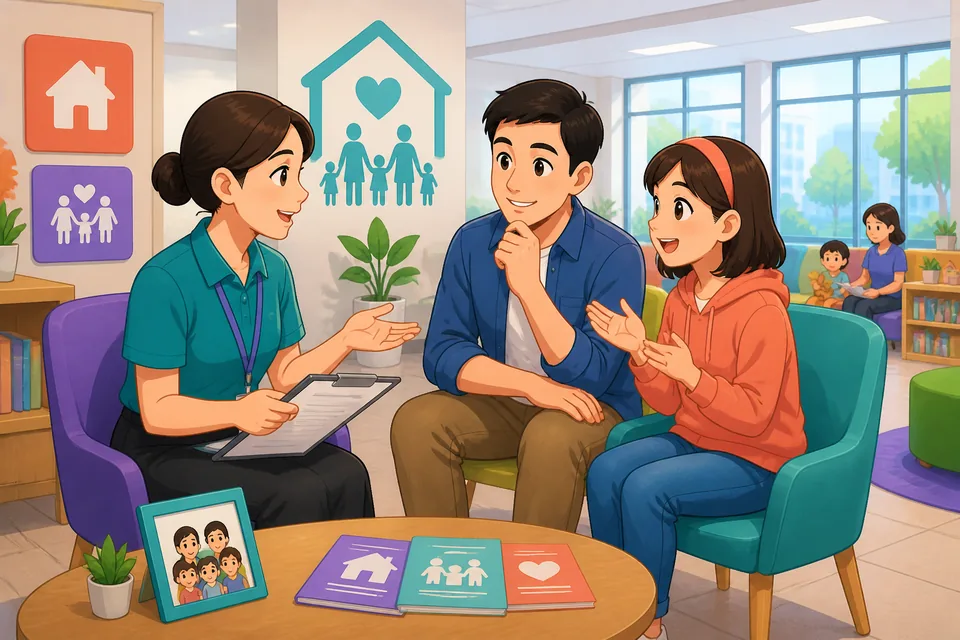
A friendly photo of a small family at home, smiling and talking about siblings in Japanese; theme: family and household phrases.

Goal: Talking about siblings, who you live with, and family size

Free Japanese lessons with guided practice, audio, and speaking support.

Welcome — ready to chat about family? This short lesson helps you ask and answer common questions about siblings, household members, and family size. Have fun and speak out loud!

Level A2: In this lesson you'll practice asking and answering questions like きょうだいはいますか。 (Kyōdai wa imasu ka.) and だれと住んでいますか。 (Dare to sunde imasu ka.), and saying things like 一人っ子です。 (Hitorikko desu.) and 家族は4人です。 (Kazoku wa 4-nin desu.). You'll get listening, practice quizzes, and speaking prompts to help these phrases stick.

After this lesson you'll be able to:

  • Ask and answer “Do you have siblings?” using きょうだいはいますか。 (Kyōdai wa imasu ka.)
  • Say how many brothers and sisters you have using 男のきょうだいが___人、女のきょうだいが___人います。 (Otoko no kyōdai ga ___-nin, onna no kyōdai ga ___-nin imasu.)
  • Ask who someone lives with and say who you live with using だれと住んでいますか。 (Dare to sunde imasu ka.) and ___と一緒に住んでいます。 (___ to issho ni sunde imasu.)
  • Describe marital status and children with phrases like 結婚しています。 (Kekkon shite imasu.) and お子さんはいますか。 (Oko-san wa imasu ka.) — CEFR-aligned practice for A2.
A cozy living room where two friends talk about family size and who they live with in Japanese; warm, personal scene.

Ready? Let's go!

When you tap play on phrases, we track your progress through this lesson.

1. Reading + Listening Practice

Hear core phrases, repeat aloud.

きょうだいはいますか。

Kyōdai wa imasu ka.

Do you have any brothers or sisters?

Meaning: Do you have any brothers or sisters?

When to use: 「きょうだい」は兄・弟・姉・妹をまとめて指します。より丁寧には「ごきょうだいはいますか」。

Tip: When asking about someone else, use ごきょうだいはいますか。 for extra politeness.

きょうだいはいますか。

Kyōdai wa imasu ka.

Do you have any brothers or sisters?
いいえ、きょうだいはいません。

Iie, kyōdai wa imasen.

No, I don't have siblings.

男のきょうだいが___人、女のきょうだいが___人います。

Otoko no kyōdai ga ___-nin, onna no kyōdai ga ___-nin imasu.

I have ___ brothers and ___ sisters.

Meaning: I have ___ brothers and ___ sisters.

When to use: ___には人数を入れます。人の数には助数詞「人」を使います。例:1人、2人。

Tip: Beginners sometimes forget 「人」 after numbers. Say 2人 (ni-nin), not just 2.

男のきょうだいが2人、女のきょうだいが1人います。

Otoko no kyōdai ga 2-nin, onna no kyōdai ga 1-nin imasu.

I have two brothers and one sister.
男のきょうだいが1人、女のきょうだいが3人います。

Otoko no kyōdai ga 1-nin, onna no kyōdai ga 3-nin imasu.

I have one brother and three sisters.

一人っ子です

Hitorikko desu.

I'm an only child.

Meaning: I’m an only child.

When to use: 自分に兄弟姉妹がいないことを言う自然な表現です。

私は一人っ子です。

Watashi wa hitorikko desu.

I'm an only child.
一人っ子なので、兄弟はいません。

Hitorikko na node, kyōdai wa imasen.

Because I'm an only child, I don't have siblings.

彼は私の___です。

Kare wa watashi no ___ desu.

He is my ___.

Meaning: He is my ___.

When to use: ___には関係を表す名詞を入れます。例:父、兄、友だち。自分の家族には「お父さん」より「父」が自然です。

彼は私の兄です。

Kare wa watashi no ani desu.

He is my older brother.
彼は私の父です。

Kare wa watashi no chichi desu.

He is my father.

彼女は私の___です。

Kanojo wa watashi no ___ desu.

She is my ___.

Meaning: She is my ___.

When to use: ___には関係を表す名詞を入れます。例:母、姉、友だち。なお「彼女」は文脈によって「girlfriend」の意味にもなります。
Tip: 注意:会話で「彼女」は文脈によって『彼女(かのじょ)=girlfriend』と解釈されることがあります。家族を指す場合は前後の文脈をはっきりさせましょう。

彼女は私の妹です。

Kanojo wa watashi no imōto desu.

She is my younger sister.
彼女は私の母です。

Kanojo wa watashi no haha desu.

She is my mother.

だれと住んでいますか。

Dare to sunde imasu ka.

Who do you live with?

Meaning: Who do you live with?

When to use: 一緒に住む相手には助詞「と」を使います。より丁寧には「どなたと住んでいますか」。

だれと住んでいますか。

Dare to sunde imasu ka.

Who do you live with?
だれと住んでいますか。— 両親と住んでいます。

Dare to sunde imasu ka. — Ryōshin to sunde imasu.

Who do you live with? — I live with my parents.

___と一緒に住んでいます。

___ to issho ni sunde imasu.

I live with my ___.

Meaning: I live with my ___.

When to use: 人を入れて使います。___の後に「と」を付けます。例:母と一緒に住んでいます。

母と一緒に住んでいます。

Haha to issho ni sunde imasu.

I live with my mother.
友だちと一緒に住んでいます。

Tomodachi to issho ni sunde imasu.

I live with a friend.

お子さんはいますか。

Oko-san wa imasu ka.

Do you have children?

Meaning: Do you have children?

When to use: 相手の子どもについて聞く自然な言い方です。より丁寧には「お子さんはいらっしゃいますか」。

お子さんはいますか。

Oko-san wa imasu ka.

Do you have children?
お子さんは何人いますか。

Oko-san wa nan-nin imasu ka.

How many children do you have?

結婚しています。

Kekkon shite imasu.

I'm married.

Meaning: I'm married.

When to use: 状態を表します。カジュアルには「結婚してる」。

はい、結婚しています。

Hai, kekkon shite imasu.

Yes, I'm married.
いいえ、結婚していません。

Iie, kekkon shite imasen.

No, I'm not married.

ご家族は何人ですか。

Go-kazoku wa nan'nin desu ka.

How many people are in your family?

Meaning: How many people are in your family?

When to use: 相手の家族について丁寧に聞く表現です。親しい相手なら「家族は何人?」もカジュアルです。

ご家族は何人ですか。

Go-kazoku wa nan'nin desu ka.

How many people are in your family?
ご家族は何人ですか。— 4人です。

Go-kazoku wa nan'nin desu ka. — Yon-nin desu.

How many people are in your family? — Four.

家族は___人です。

Kazoku wa ___-nin desu.

There are ___ people in my family.

Meaning: There are ___ people in my family.

When to use: ___には数字を入れます。「人」は人数の助数詞です。例:4人です。

家族は4人です。

Kazoku wa 4-nin desu.

There are four people in my family.
家族は5人です。両親と私と弟と妹です。

Kazoku wa 5-nin desu. Ryōshin to watashi to otōto to imōto desu.

My family has five people: my parents, me, my younger brother and sister.

私の家族は___です。

Watashi no kazoku wa ___ desu.

My family is ___.

Meaning: My family is ___.

When to use: ___には「大きい」「小さい」「仲がいい」など、家族の説明を入れます。

私の家族は仲がいいです。

Watashi no kazoku wa naka ga ii desu.

My family gets along well.
私の家族は小さいです。両親と私の3人です。

Watashi no kazoku wa chiisai desu. Ryōshin to watashi no 3-nin desu.

My family is small. It's three people: my parents and me.

両親は___

Ryōshin wa ___.

My parents are ___.

Meaning: My parents are ___.

When to use: ___には「離婚しています」「別居しています」「一緒に住んでいます」など、文末まで含む表現を入れます。丁寧さは___の中で調整します。

両親は一緒に住んでいます。

Ryōshin wa issho ni sunde imasu.

My parents live together.
両親は別居していますが、仲はいいです。

Ryōshin wa bekkyō shite imasu ga, naka wa ii desu.

My parents live separately, but they get along.

2. Conversational Listening Practice

Hear phrases in a real mini-conversation.

Anna asks about David's siblings and living situation.

Anna and David sit at a table and ask about siblings and living arrangements while practicing polite Japanese phrases.

What two topics do Anna and David talk about?

Portrait of Anna in a Japanese lesson dialogue

Anna

きょうだいはいますか。

Kyōdai wa imasu ka.

Do you have any brothers or sisters?

Portrait of David in a Japanese lesson dialogue

David

はい。男のきょうだいが2人、女のきょうだいが1人います。

Hai. Otoko no kyōdai ga 2-nin, onna no kyōdai ga 1-nin imasu.

Yes. I have two brothers and one sister.

Portrait of Anna in a Japanese lesson dialogue

Anna

だれと住んでいますか。

Dare to sunde imasu ka.

Who do you live with?

Portrait of David in a Japanese lesson dialogue

David

両親と一緒に住んでいます。結婚していますか?

Ryōshin to issho ni sunde imasu. Kekkon shite imasu ka?

I live with my parents. Are you married?

Portrait of Anna in a Japanese lesson dialogue

Anna

いいえ、一人っ子です。結婚していません。

Iie, hitorikko desu. Kekkon shite imasen.

No, I'm an only child. I'm not married.

3. Guided Practice

Quizzes and matching to lock in meaning.

Which phrase asks 'Do you have any brothers or sisters?'

How do you say 'I'm an only child'?

Which phrase asks 'Who do you live with?'

How do you say 'There are five people in my family'?

I have two brothers and one sister.

男のきょうだいが ___、女のきょうだいが1人います。

I live with my parents.

両親と住んでいますか。— ___と一緒に住んでいます。

Yes, I have two children.

お子さんはいますか。— はい、子どもが ___ います。

Match the core phrases

Match the extra phrases

4. Speaking Practice

Say phrases yourself (mic/recording).

Recording stays on your device only. Check speech uses your browser's speech tools when available.

Say this phrase out loud:

きょうだいはいますか。

Kyōdai wa imasu ka.

Do you have any brothers or sisters?

Say this phrase out loud:

男のきょうだいが___人、女のきょうだいが___人います。

Otoko no kyōdai ga ___-nin, onna no kyōdai ga ___-nin imasu.

I have ___ brothers and ___ sisters.

Say this phrase out loud:

一人っ子です

Hitorikko desu.

I'm an only child.

Say this phrase out loud:

彼は私の___です。

Kare wa watashi no ___ desu.

He is my ___.

Say this phrase out loud:

彼女は私の___です。

Kanojo wa watashi no ___ desu.

She is my ___.

Say this phrase out loud:

だれと住んでいますか。

Dare to sunde imasu ka.

Who do you live with?

Say this phrase out loud:

___と一緒に住んでいます。

___ to issho ni sunde imasu.

I live with my ___.

Say this phrase out loud:

お子さんはいますか。

Oko-san wa imasu ka.

Do you have children?

Say this phrase out loud:

結婚しています。

Kekkon shite imasu.

I'm married.

Say this phrase out loud:

ご家族は何人ですか。

Go-kazoku wa nan'nin desu ka.

How many people are in your family?

Say this phrase out loud:

家族は___人です。

Kazoku wa ___-nin desu.

There are ___ people in my family.

Say this phrase out loud:

私の家族は___です。

Watashi no kazoku wa ___ desu.

My family is ___.

Say this phrase out loud:

両親は___

Ryōshin wa ___.

My parents are ___.