
New here? This is lesson 231 of a free 240-lesson Japanese course.
Everyday idioms in Japanese
On Yanaka Ginza, Kenta's croquette stand is packed, and he is trying to handle orders and the fryer alone.
Leo steps in to help. A misshapen croquette becomes a chance to talk about staying patient, not rushing, and taking help where you can find it.
These six sayings show up in everyday speech, not as grand speeches. Use them lightly to describe a busy moment, a useful choice, or persistence.
By the end of this lesson
Use common Japanese sayings naturally in everyday conversation.
- 今は猫の手も借りたいです。I'm so busy I'd take any extra help.
- 一石二鳥だと思います。I think that kills two birds with one stone.
- 七転び八起きで、続けます。I'll keep going, no matter how many times I fall.
- ここは急がば回れです。This is a 'more haste, less speed' moment.
- 石の上にも三年、という感じです。It has that 'stick with it' feeling.
- まだ、匙は投げません。I'm not giving up yet.
Scene — extra hands at the stand
Yanaka Ginza is busy, and Kenta's croquette stand has a steady line. He is taking orders and watching the fryer at the same time.
Leo offers to help. Kenta hands him a paper bag, then gives him a quick tip about slowing down when the croquettes start to fall apart.

Learn — sayings for real life
These six sayings help you describe a crush of work, a useful two-for-one choice, and the patience to keep trying.
Listen for how each one fits an ordinary conversation.

今は猫の手も借りたいです。
I'm so busy I'd take any extra help.
When to use it: Say this when you are so busy that any help would be welcome.
The image is of borrowing even a cat's paws when work is overwhelming.
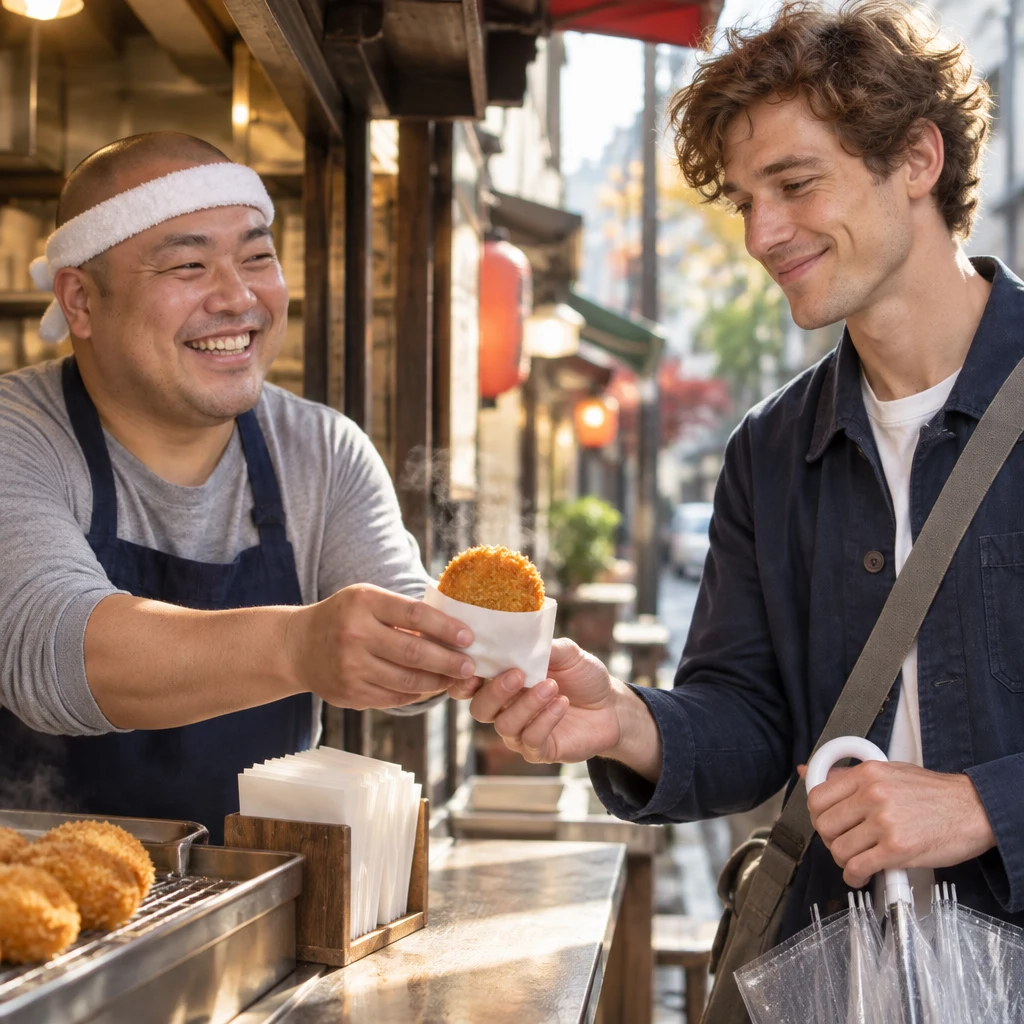
一石二鳥だと思います。
I think that kills two birds with one stone.
When to use it: Use it when one action brings two useful results.
と links the quoted thought 一石二鳥だ to 思います.

七転び八起きで、続けます。
I'll keep going, no matter how many times I fall.
When to use it: Say this to show you will keep trying after setbacks.
This saying frames repeated setbacks as a reason to get up and continue.
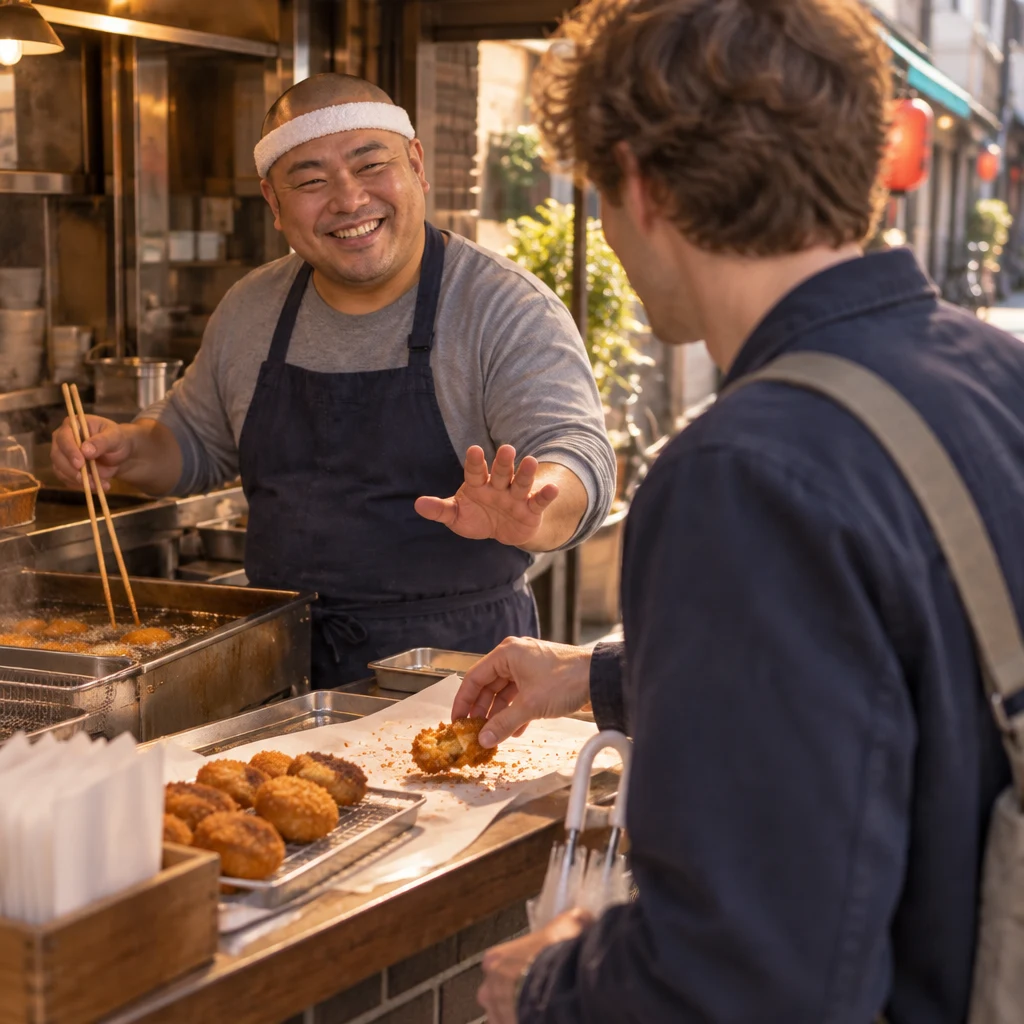
ここは急がば回れです。
This is a 'more haste, less speed' moment.
When to use it: Use it when taking a slower route is wiser than rushing.
急がば回れ advises choosing a safe, steady way over a hasty shortcut.
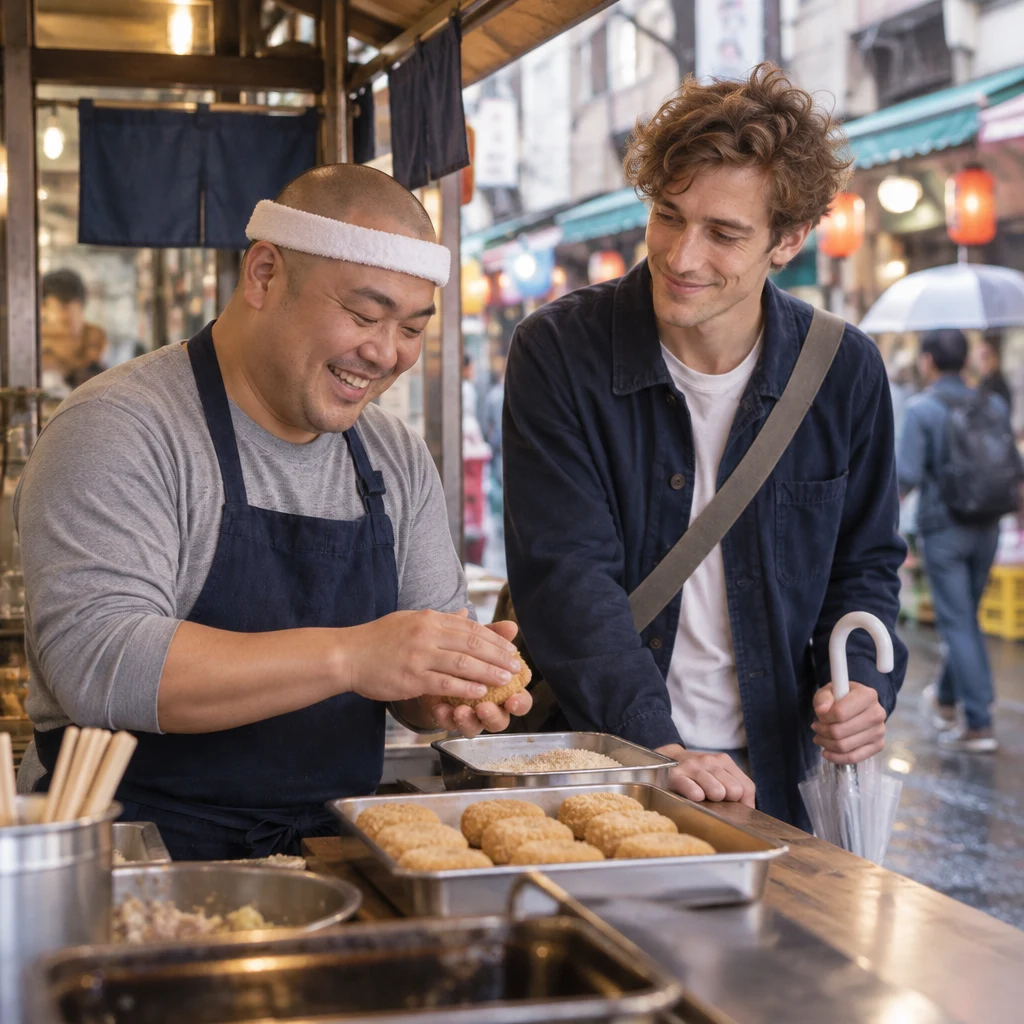
石の上にも三年、という感じです。
It has that 'stick with it' feeling.
When to use it: Use it when steady effort over time is the point.
The image is of staying on a hard stone until time and patience make it bearable.
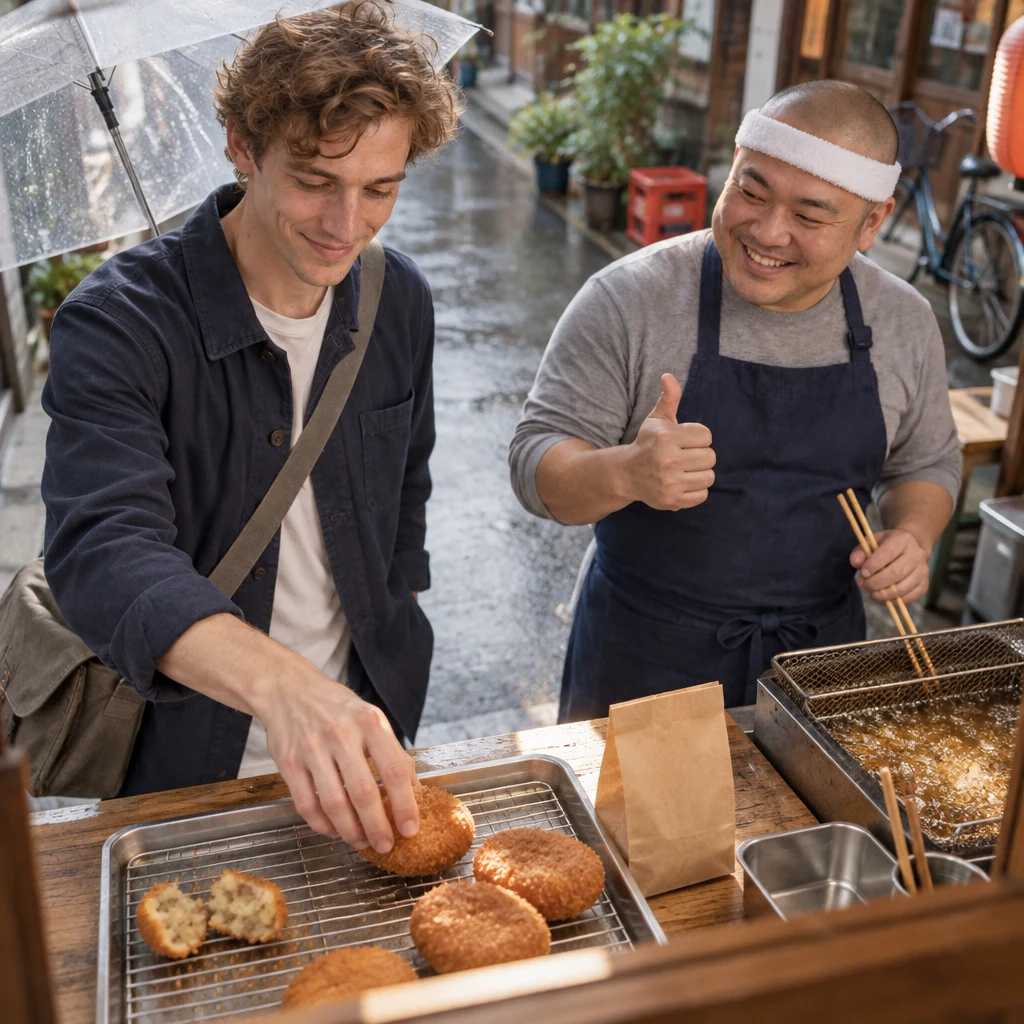
まだ、匙は投げません。
I'm not giving up yet.
When to use it: Say this when you are not ready to give up on a difficult task.
匙を投げる means to give up, so this line says you have not done that.
Story — croquettes and patience
Kenta is juggling orders and the fryer at his Yanaka Ginza stand, so Leo steps in to help. The sayings come up as Leo learns not to rush.
Highlighted phrases are the new lines. Turn on Show English if you want a gloss.
- A short line forms at the stand. Kenta keeps one eye on the fryer.
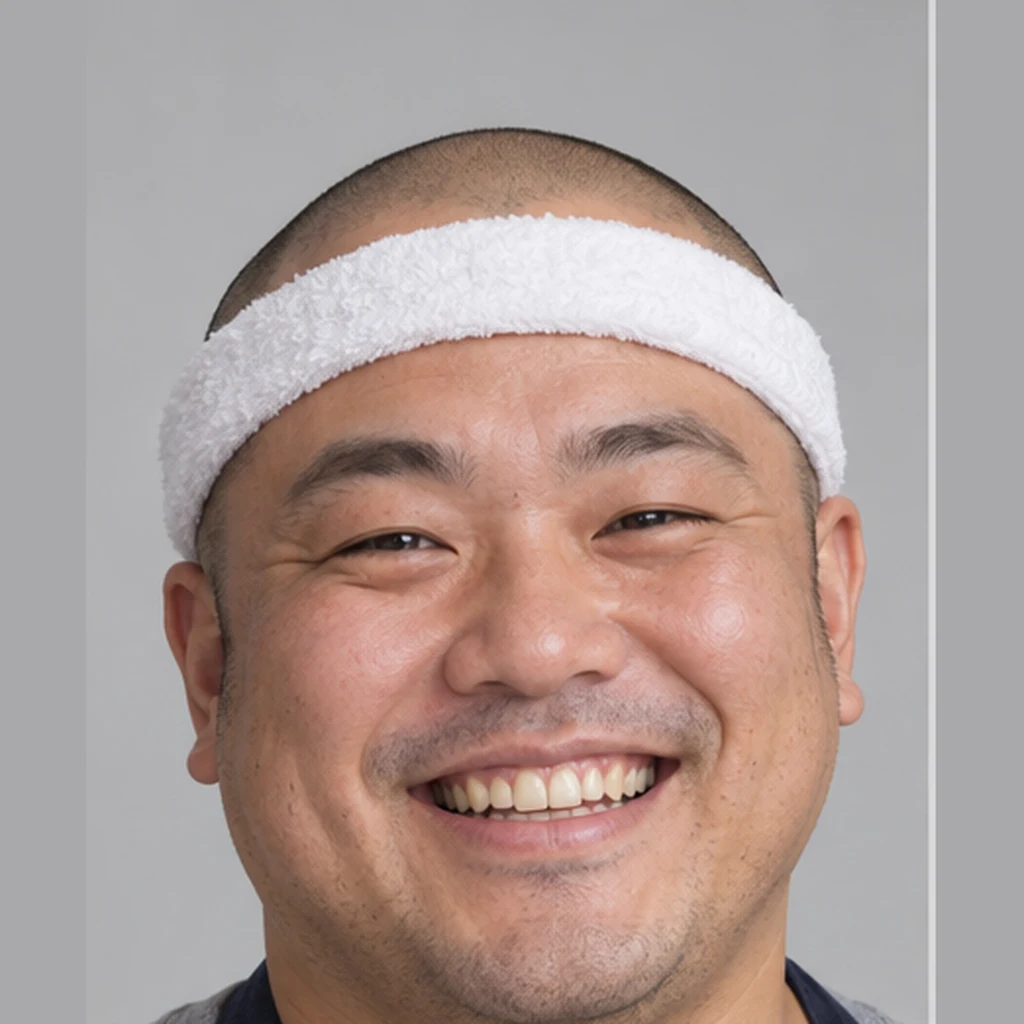 Kenta今日は人手が足りなくて、店を回すのが大変だよ。We're short-handed today, and it's hard to keep the stand going.
 Leo何を手伝えばいいですか。What can I help with?
- Kenta今は猫の手も借りたいです。I'm so busy I'd take any extra help.
- Leo注文を取ればいいですか。Should I take the orders?
- Kentaそうしてくれると助かるよ。揚げたてを袋に入れてね。That would help. Put the fresh ones in the bags, okay?
- Leo reaches for a croquette just as its shape starts to collapse.
- Kenta慌てると形が崩れるから、ゆっくりでいいよ。If you rush, they fall apart, so take your time.
- Leoここは急がば回れです。This is a 'more haste, less speed' moment.
- Kentaあっ、最初の一個、形が崩れたね。Oh, the first one fell apart.
- Leoまだ、匙は投げません。I'm not giving up yet.
- Kentaその調子。失敗しても、またやればいいよ。That's the spirit. If it goes wrong, just try again.
- Leo七転び八起きで、続けます。I'll keep going, no matter how many times I fall.
- Kenta形をそろえるの、慣れるまで何年もかかったよ。It took me years to get used to making them all the same shape.
- Leo石の上にも三年、という感じです。It has that 'stick with it' feeling.
- Kenta注文が片づいたし、レオさんもコロッケを食べられるね。The orders are done, and you get to eat a croquette too.
- Leo一石二鳥だと思います。I think that kills two birds with one stone.
- The rush eases. Leo steps to the counter to order one croquette.
- Leoコロッケを一つください。One croquette, please.
- Kentaはい、どうぞ。Sure, here you go.
- Leoありがとうございます。Thank you.
- Kenta今日は本当に助かったよ。また頼むね。You really helped today. I'll count on you again.
Practice — try the sayings out
This round mixes listening, choosing a response, building a line, and spotting a small mistake.
Focus on what the saying means in the situation, not just its literal image.
0 of 11 done
What did you hear?
What did you hear?
What do you say?
What do you say?
You help with orders and get to eat a croquette during your break; point out that this gives you two benefits.
Pick the reply
Kenta says:
Pick the reply
最初の一個、形が崩れちゃったね。
The first one fell apart.
And you reply with:
Build the line
Build the line
This is a 'more haste, less speed' moment.
。
Tap the words in order.
Fill the gap
Fill the gap
It has that 'stick with it' feeling.
石の____にも三年、という感じです。
What does it mean?
What does it mean?
まだ、匙は投げません。
Match the pairs
Japanese
今は猫の手も借りたいです。Drop the English here一石二鳥だと思います。Drop the English hereまだ、匙は投げません。Drop the English hereEnglish
Find the mistake
Find the mistake
Build the line
Build the line
This is a 'more haste, less speed' moment.
。
Tap the words in order.
What do you say?
What do you say?
You have helped at the stand and now want to order one croquette.
Pick the reply
Kenta says:
Pick the reply
はい、どうぞ。
Sure, here you go.
And you reply with:
Say it — your turn at the stand
You are helping at Kenta's Yanaka Ginza stand. When your cue appears, say the line as Leo; tap play first if you want to hear the rhythm.
This is a recording for your own practice, not a pronunciation score.
- Kenta慌てると形が崩れるから、ゆっくりでいいよ。If you rush, they fall apart, so take your time.
- Leo (you)Agree that this is a moment to take the slower, safer way.
Agree that this is a moment to take the slower, safer way.
ここは急がば回れです。
This is a 'more haste, less speed' moment.
0 of 4 said
Recap — what you can say now
| Japanese | English | Play |
|---|---|---|
| 今は猫の手も借りたいです。 | I'm so busy I'd take any extra help. | |
| 一石二鳥だと思います。 | I think that kills two birds with one stone. | |
| 七転び八起きで、続けます。 | I'll keep going, no matter how many times I fall. | |
| ここは急がば回れです。 | This is a 'more haste, less speed' moment. | |
| 石の上にも三年、という感じです。 | It has that 'stick with it' feeling. | |
| まだ、匙は投げません。 | I'm not giving up yet. |
Save your progress — it’s free
Keep your place in the course and see which lines you’ve learned.
Want the next lesson in your inbox?
Get the next lesson by email, one a day.
Join the newsletterDaily lesson emails are coming soon. Newsletter subscribers get them first.
Keep practicing with Yak Cards
Keep these sayings ready for a busy day. Open the Yak Cards for this lesson and review them on the train.
A quick Yak Cards review helps these sayings come to mind when you need them.
Open Yak Cards