
New here? This is lesson 185 of a free 240-lesson Japanese course.
It's not your fault in Japanese
Kenta counts change at the croquette stand and comes up short. He starts apologising as if the whole lane is waiting on him.
Leo stays at the counter and tells him it is not his fault.
You will comfort someone who is blaming themselves, say you are listening, and tell them they do not have to carry it alone.
These lines work with a friend, a coworker, or anyone who needs a calm word.
By the end of this lesson
Comfort someone and take the blame off them.
- あなたのせいじゃないです。It's not your fault.
- 聞いていますよ。I'm listening.
- 少しでも楽にできたらいいんですが。I wish I could make it a little easier.
- そう感じるのは自然ですよ。It's natural to feel that way.
- 全部ひとりで抱えなくていいです。You don't have to carry it all yourself.
- 自分を責めないでください。Don't blame yourself.
Scene — too much change
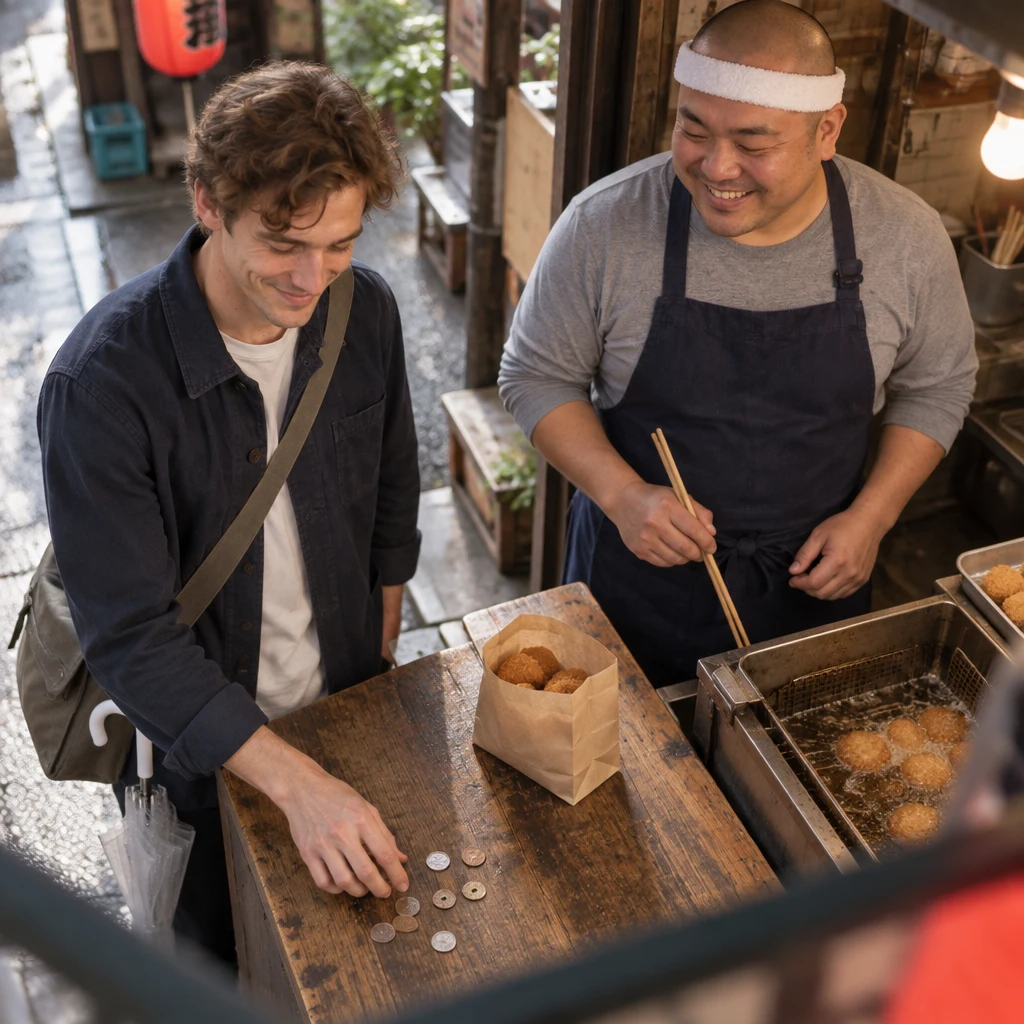
Yanaka Ginza is busy this afternoon. Oil pops in Kenta's fryer. A paper bag of croquettes sits on the small counter, and coins spill across the wood.
Kenta stares at the change in his palm. He has given too much back, and he looks as if the whole stand is his fault.

Learn — take the blame off
These six lines let you comfort someone who is blaming themselves.
You take the blame off them, stay with them, and tell them they do not have to carry it alone.

あなたのせいじゃないです。
It's not your fault.
When to use it: Use this when someone is blaming themselves for a mistake.
せい after の names the cause; じゃないです takes that blame off them.

聞いていますよ。
I'm listening.
When to use it: Use this to show you are still with them and not rushing in.
ている here means you are in the middle of listening, not finished.

少しでも楽にできたらいいんですが。
I wish I could make it a little easier.
When to use it: Use this when you want to ease things but cannot fully fix them.
たら plus いい shows a wish, and が at the end softens it.
Say it: Give the ん in いいんですが its own beat.

そう感じるのは自然ですよ。
It's natural to feel that way.
When to use it: Use this when their feeling makes sense, even if the facts are smaller.
の after the verb turns that feeling into a thing you can call natural.
全部ひとりで抱えなくていいです。
You don't have to carry it all yourself.
When to use it: Use this when they are trying to handle the whole problem alone.
なくていいです after a verb means they do not have to do that.

自分を責めないでください。
Don't blame yourself.
When to use it: Use this when they keep putting the blame on themselves.
ないでください after a verb is a polite way to ask them to stop.
Story — coins on the counter
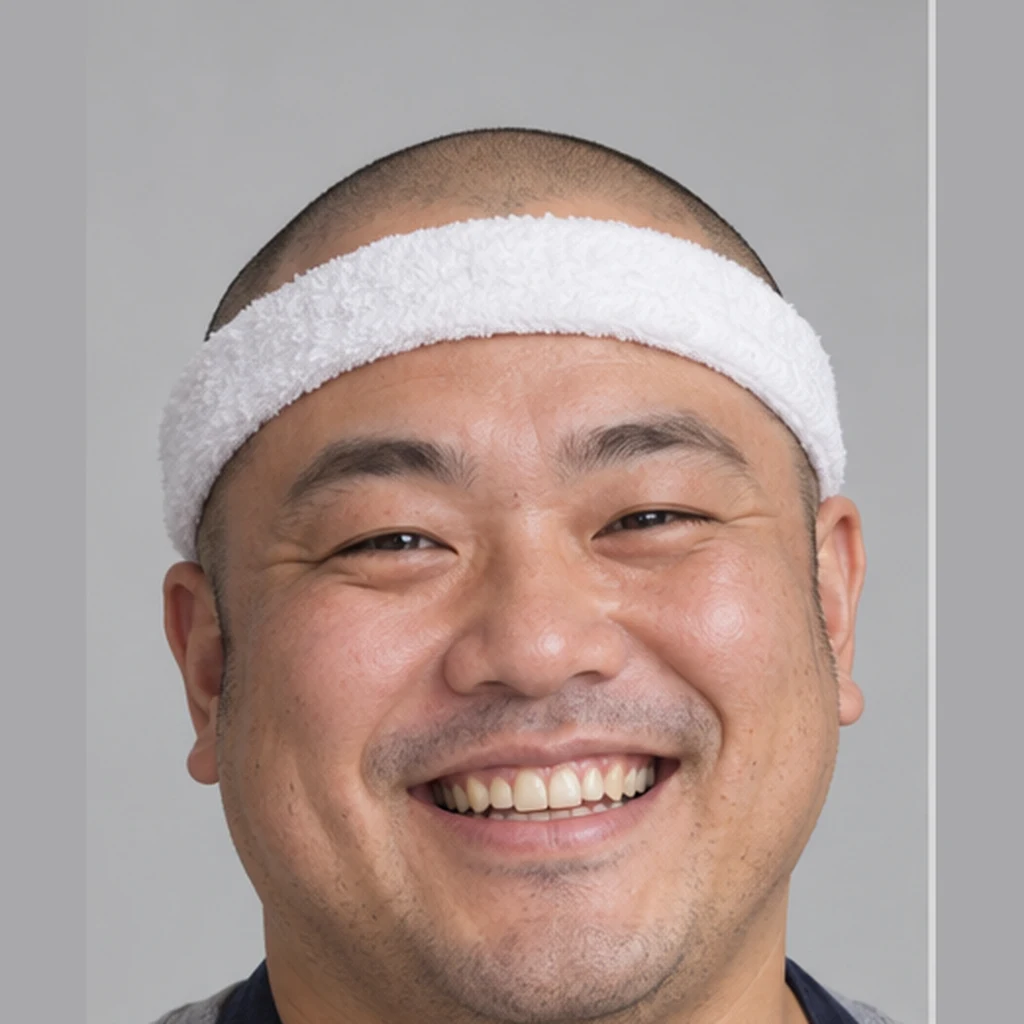
Kenta has given too much change and cannot stop apologising. Leo stays at the counter and talks him down, without rushing him.
Highlighted phrases are the new lines. Turn on Show English if you want a gloss.
- Coins on the wet wood. A paper bag waits. Kenta stares at his palm.
 Kentaええと、お釣り、多すぎた。Um, I gave too much change.
 Leo大丈夫ですか。Are you okay?
- Kentaごめんなさい。全部、俺のせいだよ。I'm sorry. It's all my fault.
- Leoあなたのせいじゃないです。It's not your fault.
- Kentaでも、いつも数え方を間違えるんだよ。But I always get the counting wrong.
- Leo聞いていますよ。I'm listening.
- A short line of people waits. Oil pops in the fryer.
- Kentaお客さんの分まで、自分が払ったみたいで。It feels like I paid the customer's share too.
- Leoそう感じるのは自然ですよ。It's natural to feel that way.
- Kenta wipes his hands on his apron and does not look up.
- Leo少しでも楽にできたらいいんですが。I wish I could make it a little easier.
- Kenta行列も見てるし、焦るんだよ。People are waiting in line, so I rush.
- Leo全部ひとりで抱えなくていいです。You don't have to carry it all yourself.
- Kenta店は俺ひとりだし。仕方ないよ。It's just me at the stand. Can't be helped.
- Leo自分を責めないでください。Don't blame yourself.
- Kentaわかった。ありがとう。Got it. Thanks.
Practice — pick the right comfort
Eleven short tasks wait in this round. You will listen, fill a gap, build a line, and pick a reply.
Each one is small, so you move on quickly.
0 of 11 done
What did you hear?
What did you hear?
Match the pairs
Japanese
あなたのせいじゃないです。Drop the English here全部ひとりで抱えなくていいです。Drop the English here自分を責めないでください。Drop the English hereEnglish
What do you say?
What do you say?
Kenta is blaming himself for the extra change. Tell him the mistake is not his fault.
Fill the gap
Fill the gap
It's not your fault.
あなたの____じゃないです。
Pick the reply
Kenta says:
Pick the reply
自分を責めてばっかりだ。
I just keep blaming myself.
And you reply with:
Build the line
Build the line
I wish I could make it a little easier.
。
Tap the words in order.
What does it mean?
What does it mean?
ごめんなさい。
Swap the word
Swap the word
Kenta feels awful about the change. Tell him that feeling is natural.
そう感じるのは____ですよ。
Find the mistake
Find the mistake
What do you say?
What do you say?
Kenta has gone quiet over the coins. Ask him directly if he is okay.
True or false?
True or false?
This line puts the blame on you.
Say it — your turn to speak
You are Leo beside Kenta's croquette stand. When the cue is yours, tap the microphone and say the line.
Tap play first if you want to hear it. The recording stays on this device.
- Kenta全部、俺のせいだよ。It's all my fault.
- Leo (you)Tell him it is not his fault.
Tell him it is not his fault.
あなたのせいじゃないです。
It's not your fault.
0 of 6 said
Recap — what you can say now
| Japanese | English | Play |
|---|---|---|
| あなたのせいじゃないです。 | It's not your fault. | |
| 聞いていますよ。 | I'm listening. | |
| 少しでも楽にできたらいいんですが。 | I wish I could make it a little easier. | |
| そう感じるのは自然ですよ。 | It's natural to feel that way. | |
| 全部ひとりで抱えなくていいです。 | You don't have to carry it all yourself. | |
| 自分を責めないでください。 | Don't blame yourself. |
Save your progress — it’s free
Keep your place in the course and see which lines you’ve learned.
Want the next lesson in your inbox?
Get the next lesson by email, one a day.
Join the newsletterDaily lesson emails are coming soon. Newsletter subscribers get them first.
Keep practicing with Yak Cards
Keep these comfort lines in your pocket. Open the Yak Cards for this lesson and run them on the train.
A short Yak Cards round after a hard day keeps these ready.
Open Yak Cards