
New here? This is lesson 81 of a free 240-lesson Japanese course.
What I usually do in Japanese
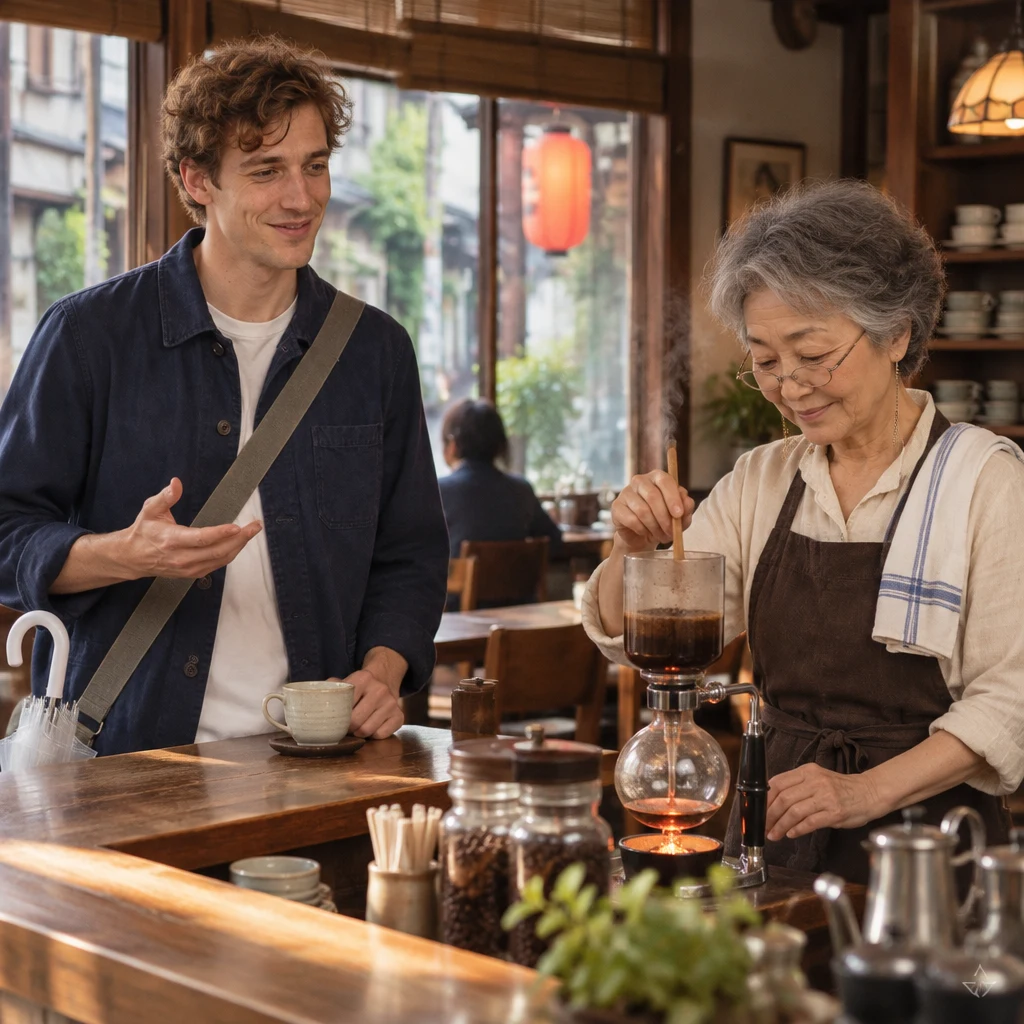
Saturday morning in Yanaka. Leo steps into Kissa Hotaru and asks for the same morning set he drinks all week.
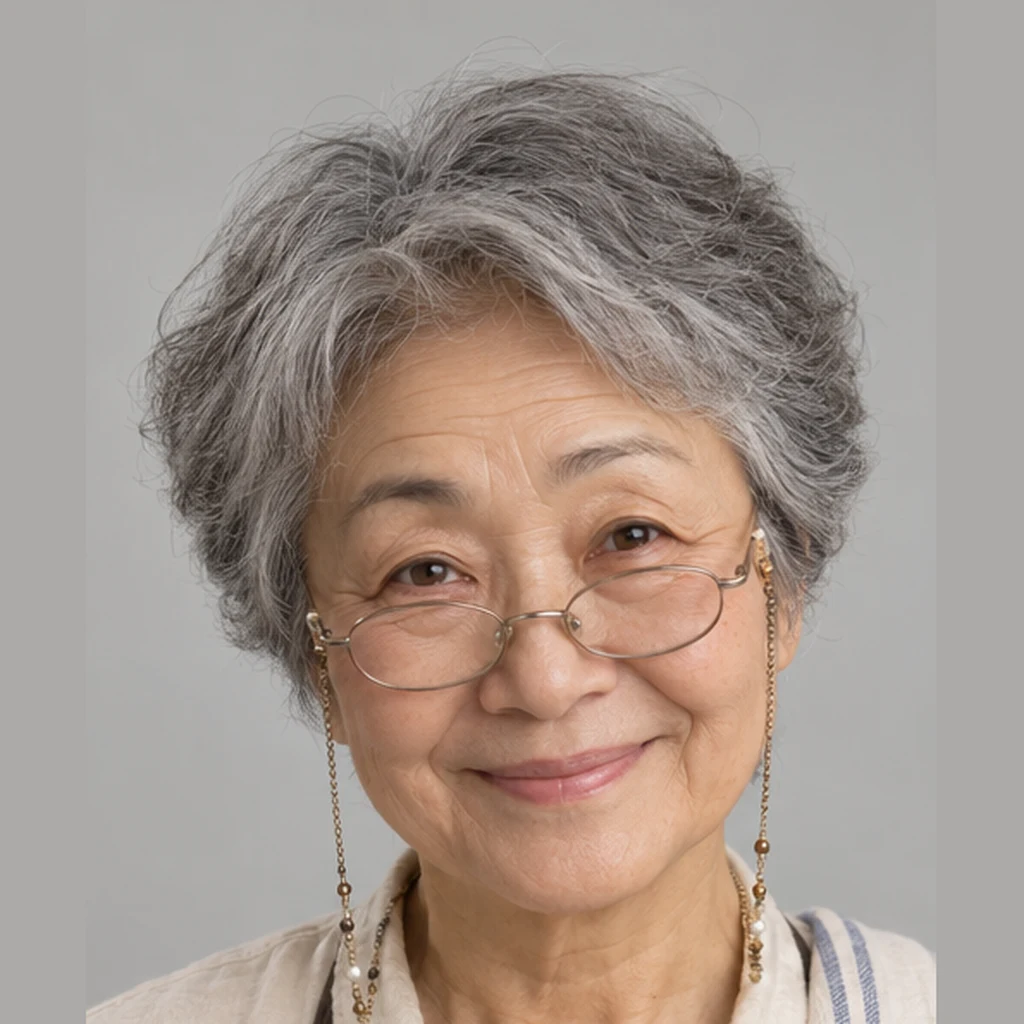
Masako already knows his cup. She keeps her eyes on the siphon and does not look up.
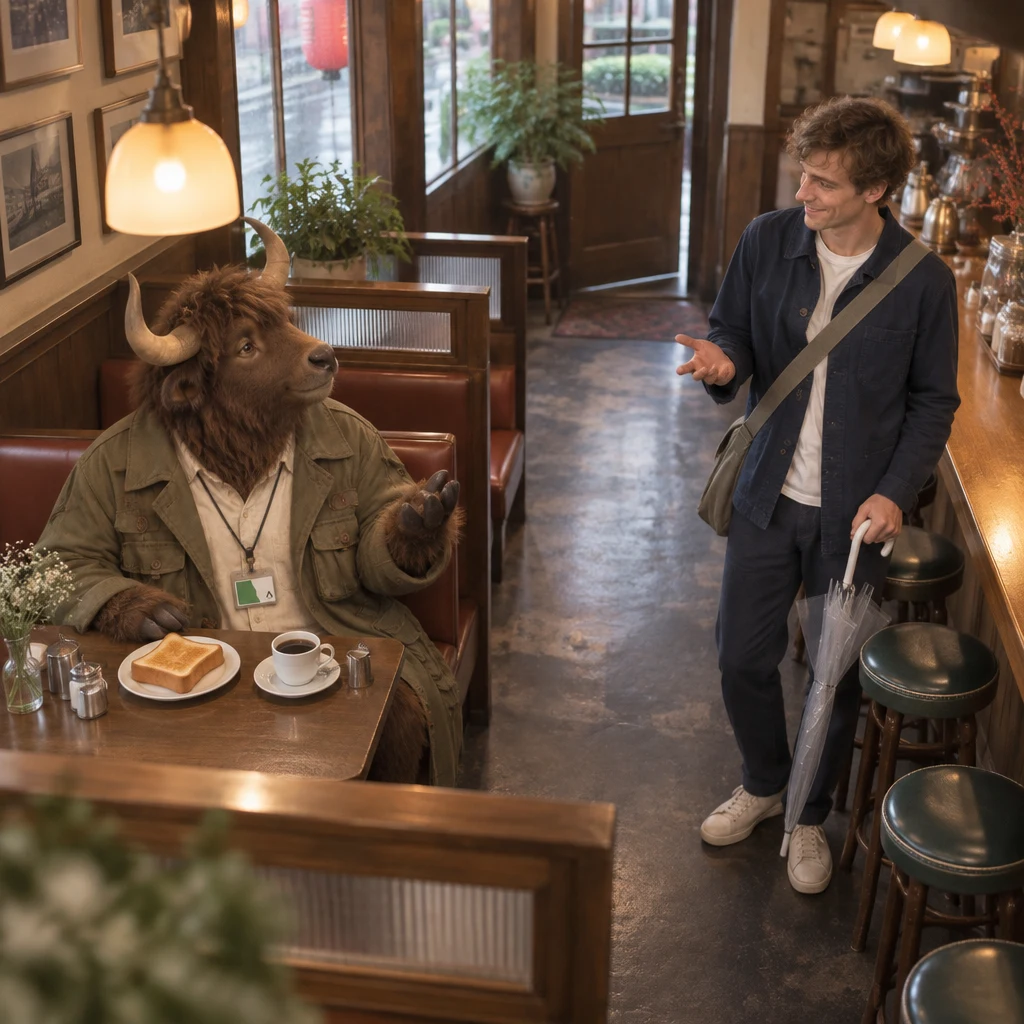
Goro looks over from the booth and asks what Leo does on weekends.
You will talk about weekdays, weekends, going out, and bedtime, and say when it depends on the day.
By the end of this lesson
Say what you usually do on weekdays and weekends.
- 平日はたいてい働きます。On weekdays I usually work.
- 週末はたいてい家にいます。On weekends I'm usually at home.
- 時々、外に出ます。Sometimes I go out.
- ふだんはあまり遅く寝ません。I don't usually stay up late.
- 日によります。It depends on the day.
- 週末は何をしますか。What do you do on weekends?
Scene — saturday usual
Kissa Hotaru is quiet this Saturday. Leo hangs his clear umbrella and stands at the wooden counter.
Masako already has his usual cup in mind. In the corner booth, Goro sits with thick toast and a blend coffee he has not finished.

Learn — weekday and weekend
These six lines help you say what you usually do on weekdays and weekends.
You also get sometimes, not staying up late, and a way to say it depends.
平日はたいてい働きます。
On weekdays I usually work.
When to use it: Use this for your usual weekday work.
は marks 平日 as the topic of the habit.
Say it: In たいてい, てい is usually pronounced like a long え.

週末はたいてい家にいます。
On weekends I'm usually at home.
When to use it: Use this for a usual weekend at home.
に marks where you are with います.
時々、外に出ます。
Sometimes I go out.
When to use it: Use this when going out is only sometimes.
時々 sits at the front to mark a sometimes habit.

ふだんはあまり遅く寝ません。
I don't usually stay up late.
When to use it: Use this to say you rarely stay up late.
あまり pairs with a negative verb like 寝ません.
Say it: Give ん in ふだん its own beat.

日によります。
It depends on the day.
When to use it: Use this when the habit is not the same every day.
に marks the thing the answer depends on.

週末は何をしますか。
What do you do on weekends?
When to use it: Ask this to learn someone's weekend habits.
を marks 何 as the thing they do.
Story — the same morning set
Leo orders his usual on Saturday and calls it a weekend habit. Masako does not look up.
Highlighted phrases are the new lines. Turn on Show English if you want a gloss.
- Saturday morning. Leo hangs his clear umbrella and stands at the counter.
 Leoモーニングをお願いします。The morning set, please.
 Masakoはい。Yes.
- Masako does not look up from the siphon. The morning set is already on the way.
 Goro週末は何をしますか。What do you do on weekends?
- Leo週末はたいてい家にいます。On weekends I'm usually at home.
- Leo時々、外に出ます。Sometimes I go out.
- Masako平日も同じですか。Is it the same on weekdays too?
- Leo平日はたいてい働きます。On weekdays I usually work.
- Goro夜は遅く寝ますか。Do you stay up late at night?
- Leoふだんはあまり遅く寝ません。I don't usually stay up late.
- Masako毎日ですか。Every day?
- Leo日によります。It depends on the day.
- Goro今日は土曜日ですよ。Today is Saturday.
- Leo週末は休みです。I'm off at the weekend.
- Goro nods. His blend coffee is still full.
Practice — pick the right habit
Ten short tasks wait in this round. You will listen, fill a gap, build a line, and pick a reply.
Each one is small, so you move on quickly.
0 of 10 done
What did you hear?
What did you hear?
What do you say?
What do you say?
You walk into Kissa Hotaru on Saturday. Order your usual morning set.
Fill the gap
Fill the gap
On weekdays I usually work.
平日は____働きます。
Pick the reply
Goro says:
Pick the reply
週末は何をしますか。
What do you do on weekends?
And you reply with:
What does it mean?
What does it mean?
時々、外に出ます。
Build the line
Build the line
I don't usually stay up late.
。
Tap the words in order.
Swap the word
Swap the word
You mean you are at home, not that you go there.
週末はたいてい家に____。
Match the pairs
Japanese
日によります。Drop the English here平日はたいてい働きます。Drop the English here時々、外に出ます。Drop the English hereふだんはあまり遅く寝ません。Drop the English hereEnglish
True or false?
True or false?
This means you work on weekends.
Find the mistake
Find the mistake
Say it — your turn to speak
You are Leo on this quiet Saturday. When the cue is yours, tap the microphone and say the line.
Tap play first if you want to hear it. The recording stays on this device.
- Goro週末は何をしますか。What do you do on weekends?
- Leo (you)Say you are usually at home on weekends.
Say you are usually at home on weekends.
週末はたいてい家にいます。
On weekends I'm usually at home.
0 of 5 said
Recap — what you can say now
| Japanese | English | Play |
|---|---|---|
| 平日はたいてい働きます。 | On weekdays I usually work. | |
| 週末はたいてい家にいます。 | On weekends I'm usually at home. | |
| 時々、外に出ます。 | Sometimes I go out. | |
| ふだんはあまり遅く寝ません。 | I don't usually stay up late. | |
| 日によります。 | It depends on the day. | |
| 週末は何をしますか。 | What do you do on weekends? |
Save your progress — it’s free
Keep your place in the course and see which lines you’ve learned.
Want the next lesson in your inbox?
Get the next lesson by email, one a day.
Join the newsletterDaily lesson emails are coming soon. Newsletter subscribers get them first.
Keep practicing with Yak Cards
Keep these habit lines in your pocket. Open the Yak Cards for this lesson and run them on the train.
A short Yak Cards round before Saturday coffee keeps usually ready.
Open Yak Cards