
New here? This is lesson 25 of a free 240-lesson Japanese course.
No thanks, that's enough in Japanese
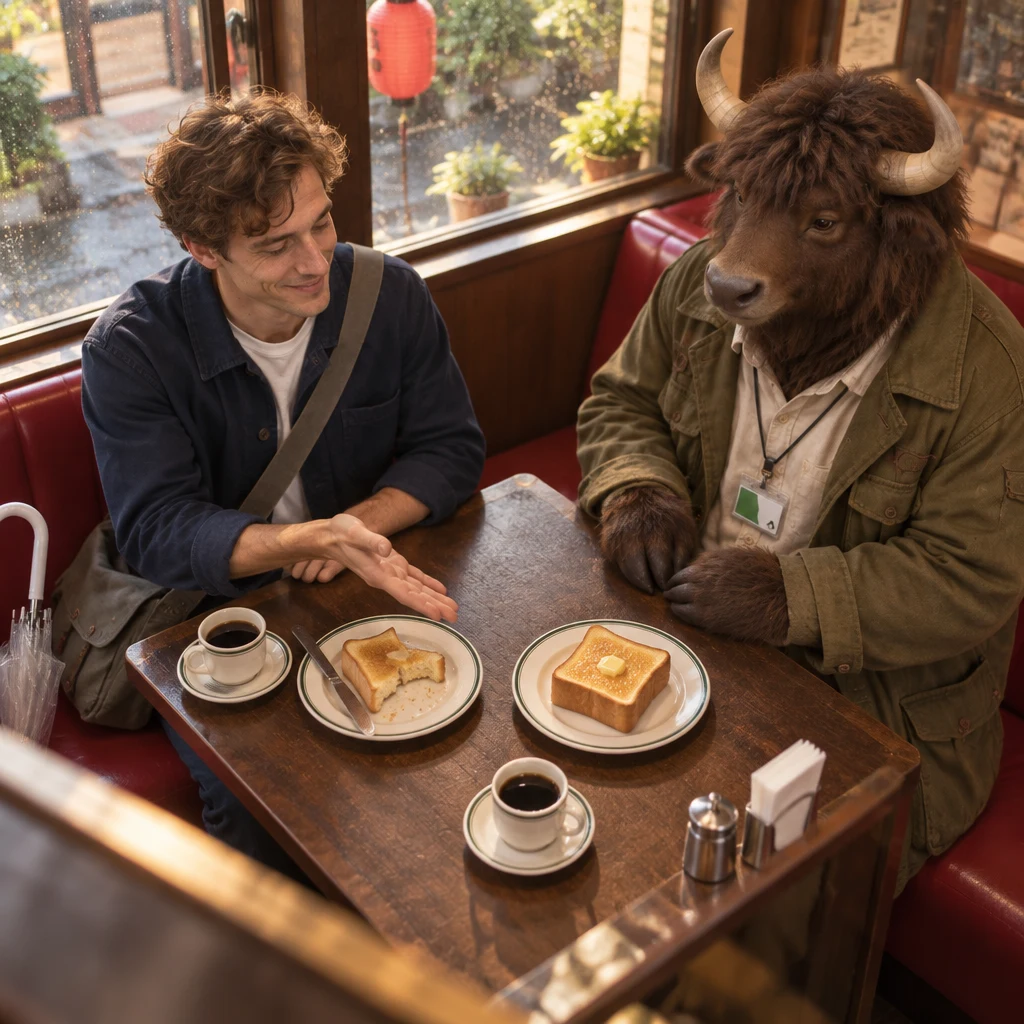
Leo is at Kissa Hotaru with a blend he has barely touched. Masako offers a second cup anyway, then extra toast.
Goro watches from the corner booth, still ignoring his own coffee.
You will turn down things you do not need, explain that you already have one, and say when you have enough.
For something you do want, ask for just a little.
By the end of this lesson
Turn things down politely and say that is enough.
- ___はいりません。I don't need ___.
- もういらないです。I don't need any more.
- もう持っています。I already have one.
- 少しください。Just a little, please.
- これで十分です。This is enough.
- たくさんです。That's plenty.
Scene — the second blend
At Kissa Hotaru in Yanaka, Masako approaches the booth with a coffee pot. Leo's first blend is still almost full, and his toast is half eaten.
Goro occupies two red seats across the table. His own coffee remains unfinished as he watches a plate of extra toast.

Learn — no thanks, that's enough
Six short lines help you refuse another serving, explain that you already have something, and ask for a little.
Learn each whole line for an everyday offer.

___はいりません。
I don't need ___.
When to use it: Use this to name something you do not need.
Learn it as one piece, putting the unwanted item in the blank.

もういらないです。
I don't need any more.
When to use it: Use this when someone offers another serving you do not want.
Learn it as one piece and say it gently when declining more.

もう持っています。
I already have one.
When to use it: Use this when offered an object you already have, such as a shop card.
Learn it as one piece to explain that you already have something.
Say it: The small っ marks a brief pause before the next sound.

少しください。
Just a little, please.
When to use it: Use this to accept a small amount of something offered.
Learn it as one piece to ask for a small amount.

これで十分です。
This is enough.
When to use it: Use this when the amount in front of you is enough.
Learn it as one piece to say the current amount is enough.
Say it: Keep the first vowel in 十分 long, lasting two beats.
たくさんです。
That's plenty.
When to use it: Use this to describe a large amount when someone asks how much there is.
Learn it as one piece for describing plenty.
Story — goro takes the toast
Masako offers another blend before Leo has finished his first. He needs less coffee, but Goro has room for toast.
Follow the offers and notice who accepts each one.
- Masako brings the coffee pot to Leo's almost-full cup.
 Masakoもう一杯いかがですか。Would you like another cup?
 Leoいいえ、けっこうです。もういらないです。No, thank you. I don't need any more.
- She puts the pot down and picks up a blank stamp card.
- Masakoポイントカードはお持ちですか。Do you have a loyalty card?
- Leoもう持っています。I already have one.
- Leo shows his card. Masako offers sugar for his first coffee.
- Leo砂糖はいりません。I don't need sugar.
- Masakoミルクはいかがですか。Would you like milk?
- Leo少しください。Just a little, please.
- Masako pours a little milk. Leo lifts his hand.
- Leoこれで十分です。This is enough.
- She stops pouring. Goro notices the extra toast on a plate beside Leo.
 Goroトーストはどのくらいありますか。How much toast is there?
- Leoたくさんです。That's plenty.
- Masakoゴローさん、どうぞ。Help yourself, Goro.
- Goroはい、お願いします。Yes, please.
- Masako passes him the toast. Goro takes it beside his unfinished blend.
Practice — enough or a little
Eleven short exercises help you choose between accepting a little and refusing more. Listen carefully, match meanings, and put words together.
Read each situation before choosing your reply.
0 of 11 done
What did you hear?
What did you hear?
Match the pairs
Japanese
もういらないです。Drop the English hereもう持っています。Drop the English hereたくさんです。Drop the English here___はいりません。Drop the English hereEnglish
Which one doesn’t belong?
Which one doesn’t belong?
Fill the gap
Fill the gap
This is enough.
これで____です。
What does it mean?
What does it mean?
たくさんです。
Build the line
Build the line
Just a little, please.
。
Tap the words in order.
Pick the reply
Masako says:
Pick the reply
もう一杯いかがですか。
Would you like another cup?
And you reply with:
Swap the word
Swap the word
You have finished eating and want no more toast, rather than saying you do not need it yet.
____いらないです。
Find the mistake
Find the mistake
What do you say?
What do you say?
Masako offers sugar. You have none and want none. Tell her you do not need sugar.
What do you say?
What do you say?
Masako offers butter for your toast. You have none and would like some. Accept her offer.
Say it — your turn at the booth
You are Leo at the booth. Answer Masako's offers using the lines you learned, choosing a little or refusing more.
Record each reply, then listen back and try again if you want.
- Masakoもう一杯いかがですか。Would you like another cup?
- Leo (you)Say you do not need any more.
Say you do not need any more.
もういらないです。
I don't need any more.
0 of 5 said
Recap — what you can say now
| Japanese | English | Play |
|---|---|---|
| ___はいりません。 | I don't need ___. | |
| もういらないです。 | I don't need any more. | |
| もう持っています。 | I already have one. | |
| 少しください。 | Just a little, please. | |
| これで十分です。 | This is enough. | |
| たくさんです。 | That's plenty. |
Save your progress — it’s free
Keep your place in the course and see which lines you’ve learned.
Want the next lesson in your inbox?
Get the next lesson by email, one a day.
Join the newsletterDaily lesson emails are coming soon. Newsletter subscribers get them first.
Keep practicing with Yak Cards
Keep these replies ready with Yak Cards and review how to accept a little or refuse more.
Try a short round before your next coffee stop.
Open Yak Cards