
New here? This is lesson 177 of a free 240-lesson Japanese course.
How it turned out in Japanese
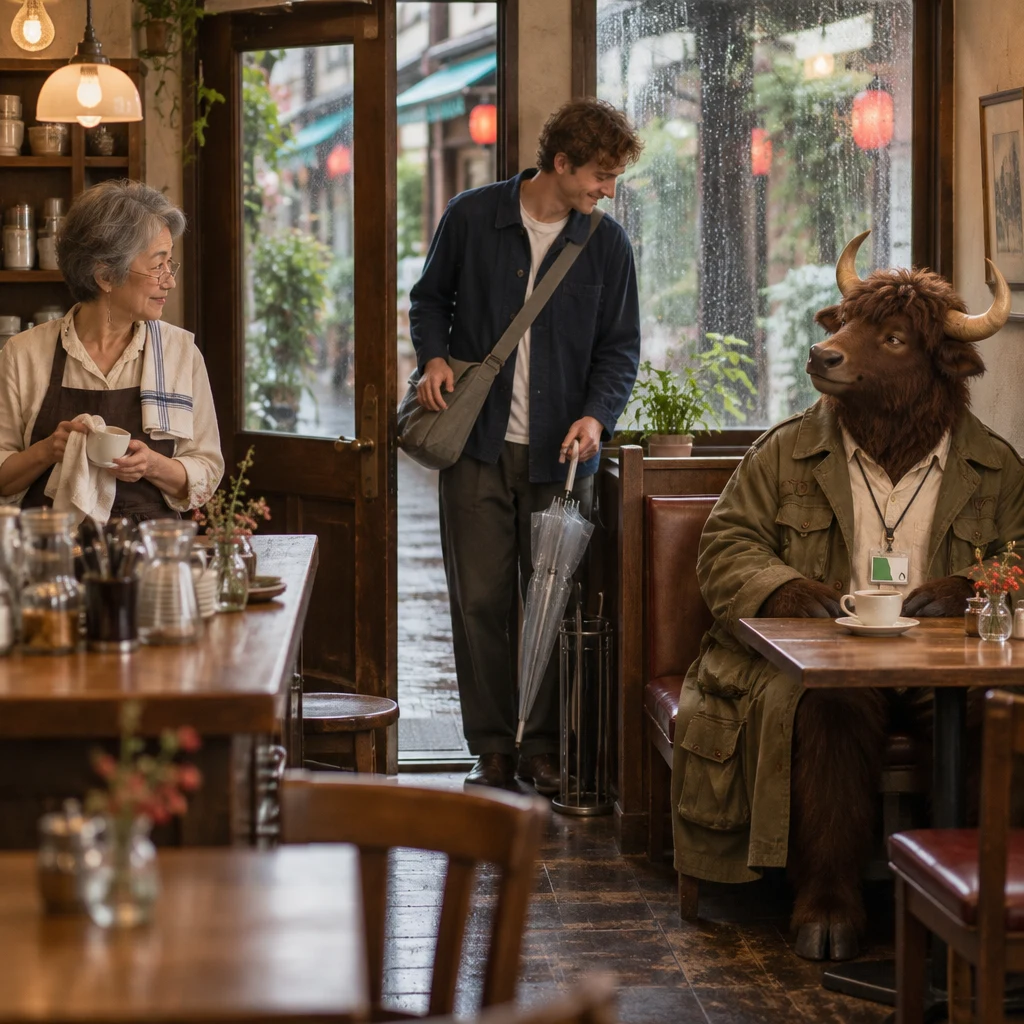
Saturday's rain still sits on the lane. Leo is back at Kissa Hotaru, laughing now at a trip that never left the plan.
Goro starts a grand ending and then loses the rest of the sentence in his toast.
You will look back, name how a day turned out, and say what you think now.
Keep the grammar in the chunk. The funny part is Goro, not the sentences.
By the end of this lesson
Look back and say how things turned out.
- 結局、___でした。It turned out to be ___.
- 今考えると、___と思います。Looking back, I think ___.
- そのとき、何も知りませんでした。At the time, I didn’t know.
- 最初は不安でした。I was nervous at first.
- 行くはずでしたが、雨でした。We were supposed to go, but it rained.
- 全然気づきませんでした。I didn’t notice at all.
Scene — the booth after rain
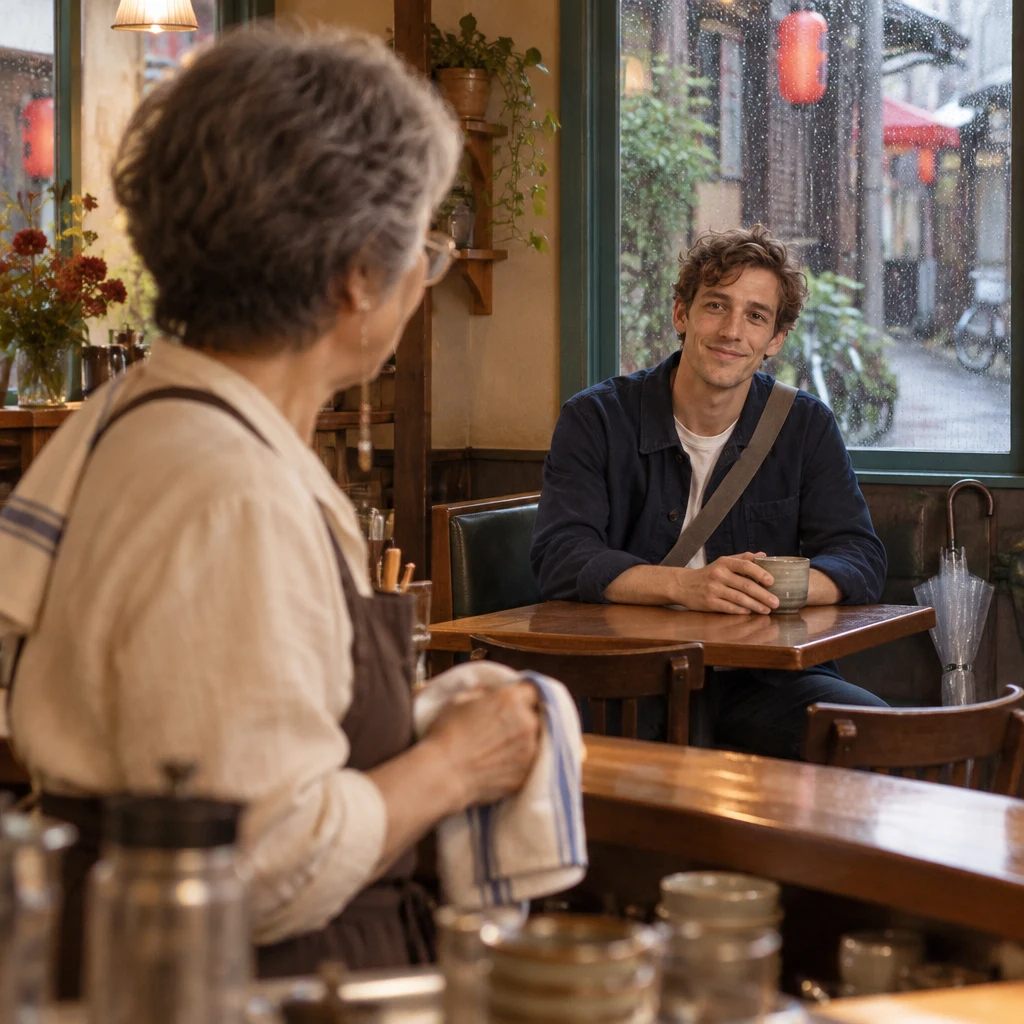
The lane is wet, but the rain has stopped. Leo hangs his clear umbrella and slides into the corner booth.
Goro's blend coffee sits untouched. Masako wipes a cup and waits for the story of Saturday.
By the door, the old black umbrella stays in the stand, tag blank, as always.
Learn — how it turned out
These six lines look back. You name the outcome, what you think now, and how it felt at the start.
One line is for a plan the rain cancelled.

結局、___でした。
It turned out to be ___.
When to use it: Use this to name the outcome after everything else.
結局 plus でした names the result you landed on.
Say it: Hold the small っ in 結局 before き.
今考えると、___と思います。
Looking back, I think ___.
When to use it: Use this to share what you think now, looking back.
と before 思います marks the thought you hold now.

そのとき、何も知りませんでした。
At the time, I didn’t know.
When to use it: Use this to say you had no idea back then.
も after 何 makes it nothing at all.

最初は不安でした。
I was nervous at first.
When to use it: Use this for how you felt at the start.
は marks that first stretch as the topic.

行くはずでしたが、雨でした。
We were supposed to go, but it rained.
When to use it: Use this when rain stopped a plan you expected.
はずでした means the plan was supposed to happen.

全然気づきませんでした。
I didn’t notice at all.
When to use it: Use this when you missed something completely.
全然 with a negative means not at all.
Say it: Give each ん in 全然 its own beat.
Story — goro loses the ending
Leo laughs about Saturday's rain. Goro tries to sum it up and loses the sentence.
Highlighted phrases are the new lines. Turn on Show English if you want a gloss.
- Rain still beads on the glass. Leo hangs his clear umbrella and laughs.
 Masako週末はどうでしたか。How was your weekend?
 Leo行くはずでしたが、雨でした。We were supposed to go, but it rained.
 Goro遥さんとですか。With Haruka?
- Leoはい、そうです。Yes, that's right.
- Leo turns his cup. Goro has not touched the blend.
- Leo最初は不安でした。I was nervous at first.
- Masakoどうしてですか。Why is that?
- Leoそのとき、何も知りませんでした。At the time, I didn’t know.
- Goro雨のことですか。You mean the rain?
- Leo全然気づきませんでした。I didn’t notice at all.
- Masako今はどう思いますか。What do you think now?
- Leo今考えると、よかったと思います。Looking back, I think it was for the best.
- Goro sits up, as if a speech is coming. The old umbrella stays in the stand.
- Goro結局、In the end...
- Masakoゴローさん。Goro.
- Goroええと、結局、雨でした。Um, it turned out to be rain.
- Masakoそれは残念ですね。That's too bad.
- Leo今考えると、面白いと思います。Looking back, I think it was funny.
- Goroなるほど。That makes sense.
Practice — pick the hindsight
Eleven short tasks wait in this round. You will listen, fill a gap, build a line, and pick a meaning.
Each one is small, so you move on quickly.
0 of 11 done
What did you hear?
What did you hear?
What do you say?
What do you say?
Leo sits down on Monday. Ask how his weekend went.
Fill the gap
Fill the gap
At the time, I didn’t know.
そのとき、何____知りませんでした。
What does it mean?
What does it mean?
全然気づきませんでした。
Pick the reply
Masako says:
Pick the reply
雨は、知っていましたか。
Did you know about the rain?
And you reply with:
Build the line
Build the line
We were supposed to go, but it rained.
、。
Tap the words in order.
Match the pairs
Japanese
結局、___でした。Drop the English here今考えると、___と思います。Drop the English here最初は不安でした。Drop the English hereEnglish
Swap the word
Swap the word
You are talking about Saturday, not now. Fix the ending.
最初は不安____。
What do you say?
What do you say?
The wet Saturday is over. Name the outcome with the new pattern.
Pick the reply
Goro says:
Pick the reply
今はどう思いますか。
What do you think now?
And you reply with:
What do you say?
What do you say?
Leo’s Saturday trip was cancelled by rain. Offer a kind response.
Say it — your turn to speak
You are Leo in the booth, looking back on the wet Saturday. When the cue is yours, tap the microphone and say the line.
Tap play first if you want to hear it. The recording stays on this device.
- Masako週末はどうでしたか。How was your weekend?
- Leo (you)Say you were supposed to go, but it rained.
Say you were supposed to go, but it rained.
行くはずでしたが、雨でした。
We were supposed to go, but it rained.
0 of 6 said
Recap — what you can say now
| Japanese | English | Play |
|---|---|---|
| 結局、___でした。 | It turned out to be ___. | |
| 今考えると、___と思います。 | Looking back, I think ___. | |
| そのとき、何も知りませんでした。 | At the time, I didn’t know. | |
| 最初は不安でした。 | I was nervous at first. | |
| 行くはずでしたが、雨でした。 | We were supposed to go, but it rained. | |
| 全然気づきませんでした。 | I didn’t notice at all. |
Save your progress — it’s free
Keep your place in the course and see which lines you’ve learned.
Want the next lesson in your inbox?
Get the next lesson by email, one a day.
Join the newsletterDaily lesson emails are coming soon. Newsletter subscribers get them first.
Keep practicing with Yak Cards
Keep these hindsight lines in your pocket. Open the Yak Cards for this lesson and run them on the train.
A short Yak Cards round keeps the outcome line ready after a messy day.
Open Yak Cards