
New here? This is lesson 155 of a free 240-lesson Japanese course.
Understood, found, finished in Japanese
Leo ducks into Kissa Hotaru after a hunt for his stamp card. Masako has already finished the morning's work, and Goro's blend coffee is still sitting there, unfinished.
You will say you understood, that something was found, and that a job is done.
You will also say you already ate or sent something, so nothing is left to do.
These lines report a result. They are not a way to go along with someone.
By the end of this lesson
Say you understood, found, or finished something.
- わかりました。I understand.
- 見つかりました。It's been found.
- 終わりました。It's finished.
- 食べてしまいました。I've eaten it all.
- 送ってしまいました。I've already sent it.
- もう全部できました。It's all done now.
Scene — the missing stamp card
Afternoon light hits the wooden counter at Kissa Hotaru. Leo walks in with his messenger bag open, looking for the stamp card he thought he had lost.
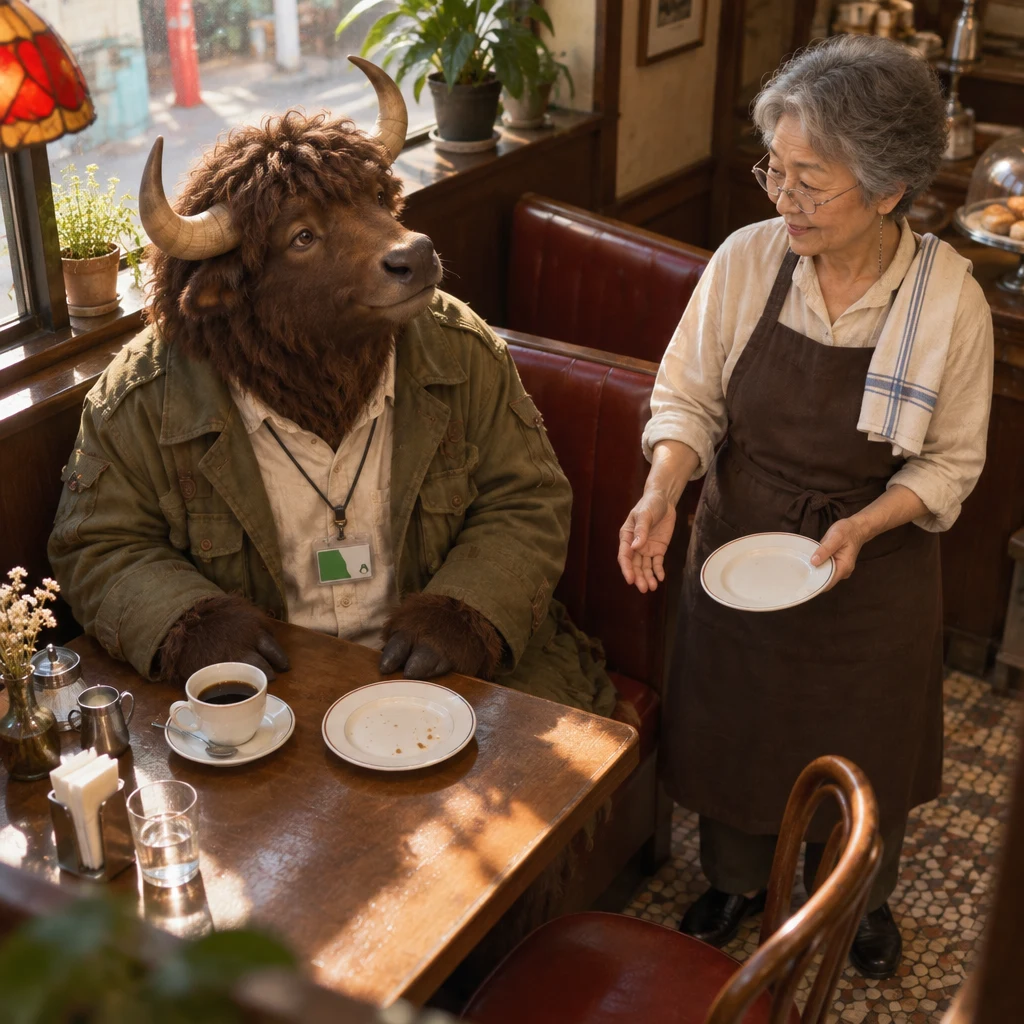
Masako wipes a siphon pot. The morning rush is over. In the corner booth, Goro's blend coffee sits untouched.

Learn — understood, found, finished
Six short result lines. You confirm you understood, that something turned up, and that work is done.
Two of them use てしまいました when the action is already complete.

わかりました。
I understand.
When to use it: Use this after an explanation to show you got the meaning.
This past form of わかります reports understanding, not a way to go along.

見つかりました。
It's been found.
When to use it: Use this when a lost thing has turned up.
見つかる takes no を because the thing itself is found.

終わりました。
It's finished.
When to use it: Use this when a task or stretch of work is done.
終わりました reports that something has finished, and it is not a goodbye.
食べてしまいました。
I've eaten it all.
When to use it: Use this when the food is already gone.
てしまいました marks the action as complete, often with nothing left.

送ってしまいました。
I've already sent it.
When to use it: Use this when the message is already on its way.
てしまいました here means the sending is already done.
Say it: Hold the small っ in 送って before て.

もう全部できました。
It's all done now.
When to use it: Use this when every part of the job is done now.
もう plus a past verb means the work is already complete.
Story — the card under the counter
Leo finds the stamp card from under the counter. Masako says the morning work is finished, but Goro's coffee is not.
Highlighted phrases are the new lines. Turn on Show English if you want a gloss.
- Leo opens his bag at the counter. The stamp card is not there.
 Leoスタンプカードがありません。I don't have my stamp card.
 Masakoカウンターの下を見て。Look under the counter.
- Leo kneels and pulls the faded card from under the wood.
- Leo見つかりました。It's been found.
- Masakoいつもそこですよ。It's always there.
- Leoわかりました。I understand.
- Masako sets the last siphon pot back on the shelf.
- Masako終わりました。It's finished.
 Goroトーストはまだありますか。Is there still toast?
- Masako食べてしまいました。I've eaten it all.
- Goroなるほど。That makes sense.
- Masako glances at Leo's phone.
- Masako遥さんには送った?Did you send it to Haruka?
- Leo送ってしまいました。I've already sent it.
- Leoもう全部できました。It's all done now.
- Goro looks at his untouched blend coffee.
- Goroまだ終わっていません。I'm not finished yet.
- Masakoコーヒー、冷めてますよ。The coffee is getting cold.
- Goroそうですね。Yes, it is.
Practice — pick the right result
Eleven short tasks wait in this round. You will listen, match meanings, fill a gap, and build a line.
Each one checks a finished result, so you stay on the new lines.
0 of 11 done
What did you hear?
What did you hear?
What do you say?
What do you say?
You pull the stamp card from under the counter and hold it up to Masako.
Pick the reply
Masako says:
Pick the reply
今日の仕事、終わった?
Is today's work done?
And you reply with:
What does it mean?
What does it mean?
食べてしまいました。
Fill the gap
Fill the gap
It's all done now.
____全部できました。
Match the pairs
Japanese
わかりました。Drop the English here見つかりました。Drop the English here終わりました。Drop the English hereEnglish
Build the line
Build the line
It's all done now.
。
Tap the words in order.
What do you say?
What do you say?
Masako wonders if the photo for Haruka is still unsent. You already sent it this morning.
Pick the reply
Masako says:
Pick the reply
コーヒー、まだ残ってるよ。終わった?
There's still coffee left. Are you finished?
And you reply with:
Which one doesn’t belong?
Which one doesn’t belong?
Swap the word
Swap the word
Every part of the job is done. Fix the middle word.
もう____できました。
Say it — your turn to speak
You are Leo at the counter after the morning rush. When the cue is yours, tap the microphone and say the line.
Tap play first if you want to hear it. The recording stays on this device.
- Masakoカウンターの下を見て。Look under the counter.
- Leo (you)Tell her it has turned up.
Tell her it has turned up.
見つかりました。
It's been found.
0 of 6 said
Recap — what you can say now
| Japanese | English | Play |
|---|---|---|
| わかりました。 | I understand. | |
| 見つかりました。 | It's been found. | |
| 終わりました。 | It's finished. | |
| 食べてしまいました。 | I've eaten it all. | |
| 送ってしまいました。 | I've already sent it. | |
| もう全部できました。 | It's all done now. |
Save your progress — it’s free
Keep your place in the course and see which lines you’ve learned.
Want the next lesson in your inbox?
Get the next lesson by email, one a day.
Join the newsletterDaily lesson emails are coming soon. Newsletter subscribers get them first.
Keep practicing with Yak Cards
Keep these result lines in your pocket. Open the Yak Cards for this lesson and run them on the train.
A short Yak Cards round after coffee keeps understood, found, and finished ready.
Open Yak Cards