
New here? This is lesson 57 of a free 240-lesson Japanese course.
I think it's good in Japanese
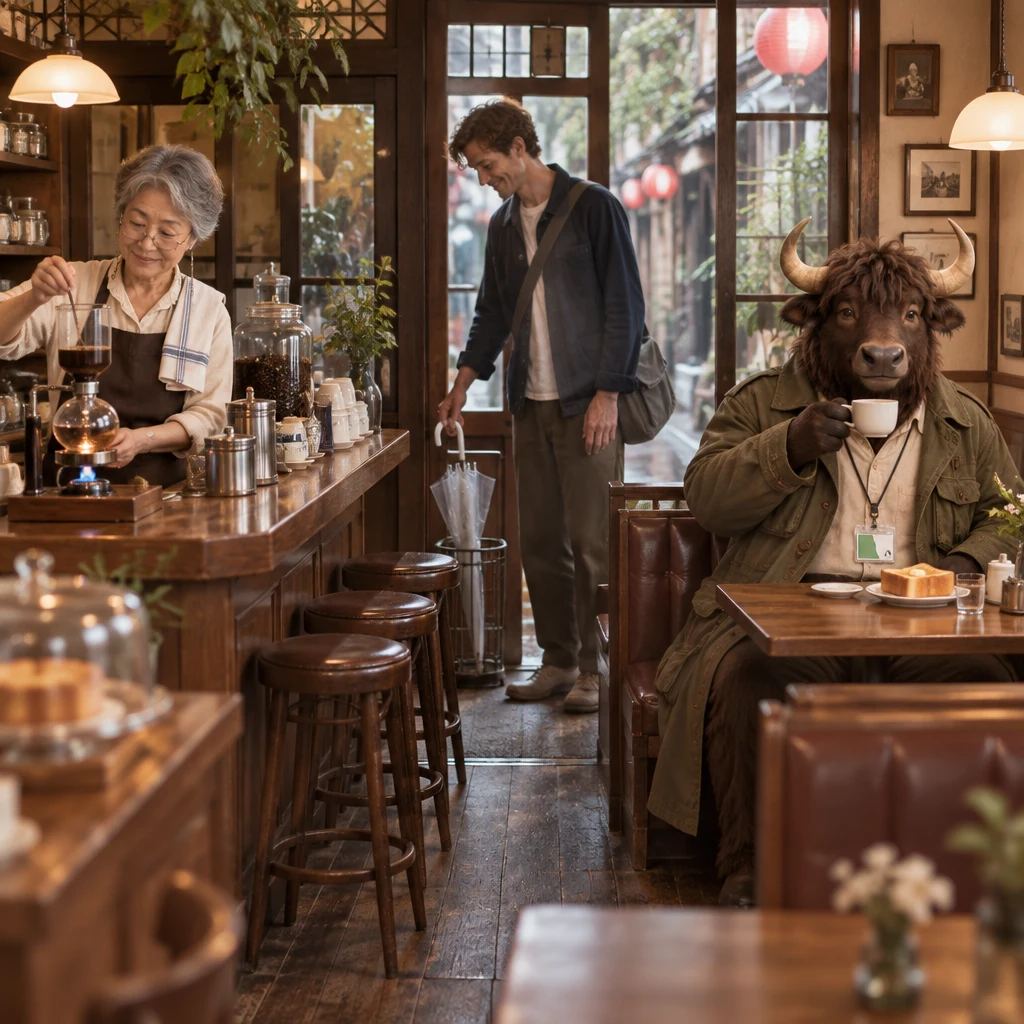
Leo sits at the Kissa Hotaru counter. Masako asks if he wants a blend coffee or the morning set.
In the booth, Goro already has his toast, and his coffee is still full.
You will say a short view in a few words, agree or not, then leave the choice to someone else.
Keep it polite. Longer opinions come later.
By the end of this lesson
Share a short view and leave the choice to someone else.
- いいと思います。I think it's good.
- そう思います。I think so.
- よくないと思います。I don't think that's good.
- どうですか。How about this?
- どちらでもいいです。Either is fine.
- お任せします。I'll leave it to you.
Scene — blend or morning
Masako stands behind the wooden counter with the siphon still on the flame. Leo hangs his clear umbrella and sits down.
In the corner booth, Goro already has thick buttered toast. His blend coffee sits full, as always.
Learn — a short view
These four lines let you share a short view, agree, say no, or ask what someone thinks.
Two more lines hand the choice back when you cannot decide.
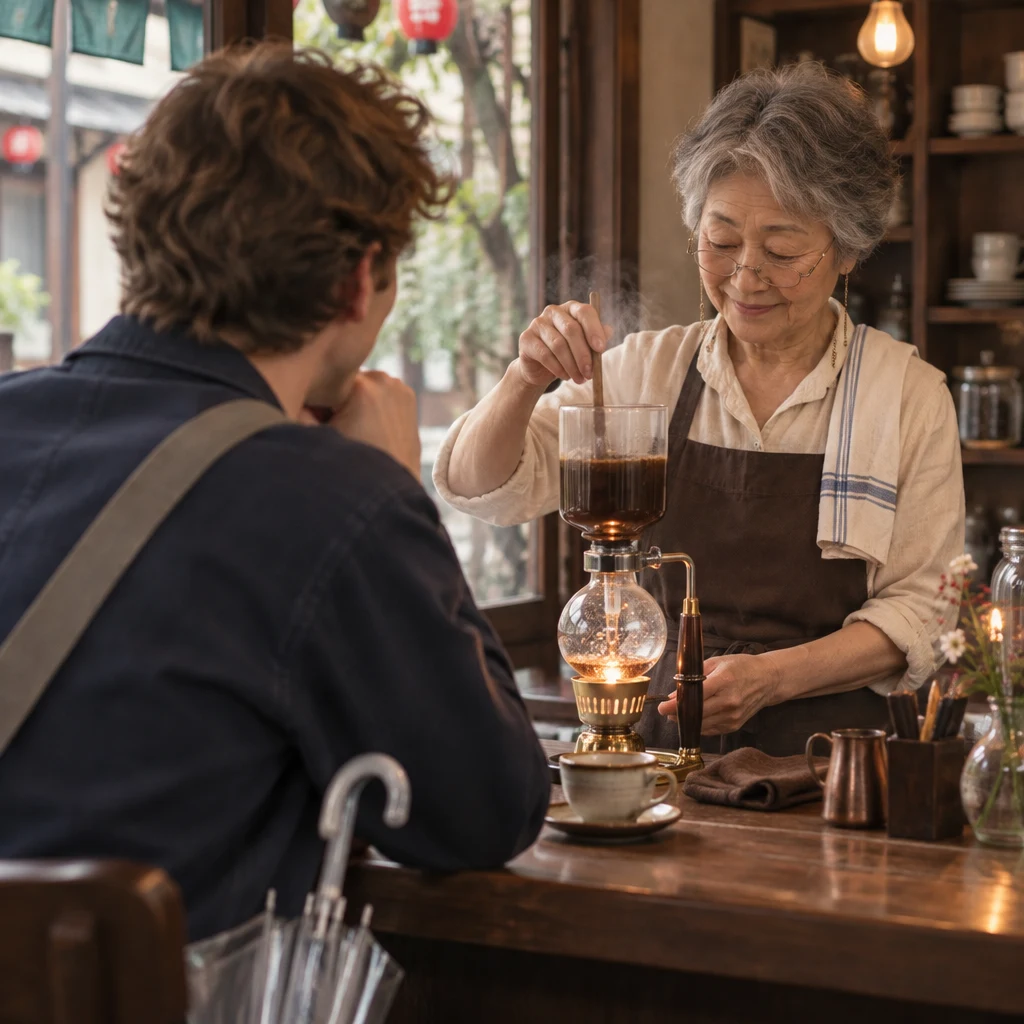
いいと思います。
I think it's good.
When to use it: Say this when you like a choice.
Learn it as one piece for a short yes.
Say it: Hold the long い in いい.
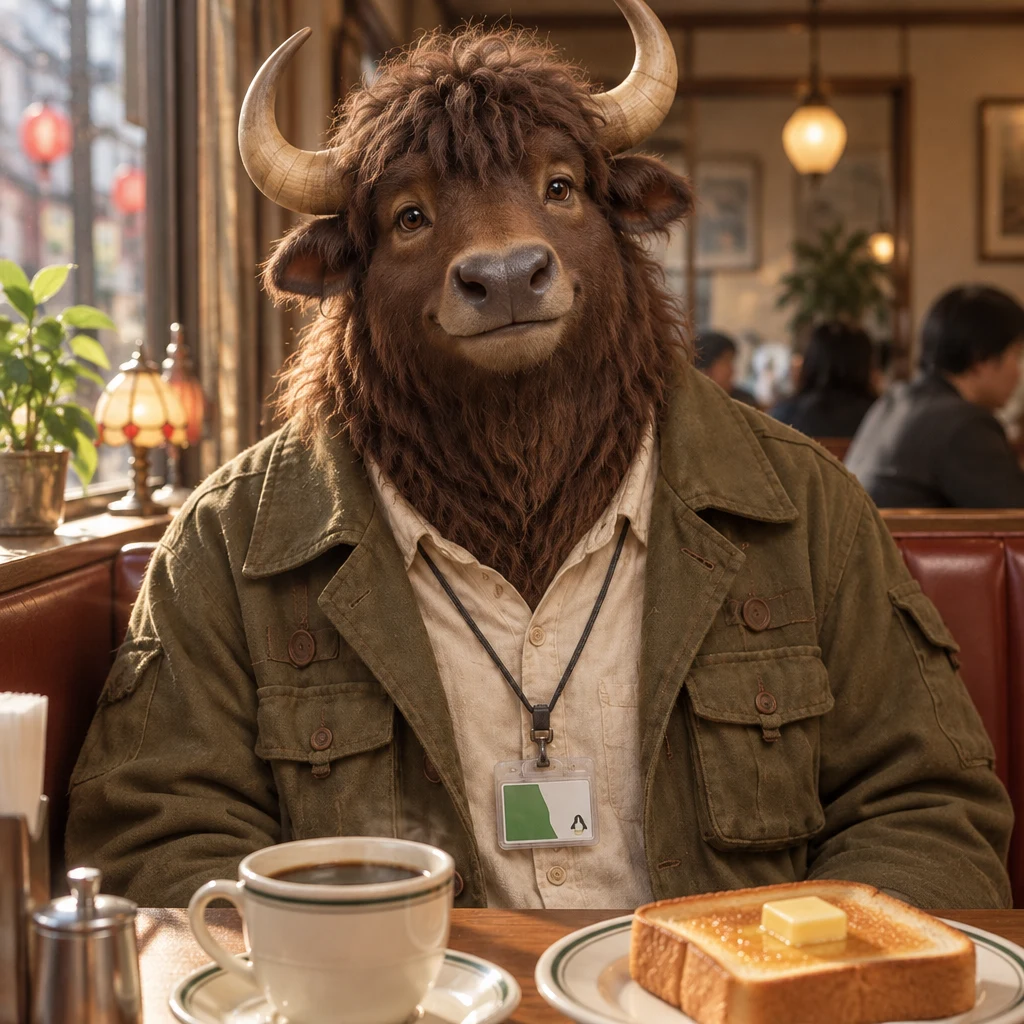
そう思います。
I think so.
When to use it: Use this to agree with someone's view.
Learn it as one piece to agree.
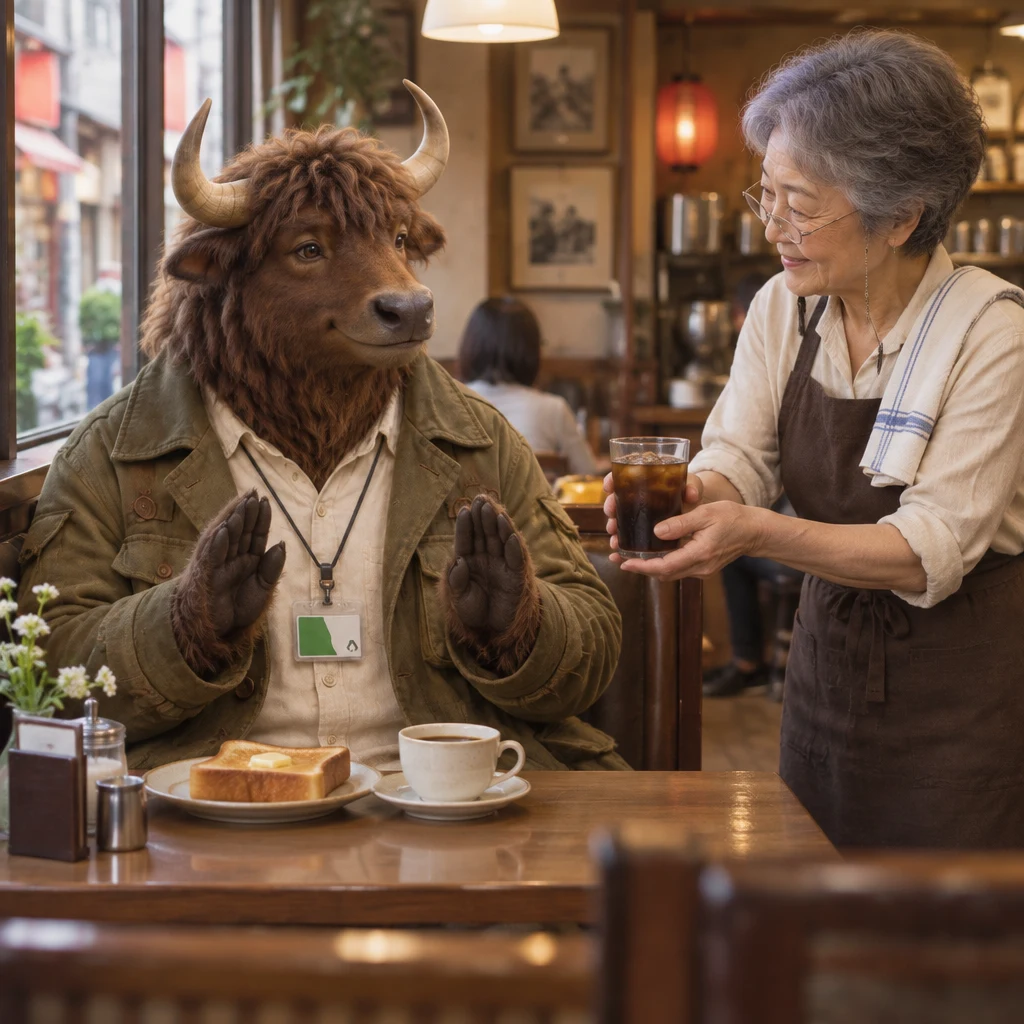
よくないと思います。
I don't think that's good.
When to use it: Use this when a choice does not seem good.
Learn it as one piece for a polite no.
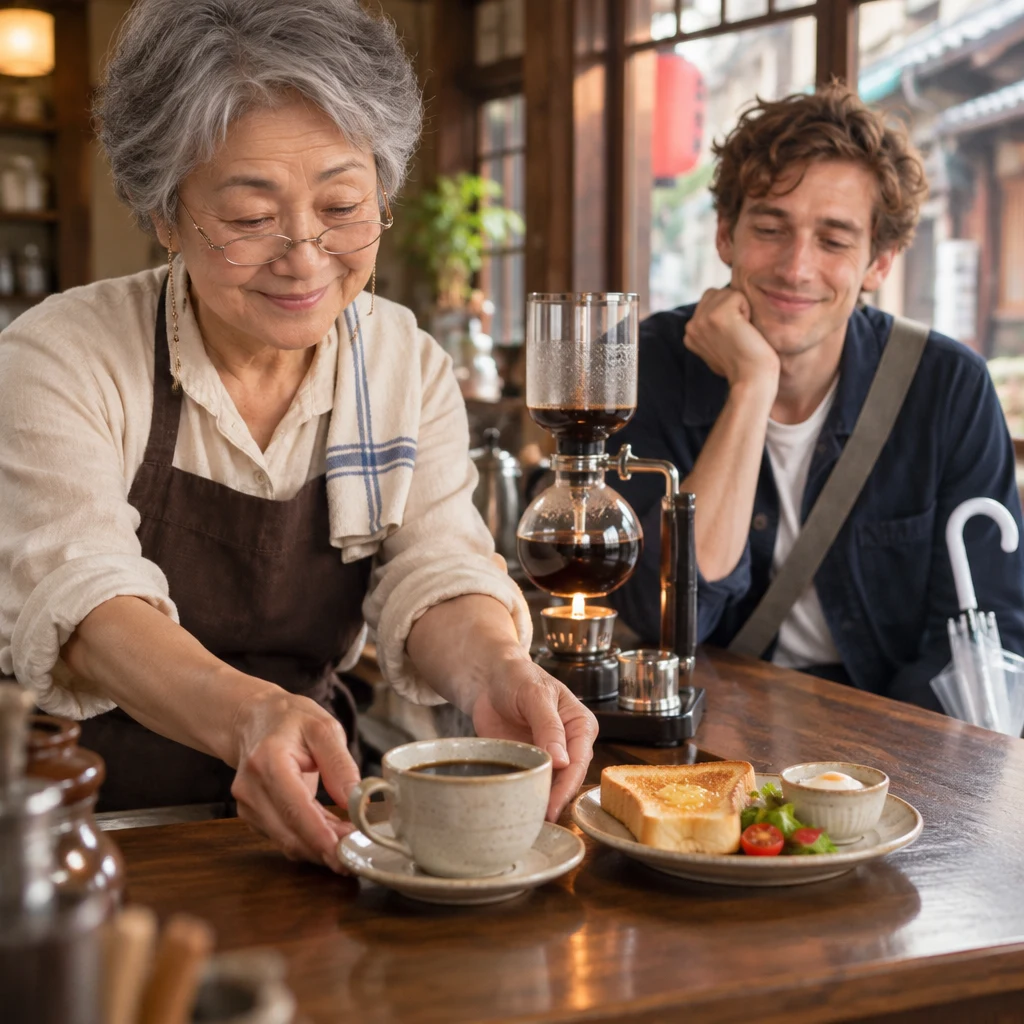
どうですか。
How about this?
When to use it: Offer a choice and ask what they think.
Learn it as one piece to offer a choice.
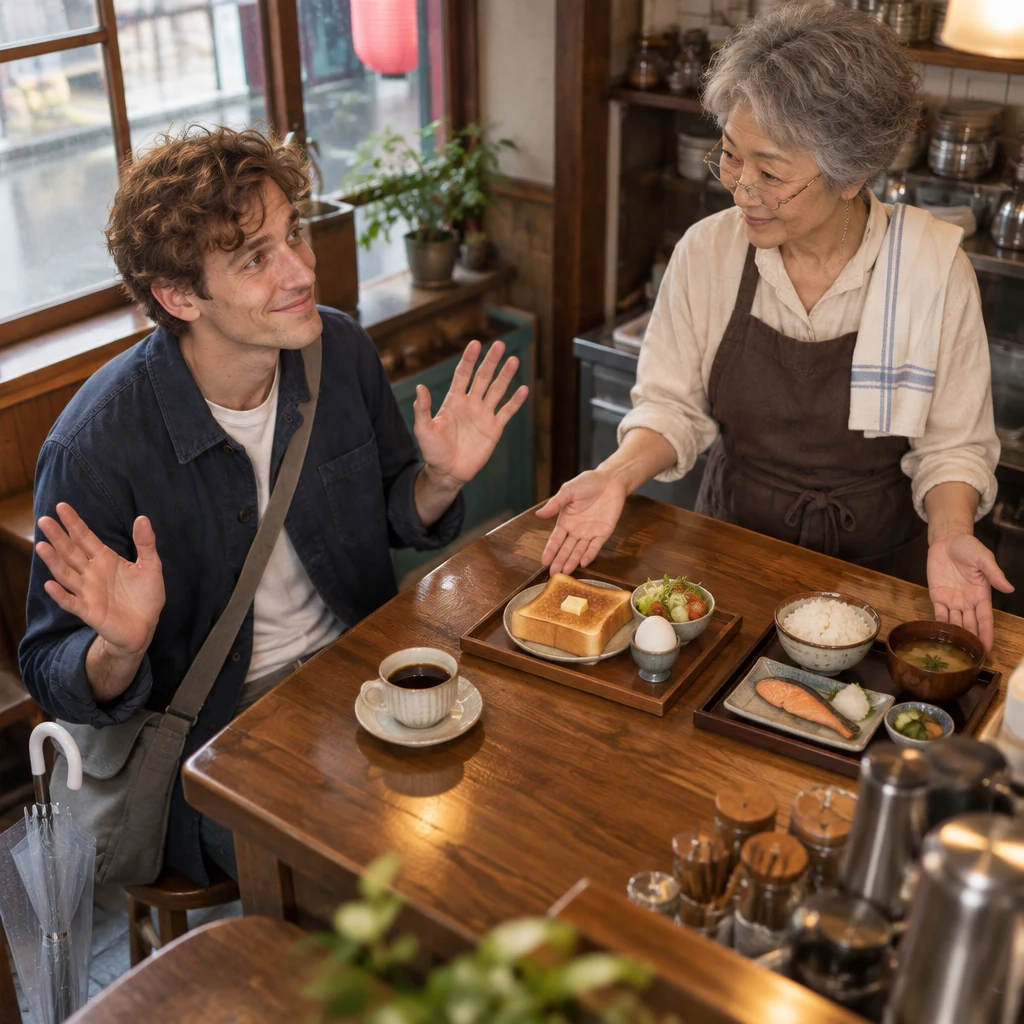
どちらでもいいです。
Either is fine.
When to use it: Use this when both choices work for you.
Learn it as one piece when you have no preference.
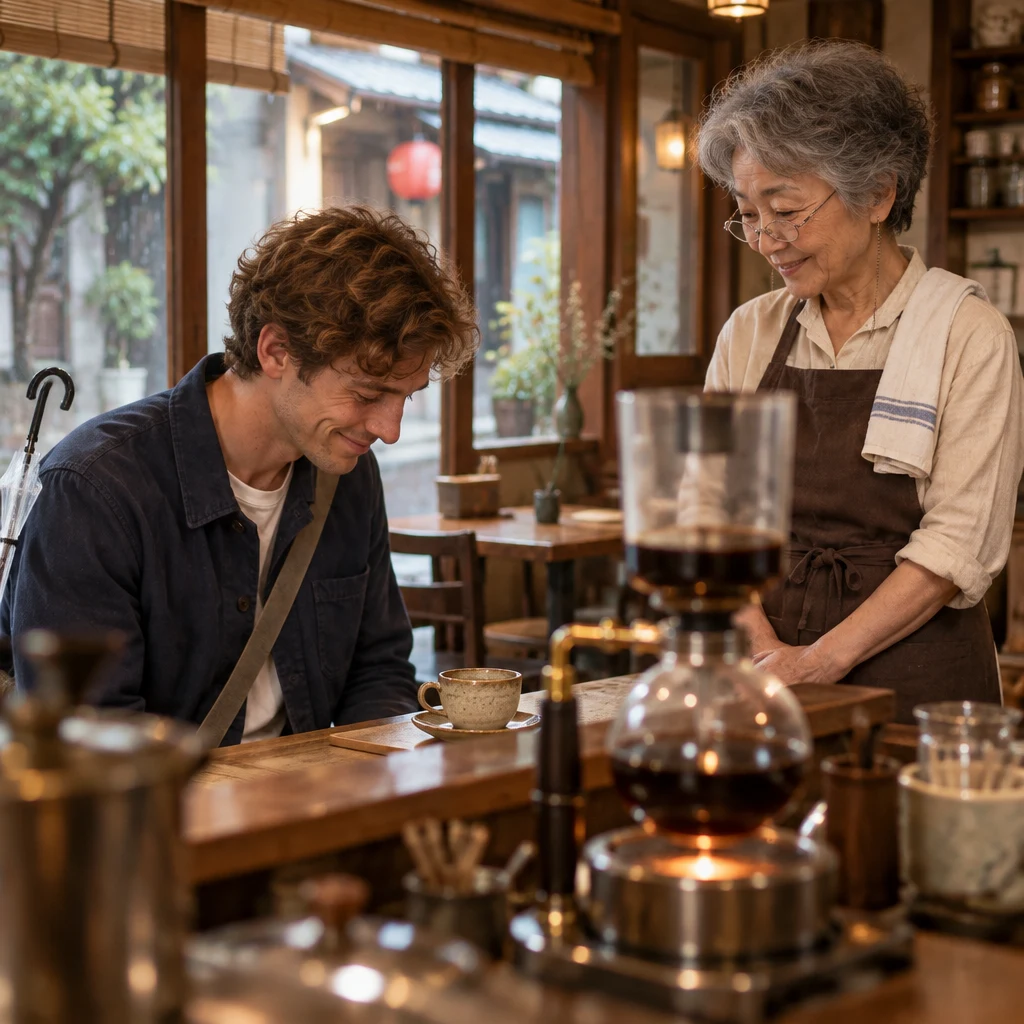
お任せします。
I'll leave it to you.
When to use it: Use this to let the other person choose.
Learn it as one piece to hand the choice over.
Say it: The u in します is almost silent.
Story — leave it to masako
Masako offers Leo a blend or the morning set. Goro has already ordered toast.
Highlighted phrases are the new lines. Turn on Show English if you want a gloss.
- Morning at the counter. Goro's toast is already on the table.
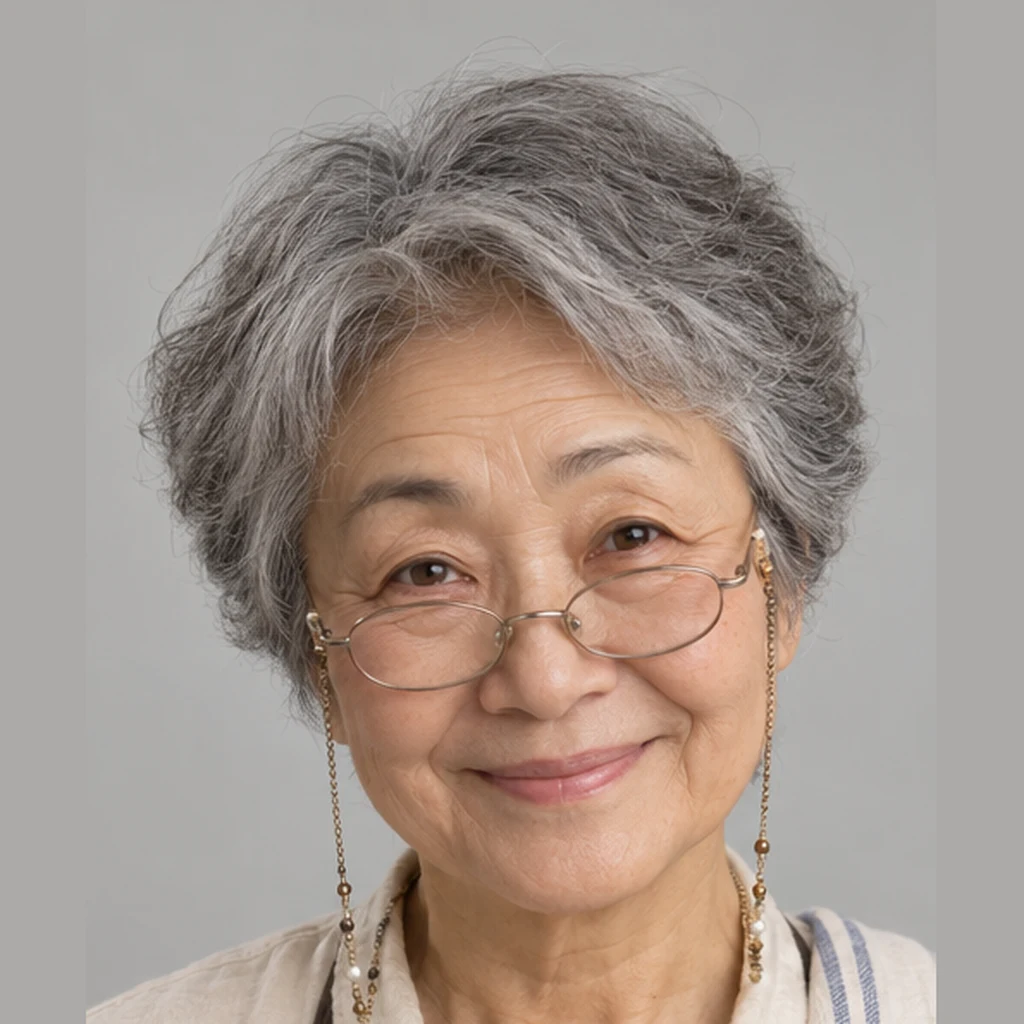 Masakoゴローさん、モーニングはどうですか。Goro, how about the morning set?
 Goroいいと思います。I think it's good.
 Leoそう思います。I think so.
- Masakoゴローさん、アイスはどうですか。Goro, how about an iced one?
- Goroよくないと思います。I don't think that's good.
- Masako glances at Goro's full cup. He still has not taken a sip.
- Masakoレオさん、ブレンドとモーニング、どちらですか。Leo, blend or the morning set, which one?
- Leoええと、どちらでもいいです。お任せします。Either is fine. I'll leave it to you.
Practice — pick the right view
Eleven short tasks wait in this round. You will listen, fill a gap, and build a line.
Each one is small, so you move on quickly.
0 of 11 done
What did you hear?
What did you hear?
Match the pairs
Japanese
いいと思います。Drop the English hereそう思います。Drop the English hereよくないと思います。Drop the English hereEnglish
What do you say?
What do you say?
Goro's toast looks good. Ask him what he thinks of it.
Fill the gap
Fill the gap
Either is fine.
どちらでもいい____。
What does it mean?
What does it mean?
そう思います。
Build the line
Build the line
I'll leave it to you.
。
Tap the words in order.
Swap the word
Swap the word
You do not like the iced coffee idea. Fix the first word.
____と思います。
Find the mistake
Find the mistake
What do you say?
What do you say?
Masako asks blend or morning set. You cannot decide. Leave it to her.
Which one doesn’t belong?
Which one doesn’t belong?
What do you say?
What do you say?
Two cups sit on the counter. Ask Goro which one.
Say it — your turn to speak
You are Leo at the counter this morning. When the cue is yours, tap the microphone and say the line.
Tap play first if you want to hear it. The recording stays on this device.
- Masakoモーニングはどうですか。How about the morning set?
- Leo (you)Say you think it is good.
Say you think it is good.
いいと思います。
I think it's good.
0 of 4 said
Recap — what you can say now
| Japanese | English | Play |
|---|---|---|
| いいと思います。 | I think it's good. | |
| そう思います。 | I think so. | |
| よくないと思います。 | I don't think that's good. | |
| どうですか。 | How about this? | |
| どちらでもいいです。 | Either is fine. | |
| お任せします。 | I'll leave it to you. |
Save your progress — it’s free
Keep your place in the course and see which lines you’ve learned.
Want the next lesson in your inbox?
Get the next lesson by email, one a day.
Join the newsletterDaily lesson emails are coming soon. Newsletter subscribers get them first.
Keep practicing with Yak Cards
Keep these short views in your pocket. Open the Yak Cards for this lesson and run them on the train.
A short Yak Cards round keeps a short view ready at the counter.
Open Yak Cards