
New here? This is lesson 127 of a free 240-lesson Japanese course.
Have you ever in Japanese
Leo stops at Kenta's croquette stand on Yanaka Ginza. Hot oil pops, and Kenta asks if Leo has ever had one.
It is Leo's first time. Goro appears on the lane, says he has heard of the old umbrella's tag, then drifts off to Kyoto.
You will say you have been somewhere, you have never done a thing, or it is your first time. You will also say you know something, or you do not.
By the end of this lesson
Say you have or have never done something, and whether you know it.
- ___に行ったことがあります。I've been to ___.
- したことがありません。I've never done that.
- 聞いたことがあります。I've heard of it.
- 初めてです。It's my first time.
- 知っています。I know about it.
- 知りません。I don't know.
Scene — a first croquette
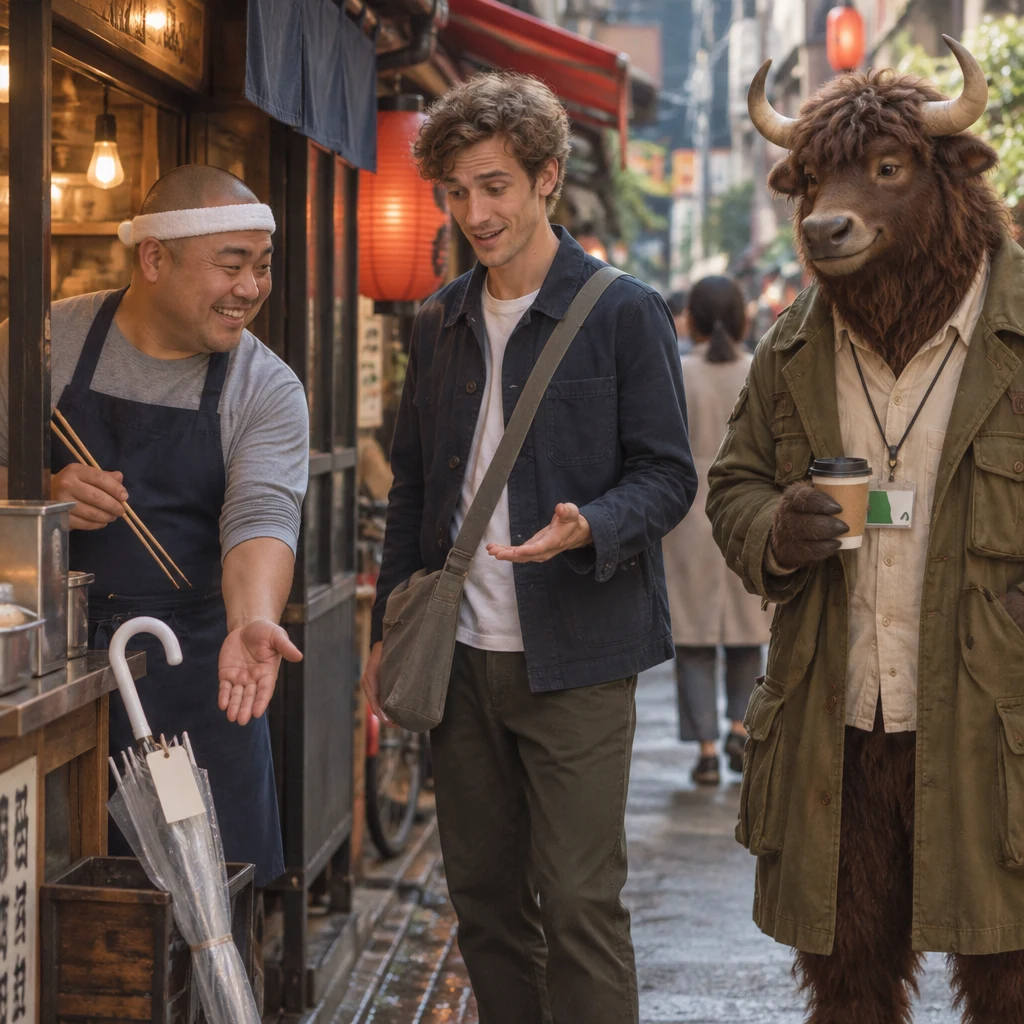
Yanaka Ginza is busy this afternoon. Leo stops at Kenta's croquette stand. Steam rises from the fryer, and a cat watches from a step.
Kenta waves his cooking chopsticks. Down the lane, Goro's olive coat appears, still carrying a blend coffee he has not finished.

Learn — have you ever
These four lines help you say you have been somewhere, have heard of something, have never done a thing, or it is your first time.
Two more lines cover I know about it and I don't know.

___に行ったことがあります。
I've been to ___.
When to use it: Use this to say you have been to a place.
た plus ことがある means you have done that before.
Say it: Make a brief pause before た.

したことがありません。
I've never done that.
When to use it: Use this when you have never done that action.
ありません after ことが means you have never done it.
Say it: Give ん in ありません its own beat.

聞いたことがあります。
I've heard of it.
When to use it: Use this when you have heard of something before.
Same past plus ことがある shape, here with heard.

初めてです。
It's my first time.
When to use it: Use this when you are doing that thing for the first time.
初めて plus です is a polite first-time line.
知っています。
I know about it.
When to use it: Use this when you already know the thing.
ています here means you know it now, as a state.
Say it: Make a brief pause before て.

知りません。
I don't know.
When to use it: Use this when you do not know the thing.
This is the polite not-knowing form next to 知っています.
Story — oil on the lane
Kenta offers Leo a hot croquette on Yanaka Ginza. It is Leo's first time, and Goro then drifts from the tag to Kyoto.
Highlighted phrases are the new lines. Turn on Show English if you want a gloss.
- Oil pops in the fryer. Leo looks at the croquettes.
 Kentaレオさん、こんにちは。Hello, Leo.
 Leoこんにちは。Hello.
- Kentaコロッケは知っていますか。Do you know croquettes?
- Leo知っています。I know about it.
- Kentaコロッケは食べたことがありますか。Have you had a croquette?
- Leoしたことがありません。I've never done that.
- Kenta本当ですか。Really?
- Leo初めてです。It's my first time.
- Kentaそうなんですね。Oh, I see.
- Goro's olive coat fills the lane. His coffee is still unfinished.
- Kentaあの札の持ち主を知っていますか。Do you know the owner of that umbrella?
- Leo知りません。I don't know.
 Goro聞いたことがあります。I've heard of it.
- Goro looks at the steam, then loses the thread.
- Goroええと、京都に行ったことがあります。Um, I've been to Kyoto.
- Kenta今は札の話ですよ。We're talking about the tag now.
Practice — pick have or never
Eleven short tasks wait in this round. You will listen, fill a gap, build a line, and pick a reply.
Each one is small, so you move on quickly.
0 of 11 done
What did you hear?
What did you hear?
Match the pairs
Japanese
知っています。Drop the English here知りません。Drop the English here聞いたことがあります。Drop the English here初めてです。Drop the English hereEnglish
What do you say?
What do you say?
Kenta asks if this croquette is your first. Tell him it is.
Fill the gap
Fill the gap
I've never done that.
したこと____ありません。
What does it mean?
What does it mean?
そうなんですね。
Pick the reply
Kenta says:
Pick the reply
コロッケは食べたことがありますか。
Have you had a croquette?
And you reply with:
Build the line
Build the line
I've heard of it.
。
Tap the words in order.
Swap the word
Swap the word
You want to say you have been there, not that you never have.
___に行ったことが____。
Which one doesn’t belong?
Which one doesn’t belong?
True or false?
True or false?
This line asks if what you heard is true.
Find the mistake
Find the mistake
Say it — your turn to speak
You are Leo on Yanaka Ginza this afternoon. When the cue is yours, tap the microphone and say the line.
Tap play first if you want to hear it. The recording stays on this device.
- Kentaコロッケは知っていますか。Do you know croquettes?
- Leo (you)Tell him you know about them.
Tell him you know about them.
知っています。
I know about it.
0 of 5 said
Recap — what you can say now
| Japanese | English | Play |
|---|---|---|
| ___に行ったことがあります。 | I've been to ___. | |
| したことがありません。 | I've never done that. | |
| 聞いたことがあります。 | I've heard of it. | |
| 初めてです。 | It's my first time. | |
| 知っています。 | I know about it. | |
| 知りません。 | I don't know. |
Save your progress — it’s free
Keep your place in the course and see which lines you’ve learned.
Want the next lesson in your inbox?
Get the next lesson by email, one a day.
Join the newsletterDaily lesson emails are coming soon. Newsletter subscribers get them first.
Keep practicing with Yak Cards
Keep these have-you-ever lines in your pocket. Open the Yak Cards for this lesson and run them on the train.
A short Yak Cards round keeps first time and never ready at the stand.
Open Yak Cards