
New here? This is lesson 229 of a free 240-lesson Japanese course.
Helping a newcomer in Japanese
A new visitor joins Leo at Kissa Hotaru and orders a drink. When the visitor asks where to pay, Leo explains the local routine and why no tip is needed.
The visitor also asks about taking off shoes before going to a friend's home. Leo shares the simple rule without making the moment feel like a lecture.
Practise helpful, considerate lines for ordering and everyday customs. The goal is to make someone new feel welcome.
By the end of this lesson
Help a newcomer order and understand a few everyday customs.
- ここでは、会計はレジでします。Here you pay at the register.
- チップはいらないんです。You don't tip here.
- 靴を脱ぐところでは、脱いでください。Where people take their shoes off, please take them off.
- メニュー、一緒に見ましょうか。Shall we look at the menu together?
- 私が来たばかりのときも、同じでした。I was the same when I'd just arrived.
- わからないことがあったら、聞いてください。If something's unclear, just ask.
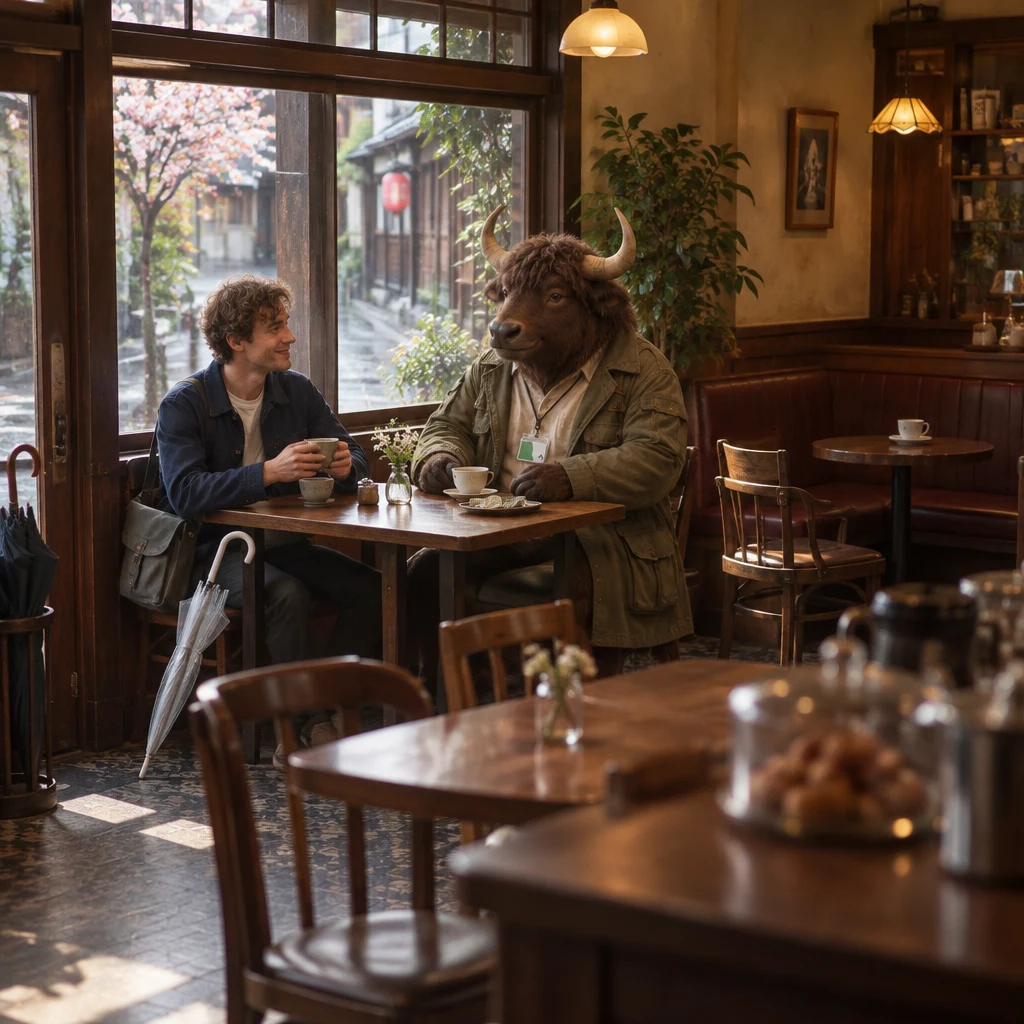
Scene — cash on the table
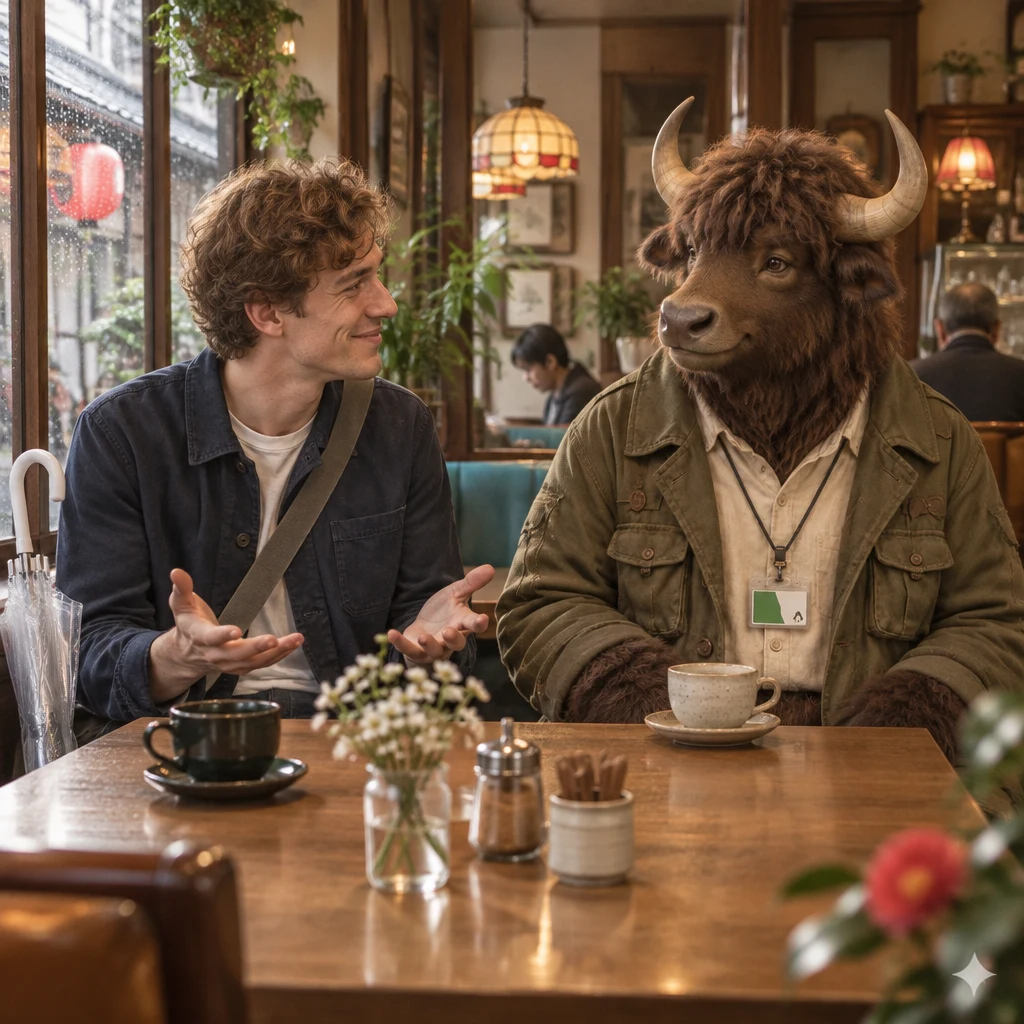
At Kissa Hotaru in Yanaka, Leo shares a table with a visitor who has just arrived in the neighbourhood. The visitor orders tea and asks how payment works.
By the door, the old black umbrella remains in its stand. Goro sits in the corner booth, his blend coffee still untouched.
Learn — local customs, kindly explained
These six lines help you guide a newcomer through ordering, payment, tipping, and shoes-off places.
They also let you offer to look at the menu and reassure someone who is still learning.
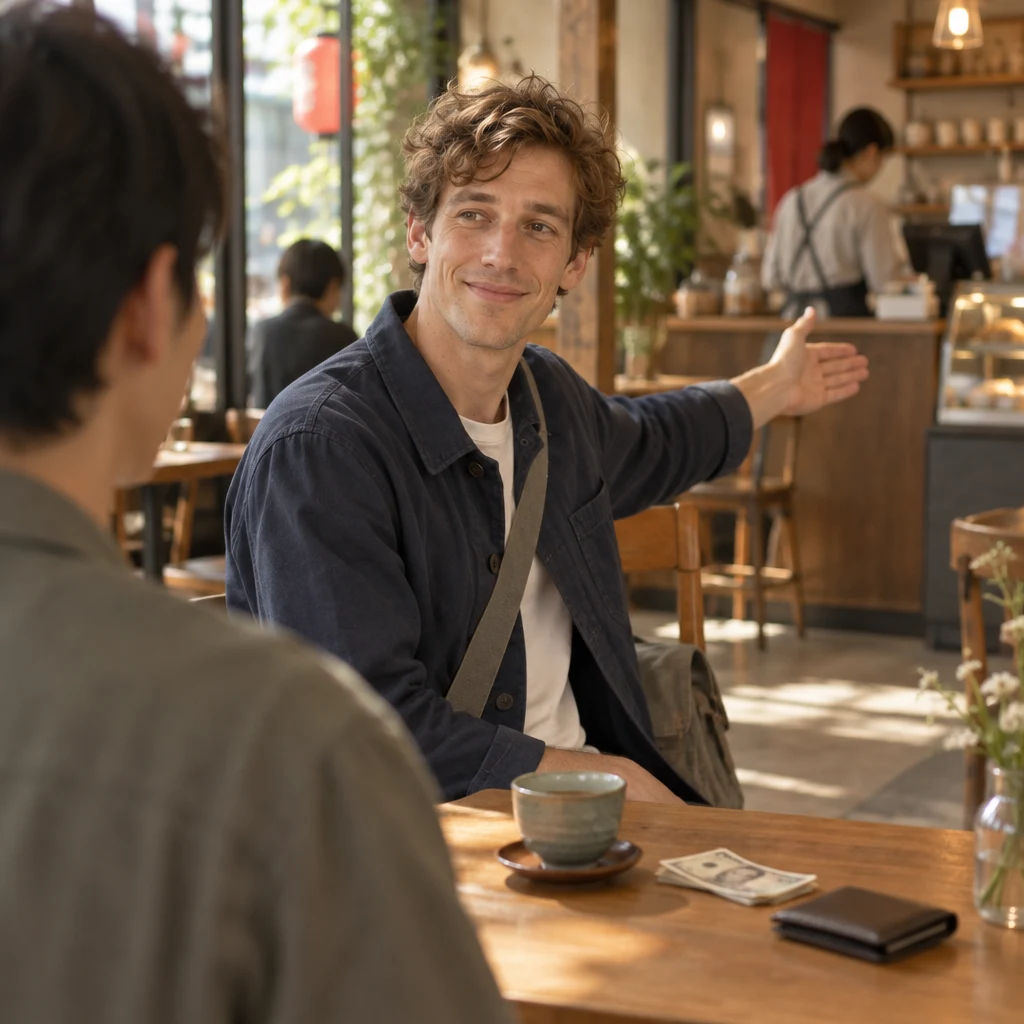
ここでは、会計はレジでします。
Here you pay at the register.
When to use it: Use this to explain where customers pay in a shop or cafe.
で marks the place where the payment happens; レジ names the register.

チップはいらないんです。
You don't tip here.
When to use it: Use this to gently explain that tipping is not expected.
は presents チップ as the topic, while んです gives the explanation a gentle, explanatory tone.
Say it: Keep the ん in いらないんです as a full nasal beat.

靴を脱ぐところでは、脱いでください。
Where people take their shoes off, please take them off.
When to use it: Use this when explaining the rule at a home or another shoes-off place.
ところ means a place where an action happens; では limits the advice to those places.
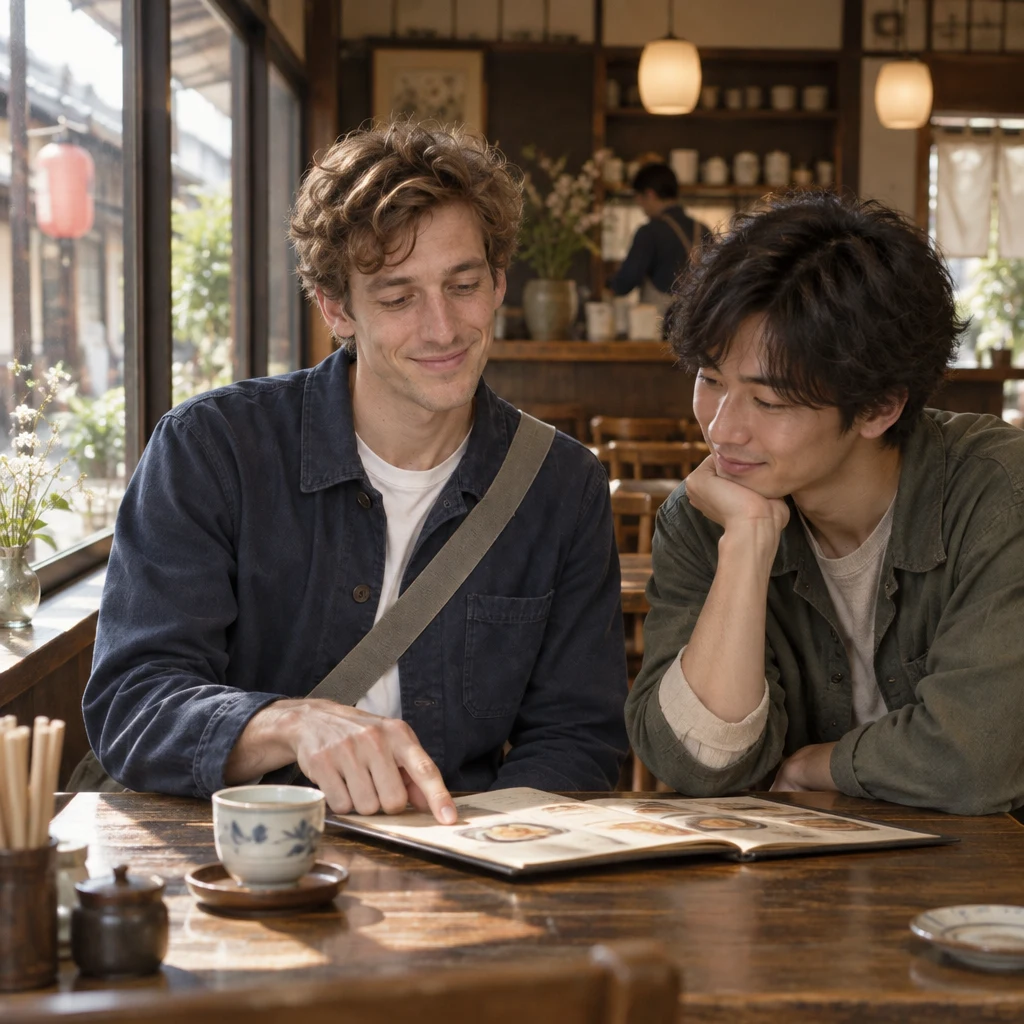
メニュー、一緒に見ましょうか。
Shall we look at the menu together?
When to use it: Offer this when someone would welcome help choosing from a menu.
見ましょうか offers to do something together and checks whether the offer is welcome.
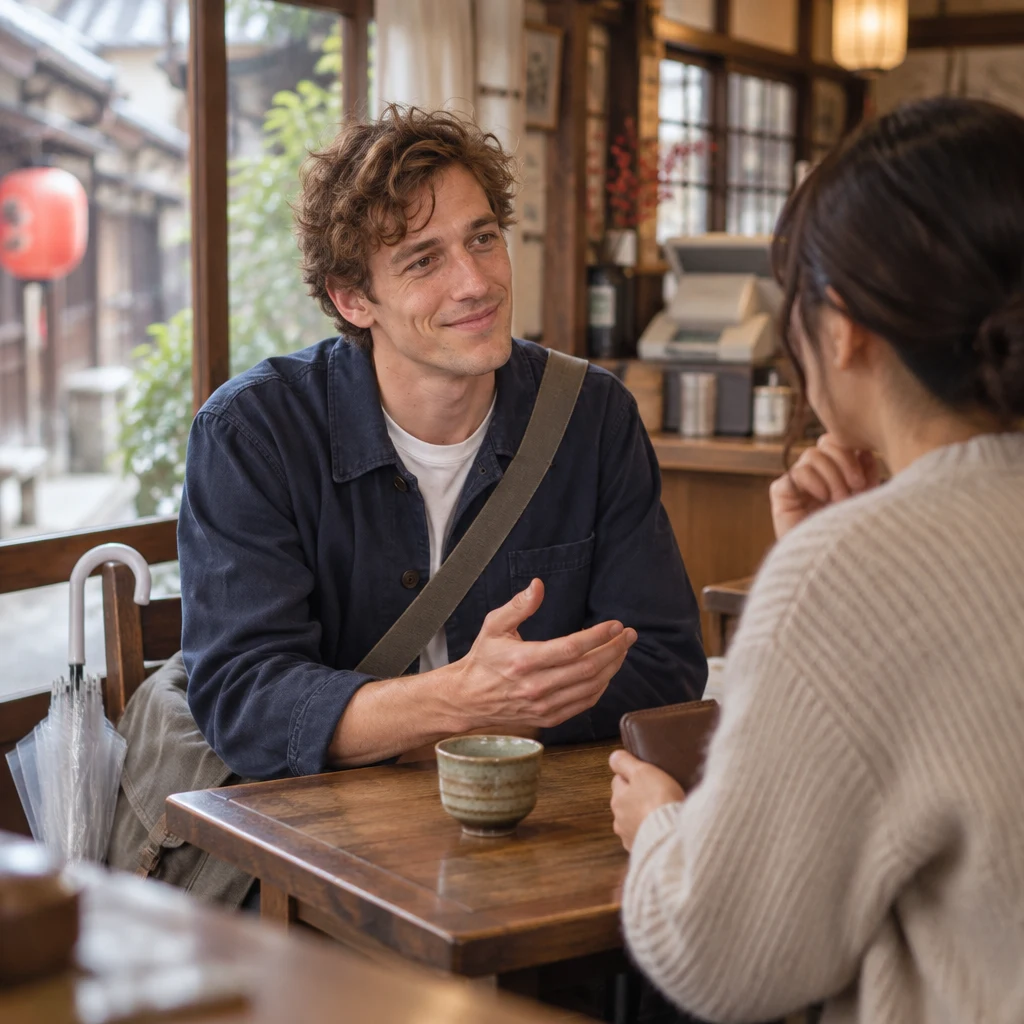
私が来たばかりのときも、同じでした。
I was the same when I'd just arrived.
When to use it: Use this to reassure someone by sharing that you felt the same as a newcomer.
も adds the meaning of also: you were in the same situation too.
わからないことがあったら、聞いてください。
If something's unclear, just ask.
When to use it: Use this to invite someone to ask whenever they need help.
あったら means if there is or comes up; here it introduces a possible question.
Story — a first visit to the kissa
A newcomer tries Kissa Hotaru for the first time and is unsure about the local routine. Leo helps with the menu, payment, and a question about shoes.
Highlighted phrases are the new lines. Turn on Show English if you want a gloss.
- The visitor has chosen tea and asks Leo how payment works before taking out their wallet.
- Visitorこんにちは。Hello.
 Leoこんにちは。Hello.
- Visitorメニューを見せてください。Can I see the menu?
- Leoメニュー、一緒に見ましょうか。Shall we look at the menu together?
- Visitor紅茶をください。Black tea, please.
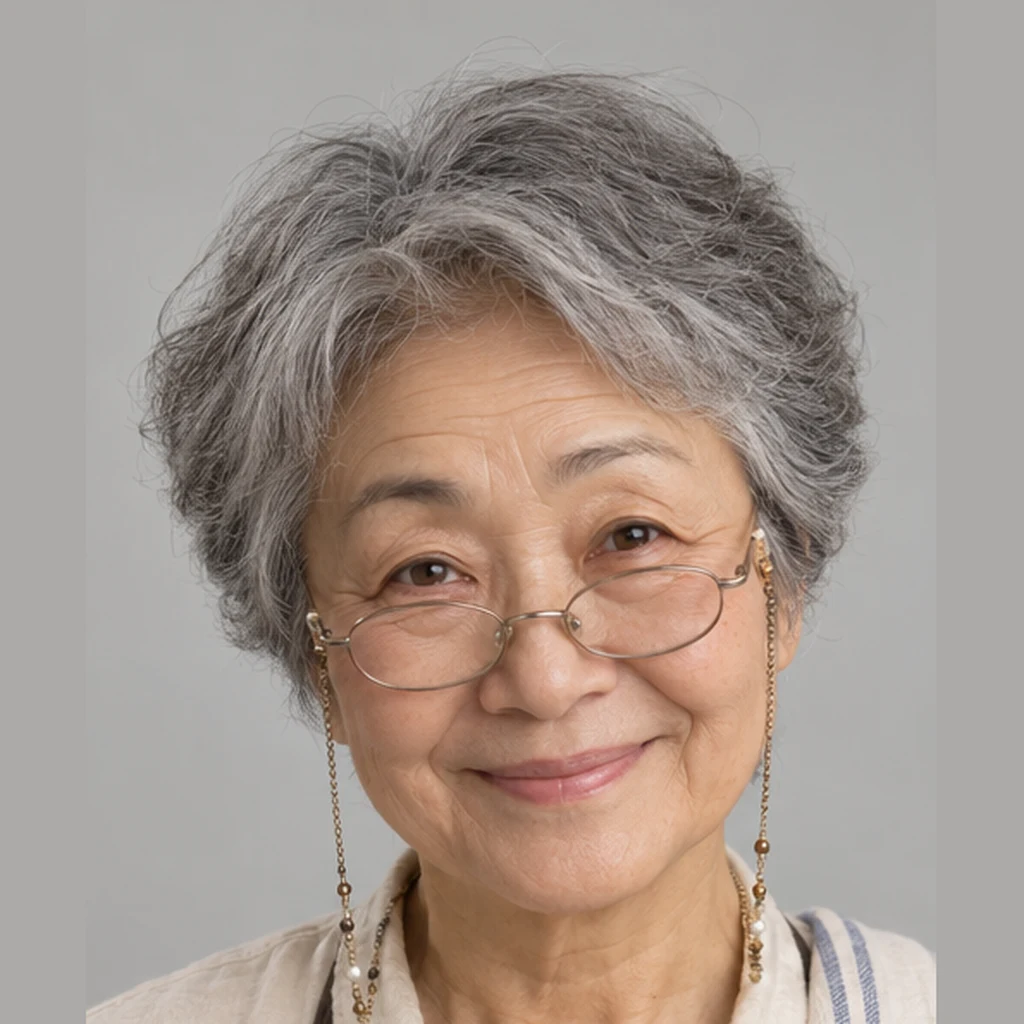 Masakoかしこまりました。Certainly.
- Visitor会計はどこですればいいですか。Where should I pay?
- Leoここでは、会計はレジでします。Here you pay at the register.
- The visitor takes out some cash and places it beside the cup.
- Visitorチップも置いたほうがいいですか。Should I leave a tip too?
- Leoチップはいらないんです。You don't tip here.
- Masakoお会計はレジでお願いいたします。Please pay at the register.
- The visitor picks up the cash, takes it to the register, and pays.
- Visitorこのあと友達の家に行くんですが、靴はどうすればいいですか。I'm going to a friend's home after this. What should I do about my shoes?
- Leo靴を脱ぐところでは、脱いでください。Where people take their shoes off, please take them off.
- Visitor日本の習慣はまだ分からないことが多くて、少し緊張します。There are still many customs I don't understand, so I'm a little nervous.
- Leo私が来たばかりのときも、同じでした。I was the same when I'd just arrived.
- Leoわからないことがあったら、聞いてください。If something's unclear, just ask.
- Visitorありがとうございます。Thank you.
- Goro watches from the booth. His blend coffee remains untouched.
Practice — help with the small details
Ten tasks revisit the new phrases in several useful ways. Listen for the payment rule, choose a kind response, build a line, and check particles.
Then put a short exchange in order.
0 of 10 done
What did you hear?
What did you hear?
What do you say?
What do you say?
A newcomer asks whether to leave a tip. Gently explain that tipping is not needed here.
Pick the reply
Visitor says:
Pick the reply
このあと友達の家に行くんですが、靴はどうすればいいですか。
I'm going to a friend's home after this. What should I do about my shoes?
And you reply with:
Build the line
Build the line
Shall we look at the menu together?
、。
Tap the words in order.
Fill the gap
Fill the gap
I was the same when I'd just arrived.
私が来たばかりのとき____、同じでした。
Find the mistake
Find the mistake
What do you say?
What do you say?
You are at the counter and want to ask Masako to show you the menu.
What do you say?
What do you say?
You have chosen black tea and are ready to order it politely.
Match the pairs
Japanese
ここでは、会計はレジでします。Drop the English hereチップはいらないんです。Drop the English here靴を脱ぐところでは、脱いでください。Drop the English hereEnglish
Put the chat in order
- VisitorWhat comes first?
- Leo…
- Visitor…
- Leo…
Say it — show them the way
Imagine you are Leo helping a new visitor at Kissa Hotaru. When the cue is yours, say the line that fits the moment.
Tap play first if you want to hear the model. This is a recording activity, not a pronunciation score.
- Masakoいらっしゃいませ。Welcome.
- Leo (you)Offer to look at the menu together.
Offer to look at the menu together.
メニュー、一緒に見ましょうか。
Shall we look at the menu together?
0 of 6 said
Recap — what you can say now
| Japanese | English | Play |
|---|---|---|
| ここでは、会計はレジでします。 | Here you pay at the register. | |
| チップはいらないんです。 | You don't tip here. | |
| 靴を脱ぐところでは、脱いでください。 | Where people take their shoes off, please take them off. | |
| メニュー、一緒に見ましょうか。 | Shall we look at the menu together? | |
| 私が来たばかりのときも、同じでした。 | I was the same when I'd just arrived. | |
| わからないことがあったら、聞いてください。 | If something's unclear, just ask. |
Save your progress — it’s free
Keep your place in the course and see which lines you’ve learned.
Want the next lesson in your inbox?
Get the next lesson by email, one a day.
Join the newsletterDaily lesson emails are coming soon. Newsletter subscribers get them first.
Keep practicing with Yak Cards
Save these helpful phrases for your next cafe visit. Open the Yak Cards for this lesson and practise them on the train.
A quick review helps you offer practical help without making a newcomer feel awkward.
Open Yak Cards