
New here? This is lesson 143 of a free 240-lesson Japanese course.
Fruit and bargaining in Japanese
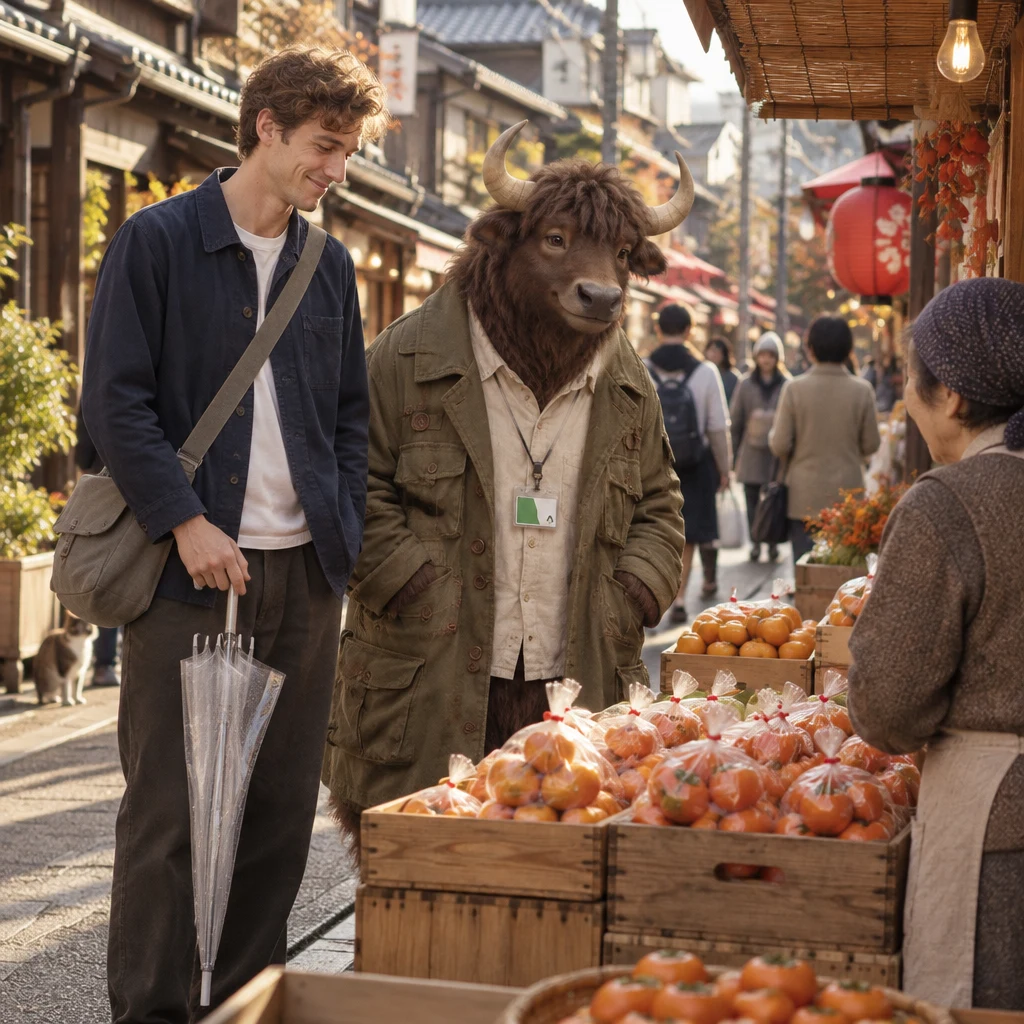
Leo and Goro stop at a fruit stall on Yanaka Ginza. Bags of orange persimmons sit on a crate.
Leo asks the price per bag, checks if they are sweet and ripe, and asks the seller to cut one.
In Japan you do not bargain the price. You can ask for a little extra instead.
You will ask the bag price, check the fruit, order two, and ask for that extra.
By the end of this lesson
Buy fruit, ask the price per bag, and ask for a little extra.
- これ一袋いくらですか。How much is this bag?
- 甘いですか。Is it sweet?
- おまけはありますか。Is there a little extra?
- これを二つください。I'll take two of these.
- よく熟していますか。Are they ripe?
- 切ってもらえますか。Can you cut it for me?
Scene — persimmons on the crate
Yanaka Ginza is busy this afternoon. Leo and Goro stop at a fruit stall. Bags of persimmons sit on a wooden crate.
The seller waits behind the crate. Goro's olive coat fills the lane, and his unfinished thoughts wander to extra fruit, not a lower price.
Learn — bags, sweetness, extra
These six lines help you buy fruit by the bag.
You ask the price, check if it is sweet and ripe, order two, and ask for a little extra.
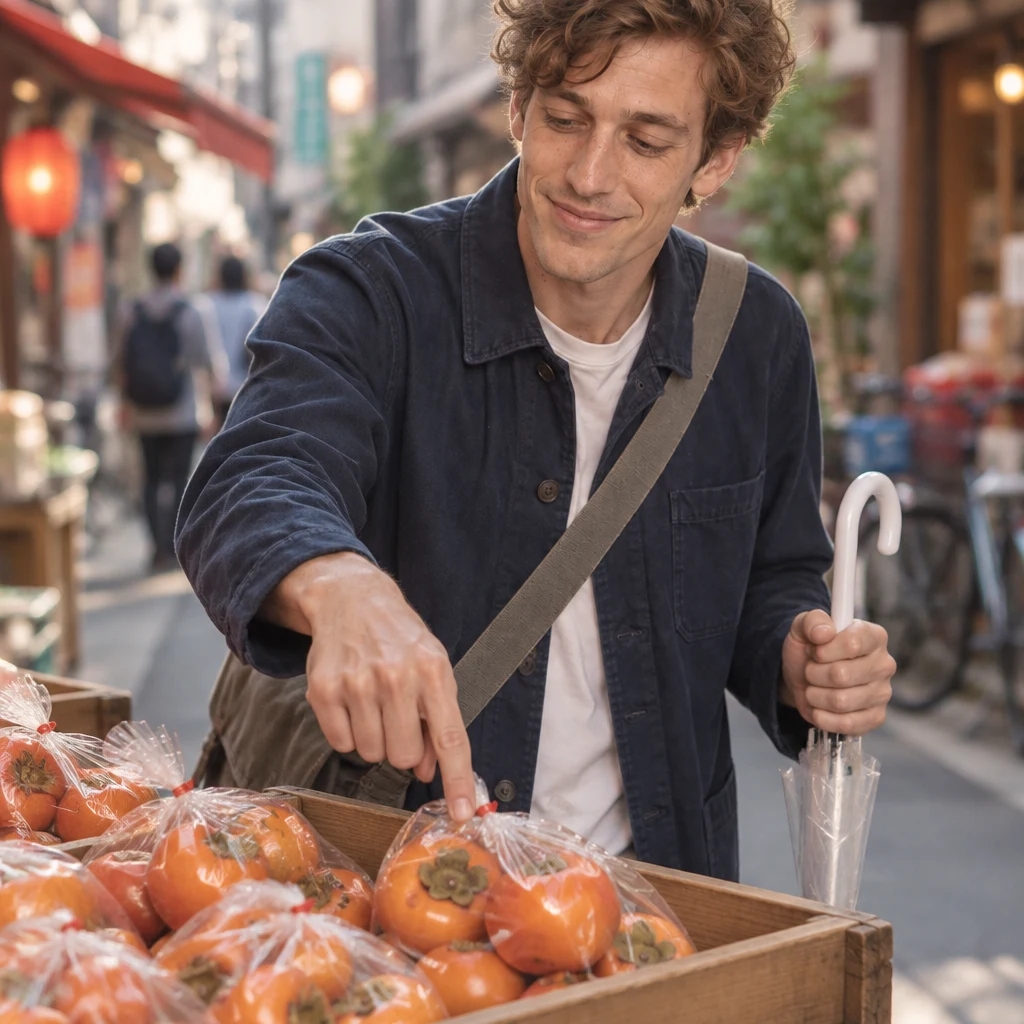
これ一袋いくらですか。
How much is this bag?
When to use it: Ask the price of one bag at a fruit stall.
一袋 means one bag, the usual unit here, not a kilo.
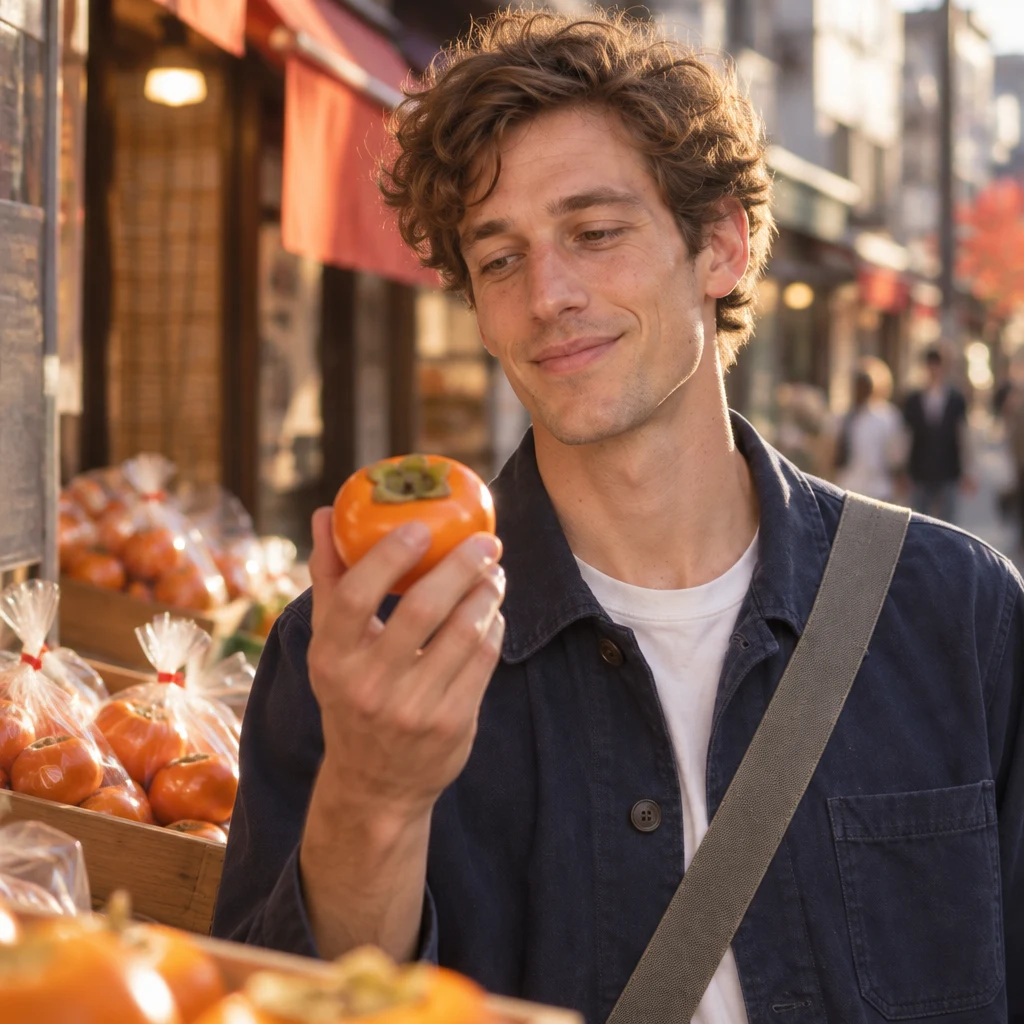
甘いですか。
Is it sweet?
When to use it: Ask if fruit tastes sweet before you buy.
か at the end turns this into a polite yes-no question.
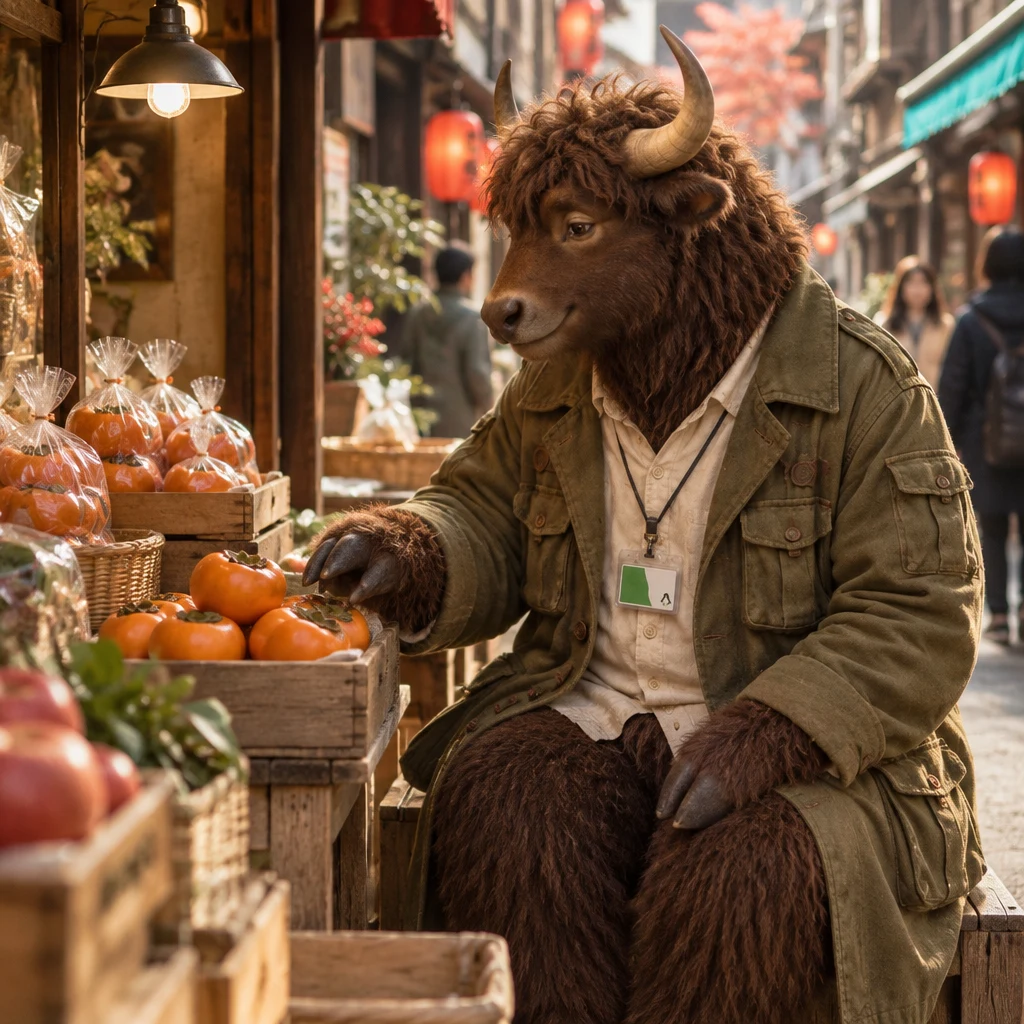
おまけはありますか。
Is there a little extra?
When to use it: Ask for a little extra, not a cheaper price.
は marks おまけ as the topic you are asking about.
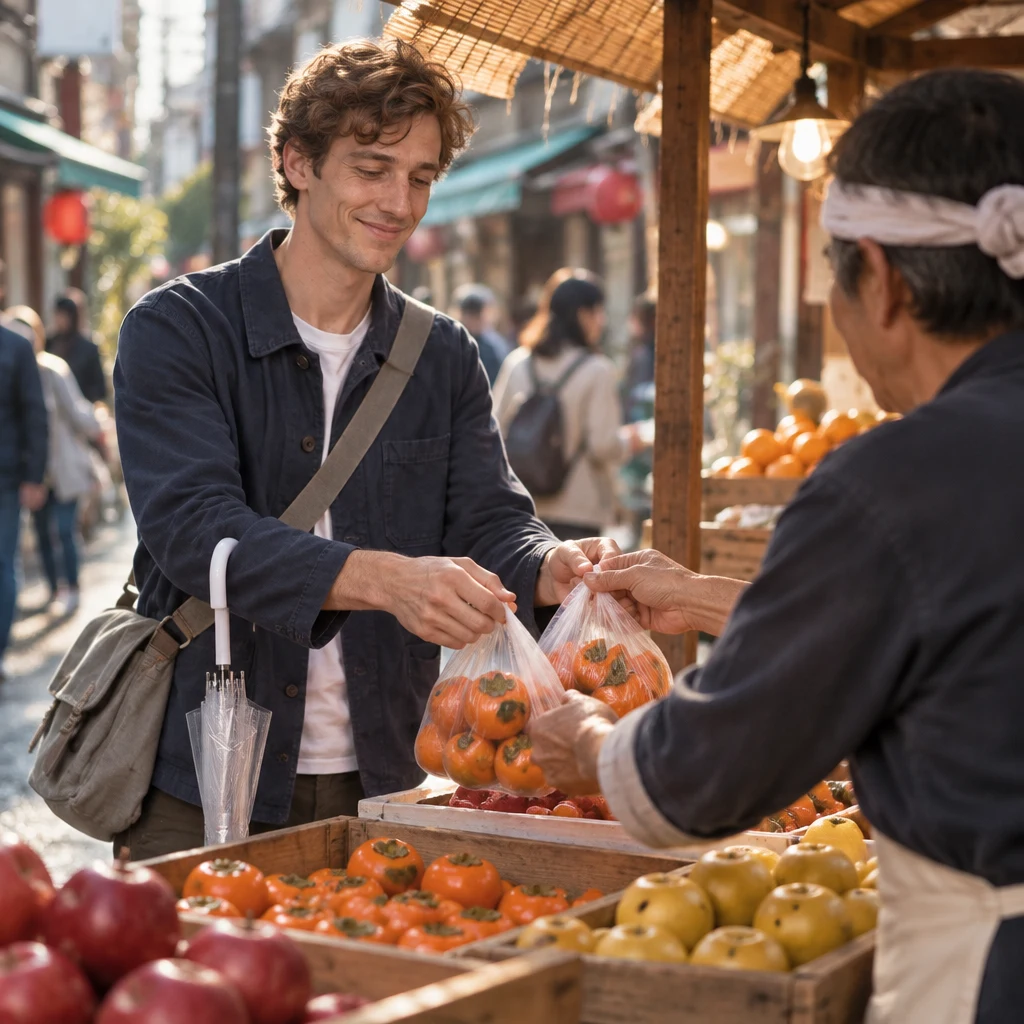
これを二つください。
I'll take two of these.
When to use it: Buy two of the thing you are pointing at.
を marks the item you buy, and 二つ counts the bags.
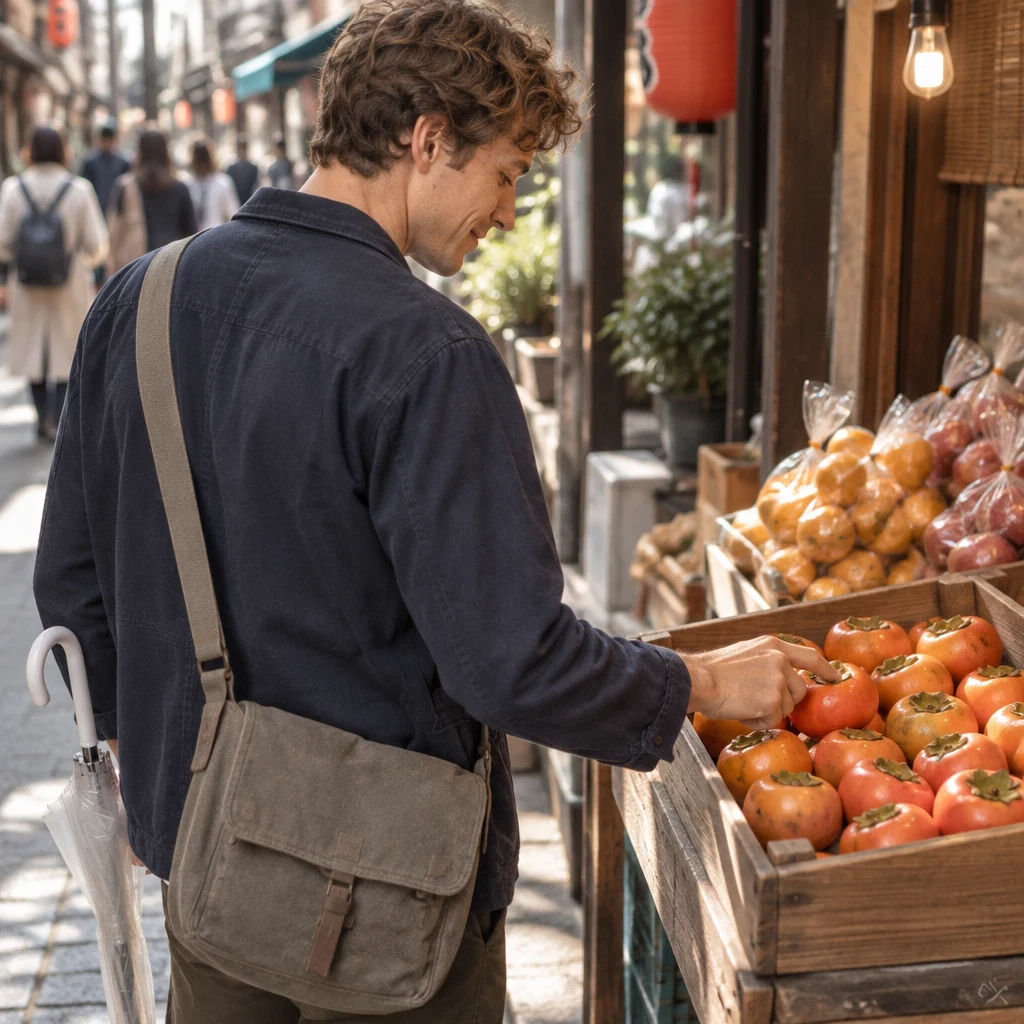
よく熟していますか。
Are they ripe?
When to use it: Check that fruit is ripe enough to eat soon.
ている here describes a state: already ripe, not an action.
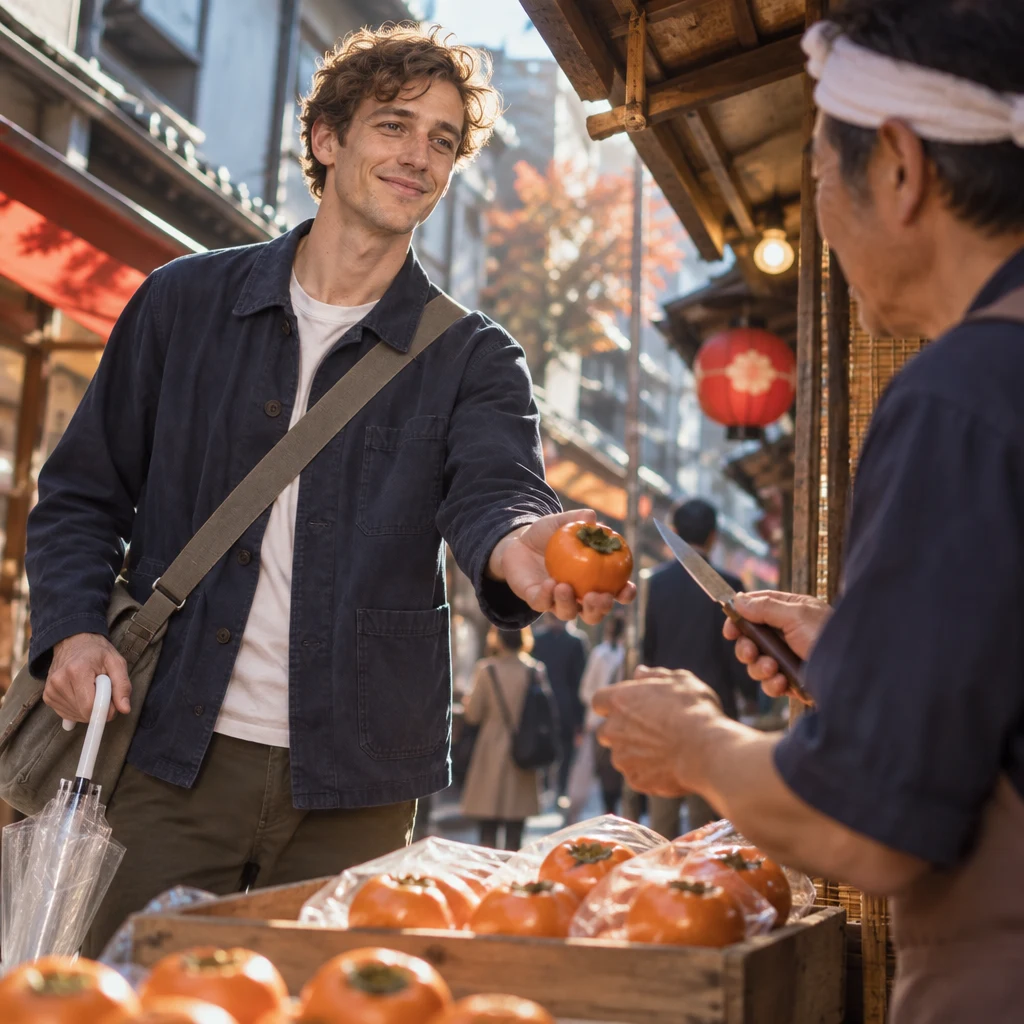
切ってもらえますか。
Can you cut it for me?
When to use it: Ask staff to cut the fruit for you.
てもらえますか politely asks someone to do this for you.
Say it: Hold the small っ in 切って; it is a stop, not a vowel.
Story — one more in the bag
Leo wants persimmons at a stall on Yanaka Ginza. He asks the bag price, then whether they are sweet and ripe.
Highlighted phrases are the new lines. Turn on Show English if you want a gloss.
- Bags of persimmons sit on a crate. Goro leans in, horns first.
- Clerkいらっしゃいませ。Welcome.
 Leoこれ一袋いくらですか。How much is this bag?
- Clerk一袋500円です。It's 500 yen a bag.
- Leo甘いですか。Is it sweet?
- Clerkはい、甘いですよ。Yes, they're sweet.
- Leo turns a bag toward the light and checks the colour.
- Leoよく熟していますか。Are they ripe?
- Clerkはい、よく熟していますよ。Yes, they're nice and ripe.
- Leo切ってもらえますか。Can you cut it for me?
- Clerkはい、切っておきますね。Yes, I'll cut it for you.
- Leoこれを二つください。I'll take two of these.
- Clerkはい、どうぞ。Yes, here you go.
- Leoおまけはありますか。Is there a little extra?
- Clerk一つおまけしますね。I'll add one extra.
- The seller slips one more persimmon into the bag. Goro looks proud.
 Goroおまけはいいですね。A little extra is a nice thing.
- Leoありがとうございます。Thank you.
Practice — pick the fruit-stall line
Ten short tasks wait in this round. You will listen, fill a gap, build a line, and catch a mistake.
Each one is small, so you move on quickly.
0 of 10 done
What did you hear?
What did you hear?
Match the pairs
Japanese
甘いですか。Drop the English hereよく熟していますか。Drop the English hereおまけはありますか。Drop the English hereEnglish
What do you say?
What do you say?
The bag price is already fine, and you want a little extra in the bag.
Fill the gap
Fill the gap
I'll take two of these.
これ____二つください。
What does it mean?
What does it mean?
甘いですか。
Build the line
Build the line
Can you cut it for me?
。
Tap the words in order.
Pick the reply
Clerk says:
Pick the reply
一つおまけしますね。
I'll add one extra.
And you reply with:
Swap the word
Swap the word
Fruit here is sold by the bag, so fix the unit in the price question.
これ____いくらですか。
Find the mistake
Find the mistake
What do you say?
What do you say?
You already know the price. Point at this one fruit and take it.
Say it — your turn at the stall
You are Leo at this fruit stall today. When the cue is yours, tap the microphone and say the line.
Tap play first if you want to hear it. The recording stays on this device.
- Clerkいらっしゃいませ。Welcome.
- Leo (you)Ask how much this bag is.
Ask how much this bag is.
これ一袋いくらですか。
How much is this bag?
0 of 6 said
Recap — what you can say now
| Japanese | English | Play |
|---|---|---|
| これ一袋いくらですか。 | How much is this bag? | |
| 甘いですか。 | Is it sweet? | |
| おまけはありますか。 | Is there a little extra? | |
| これを二つください。 | I'll take two of these. | |
| よく熟していますか。 | Are they ripe? | |
| 切ってもらえますか。 | Can you cut it for me? |
Save your progress — it’s free
Keep your place in the course and see which lines you’ve learned.
Want the next lesson in your inbox?
Get the next lesson by email, one a day.
Join the newsletterDaily lesson emails are coming soon. Newsletter subscribers get them first.
Keep practicing with Yak Cards
Keep these fruit-stall lines in your pocket. Open the Yak Cards for this lesson and run them on the train.
A short Yak Cards round before you shop keeps the bag price ready.
Open Yak Cards