
New here? This is lesson 240 of a free 240-lesson Japanese course.
The last morning in Japanese
Leo shares toast and coffee with Goro at Kissa Hotaru, ordering something familiar for the final breakfast of this course.
By evening, rain brings them back to the umbrella stand, where a few ordinary words finally explain the old tag.
You will recall an old order, claim something, recognize handwriting, and finish a drink before an unhurried goodbye.
By the end of this lesson
Recall a familiar order, identify an old possession, and bring a goodbye to a warm close.
- 昔と同じもので、お願いします。The same as in the old days, please.
- この傘は、私のです。This umbrella is mine.
- 眼鏡をかけて、読みますね。I'll put my glasses on and read it.
- 母の字です。It's my mother's handwriting.
- やっと、飲み終わりました。I've finally finished it.
- もう一杯お願いします。One more cup, please.
Scene — breakfast, then rain
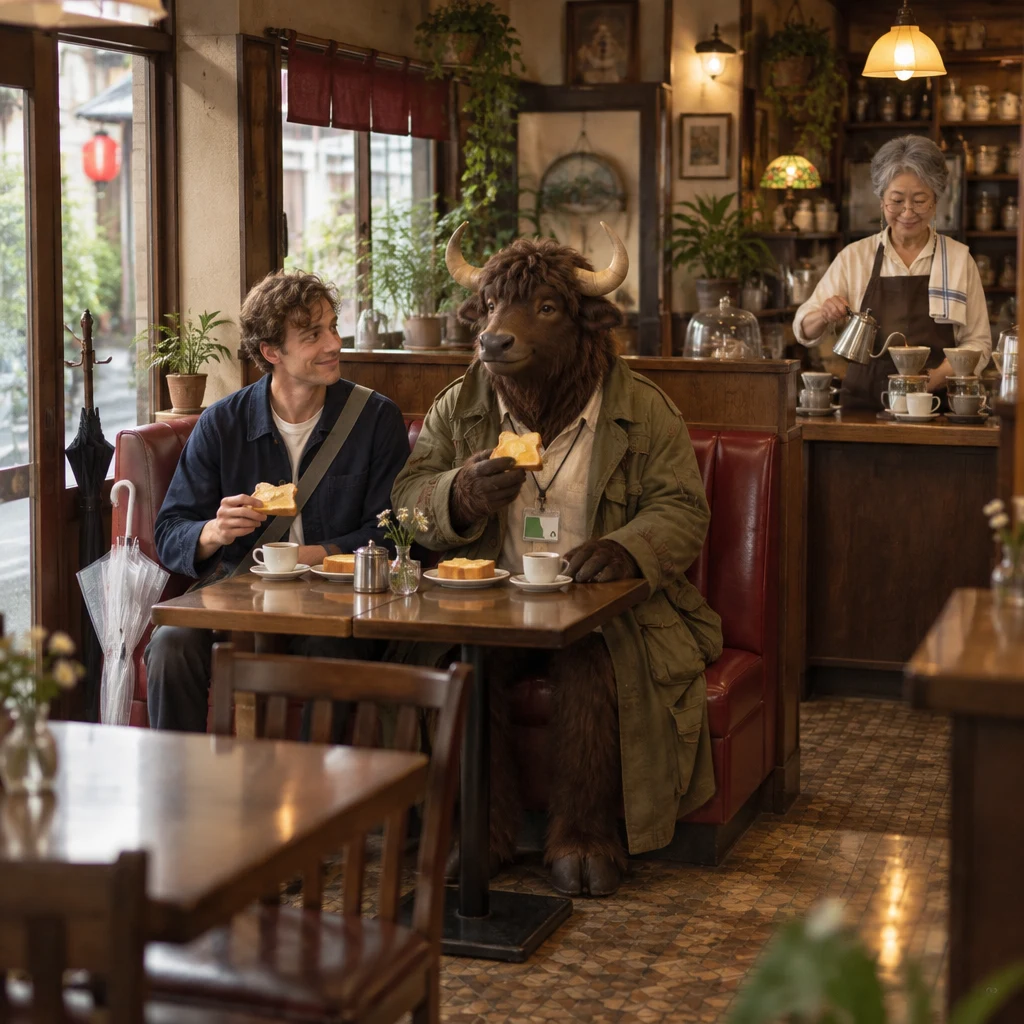
Morning light reaches the red booth at Kissa Hotaru in Yanaka, Taito, Tokyo. Leo joins Goro for buttered toast while Masako gets the coffee ready.
The old black umbrella remains beside the door. By evening, rain will be running down the window, and Leo will be back at the same table.
Learn — familiar orders and unfinished business
These six lines connect familiar objects with the people and memories behind them.
Notice how short, complete sentences can carry a conversation that matters.
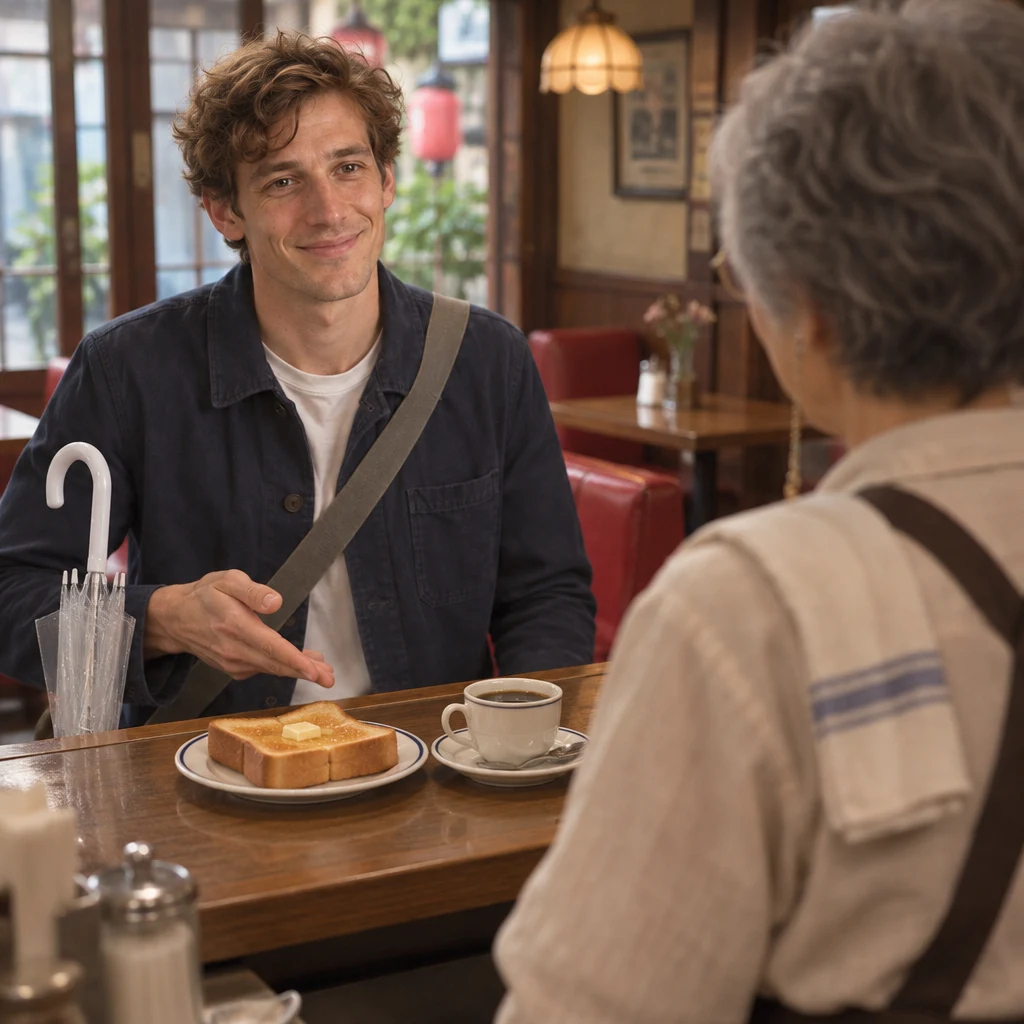
昔と同じもので、お願いします。
The same as in the old days, please.
When to use it: Use this when the person taking your order remembers what you used to have.
The comparison reaches back to an earlier time, so the person serving you needs to know the old order.
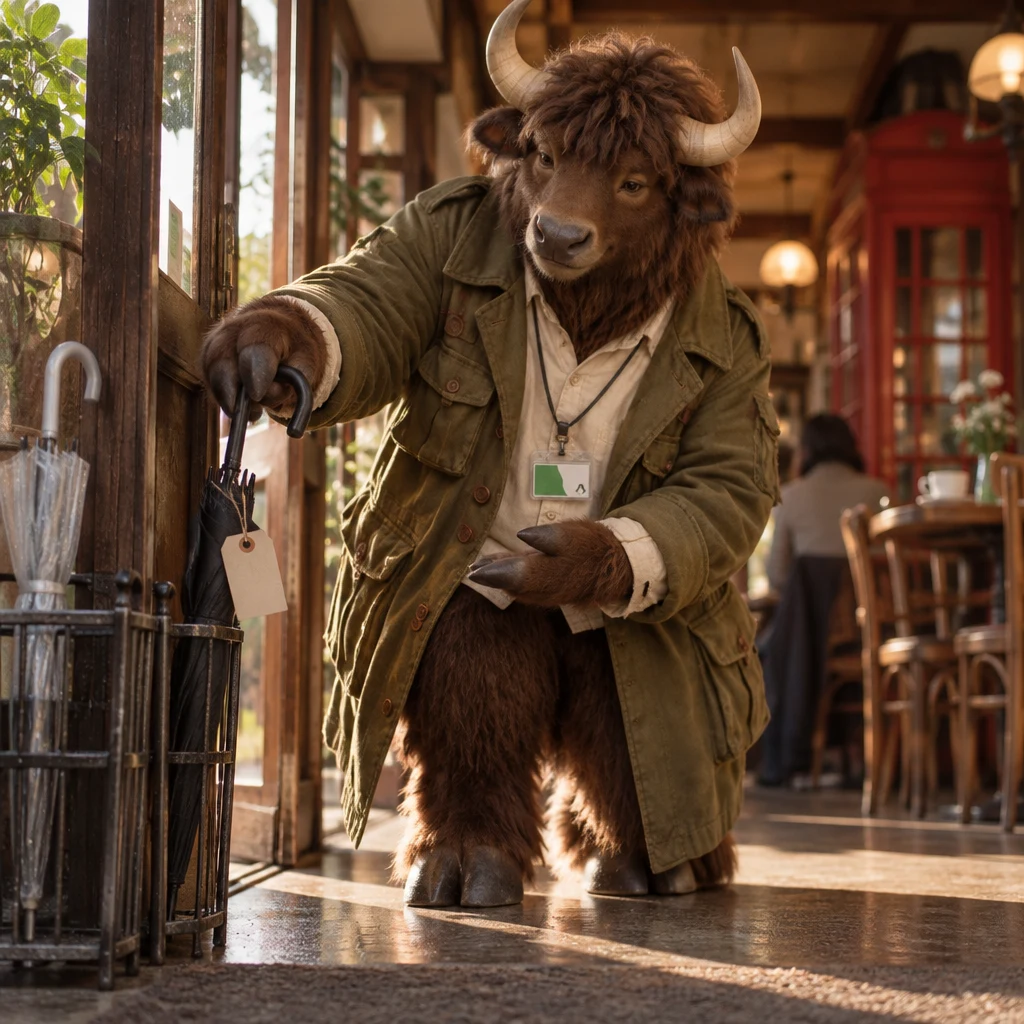
この傘は、私のです。
This umbrella is mine.
When to use it: Use this to identify an umbrella as your own when its ownership is unclear.
The possessive ending stands for your umbrella without repeating the object.
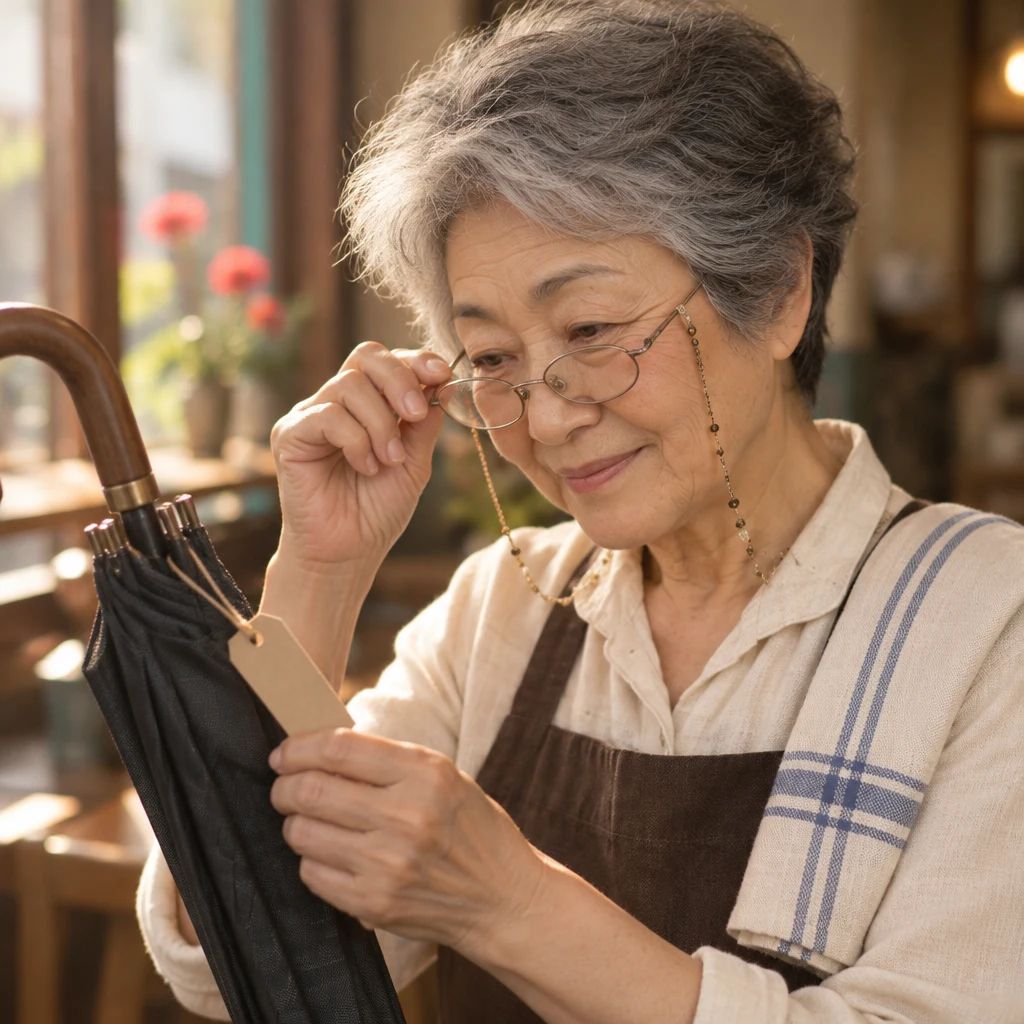
眼鏡をかけて、読みますね。
I'll put my glasses on and read it.
When to use it: Use this when you need your glasses before reading something for someone.
The connected verb form presents putting on your glasses as the action before reading.
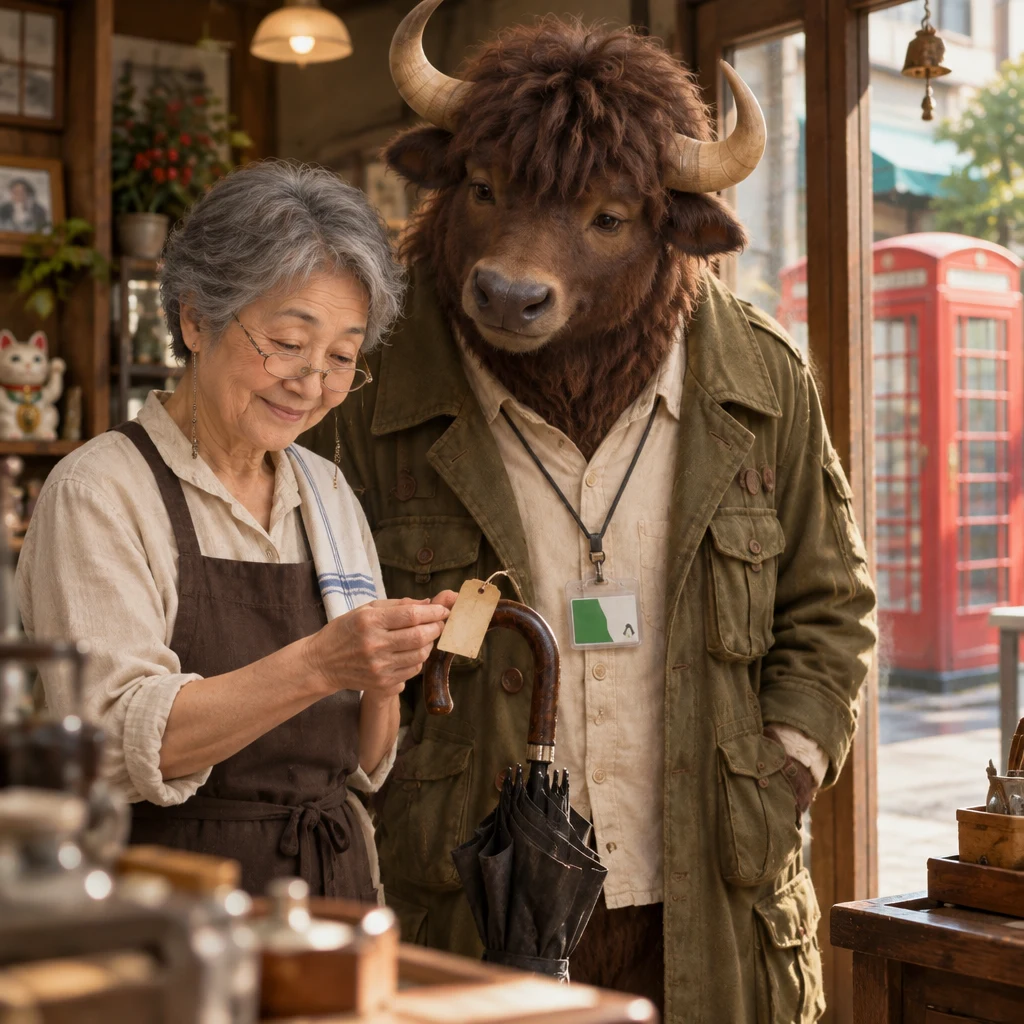
母の字です。
It's my mother's handwriting.
When to use it: Use this when you recognize something written in your mother's hand.
The particle between “mother” and “handwriting” identifies whose handwriting it is.
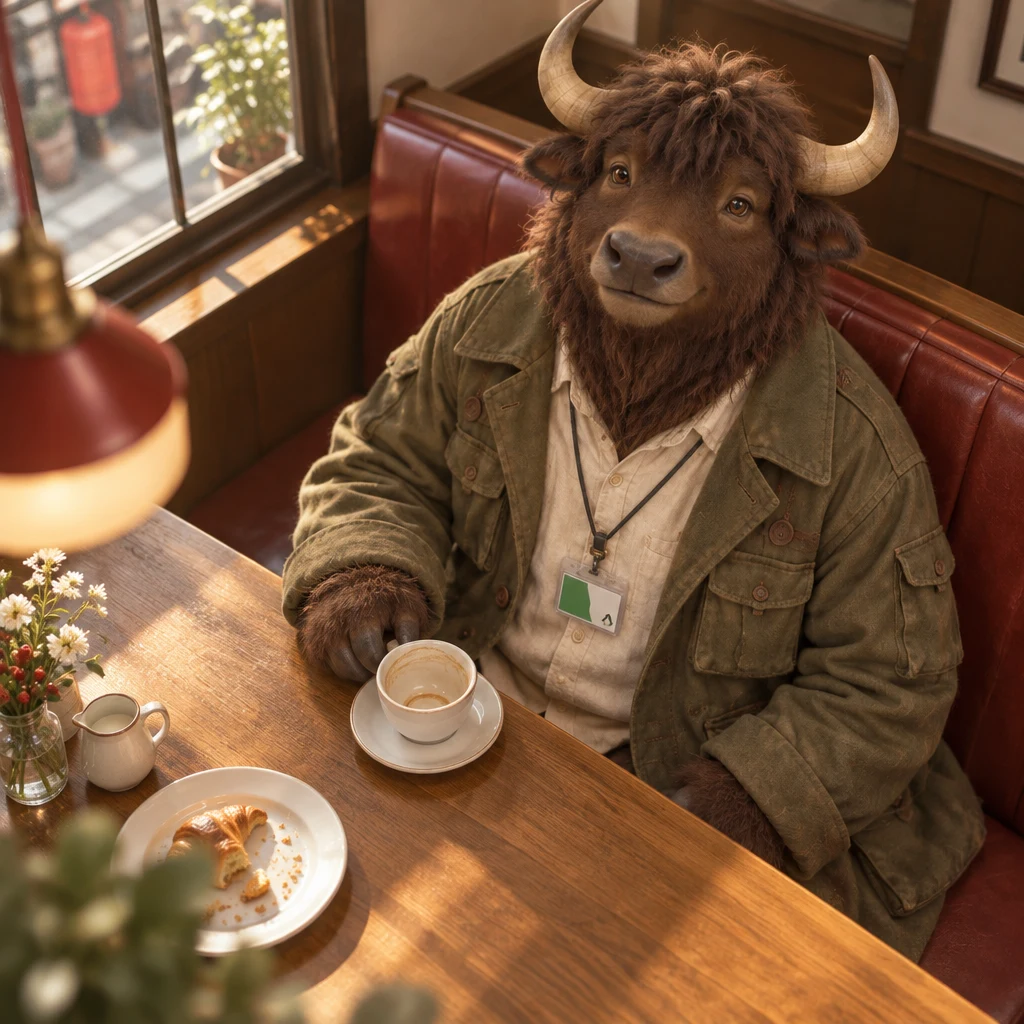
やっと、飲み終わりました。
I've finally finished it.
When to use it: Use this when the last sip finally completes a drink you have taken time to finish.
The combined verb says you have finished drinking the whole serving.
Say it: Hold the small っ for one beat before releasing the next consonant.
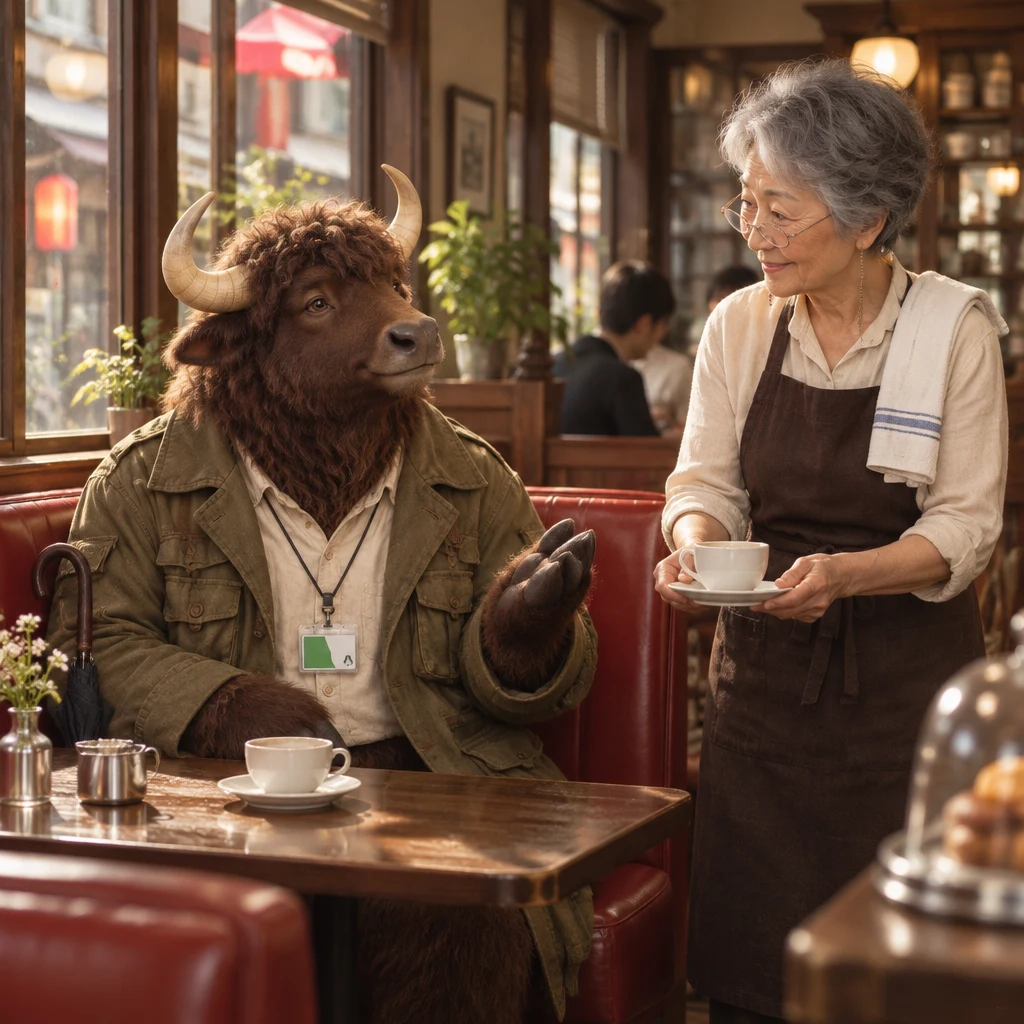
もう一杯お願いします。
One more cup, please.
When to use it: Use this to request one additional serving of the drink already being discussed.
The cup counter makes this a request for one additional serving.
Story — the umbrella goes home
Breakfast begins with an order Masako knows well, and the conversation resumes when Leo returns that evening.
Follow the umbrella, the handwriting, and the coffee cup.
- At breakfast, Goro makes room for Leo beside the booth's two occupied seats.
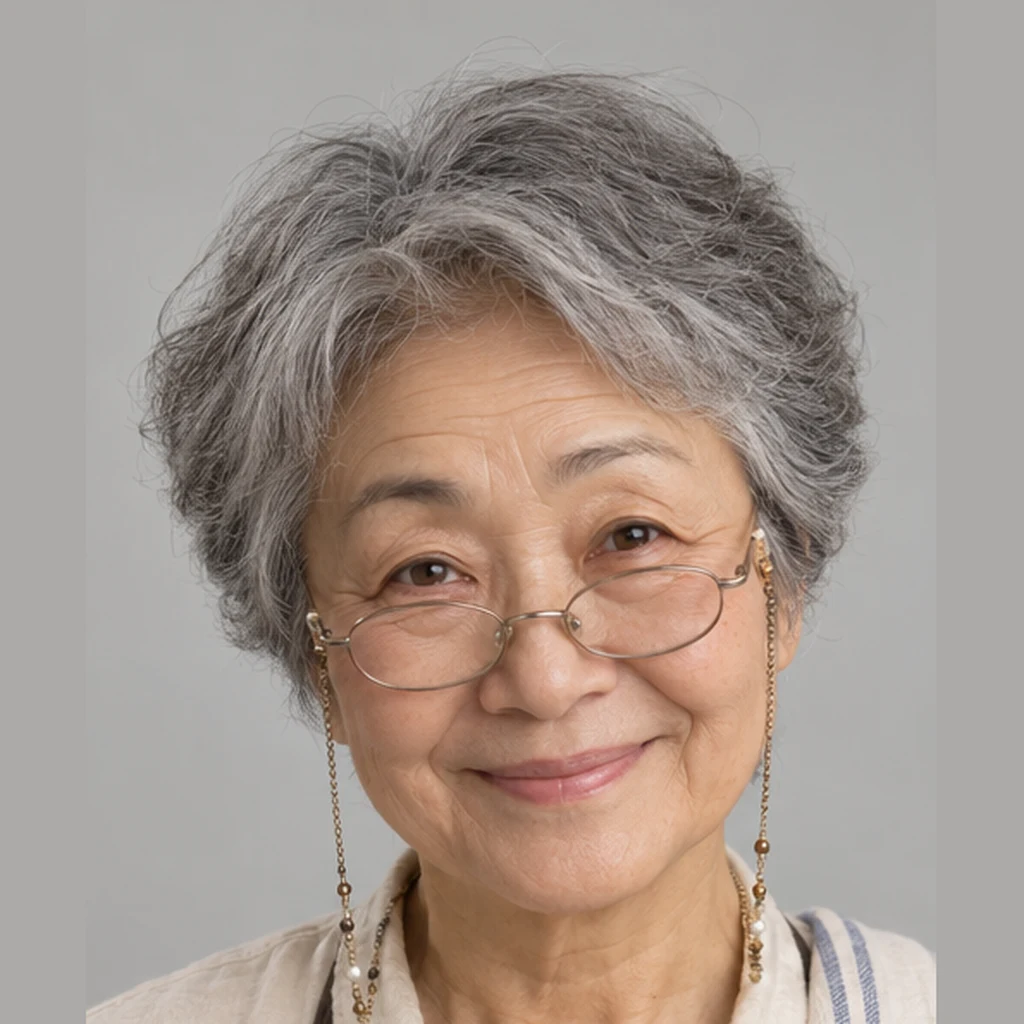 Masako今朝は何にしますか。What will you have this morning?
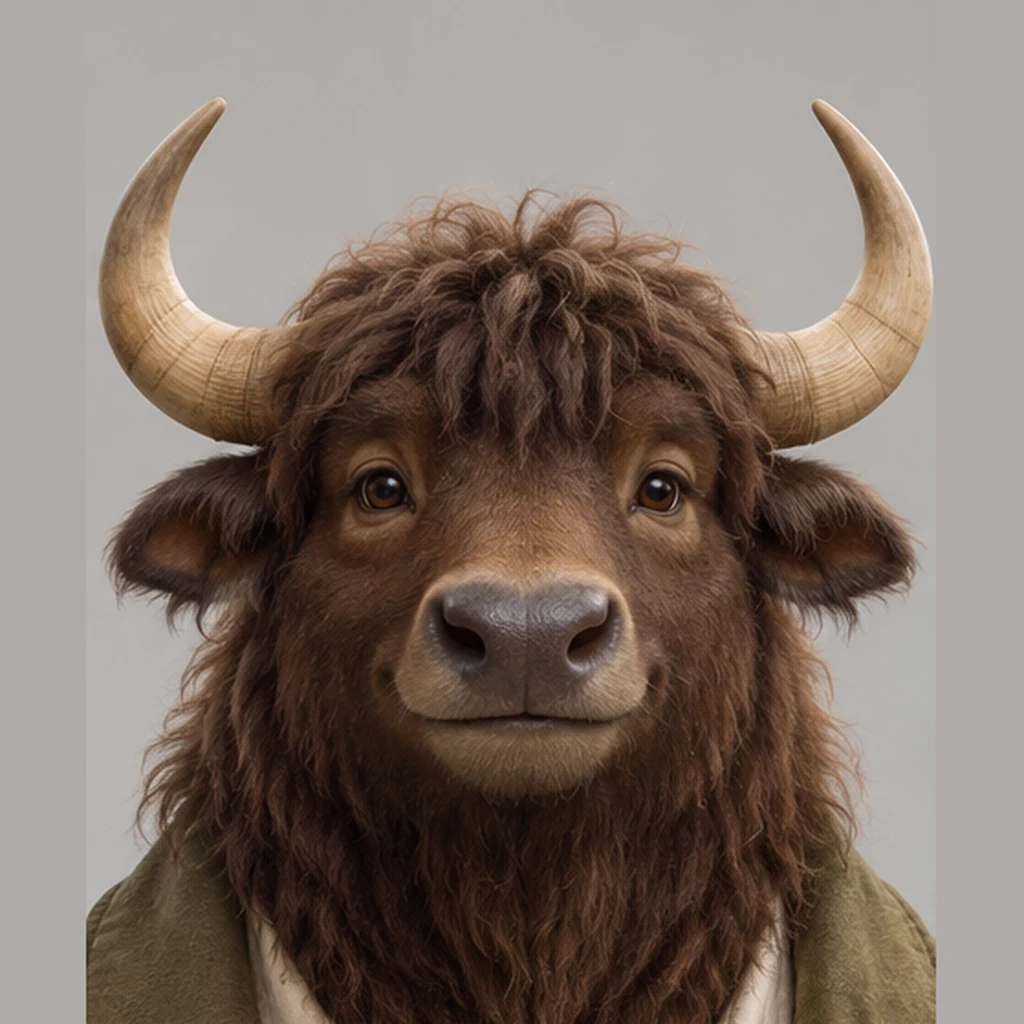 Goro昔と同じもので、お願いします。The same as in the old days, please.
- Masakoバタートーストとブレンドね。レオさんも一緒に食べる?Buttered toast and a blend, then. Will you join him for breakfast, Leo?
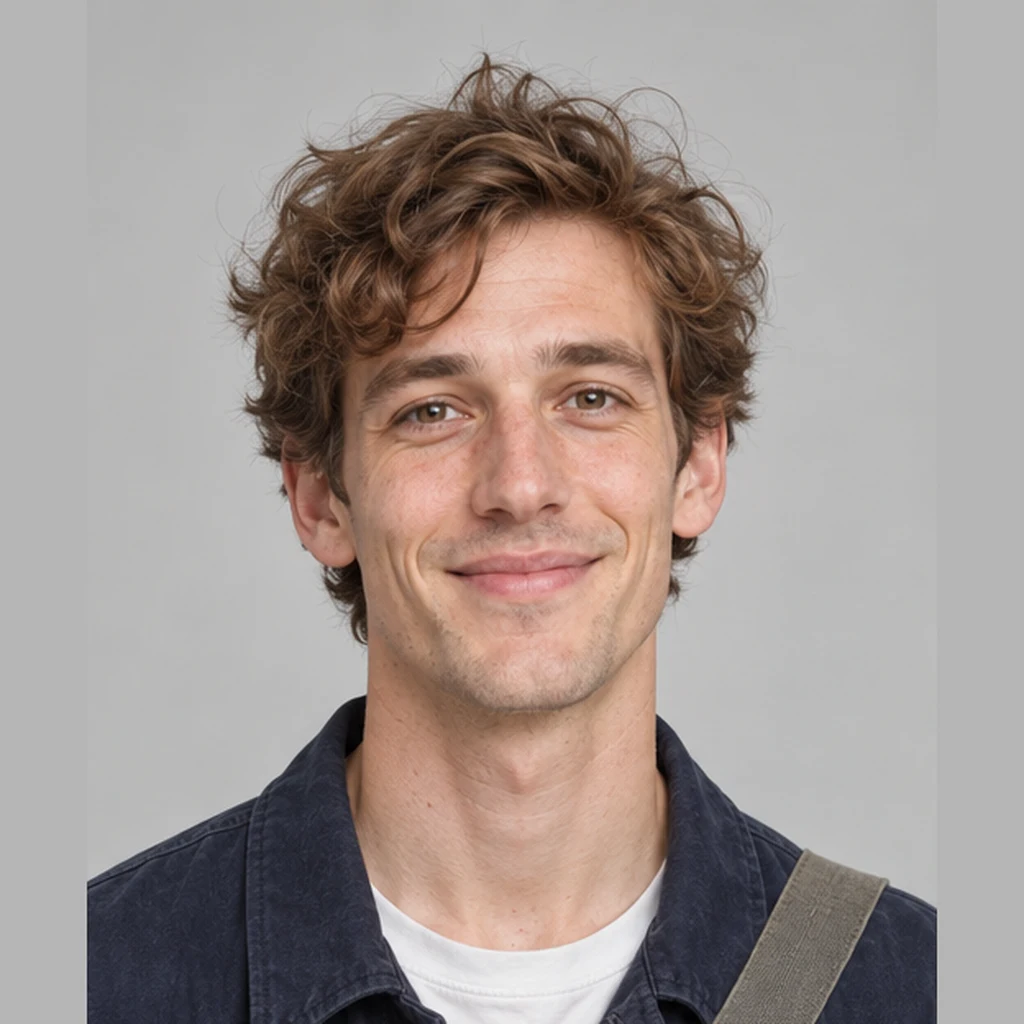 Leoはい。僕も同じものをお願いします。Yes. I'll have the same, please.
- They share breakfast. That evening, Leo returns through the rain; Goro sits beside a fresh blend coffee.
- Leoゴローさん、帰らないんですか。Goro, aren't you heading home?
- Goro stands, walks to the door, and lifts the old black umbrella out of the stand.
- Goroこの傘は、私のです。This umbrella is mine.
- Masakoえ、その傘、ゴローさんの?札を見せて。Oh, that umbrella is yours, Goro? Let me see the tag.
- Goroはい。ずっと預かってくださって、ありがとうございます。Yes. Thank you for keeping it all this time.
- Masako眼鏡をかけて、読みますね。I'll put my glasses on and read it.
- Masako puts on her glasses and holds the faded tag close.
- Masako母の字です。It's my mother's handwriting.
- Masako「雨の日に取りに来ます。」って。母が書いたのね。It says, “I'll come for it on a rainy day”; my mother wrote it.
- Goroええ。晴れた日に急に東京を離れることになって、傘を置いていったんです。Yes. I suddenly had to leave Tokyo on a sunny day, and I left the umbrella behind.
- Masakoそうだったの。ずいぶん長く預かったね。Oh, I see. We've kept it for quite a while.
- Goroあの日はコーヒーも残して、さようならも言えませんでした。That day I left my coffee unfinished and couldn't even say goodbye.
- Back at the booth, Goro drinks the last of his blend and sets the empty cup on its saucer.
- Goroやっと、飲み終わりました。I've finally finished it.
- Goroあの日の分も、ありがとうございました。さようなら。Thank you, including for that day back then. Goodbye.
- Masakoええ、さようなら。まだ時間があるなら、もう一杯どう?Yes, goodbye. If you still have time, how about another cup?
- Goroもう一杯お願いします。One more cup, please.
- Goro settles across his two seats, his umbrella beside him. Masako brings another cup.
- Masakoはい。レオさんは、もう引っ越しの準備?Here you go. Leo, are you already getting ready to move?
- Leoいいえ。契約を更新しました。谷中に残ります。No. I've renewed my lease. I'm staying in Yanaka.
- Masakoじゃあ、明日も朝ごはん、食べにおいで。Then come for breakfast tomorrow too.
- Leoはい。そろそろ帰りますね。I will. I'd better head home now.
- Goroレオさん、また明日もここで。Leo, let's meet here tomorrow too.
- Leoまた明日。See you tomorrow.
Practice — finish the conversation
Work through nine tasks about orders, ownership, handwriting, and finishing a drink.
Listen carefully, arrange the words, and choose replies that fit the exact moment.
0 of 9 done
What did you hear?
What did you hear?
What does it mean?
What does it mean?
この傘は、私のです。
Build the line
Build the line
I'll put my glasses on and read it.
、。
Tap the words in order.
Fill the gap
Fill the gap
It's my mother's handwriting.
母____字です。
True or false?
True or false?
The speaker still has some of the drink left.
What do you say?
What do you say?
Your coffee cup is empty, and you want exactly one more cup of the same coffee before leaving.
What does it mean?
What does it mean?
さようなら。
What do you say?
What do you say?
You are leaving for tonight and have agreed to meet here tomorrow morning; name that next meeting.
Swap the word
Swap the word
You recognize your mother's handwriting, rather than your father's; change the writer.
____の字です。
Say it — stay for another cup
You are Leo, practicing a familiar order and an unhurried finish to coffee at the booth.
Record each prompted line, then close with the goodbye that promises tomorrow.
- Masako前に頼んでいたものでいいですか。Would you like what you used to order?
- Leo (you)Request the same thing you had in the old days.
Request the same thing you had in the old days.
昔と同じもので、お願いします。
The same as in the old days, please.
0 of 4 said
Recap — what you can say now
| Japanese | English | Play |
|---|---|---|
| 昔と同じもので、お願いします。 | The same as in the old days, please. | |
| この傘は、私のです。 | This umbrella is mine. | |
| 眼鏡をかけて、読みますね。 | I'll put my glasses on and read it. | |
| 母の字です。 | It's my mother's handwriting. | |
| やっと、飲み終わりました。 | I've finally finished it. | |
| もう一杯お願いします。 | One more cup, please. |
Save your progress — it’s free
Keep your place in the course and see which lines you’ve learned.
Want the next lesson in your inbox?
Get the next lesson by email, one a day.
Join the newsletterDaily lesson emails are coming soon. Newsletter subscribers get them first.
Keep practicing with Yak Cards
Keep these last six lines ready with Yak Cards, alongside the familiar goodbye that brings you back tomorrow.
Return to a few cards over your next coffee and keep the conversation going.
Open Yak Cards