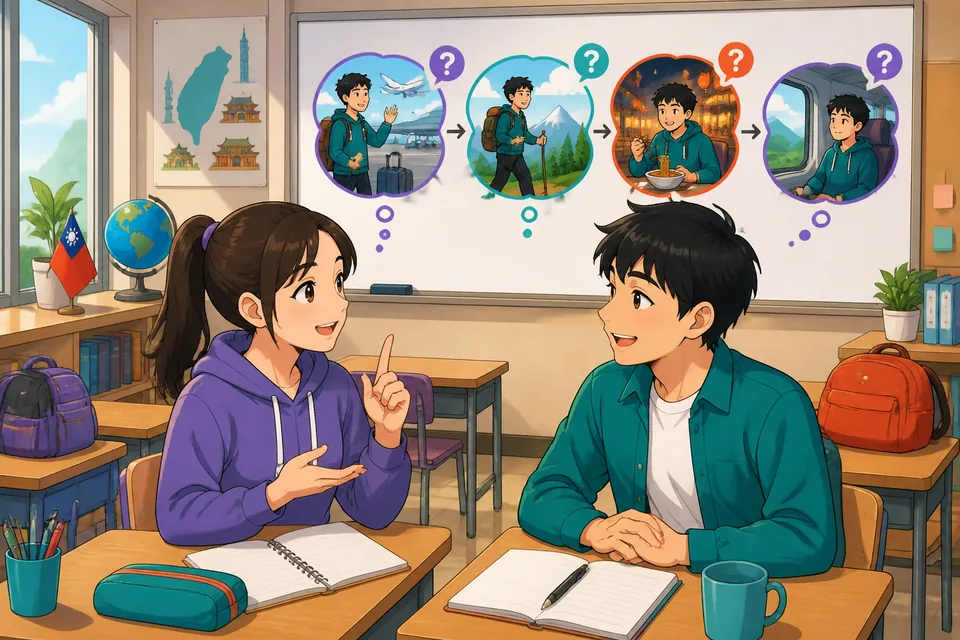
Welcome to Lesson 27 — a short, friendly practice to help your conversations flow. In Yak Yacker lessons you listen, repeat, and then use the phrases aloud to build confidence.
Level A2: In this lesson you'll learn polite follow-up questions that keep a story moving — duration, reasons, examples, and clarifying checks. Lesson 27 focuses on 12 ready-to-use follow-up frames (e.g., どのくらい続きましたか?, その後、何をしましたか?). These questions are great for asking about experiences, reasons, and details — and for sounding engaged.
After this lesson you'll be able to:
Practice 12 polite follow-up question frames for everyday conversation (Level A2).
Be able to ask about duration, sequence, difficulty, examples, reasons, and to check your understanding (e.g., 私の理解で合っていますか?).
Use these phrases naturally in short dialogues and repeat them aloud to build speaking confidence.
Ready? Let's go!
When you tap play on phrases, we track your progress through this lesson.
1. Reading + Listening Practice
Hear core phrases, repeat aloud.
どのくらい続きましたか?
Dono kurai tsuzukimashita ka?
How long did it last?
Meaning: How long did it last?
When to use: Ask how long an event, class, trip, or meeting lasted. Polite form; for friends you can say どのくらい続いたの?
Tip: Don't confuse duration (どのくらい続きましたか?) with frequency (どのくらいの頻度で...).
そのコンサートはどのくらい続きましたか?
Sono konsāto wa dono kurai tsuzukimashita ka?
How long did that concert last?
会議は一時間半でした。どのくらい続きましたか?
Kaigi wa ichi-jikan han deshita. Dono kurai tsuzukimashita ka?
The meeting was 1.5 hours. How long did it last?
その後、何をしましたか?
Sono ato, nani o shimashita ka?
What did you do after that?
Meaning: What did you do after that?
When to use: Ask what action happened next in someone's story. Polite; casual: その後、何したの?
プレゼンの後、何をしましたか?
Purezen no ato, nani o shimashita ka?
What did you do after the presentation?
映画を見た。その後、何をしましたか?
Eiga o mita. Sono ato, nani o shimashita ka?
You watched a movie. What did you do after that?
簡単でしたか、難しかったですか?
Kantan deshita ka, muzukashikatta desu ka?
Was it easy or hard?
Meaning: Was it easy or hard?
When to use: Ask whether a task or experience was easy or difficult. Polite; casual shorter forms are also common.
テストは簡単でしたか、難しかったですか?
Tesuto wa kantan deshita ka, muzukashikatta desu ka?
Was the test easy or hard?
引越しは簡単でしたか、難しかったですか?
Hikkoshi wa kantan deshita ka, muzukashikatta desu ka?
Was the move easy or hard?
一番よかったところは何でしたか?
Ichiban yokatta tokoro wa nan deshita ka?
What was the best part?
Meaning: What was the best part?
When to use: Ask about the most positive or memorable part of a trip, movie, event, or experience.
旅行で一番よかったところは何でしたか?
Ryokō de ichiban yokatta tokoro wa nan deshita ka?
What was the best part of the trip?
映画の一番よかったところは何でしたか?
Eiga no ichiban yokatta tokoro wa nan deshita ka?
What was the best part of the movie?
例えば、どんなものですか?
Tatoeba, donna mono desu ka?
Like what?
Meaning: Like what?
When to use: Ask for a concrete example when someone gives a general comment. Polite; shorter: 例えば何ですか?
そのお店は人気があると言いましたね。例えば、どんなものですか?
Sono omise wa ninki ga aru to iimashita ne. Tatoeba, donna mono desu ka?
You said that shop is popular. Like what (items)?
面白い活動がたくさんあります。例えば、どんなものですか?
Omoshiroi katsudō ga takusan arimasu. Tatoeba, donna mono desu ka?
There are many interesting activities. For example, like what?
どうしてそれが分かるんですか?
Dōshite sore ga wakaru n desu ka?
How do you know?
Meaning: How do you know?
When to use: Ask for the reason or evidence behind a statement. Polite; be mindful tone can sound skeptical.
Tip: Be careful: in casual talk tone matters — this can sound doubting if said sharply.
彼が来ないと言いました。どうしてそれが分かるんですか?
Kare ga konai to iimashita. Dōshite sore ga wakaru n desu ka?
You said he won't come. How do you know that?
売上が上がったそうです。どうしてそれが分かるんですか?
Uriage ga agatta sō desu. Dōshite sore ga wakaru n desu ka?
I heard sales went up. How do you know?
どうしてですか?
Dōshite desu ka?
Why is that?
Meaning: Why is that?
When to use: A short, polite question to ask for a reason or explanation. Casual: なんで?/どうして?
早く帰るそうです。どうしてですか?
Hayaku kaeru sō desu. Dōshite desu ka?
They'll go home early. Why is that?
今日は静かですね。どうしてですか?
Kyō wa shizuka desu ne. Dōshite desu ka?
It's quiet today. Why is that?
どんな感じでしたか?
Donna kanji deshita ka?
What was it like?
Meaning: What was it like?
When to use: Ask someone to describe an experience, place, person, or atmosphere.
そのコンサートはどんな感じでしたか?
Sono konsāto wa donna kanji deshita ka?
What was that concert like?
新しいカフェ、どんな感じでしたか?
Atarashii kafe, donna kanji deshita ka?
What was the new café like?
その前に何がありましたか?
Sono mae ni nani ga arimashita ka?
What happened before that?
Meaning: What happened before that?
When to use: Ask for earlier events in a sequence when you want to know what came before. Polite form.
会議の最後に発表がありました。その前に何がありましたか?
Kaigi no saigo ni happyō ga arimashita. Sono mae ni nani ga arimashita ka?
There was a presentation at the end of the meeting. What happened before that?
パーティーで驚きがあったそうです。その前に何がありましたか?
Pātī de odoroki ga atta sō desu. Sono mae ni nani ga arimashita ka?
I heard there was a surprise at the party. What happened before that?
私の理解で合っていますか?
Watashi no rikai de atte imasu ka?
Did I understand that right?
Meaning: Did I understand that right?
When to use: Check whether your summary or understanding of what someone said is correct. Polite and useful in business or study talk.
Tip: Sometimes learners say this too abruptly; add a softener (例えば、私の理解で合っていますか?) to be extra polite.
要点は明日までに提出、私の理解で合っていますか?
Yōten wa ashita made ni teishutsu, watashi no rikai de atte imasu ka?
The key point is to submit by tomorrow — did I get that right?
つまり、来週から開始ですね。私の理解で合っていますか?
Tsumari, raishū kara kaishi desu ne. Watashi no rikai de atte imasu ka?
So it starts next week. Have I understood correctly?
それはどのくらいの頻度でありますか?
Sore wa dono kurai no hindo de arimasu ka?
How often does that happen?
Meaning: How often does that happen?
When to use: Ask about the frequency of an event or habit. Use to clarify how common something is.
遅刻することがあるそうです。 それはどのくらいの頻度でありますか?
Chikoku suru koto ga aru sō desu. Sore wa dono kurai no hindo de arimasu ka?
I heard they are late sometimes. How often does that happen?
停電があると聞いた。どのくらいの頻度でありますか?
Teiden ga aru to kiita. Dono kurai no hindo de arimasu ka?
I heard there are power outages. How often do they occur?
もう少しくわしく言ってもらえますか?
Mō sukoshi kuwashiku itte moraemasu ka?
Can you be more specific?
Meaning: Can you be more specific?
When to use: Politely ask for a clearer or more detailed explanation. Useful when a speaker is vague.
計画についてもう少しくわしく言ってもらえますか?
Keikaku ni tsuite mō sukoshi kuwashiku itte moraemasu ka?
Could you say a bit more specifically about the plan?
その提案は面白いです。もう少しくわしく言ってもらえますか?
Sono teian wa omoshiroi desu. Mō sukoshi kuwashiku itte moraemasu ka?
That suggestion is interesting. Can you be a bit more specific?
2. Conversational Listening Practice
Hear phrases in a real mini-conversation.
Anna asks David about a recent trip and follows up with several questions to learn details.
Anna
京都のツアー、行ったって聞きました。どのくらい続きましたか?
Kyōto no tsuā, itta tte kikimashita. Dono kurai tsuzukimashita ka?
I heard you went on a Kyoto tour. How long did it last?
David
二日間続きました。その後、何をしましたか?
Futsukakan tsuzukimashita. Sono ato, nani o shimashita ka?
It lasted two days. What did you do after that?
Anna
お寺をたくさん見ました。一番よかったところは何でしたか?
Otera o takusan mimashita. Ichiban yokatta tokoro wa nan deshita ka?
I saw a lot of temples. What was the best part?
David
嵐山の景色が一番よかったです。例えば、竹林や川がきれいでした。
Arashiyama no keshiki ga ichiban yokatta desu. Tatoeba, chikurin ya kawa ga kirei deshita.
The Arashiyama scenery was the best—like the bamboo grove and the river were beautiful.
Anna
どうしてそれが分かるんですか?
Dōshite sore ga wakaru n desu ka?
How do you know that?
David
写真がたくさんあって、地元の人にすすめられました。
Shashin ga takusan atte, jimoto no hito ni susumeraremashita.
I took a lot of photos and locals recommended it.
3. Guided Practice
Quizzes and matching to lock in meaning.
Which Japanese phrase means 'How long did it last?'
You want someone to explain the reason behind a claim. Which is best?
Which phrase asks someone to give a concrete example?
You heard someone summarize a plan and want to confirm your understanding. What should you ask?
I have meetings every week. By the way, how often does that happen?
毎週ミーティングをしています。ところで、___
Maishū mītingu o shite imasu. Tokorode, ___
There was a presentation after the explanation. What happened before that?
説明の後に発表がありました。その前に___
Setsumei no ato ni happyō ga arimashita. Sono mae ni ___
I heard the trip was fun. What was the best part?
旅行は楽しかったと聞きました。___
Ryokō wa tanoshikatta to kikimashita. ___
Match the core phrases
Match the extra phrases
4. Speaking Practice
Say phrases yourself (mic/recording).
Recording stays on your device only. Check speech uses your browser's speech tools when available.