
New here? This is lesson 88 of a free 240-lesson Japanese course.
Getting a table in Japanese
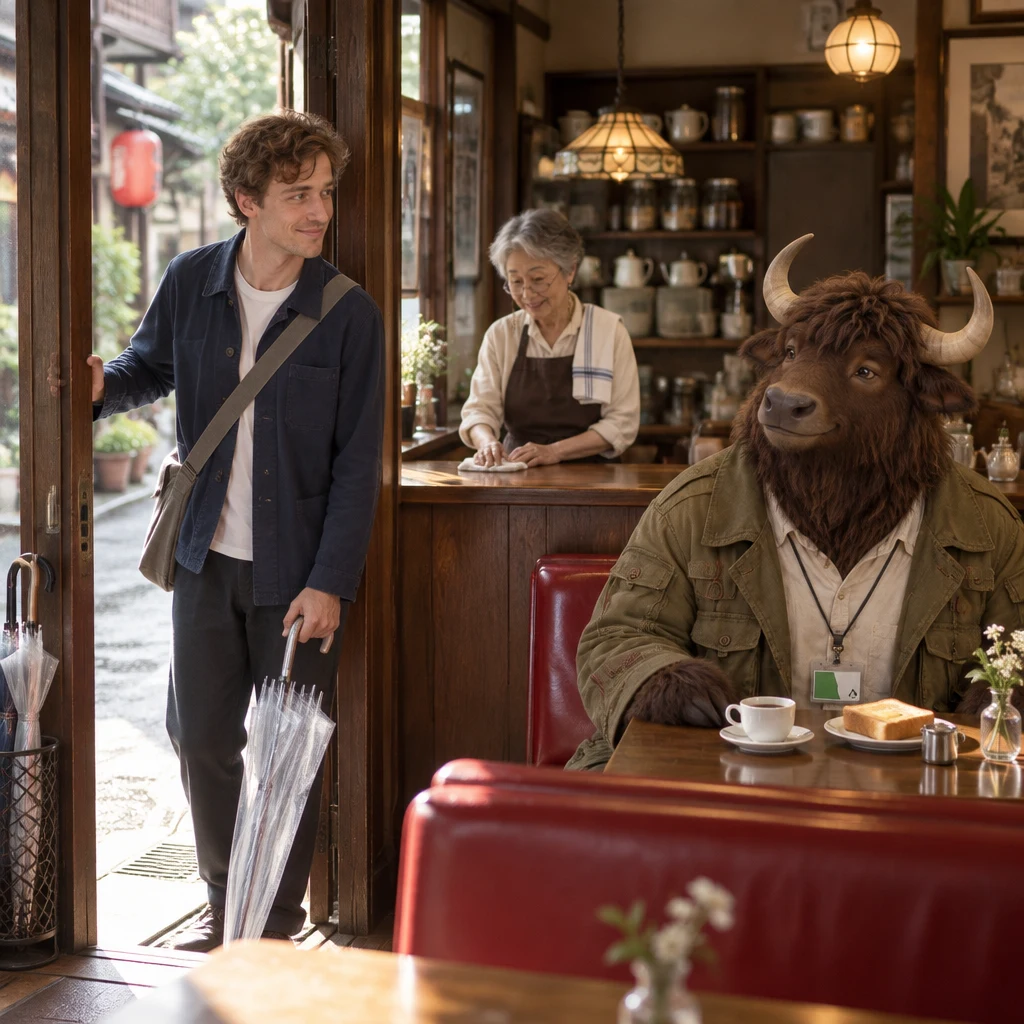
Leo wants a booth at Kissa Hotaru this afternoon. The corner seats are already taken: Goro fills two of them, toast on the table, coffee untouched.
Masako does not take bookings. You will still ask for a table, give a party size, and ask how long the wait is.
Staff may ask you to wait a moment. You answer in polite Japanese, not shop honorifics.
By the end of this lesson
Ask for a table, a booking, and for the wait.
- 予約しています。I have a reservation.
- 予約したいです。I'd like to make a reservation.
- ___名です。There are two of us.
- どのくらい待ちますか。How long is the wait?
- 席はありますか。Do you have a table?
- 中村で予約しました。I booked under Nakamura.
Scene — two seats taken
Saturday afternoon on a Yanaka lane. Leo opens the door of Kissa Hotaru and looks toward the booths. Masako wipes the wooden counter.
In the corner, Goro occupies two red seats. His blend coffee sits untouched beside his toast. The old black umbrella stays in the stand by the door.
Learn — a table and a booking
These six lines cover a booking you have, one you want, a party of two, and asking about a table or wait.
Keep them polite. Staff wait-lines are for listening only.
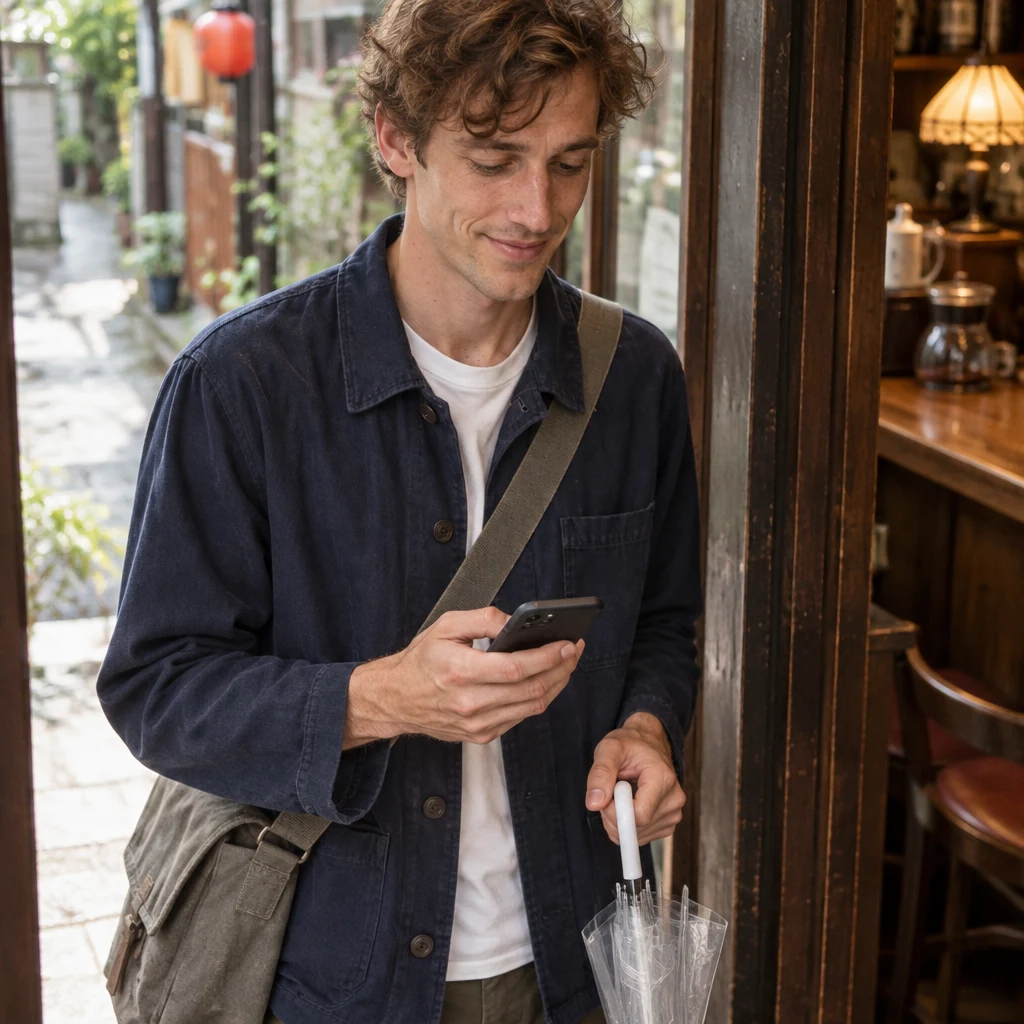
予約しています。
I have a reservation.
When to use it: Say this when you arrive after booking.
ています here describes the state of already having a booking.
Say it: The u in ます is almost silent.
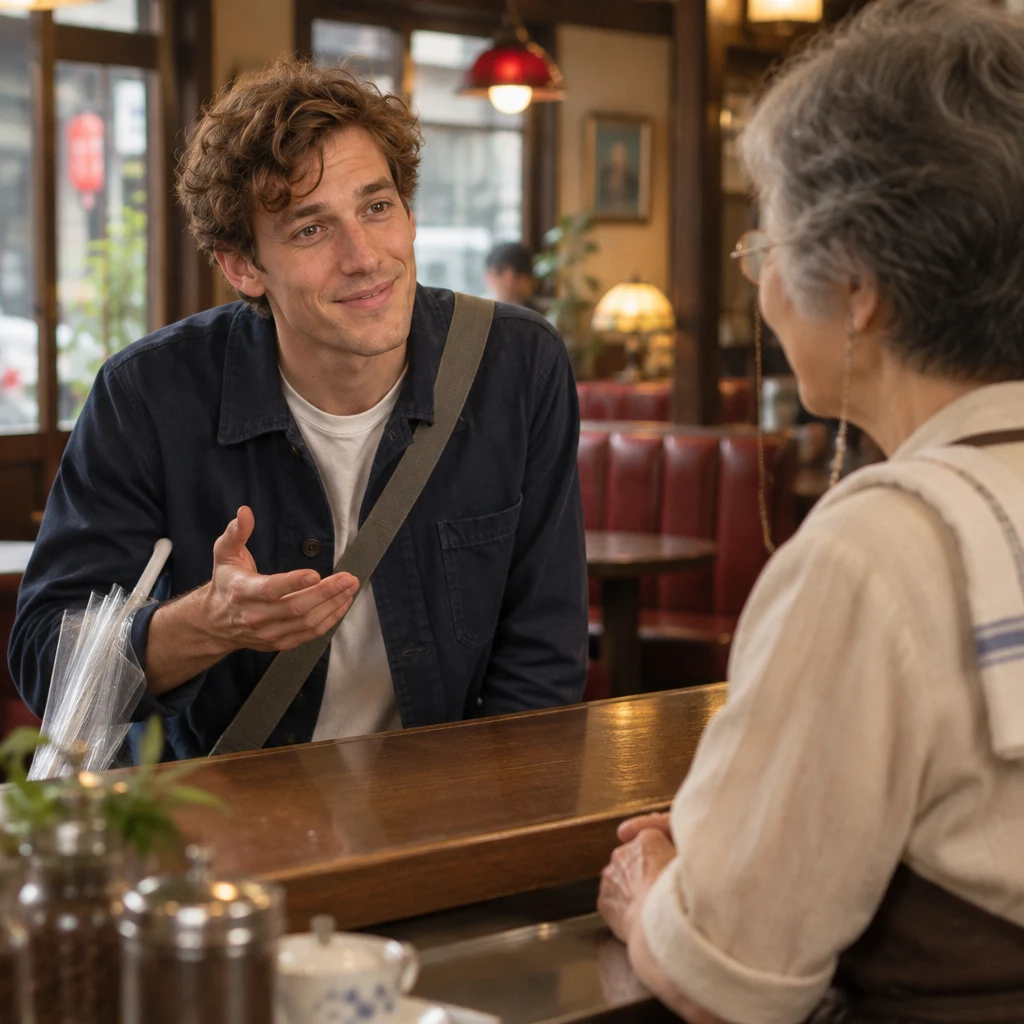
予約したいです。
I'd like to make a reservation.
When to use it: Use this when you want to make a booking.
たい expresses that you want to make a reservation.
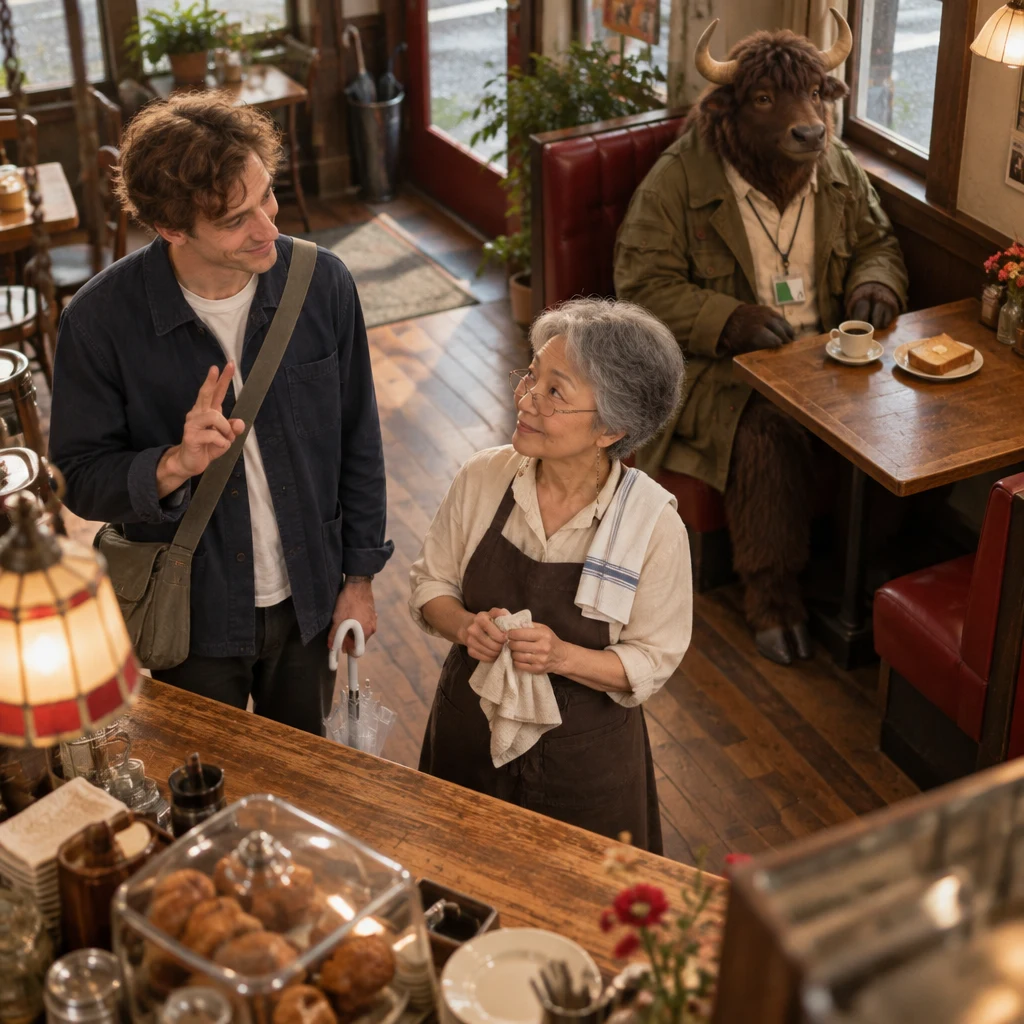
___名です。
There are two of us.
When to use it: Say this when staff ask and your group has two people.
名 counts people at a restaurant; 二名 means a party of two.
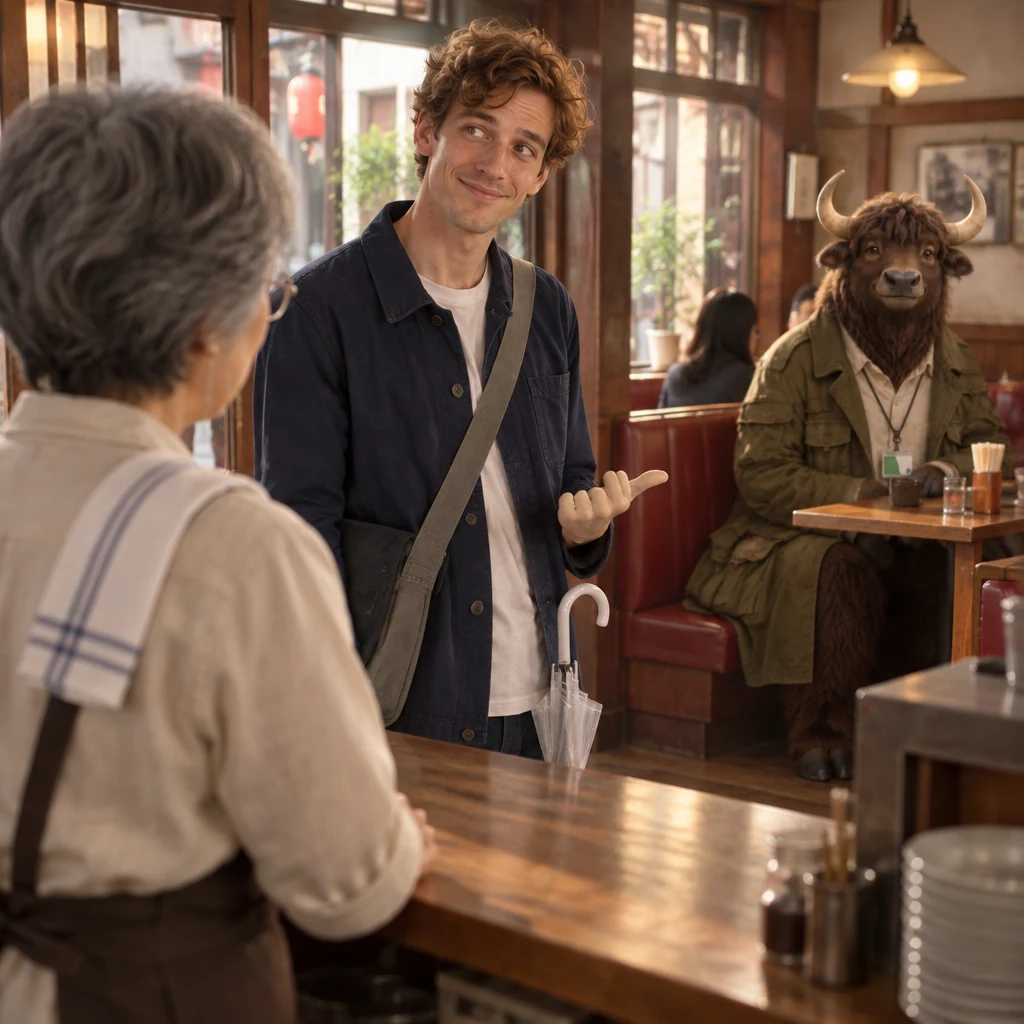
どのくらい待ちますか。
How long is the wait?
When to use it: Ask this when a table is not free yet.
どのくらい asks about an amount of time.
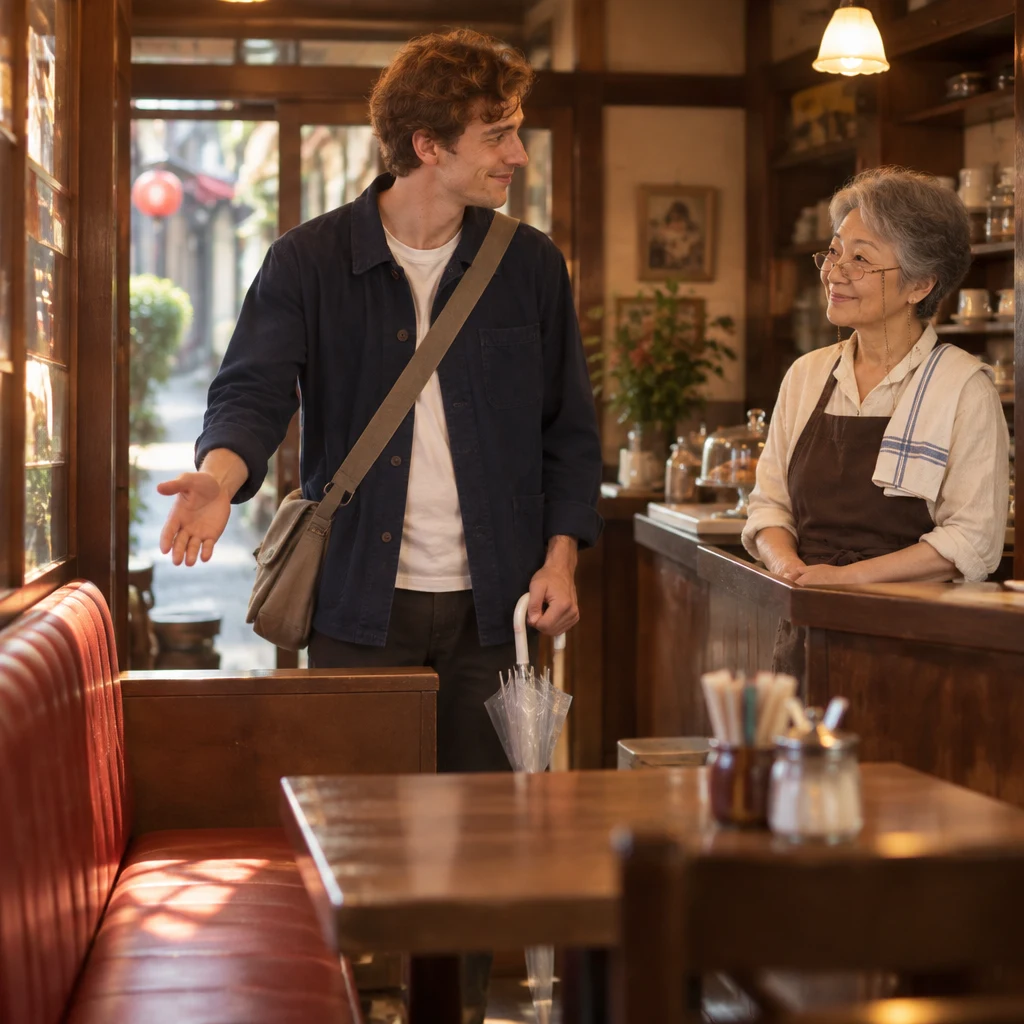
席はありますか。
Do you have a table?
When to use it: Ask this when you want a table now.
は marks 席 as the thing you are asking about.
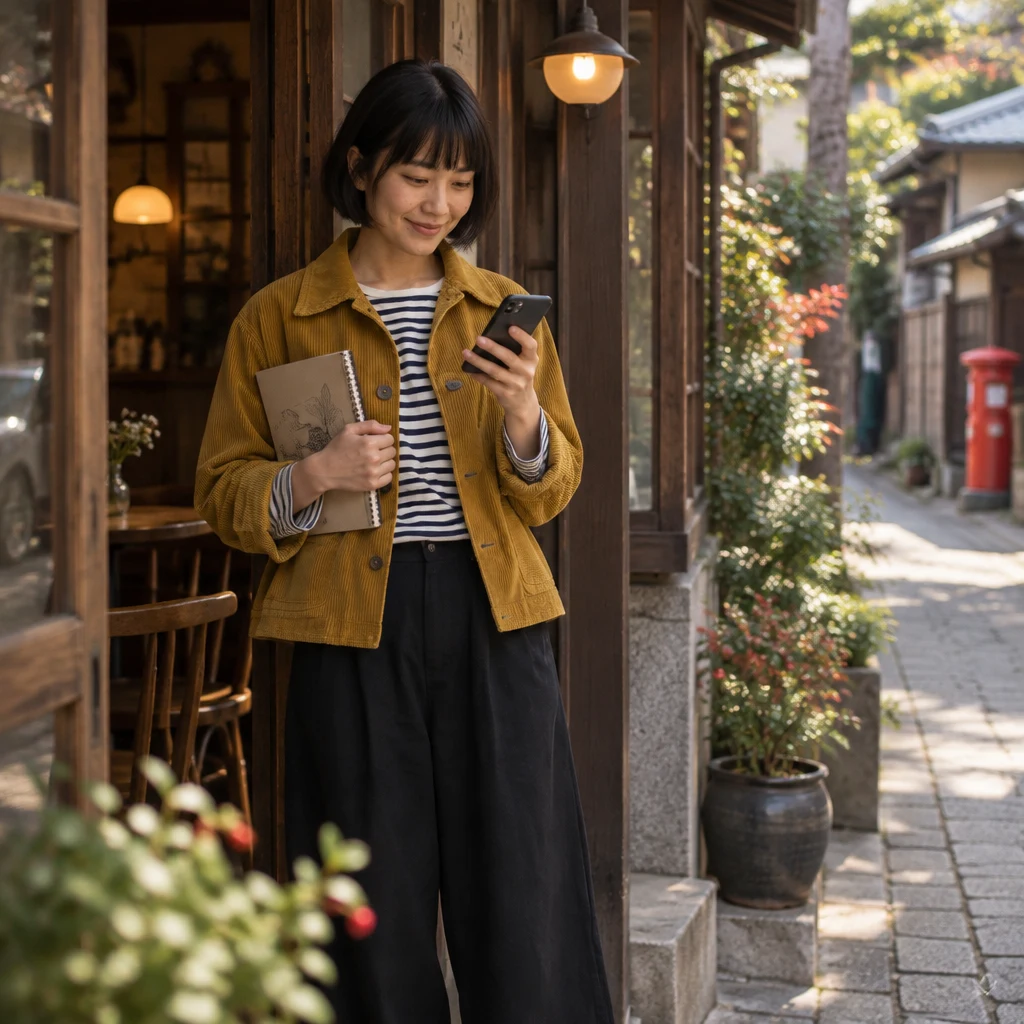
中村で予約しました。
I booked under Nakamura.
When to use it: Give the name you booked under at the door.
で marks the name used for a booking here.
Story — the booth is full
Leo arrives hoping to get a booth. Haruka's message says she booked under Nakamura, but she only thought Kissa Hotaru took bookings.
Highlighted phrases are the new lines. Turn on Show English if you want a gloss.
- Before Leo arrives, Haruka messages him with her mistaken assumption that she has booked a booth.
 Haruka予約しています。I have a reservation.
- Haruka中村で予約しました。I booked under Nakamura.
- Leo reaches the kissa. Masako does not take bookings.
 Masakoいらっしゃいませ。Welcome.
 Leo予約したいです。I'd like to make a reservation.
- Masakoうちは予約を受けていません。We don't take reservations.
- Leo席はありますか。Do you have a table?
- Masako少々お待ちください。Please wait a moment.
- Masako何人ですか。How many people?
- Leo二名です。There are two of us.
- Leoどのくらい待ちますか。How long is the wait?
- Masako五分ぐらいです。About five minutes.
Practice — pick the right ask
Ten short tasks wait in this round. You will listen, match meanings, fill a gap, build a line, and choose a reply.
Each one is small, so you can move on quickly.
0 of 10 done
What did you hear?
What did you hear?
Match the pairs
Japanese
予約しています。Drop the English here予約したいです。Drop the English hereどのくらい待ちますか。Drop the English here中村で予約しました。Drop the English hereEnglish
What do you say?
What do you say?
You want to book a booth for another day, rather than sit down now.
Pick the reply
Masako says:
Pick the reply
少々お待ちください。
Please wait a moment.
And you reply with:
Fill the gap
Fill the gap
Do you have a table?
席____ありますか。
What does it mean?
What does it mean?
いらっしゃいませ。
Build the line
Build the line
I booked under Nakamura.
。
Tap the words in order.
Swap the word
Swap the word
You booked under Nakamura. Fix the particle.
中村____予約しました。
What do you say?
What do you say?
Masako asks how many people are in your group. There are two of you; put 二 in the blank.
True or false?
True or false?
This asks how many people are in the group.
Say it — your turn to speak
You are Leo at the kissa counter. When the cue is yours, say the polite line that fits the moment.
Tap play first if you want to hear the turns. Your speaking is recorded on this device, not scored.
- Masakoいらっしゃいませ。Welcome.
- Leo (you)Ask if she has a table right now.
Ask if she has a table right now.
席はありますか。
Do you have a table?
0 of 3 said
Recap — what you can say now
| Japanese | English | Play |
|---|---|---|
| 予約しています。 | I have a reservation. | |
| 予約したいです。 | I'd like to make a reservation. | |
| ___名です。 | There are two of us. | |
| どのくらい待ちますか。 | How long is the wait? | |
| 席はありますか。 | Do you have a table? | |
| 中村で予約しました。 | I booked under Nakamura. |
Save your progress — it’s free
Keep your place in the course and see which lines you’ve learned.
Want the next lesson in your inbox?
Get the next lesson by email, one a day.
Join the newsletterDaily lesson emails are coming soon. Newsletter subscribers get them first.
Keep practicing with Yak Cards
Keep these table lines in your pocket. Open the Yak Cards for this lesson and run them on the train.
A short Yak Cards round before lunch keeps the table ask ready.
Open Yak Cards