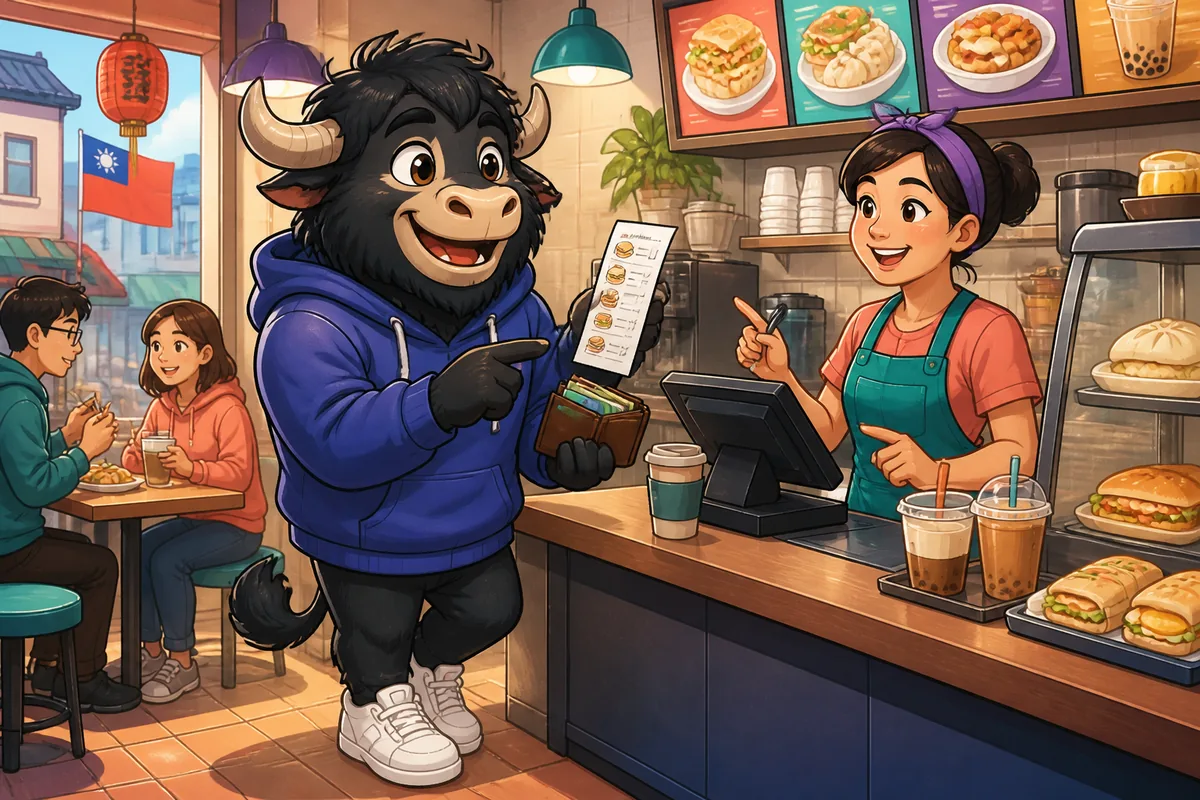
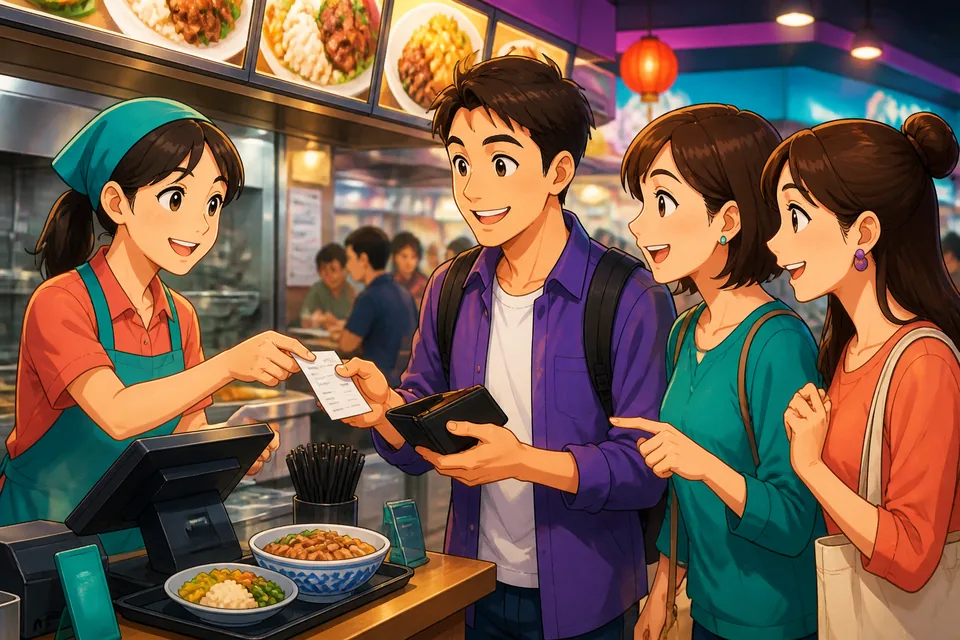
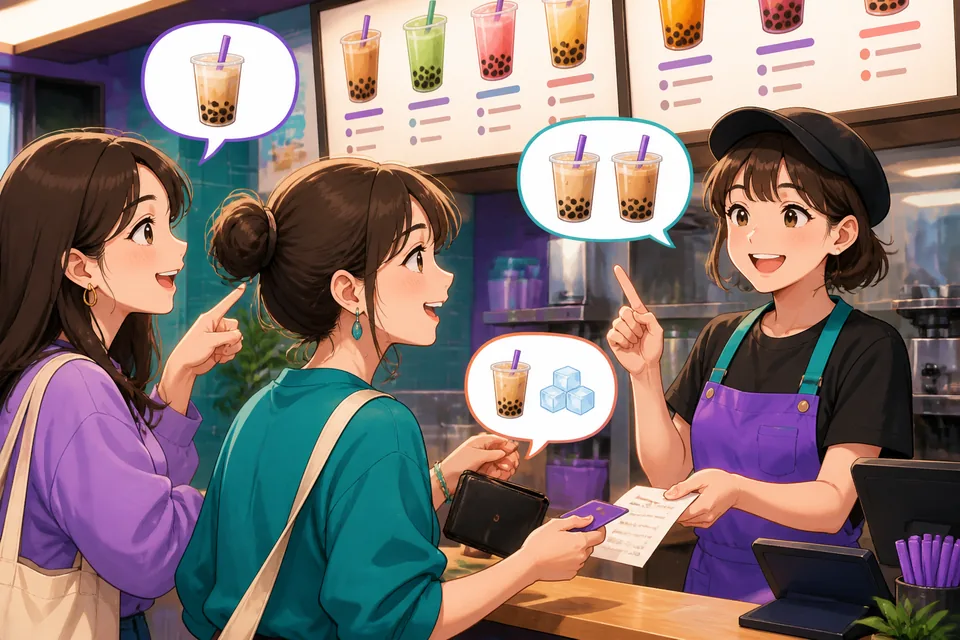
Ready for a short, useful trip to the register? This lesson gives you the exact phrases you'll hear and use at Japanese shops and cafés. Say each line out loud — it helps your rhythm and confidence!
Level A1: In this short lesson (Lesson 154) you will practice common Japanese shopping phrases for choosing items, asking for the same item, bags, receipts, and payment options. You'll hear the phrases in context and do quick exercises to remember when to say これにします (Kore ni shimasu.) and related polite lines. CEFR-aligned and focused — small, practical steps at the checkout.
After this lesson you'll be able to:
Learn to say polite checkout phrases like これにします (Kore ni shimasu.) and 袋をお願いします (Fukuro o onegai shimasu.).
Be able to ask or understand basic payment questions such as カードで払えますか (Kādo de haraemasu ka.).
Recognize and use simple requests for receipts and separate/together bills (A1 practice).
Ready? Let's go!
When you tap play on phrases, we track your progress through this lesson.
1. Reading + Listening Practice
Hear core phrases, repeat aloud.
これにします
Kore ni shimasu.
I’ll take this one.
Meaning: I’ll take this one.
When to use: Use when you point to an item and decide to buy it at a shop or café.
Tip: Don't confuse これにします with ください — これにします means 'I'll take this', not just 'please give me'.
これにします。これ、お願いします。
Kore ni shimasu. Kore, onegai shimasu.
I'll take this one. This one, please.
メニューを見て、ケーキはこれにします。
Menyū o mite, kēki wa kore ni shimasu.
Looking at the menu, I'll have this cake.
これと同じものをください。
Kore to onaji mono o kudasai.
Please give me the same as this.
Meaning: Please give me the same as this.
When to use: Point to an item (or photo) and ask the staff to give you the identical product.
Tip: Be sure to include 同じ (onaji) to mean 'the same' — without it you might sound like you're asking for 'this' once.
テーブルの上の赤いものを見て、店員に「これと同じものをください。」と言った。
Tēburu no ue no akai mono o mite, ten'in ni 'Kore to onaji mono o kudasai.' to itta.
I looked at the red one on the table and said to the clerk, 'Please give me the same as this.'
友だちのカップを見て、これと同じものをください。
Tomodachi no kappu o mite, kore to onaji mono o kudasai.
Looking at my friend's cup, 'Please give me the same as this.'
別々にお願いします。
Betsubetsu ni onegai shimasu.
Separately, please.
Meaning: Separately, please.
When to use: Use when you and others want separate bills or separate bags.
二人で払うときに「別々にお願いします。」と言った。
Futari de harau toki ni 'Betsubetsu ni onegai shimasu.' to itta.
When paying for two people I said, 'Separately, please.'
ケーキを二つ買って、別々にお願いします。
Kēki o futatsu katte, betsubetsu ni onegai shimasu.
Buying two cakes — separately, please.
一緒でお願いします。
Issho de onegai shimasu.
Together, please.
Meaning: Together, please.
When to use: Say this when you want one combined bill or to put items together.
友だちとまとめて払うから「一緒でお願いします。」と言った。
Tomodachi to matomete harau kara 'Issho de onegai shimasu.' to itta.
Because we pay together I said, 'Together, please.'
買い物をまとめたいときに「一緒でお願いします。」
Kaimono o matometai toki ni 'Issho de onegai shimasu.'
When you want to combine purchases: 'Together, please.'
袋は要りますか。
Fukuro wa irimasu ka.
Do you need a bag?
Meaning: Do you need a bag?
When to use: Common question from shop staff at checkout about a shopping bag.
店員が「袋は要りますか。」と聞いたので考えた。
Ten'in ga 'Fukuro wa irimasu ka.' to kiita node kangaeta.
The clerk asked, 'Do you need a bag?' so I thought for a moment.
エコで袋は要りますかと聞かれることが多い。
Eko de fukuro wa irimasu ka to kikareru koto ga ōi.
For ecological reasons they often ask, 'Do you need a bag?'
袋をお願いします。
Fukuro o onegai shimasu.
A bag, please.
Meaning: A bag, please.
When to use: Use at checkout to request a shopping bag.
荷物が多いから「袋をお願いします。」と言った。
Nimotsu ga ōi kara 'Fukuro o onegai shimasu.' to itta.
Because I had many items I said, 'A bag, please.'
店員が『袋は要りますか。』と聞いて『袋をお願いします。』と答えた。
Ten'in ga 'Fukuro wa irimasu ka.' to kiite 'Fukuro o onegai shimasu.' to kotaeta.
When the clerk asked 'Do you need a bag?' I replied 'A bag, please.'
レシートをください。
Reshīto o kudasai.
Please give me the receipt.
Meaning: Please give me the receipt.
When to use: Ask this after paying if you want a receipt.
経費のために「レシートをください。」と店員に頼んだ。
Keihi no tame ni 'Reshīto o kudasai.' to ten'in ni tanonda.
For expenses I asked the clerk, 'Please give me the receipt.'
買い物の後で『レシートをください。』と言った。
Kaimono no ato de 'Reshīto o kudasai.' to itta.
After shopping I said, 'Please give me the receipt.'
レシートは大丈夫です。
Reshīto wa daijōbu desu.
I don’t need the receipt.
Meaning: I don’t need the receipt.
When to use: Use to politely say you don’t want the receipt after paying.
紙を減らしたいので「レシートは大丈夫です。」と言いました。
Kami o herashitai node 'Reshīto wa daijōbu desu.' to iimashita.
I want less paper, so I said, 'I don't need the receipt.'
店員がレシートを差し出して『レシートは大丈夫です。』と答えた。
Ten'in ga reshīto o sashidashite 'Reshīto wa daijōbu desu.' to kotaeta.
The clerk offered the receipt and I answered, 'I don't need the receipt.'
カードで払えますか。
Kādo de haraemasu ka.
Can I pay by card?
Meaning: Can I pay by card?
When to use: Ask if card payment is available.
小さな店で『カードで払えますか。』と聞いた。
Chīsana mise de 'Kādo de haraemasu ka.' to kiita.
At a small shop I asked, 'Can I pay by card?'
メニューを見て支払い方法を決める前に『カードで払えますか。』
Menyū o mite shiharai hōhō o kimeru mae ni 'Kādo de haraemasu ka.'
Before deciding how to pay I asked, 'Can I pay by card?'
現金だけですか。
Genkin dake desu ka.
Is it cash only?
Meaning: Is it cash only?
When to use: Ask in small shops or restaurants to check if only cash is accepted.
看板にカード不可のとき『現金だけですか。』と確認した。
Kanban ni kādo fuka no toki 'Genkin dake desu ka.' to kakunin shita.
When a sign said no cards I confirmed, 'Is it cash only?'
メニューにカードの表示がないと『現金だけですか。』と聞く。
Menyū ni kādo no hyōji ga nai to 'Genkin dake desu ka.' to kiku.
If the menu doesn't show card info you ask, 'Is it cash only?'
交通系ICカードは使えますか。
Kōtsūkei ai shī kādo wa tsukaemasu ka.
Can I use a transit IC card?
Meaning: Can I use a transit IC card?
When to use: Ask specifically about Suica, PASMO, ICOCA and other transit IC cards.
Tip: Some learners say 使える? informally; in stores ask politely with 使えますか for best results.
自販機やコンビニで『交通系ICカードは使えますか。』と聞いた。
Jihanki ya konbini de 'Kōtsūkei ai shī kādo wa tsukaemasu ka.' to kiita.
I asked at a vending machine or convenience store, 'Can I use a transit IC card?'
旅行中に『交通系ICカードは使えますか。』と確認した。
Ryokō-chū ni 'Kōtsūkei ai shī kādo wa tsukaemasu ka.' to kakunin shita.
While traveling I confirmed, 'Can I use a transit IC card?'
2. Conversational Listening Practice
Hear phrases in a real mini-conversation.
At a small shop counter when choosing and paying
Anna
すみません、これにします。
Sumimasen, kore ni shimasu.
Excuse me, I'll take this one.
David
袋は要りますか。
Fukuro wa irimasu ka.
Do you need a bag?
Anna
袋をお願いします。あと、これと同じものをください。
Fukuro o onegai shimasu. Ato, kore to onaji mono o kudasai.
A bag, please. Also, please give me the same as this.
David
わかりました。カードで払えますか。
Wakarimashita. Kādo de haraemasu ka.
Understood. Can you pay by card?
Anna
はい、カードでお願いします。
Hai, kādo de onegai shimasu.
Yes, by card please.
David
レシートは大丈夫ですか。
Reshīto wa daijōbu desu ka.
Do you need the receipt?
Anna
レシートは大丈夫です。ありがとうございます。
Reshīto wa daijōbu desu. Arigatō gozaimasu.
I don't need the receipt. Thank you.
3. Guided Practice
Quizzes and matching to lock in meaning.
You want the same item as the display photo — what do you say?
You and a friend want separate bills — which phrase do you use?
The cashier asks '袋は要りますか。' What does it mean?
You don't want the receipt after paying. Which phrase fits?
Clerk: 'Do you need a bag?' You: 'A bag, please.'
店員:「袋は要りますか。」 あなた:「___」
Ten'in: 'Fukuro wa irimasu ka.' Anata: '___'
You want separate payments: 'Separately, please.'
友だちと別々に支払いたいです。あなたは店員に「___」と言います。
Tomodachi to betsubetsu ni shiharaitai desu. Anata wa ten'in ni '___' to iimasu.
At a vending machine: 'Can I use a transit IC card?'
自販機で交通系カードが使えるか聞きたいとき:『___』
Jihanki de kōtsūkei kādo ga tsukaeru ka kikitai toki: '___'
Match the core phrases
Match the extra phrases
4. Speaking Practice
Say phrases yourself (mic/recording).
Recording stays on your device only. Check speech uses your browser's speech tools when available.