
New here? This is lesson 56 of a free 240-lesson Japanese course.
What I like in Japanese
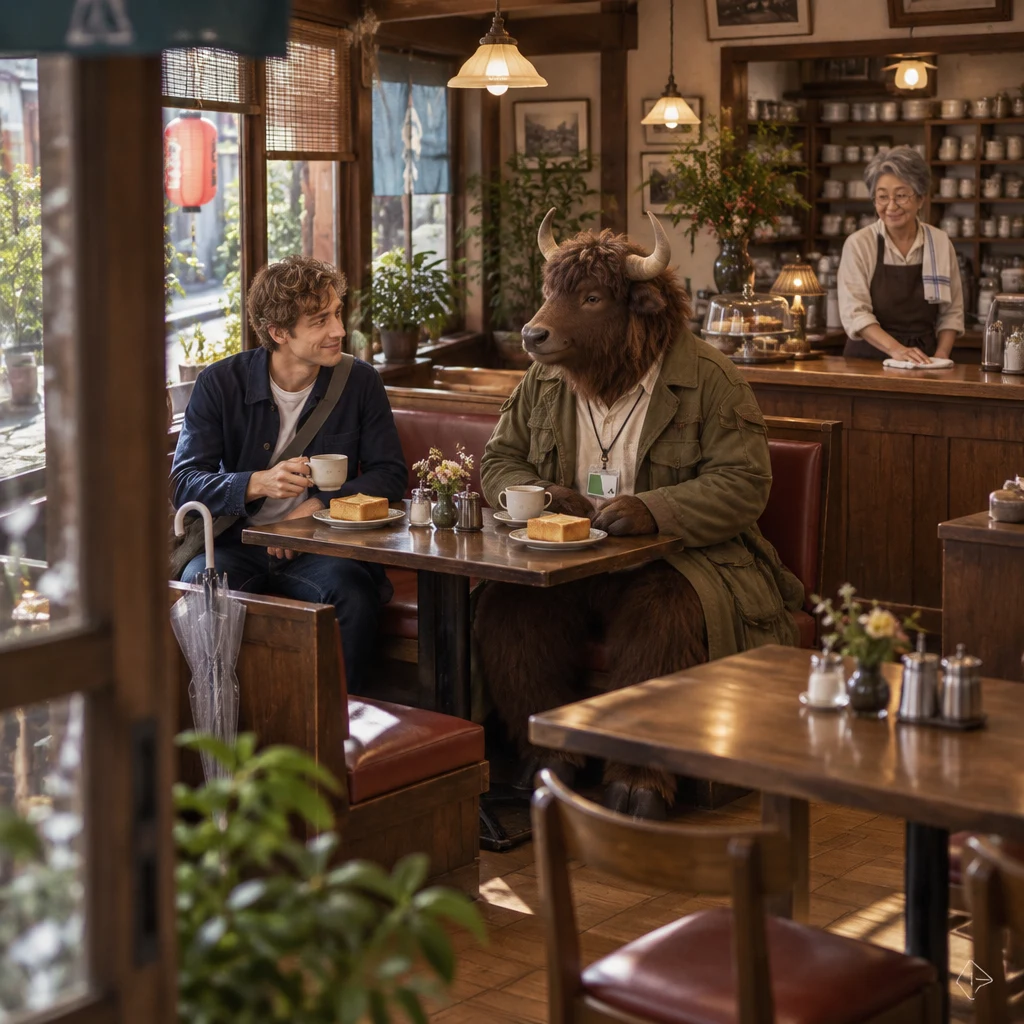
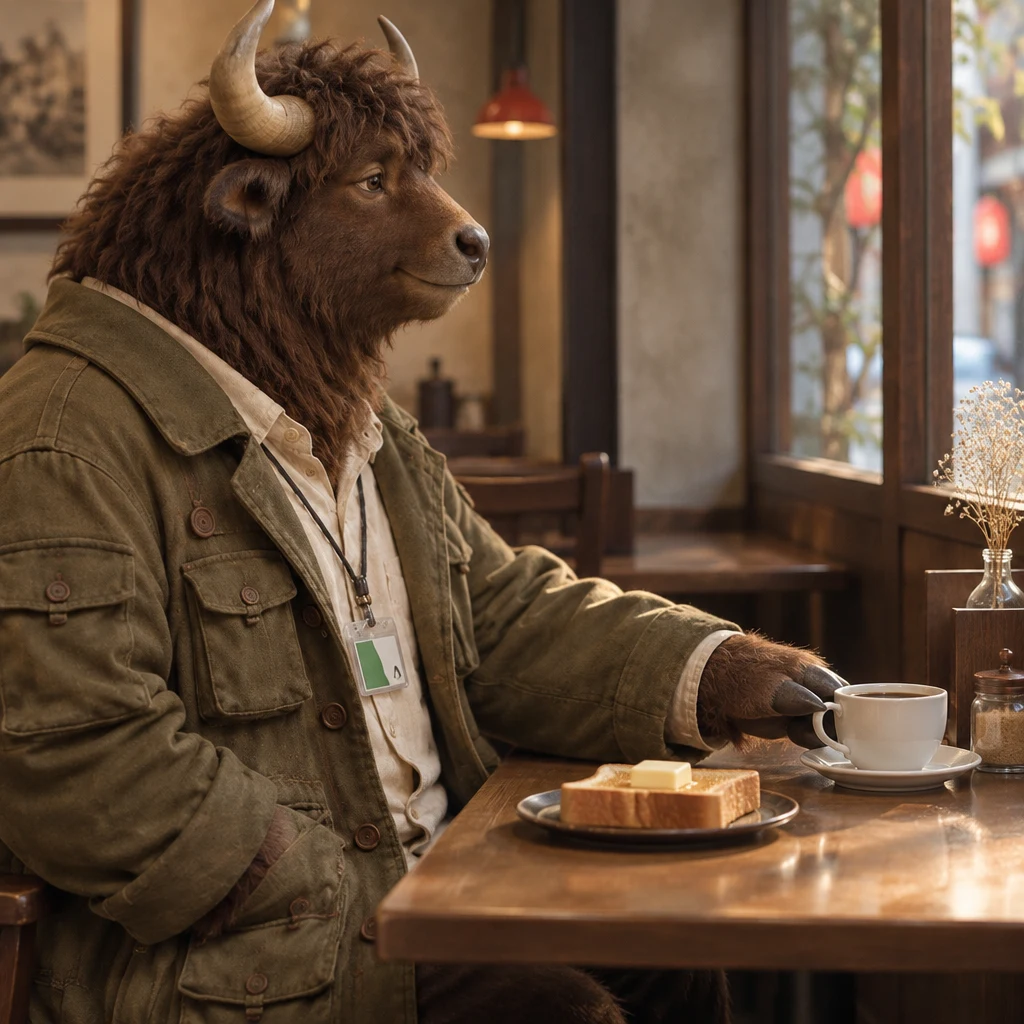
Leo sits with Goro in the corner booth. Masako has already set down thick toast and a blend coffee.
Goro looks happy about the toast. The coffee sits there, as usual, without a sip.
You will say what you like, ask what someone likes, and say when you love it or do not.
Keep it polite. Food you cannot eat comes later.
By the end of this lesson
Say what you like, love, and do not like.
- ___が好きです。I like ___.
- ___は好きですか。Do you like ___?
- 何が好きですか。What do you like?
- 大好きです。I love it.
- 好きじゃないです。I don't like it.
- どっちも好きです。I like both.
Scene — toast on the table
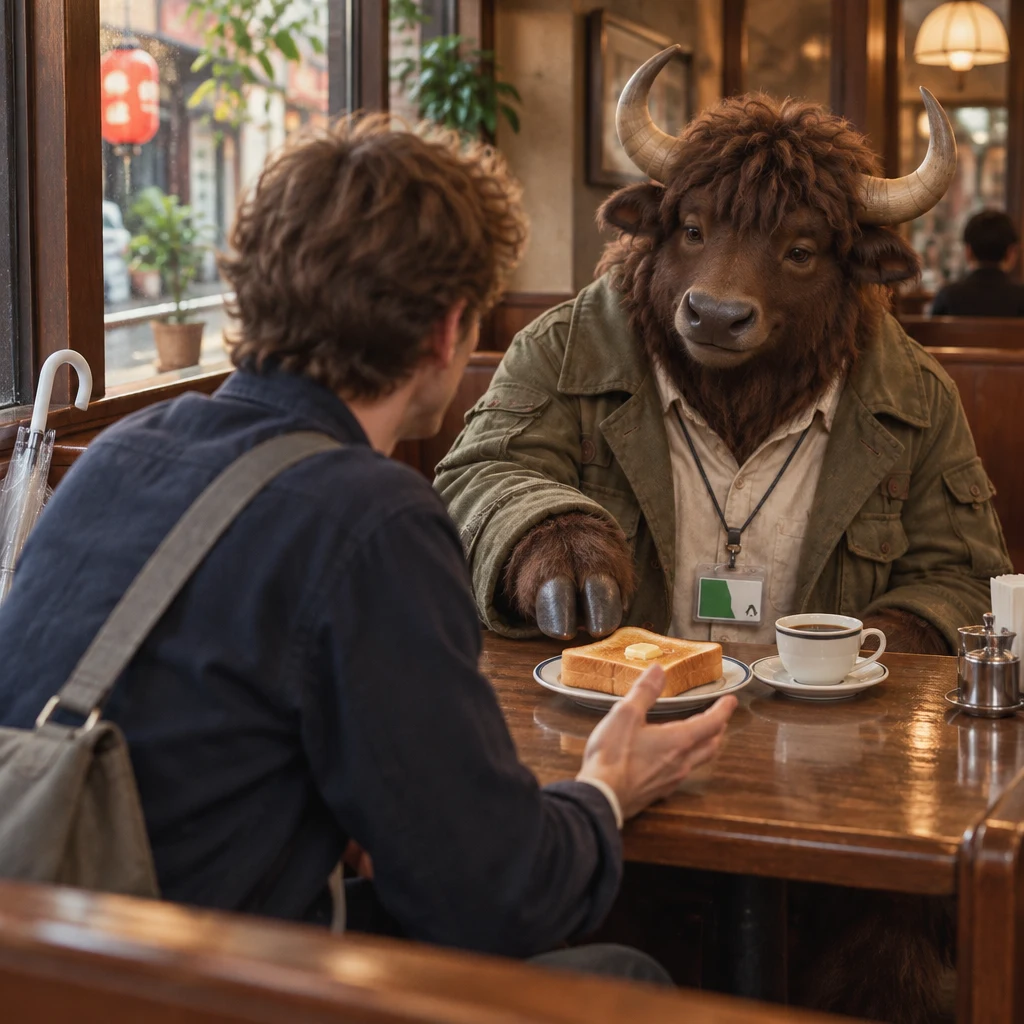
Kissa Hotaru is quiet this afternoon. Leo slides into the booth across from Goro. Thick buttered toast and a blend coffee are already on the table.
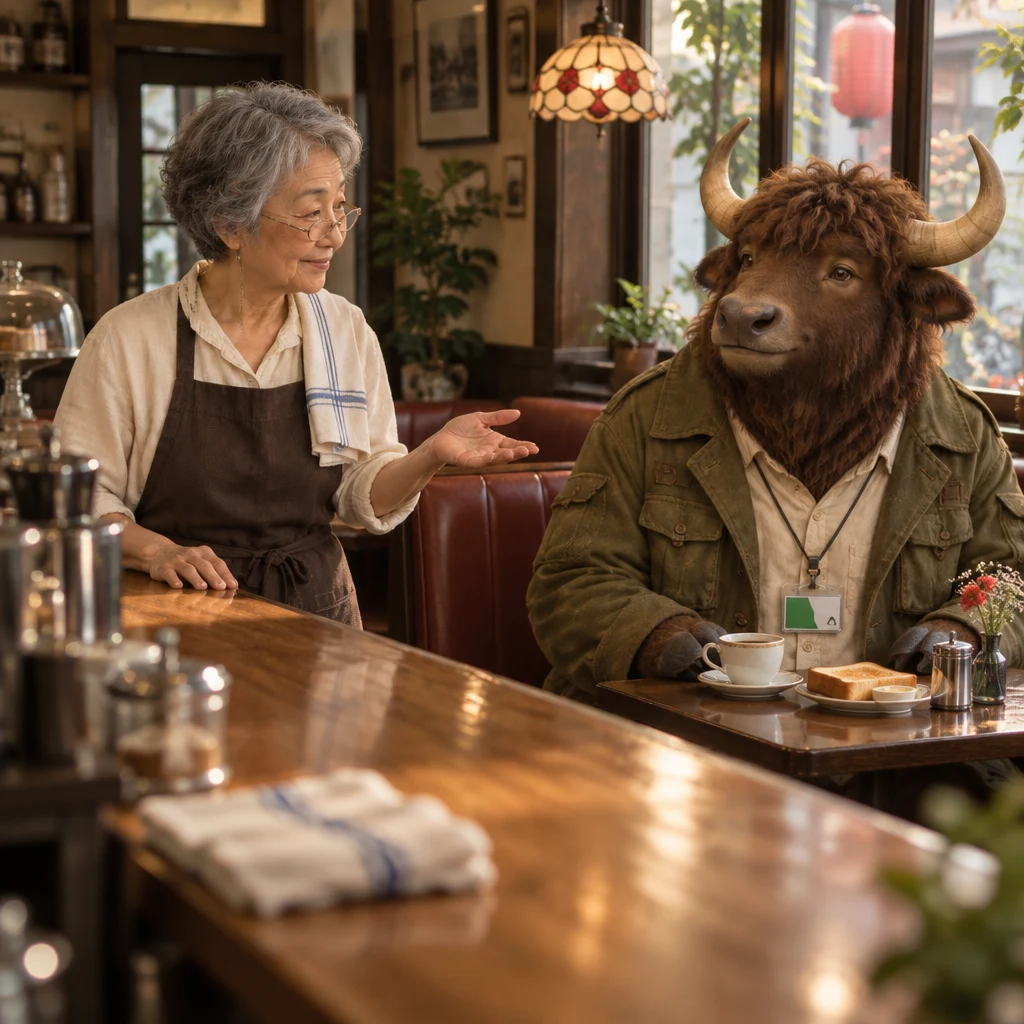
Masako wipes the wooden counter and watches the two cups. Goro has not touched the coffee.
Learn — say what you like
These six lines help you name a like, ask about one, and say you love it or do not.
One line lets you pick both.

___が好きです。
I like ___.
When to use it: Name the thing you like, then use this line.
Learn it as one piece to name a like.
___は好きですか。
Do you like ___?
When to use it: Ask this when you name a thing and want a yes or no.
Learn it as one piece to ask about a like.
何が好きですか。
What do you like?
When to use it: Ask this when you want to hear someone's likes.
Learn it as one piece to ask what they like.
大好きです。
I love it.
When to use it: Use this when you like something a lot.
Learn it as one piece for a strong like.
好きじゃないです。
I don't like it.
When to use it: Use this to say you do not like something.
Learn it as one piece to say you do not like it.

どっちも好きです。
I like both.
When to use it: Use this when you like both of two things.
Learn it as one piece to say you like both.
Say it: Pause briefly before ち in どっち; the small っ doubles the next consonant.
Story — Goro and the coffee
Leo sits down with Goro. Masako has already brought toast and coffee.
Highlighted phrases are the new lines. Turn on Show English if you want a gloss.
- Thick toast and a blend coffee already sit on the table.
 Leoこんにちは。Hello.
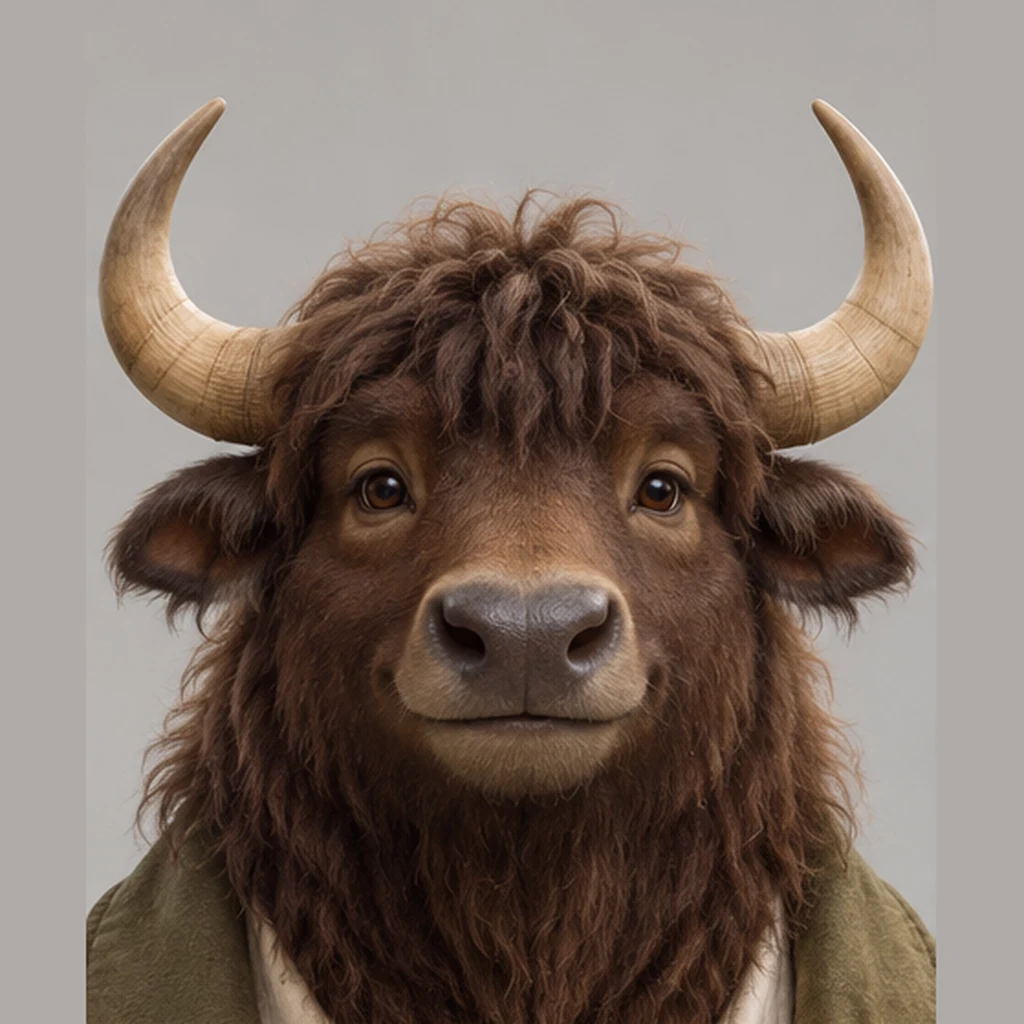 Goroお元気ですか。How are you?
- Leo元気です。I'm fine.
- Masako turns to Goro.
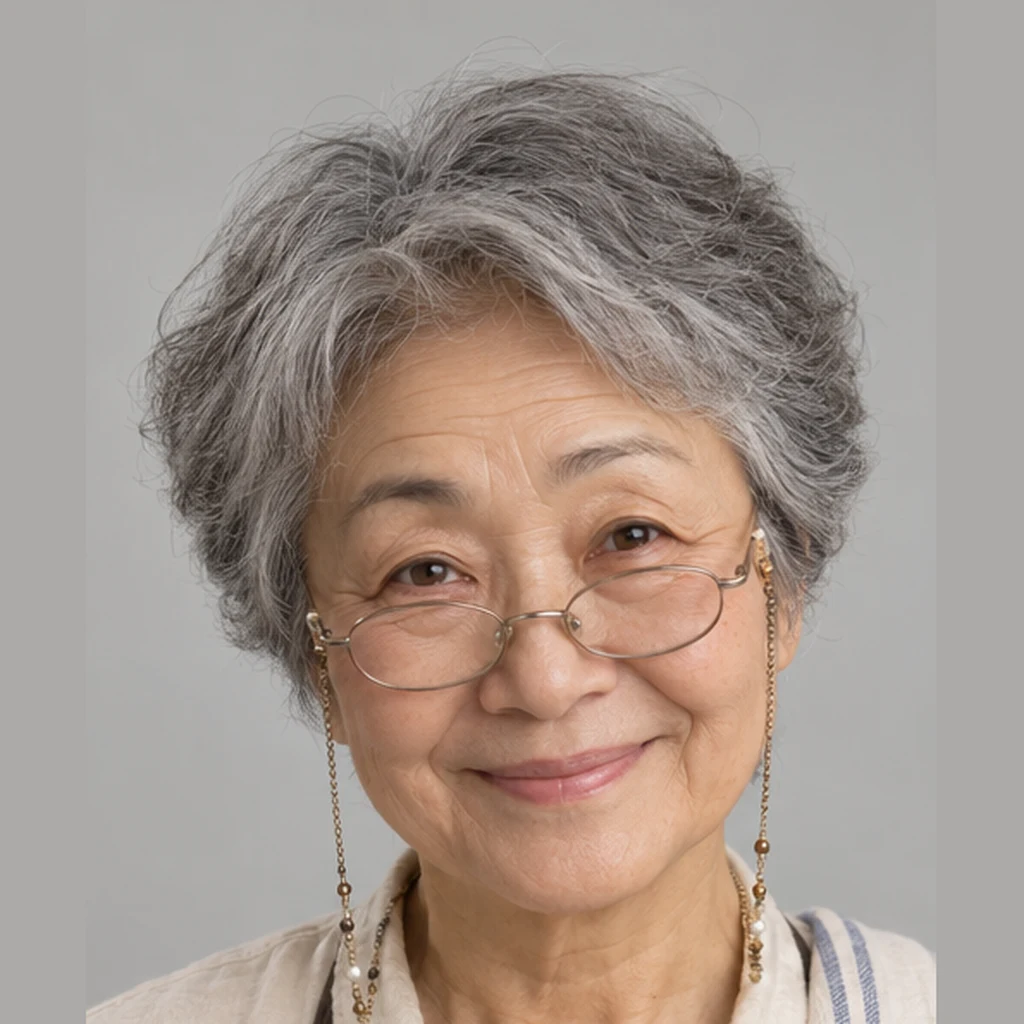 Masako何が好きですか。What do you like?
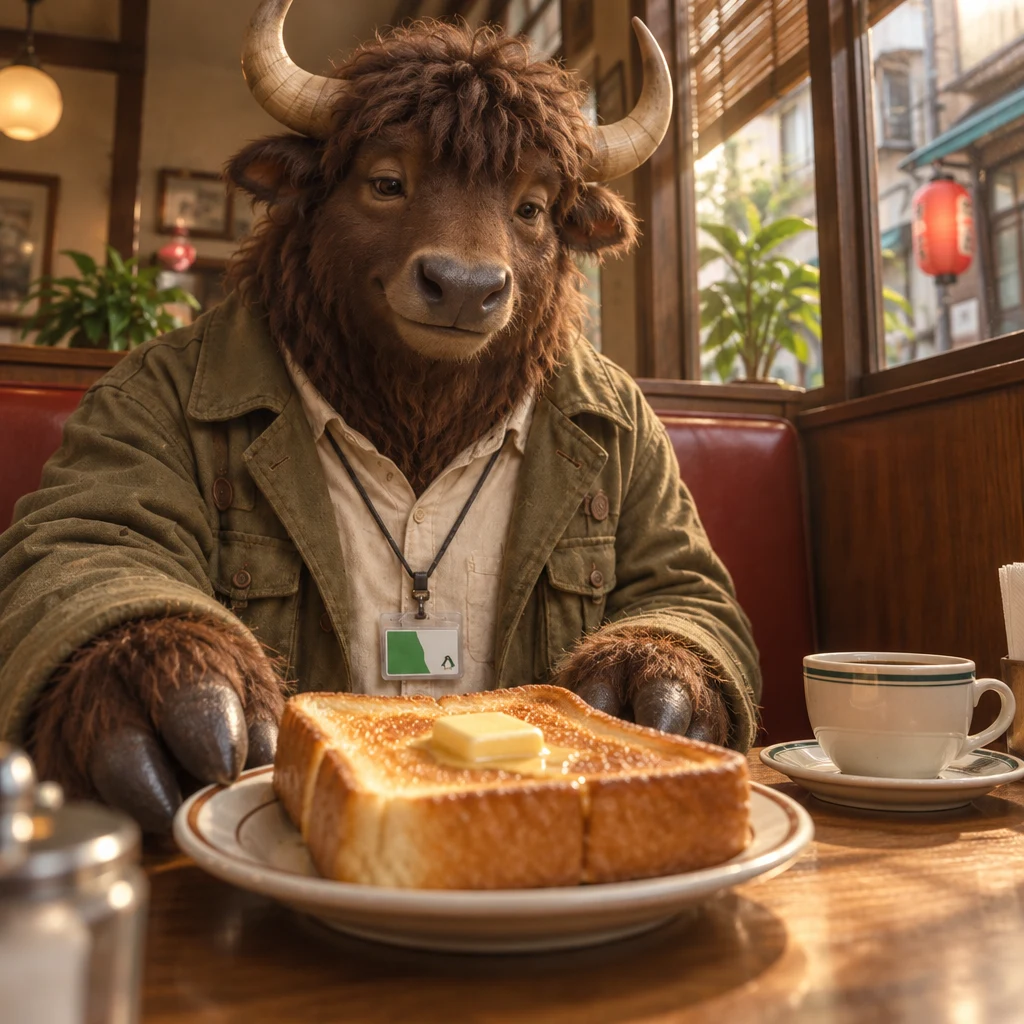
- Goroバタートーストが好きです。I like buttered toast.
- Goro taps the thick toast with a hoof.
- Goro大好きです。I love it.
- Masakoコーヒーは好きですか。Do you like coffee?
- Goro好きじゃないです。I don't like it.
- The blend coffee sits untouched, as usual.
- Masako turns to Leo.
- Masakoコーヒーは好きですか。Do you like coffee?
- Leoブレンドコーヒーが好きです。I like blend coffee.
- Masakoトーストは好きですか。Do you like toast?
- Leoどっちも好きです。I like both.
Practice — pick the right like
Eleven short tasks wait in this round. You will listen, fill a gap, build a line, and pick a reply.
Each one is small, so you move on quickly.
0 of 11 done
What did you hear?
What did you hear?
Match the pairs
Japanese
大好きです。Drop the English here好きじゃないです。Drop the English hereどっちも好きです。Drop the English hereEnglish
What do you say?
What do you say?
Masako asks what you like. Tell her you like blend coffee.
Pick the reply
Goro says:
Pick the reply
お元気ですか。
How are you?
And you reply with:
Fill the gap
Fill the gap
I like both.
どっち____好きです。
What does it mean?
What does it mean?
好きじゃないです。
Build the line
Build the line
What do you like?
。
Tap the words in order.
What do you say?
What do you say?
Ask Goro whether he likes coffee.
Fill the gap
Fill the gap
I don't like it.
好き____です。
What do you say?
What do you say?
Goro asks if you like the toast. Tell him you love it.
Which one doesn’t belong?
Which one doesn’t belong?
Say it — your turn in the booth
You are Leo in the booth. When the cue is yours, tap the microphone and say the line.
Tap play first if you want to hear it. The recording stays on this device.
- Masako何が好きですか。What do you like?
- Leo (you)Tell her you like blend coffee.
Tell her you like blend coffee.
___が好きです。
I like ___.
0 of 3 said
Recap — what you can say now
| Japanese | English | Play |
|---|---|---|
| ___が好きです。 | I like ___. | |
| ___は好きですか。 | Do you like ___? | |
| 何が好きですか。 | What do you like? | |
| 大好きです。 | I love it. | |
| 好きじゃないです。 | I don't like it. | |
| どっちも好きです。 | I like both. |
Save your progress — it’s free
Keep your place in the course and see which lines you’ve learned.
Want the next lesson in your inbox?
Get the next lesson by email, one a day.
Join the newsletterDaily lesson emails are coming soon. Newsletter subscribers get them first.
Keep practicing with Yak Cards
Keep these likes in your pocket. Open the Yak Cards for this lesson and run them on the train.
A short Yak Cards round each day keeps these likes ready at the counter.
Open Yak Cards