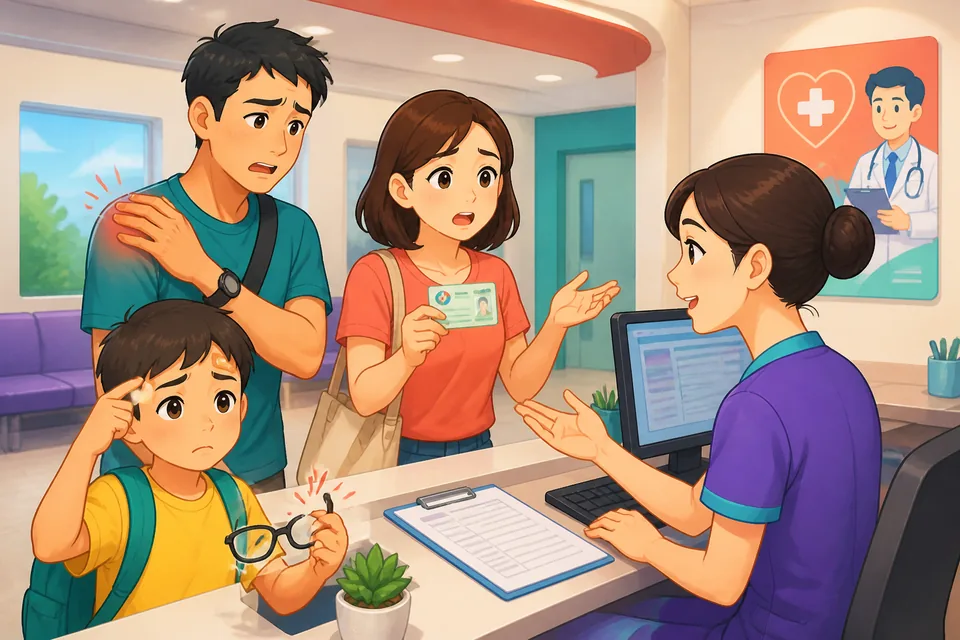
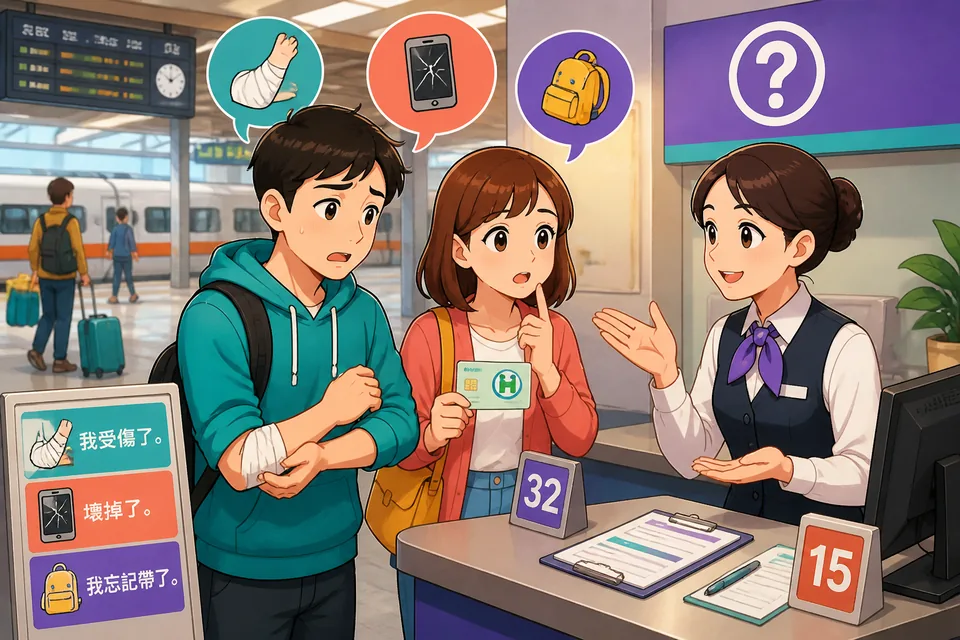
Welcome! In this short lesson you'll learn to say common small problems politely. Say each phrase aloud and imagine using it in travel or daily life.
Level A1: Lesson 24 focuses on short, useful sentences to report everyday problems (e.g., I hurt my ___, I forgot ___, it’s broken). You'll practice hearing and repeating these exact frames and using them in a short conversation—handy for trips and errands. This lesson is CEFR-aligned and keeps things friendly and practical.
After this lesson you'll be able to:
Be able to state a minor injury and what part is hurt using ___をけがしました。(___ o kega shimashita).
Say that something is broken with ___が壊れています。(___ ga kowarete imasu) and that you forgot something with ___を忘れました。(___ o wasuremashita).
Explain you missed transport or an event with ___に間に合いませんでした。(___ ni ma ni aimasen deshita), say you are late with 遅れています。(Okurete imasu), and report payment trouble with 払えません。(Haraemasen).
Use ___すぎます。(___ sugimasu) to say something is too ___ (e.g., 高すぎます, 熱すぎます).
Ready? Let's go!
When you tap play on phrases, we track your progress through this lesson.
1. Reading + Listening Practice
Hear core phrases, repeat aloud.
___をけがしました。
___ o kega shimashita.
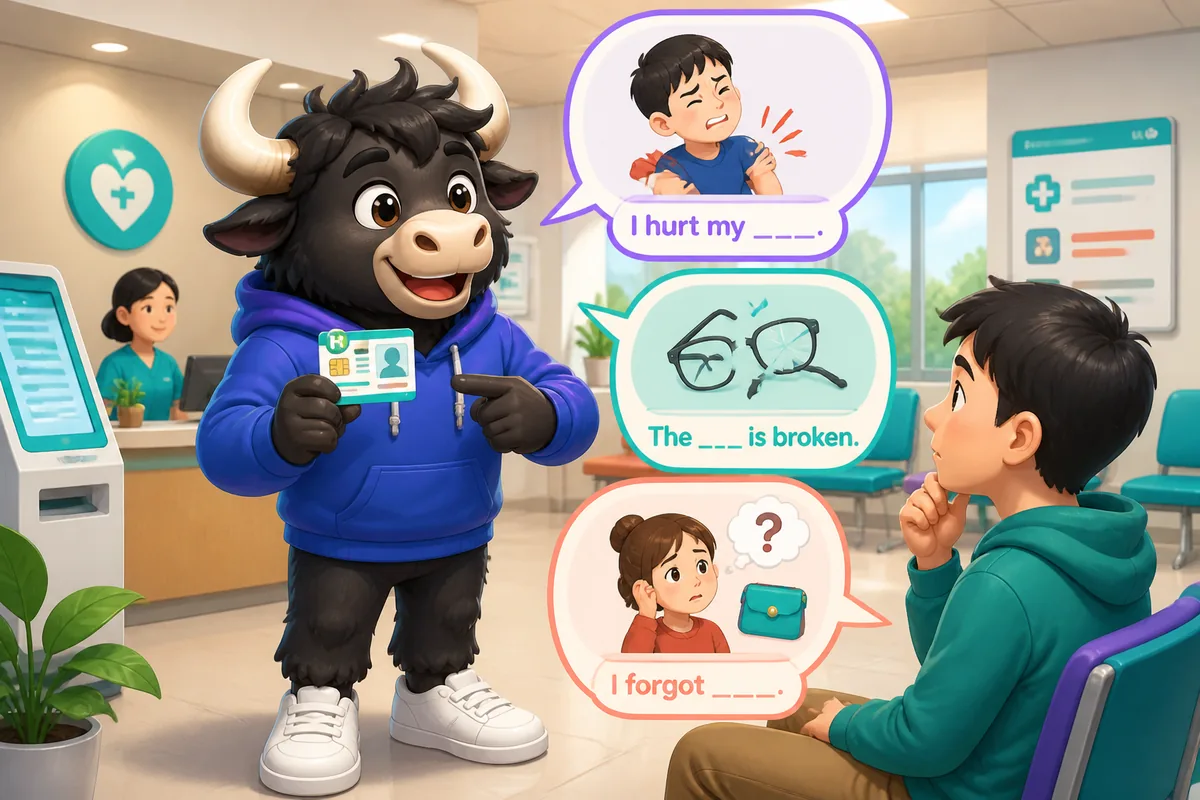
I hurt my ___.
Meaning: I hurt my ___.
When to use: Put a body part before を to say you hurt that part (e.g., 足をけがしました。). Use this for minor injuries you want to report politely.
足をけがしました。
Ashi o kega shimashita.
I hurt my foot.
手をけがしました。
Te o kega shimashita.
I hurt my hand.
___が壊れています。
___ ga kowarete imasu.
The ___ is broken.
Meaning: The ___ is broken.
When to use: Use が with devices or objects (e.g., 携帯電話が壊れています。). If you want to stress the event, 壊れました is also possible.
Tip: Beginner learners sometimes use を instead of が (e.g., 携帯電話を壊れています。). Use が for the broken item.
携帯電話が壊れています。
Keitai denwa ga kowarete imasu.
My cellphone is broken.
窓が壊れています。
Mado ga kowarete imasu.
The window is broken.
___を忘れました。
___ o wasuremashita.
I forgot ___.
Meaning: I forgot ___.
When to use: Put the thing you forgot before を (e.g., パスポートを忘れました。). This can mean you forgot to bring it or forgot information.
パスポートを忘れました。
Pasupōto o wasuremashita.
I forgot my passport.
傘を忘れました。
Kasa o wasuremashita.
I forgot my umbrella.
___に間に合いませんでした。
___ ni ma ni aimasen deshita.
I missed ___.
Meaning: I missed ___ / I didn't make it in time for ___.
When to use: Use に with a train, bus, appointment, or event (e.g., 電車に間に合いませんでした。). For transport, 乗り遅れました is another natural option.
電車に間に合いませんでした。
Densha ni ma ni aimasendeshita.
I missed the train.
会議に間に合いませんでした。
Kaigi ni ma ni aimasendeshita.
I didn't make it to the meeting.
遅れています
Okurete imasu.
I'm late.
Meaning: I'm late.
When to use: Use 遅れています (Okurete imasu) to say you are running late. For school or work, 遅刻しています is also common.
ごめんなさい、遅れています。
Gomen nasai, okurete imasu.
Sorry, I'm running late.
会場に遅れています。
Kaijō ni okurete imasu.
I'm late to the venue.
払えません
Haraemasen.
I can't pay.
Meaning: I can't pay.
When to use: Use 払えません to indicate a problem paying. If you specifically have no money, say お金がありません。
すみません、払えません。
Sumimasen, haraemasen.
Sorry, I can't pay.
カードが使えなくて払えません。
Kādo ga tsukaenakute haraemasen.
My card doesn't work so I can't pay.
___すぎます。
___ sugimasu.
It's too ___.
Meaning: It's too ___.
When to use: Put the adjective stem before すぎます to say something is too ___ (e.g., 高すぎます, 暑すぎます). Works with な-adjectives as well (e.g., 静かすぎます).
Tip: Remember to use the adjective stem before すぎます. Beginners sometimes use the full adjective form (e.g., 高いすぎます), which is incorrect.
高すぎます
Taka sugimasu.
It's too expensive.
辛すぎます
Kara sugimasu.
It's too spicy.
2. Conversational Listening Practice
Hear phrases in a real mini-conversation.
At a train station after a morning mishap
Anna
足をけがしました。
Ashi o kega shimashita.
I hurt my foot.
David
大丈夫ですか?それでどうしましたか?
Daijōbu desu ka? Sore de dōshimashita ka?
Are you okay? So what happened?
Anna
駅で遅れています。電車に間に合いませんでした。
Eki de okurete imasu. Densha ni ma ni aimasendeshita.
I'm running late at the station. I missed the train.
David
それは大変。財布は?
Sore wa taihen. Saifu wa?
That's rough. What about your wallet?
Anna
パスポートを忘れました。そして、携帯電話が壊れています。
Pasupōto o wasuremashita. Soshite, keitai denwa ga kowarete imasu.
I forgot my passport. And my phone is broken.
David
お金がないってこと?
Okane ga nai tte koto?
So you have no money?
Anna
ううん、払えません。助けてくれる?
Ūn, haraemasen. Tasukete kureru?
No, I can't pay. Can you help me?
3. Guided Practice
Quizzes and matching to lock in meaning.
You dropped your phone and the screen is cracked. What do you say?
At a cafe you realize you left your wallet at home. Which phrase fits?
You were at home and missed a scheduled meeting. Which sentence do you use?
The price on the menu is too high. How do you say 'It's too expensive'?
At the departure gate I noticed: I forgot my passport.
空港の出国ゲートで気づいた。パスポート___。
Kūkō no shukkoku gēto de kizuita. Pasupōto ___.
At the bus stop I told the station worker: 'Sorry, I missed the bus.'
バス停で駅員に言った:「ごめんなさい、バス___。」
Basu tei de ekiin ni itta: 'Gomen nasai, basu ___.'
When I returned the watch, the hand had stopped. My friend said, 'Sorry, the watch is broken.'
時計を返したら針が止まっていた。友だちが言った:「ごめん、時計が___。」
Tokei o kaeshitara hari ga tomatte ita. Tomodachi ga itta: 'Gomen, tokei ga ___.'
Match the core phrases
Match the extra phrases
4. Speaking Practice
Say phrases yourself (mic/recording).
Recording stays on your device only. Check speech uses your browser's speech tools when available.