
New here? This is lesson 236 of a free 240-lesson Japanese course.
Retelling the year in Japanese
Leo has nearly a year of Tokyo life to look back on, from a bewildering first morning to helping someone else at the register.
At the booth, Goro listens as Leo picks out what matters most: the people who helped him build a life in Yanaka.
Practice giving your memories a clear beginning, a main point, and an honest sense of progress.
By the end of this lesson
Tell the story of your year, connecting your first weeks to what matters now.
- この一年で、本当にいろいろなことがありました。A lot really happened this year.
- 来たばかりのころは、何もわかりませんでした。When I'd just arrived, I understood nothing.
- 今となっては、あの雨の朝が始まりでした。Looking back, that rainy morning was the start.
- 一番残っているのは、人とのつきあいです。What stays with me most is the people.
- 一晩でこうなったわけではありません。It didn't happen overnight.
- まだできないことも、あります。There are still things I can't do.
Scene — a year at the booth
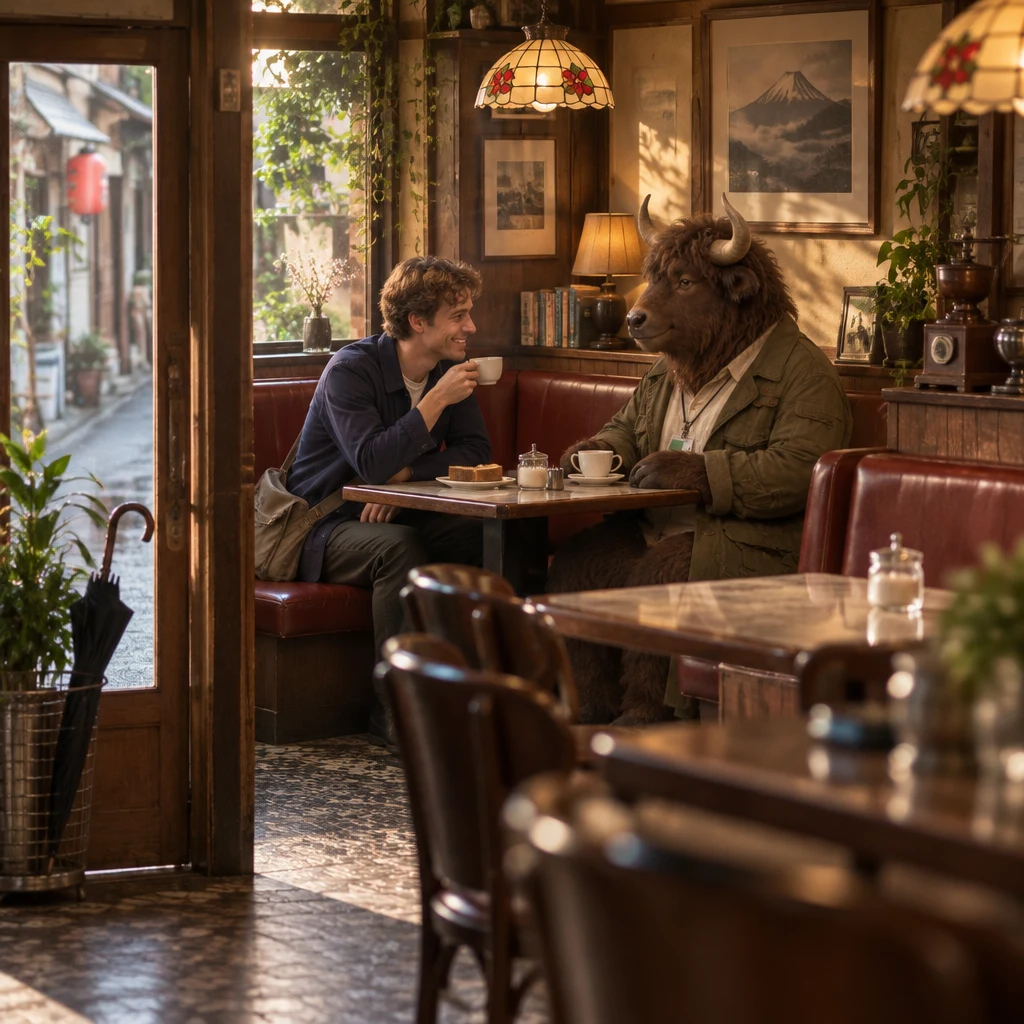
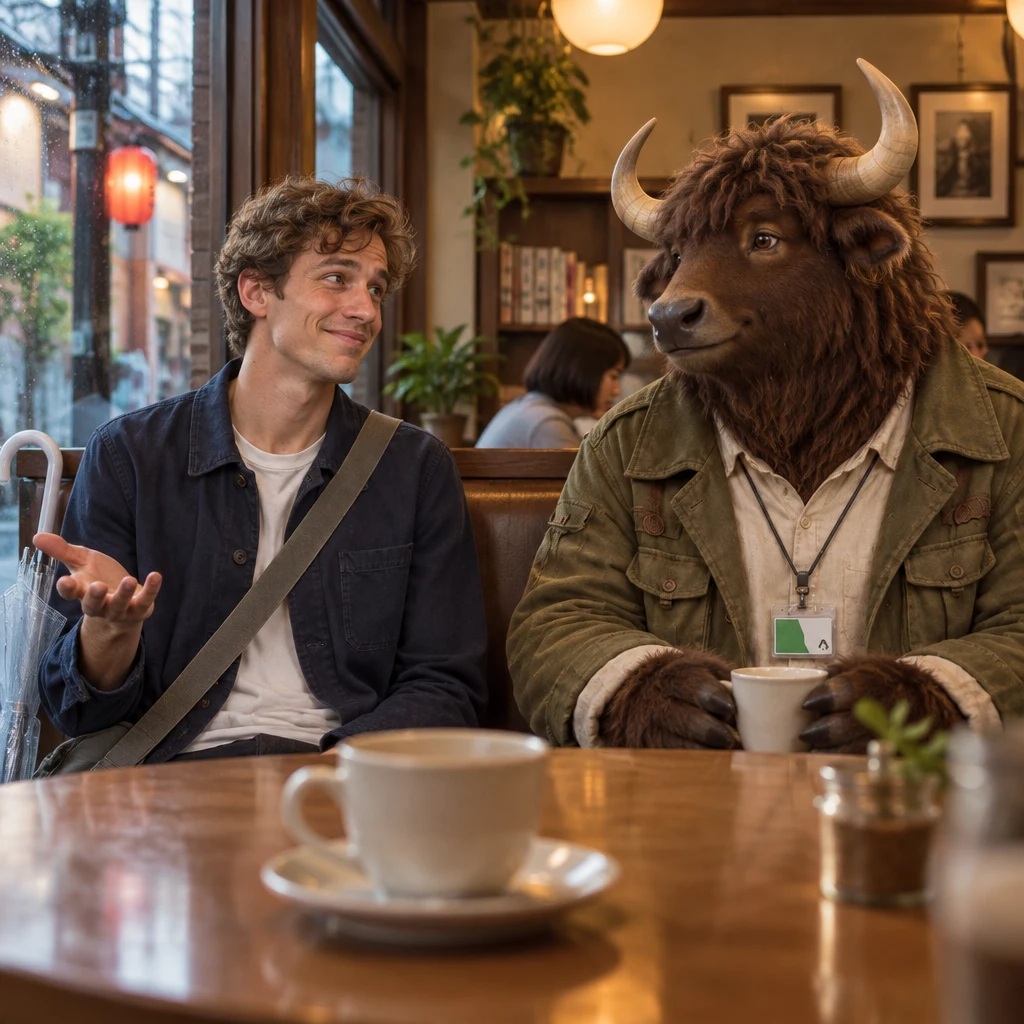
Late afternoon light reaches the red booth at Kissa Hotaru in Yanaka. Leo sits opposite Goro, whose buttered toast rests beside an unfinished blend coffee.
The old black umbrella remains in its stand by the door while their conversation turns to Leo's year.
Learn — give your memories a point
These six lines help you turn separate memories into a short account of your year.
Begin with the early days, explain what stayed with you, and acknowledge what still takes practice.

この一年で、本当にいろいろなことがありました。
A lot really happened this year.
When to use it: Open a personal account when you want to gather a year's experiences into one overview.
The opening sets a time span for the experiences you are about to summarize.

来たばかりのころは、何もわかりませんでした。
When I'd just arrived, I understood nothing.
When to use it: Describe your uncertain early days before explaining how things changed.
The opening describes the early period just after arrival, rather than one particular day.
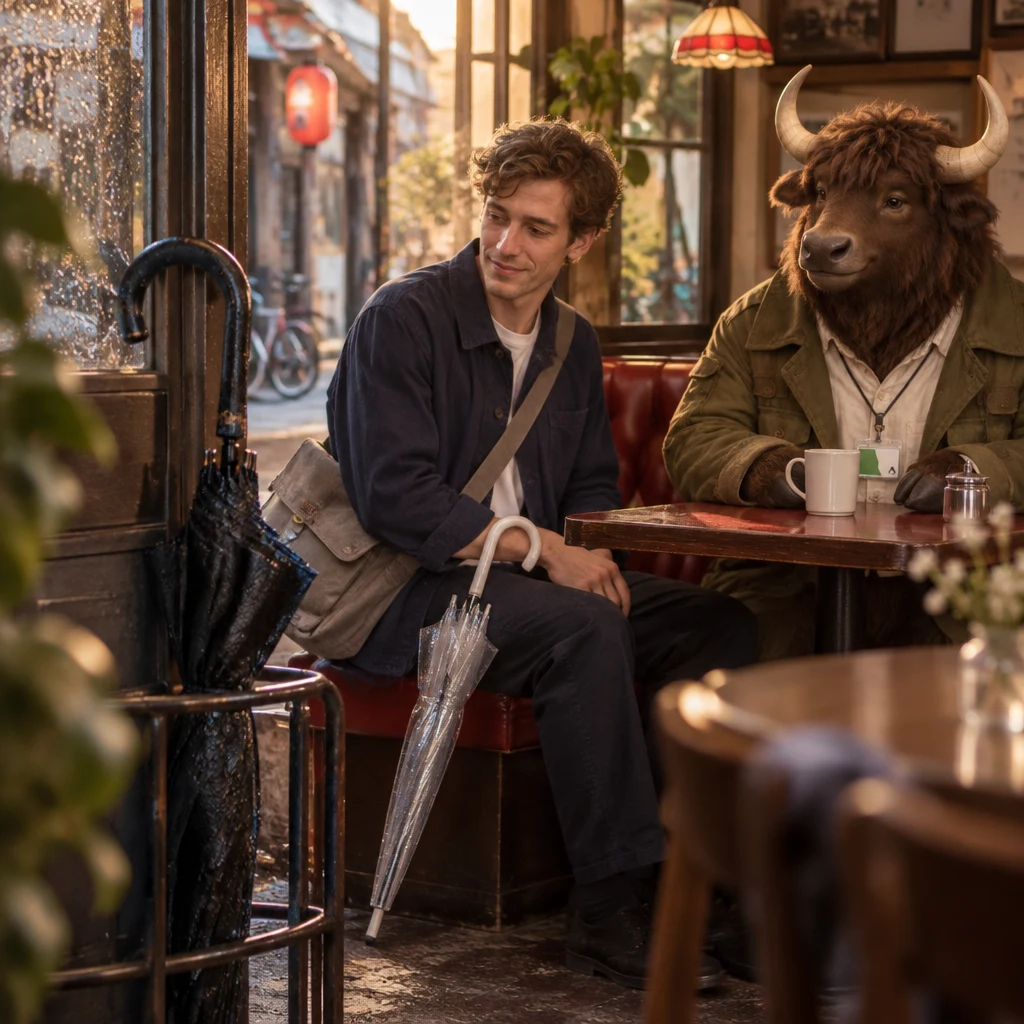
今となっては、あの雨の朝が始まりでした。
Looking back, that rainy morning was the start.
When to use it: Identify an earlier moment whose importance you can now recognize.
The opening presents your present-day view of an earlier event.
Say it: Hold the brief closure at the small っ before continuing; do not add a vowel.
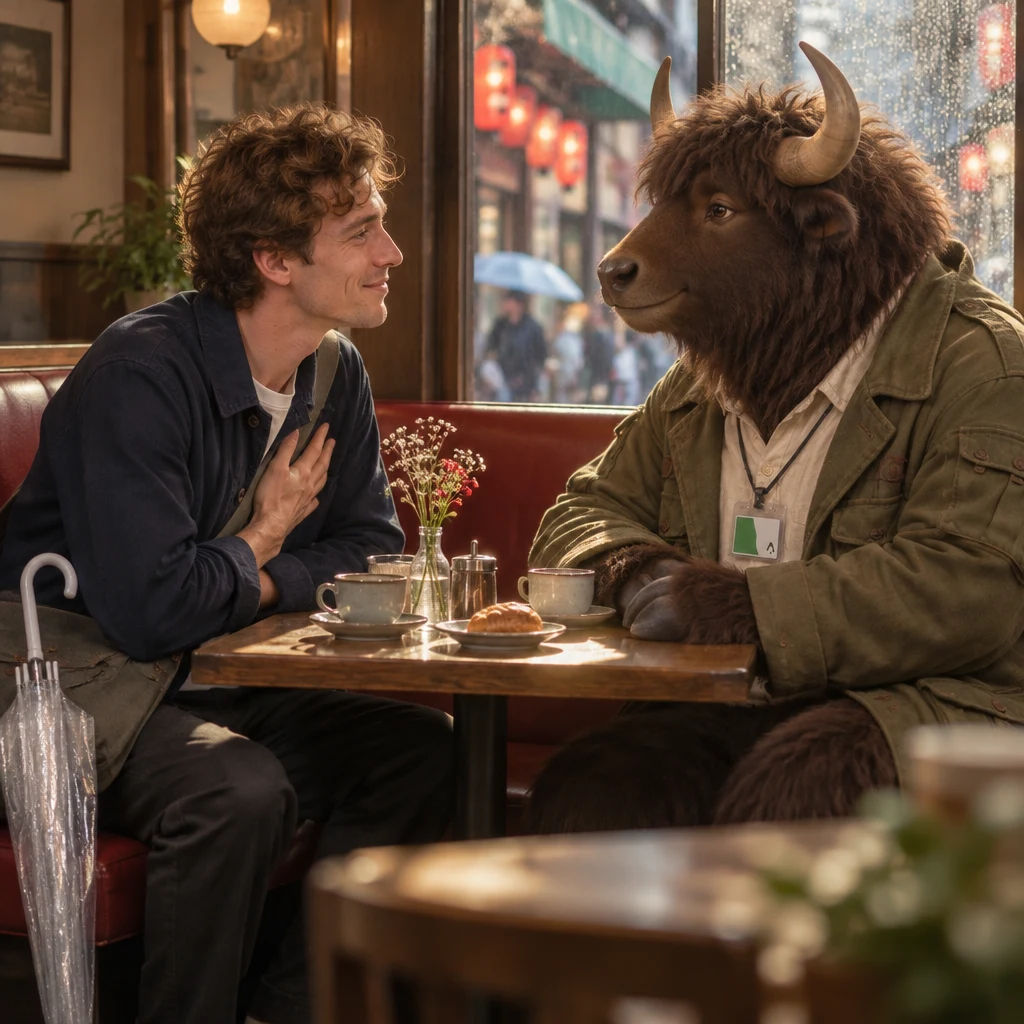
一番残っているのは、人とのつきあいです。
What stays with me most is the people.
When to use it: Give your account its main point by emphasizing the relationships that mattered.
The particle after 'people' marks the other side of a relationship.
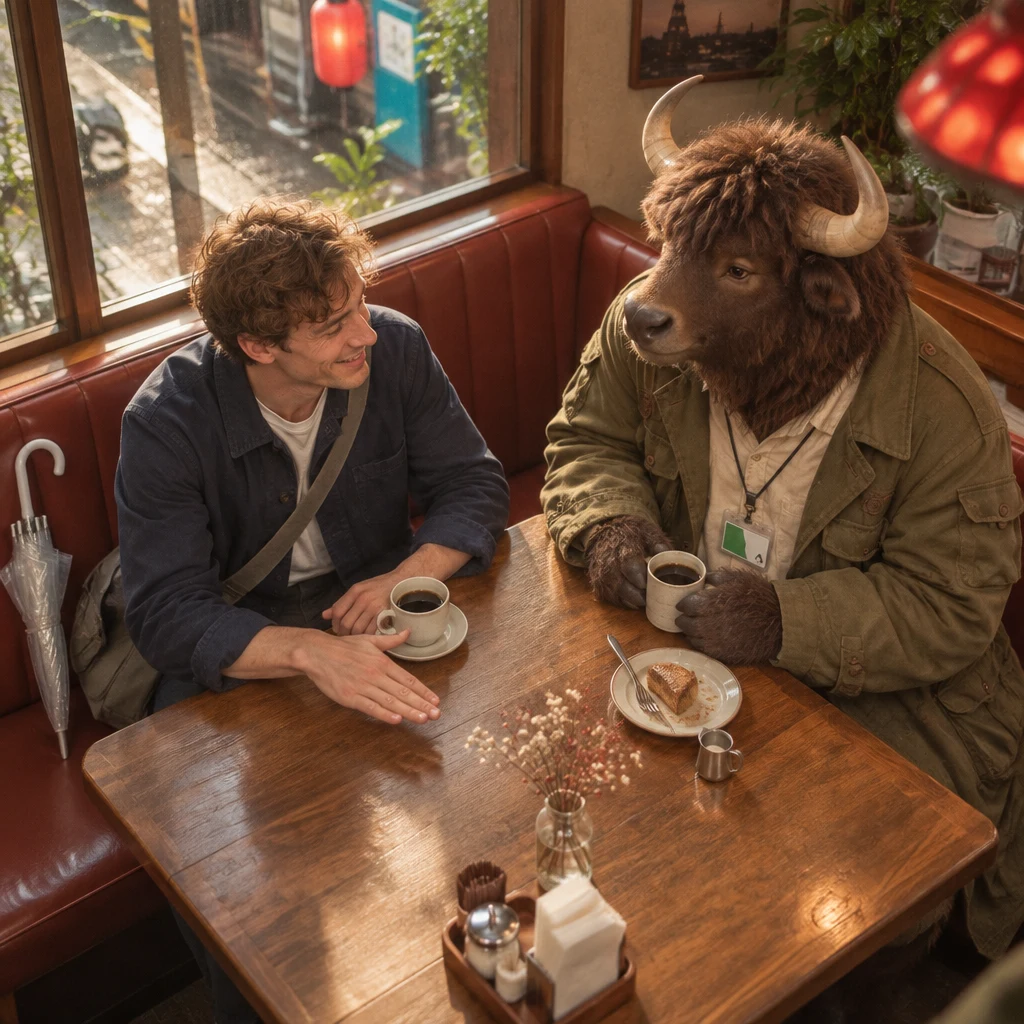
一晩でこうなったわけではありません。
It didn't happen overnight.
When to use it: Correct the impression that your present confidence or ability appeared suddenly.
The negative ending rejects the idea of an overnight change without denying the progress itself.
まだできないことも、あります。
There are still things I can't do.
When to use it: Keep an account of your progress honest by acknowledging remaining limitations.
The particle after 'things I cannot do' adds remaining limitations to the progress already described.
Story — from arriving to belonging
Goro asks about Leo's first weeks, and Leo connects those memories to his life now.
Listen for the main point that holds his account together, even when Goro briefly loses it.
- Goro rests his cup on its saucer, with plenty of coffee still inside.
 Goroもうすぐ一年ですね。It will be a year soon.
 Leoこの一年で、本当にいろいろなことがありました。A lot really happened this year.
- Goro最初は、どうでしたか。What was it like at first?
- Leo来たばかりのころは、何もわかりませんでした。When I'd just arrived, I understood nothing.
- Leo最初は不安でした。I was nervous at first.
- Goroあの雨の朝、ここで会いましたね。We met here that rainy morning.
- Leo今となっては、あの雨の朝が始まりでした。Looking back, that rainy morning was the start.
- Goro今は、新しく来た人を手伝っていますね。Now you're helping people who have just arrived.
- Leoええ。先日は、レジで会計の仕方を説明しました。Yes, the other day I explained how to pay at the register.
- Goroすっかり慣れたんですね。You've really settled in.
- Leo一晩でこうなったわけではありません。It didn't happen overnight.
- Goro何が一番心に残っていますか。What has stayed with you most?
- Leo一番残っているのは、人とのつきあいです。What stays with me most is the people.
- Goroそうですね。毎日少しずつ話しましたね。Yes, we talked a little every day.
- Leoまだできないことも、あります。There are still things I can't do.
- Goro例えば、どんなことですか。What sort of things, for example?
- Leo電話だと、まだ聞き返すことが多いです。On the phone, I still often have to ask people to repeat themselves.
- Goro's eyes drift toward the thick toast.
- Goroレオさんは?And you, Leo?
- Leo今、僕の話をしていたんですよ。We were just talking about me.
- Goroあ、そうでした。トーストを見ていたら、何の話か忘れました。Oh, right, I looked at the toast and forgot what we were talking about.
- Leo電話の話です。一歩ずつやっていきます。We were talking about phone calls; I'll take it step by step.
Practice — connect the beginning to now
Work through ten tasks that connect memories, relationships, and gradual progress.
Listen for the speaker's point, build complete lines, and choose replies that fit the account.
0 of 10 done
What did you hear?
What did you hear?
What does it mean?
What does it mean?
来たばかりのころは、何もわかりませんでした。
What do you say?
What do you say?
Looking back, explain that the rainy morning when you entered Kissa Hotaru was the beginning of your life here.
Build the line
Build the line
What stays with me most is the people.
、。
Tap the words in order.
Pick the reply
Goro says:
Pick the reply
今みたいに話せるようになるまで、時間がかかりましたか。
Did it take time to become able to speak the way you do now?
And you reply with:
Build the line
Build the line
There are still things I can't do.
、。
Tap the words in order.
True or false?
True or false?
The speaker says they felt confident from the beginning.
What do you say?
What do you say?
End your account by saying you will keep going one step at a time.
Build the line
Build the line
It didn't happen overnight.
。
Tap the words in order.
What does it mean?
What does it mean?
一番残っているのは、人とのつきあいです。
Say it — tell Goro what matters
You are Leo, looking back with Goro at the booth. Use each cue to give your account a clear direction.
Record your lines, then listen back for how the memories connect.
- Goroもうすぐ一年ですね。振り返って、どうですか。It will be a year soon; how does it feel looking back?
- Leo (you)Open by saying a lot really happened this year.
Open by saying a lot really happened this year.
この一年で、本当にいろいろなことがありました。
A lot really happened this year.
0 of 6 said
Recap — what you can say now
| Japanese | English | Play |
|---|---|---|
| この一年で、本当にいろいろなことがありました。 | A lot really happened this year. | |
| 来たばかりのころは、何もわかりませんでした。 | When I'd just arrived, I understood nothing. | |
| 今となっては、あの雨の朝が始まりでした。 | Looking back, that rainy morning was the start. | |
| 一番残っているのは、人とのつきあいです。 | What stays with me most is the people. | |
| 一晩でこうなったわけではありません。 | It didn't happen overnight. | |
| まだできないことも、あります。 | There are still things I can't do. |
Save your progress — it’s free
Keep your place in the course and see which lines you’ve learned.
Want the next lesson in your inbox?
Get the next lesson by email, one a day.
Join the newsletterDaily lesson emails are coming soon. Newsletter subscribers get them first.
Keep practicing with Yak Cards
Revisit these lines with Yak Cards and practice connecting an early memory to what matters now.
Choose one memory from your own year and decide what point you want it to make.
Open Yak Cards