
New here? This is lesson 233 of a free 240-lesson Japanese course.
Say thanks properly in Japanese
Leo has finished a long year in Yanaka. Before he closes the lease file, he drafts two separate thank-you notes: one for Ono-san and one for Mori-san.
The wording must fit each relationship: a landlord who helped him settle in, and a team lead who taught him at work.
Learn formal thanks that acknowledge past support, recognize others' help, and leave the door open for future contact.
By the end of this lesson
Write a formal thank-you and a short farewell note.
- この一年、大変お世話になりました。Thank you for everything this year.
- 丁寧に教えてくださって、ありがとうございました。Thank you for teaching me so carefully.
- また、ご連絡させてください。Please let me stay in touch.
- 皆様のおかげで、助かりました。I got through it thanks to everyone.
- 今後とも、どうぞよろしくお願いいたします。I hope we can keep this connection.
- まずは、お礼まで。Just a note to say thank you.
Scene — two notes at home
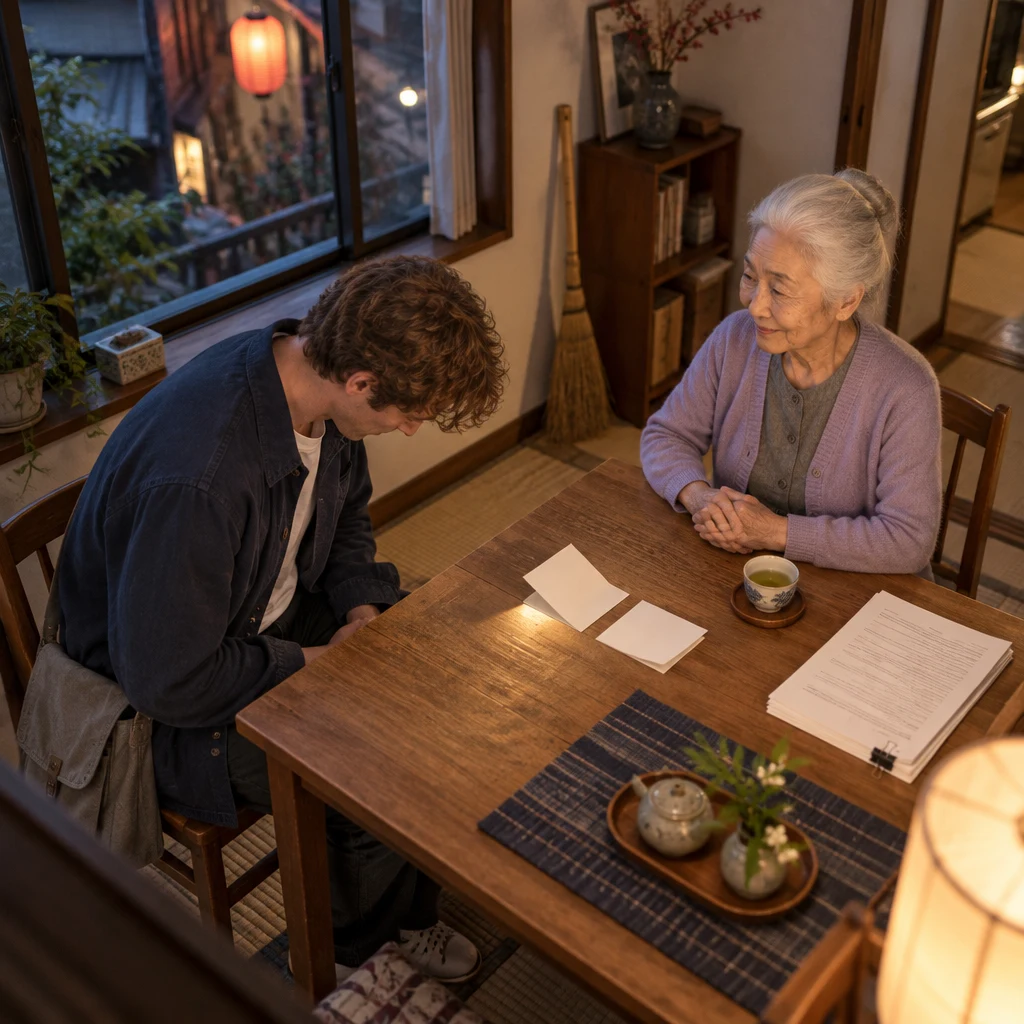
At his small Yanaka apartment table, Leo has opened two blank cards and set the lease papers aside. He wants to thank Ono-san for helping him settle in.
His laptop is open to a call with Mori-san, who is checking a separate work note. The old black umbrella remains in the kissa stand, untouched.

Learn — thanks that fit the relationship
These six expressions belong in written notes, not a casual counter exchange. Some thank one person; others recognize a whole group.
Notice how the closings keep a relationship open without pretending this is a final goodbye.
この一年、大変お世話になりました。
Thank you for everything this year.
When to use it: Use this in a formal note to thank someone for support over a period that is ending.
お世話になりました is a set expression for acknowledging someone's support over a period that is ending.

丁寧に教えてくださって、ありがとうございました。
Thank you for teaching me so carefully.
When to use it: Use this to thank someone respectfully for careful guidance or instruction.
に links 丁寧 to 教えて in this expression.

また、ご連絡させてください。
Please let me stay in touch.
When to use it: Use this in a note when you hope to contact someone again.
させてください is a polite request for permission, softened here as a wish to remain in contact.

皆様のおかげで、助かりました。
I got through it thanks to everyone.
When to use it: Use this to acknowledge a group's support in a formal message.
おかげで credits other people as the reason things worked out, while 皆様 makes the thanks collective.

今後とも、どうぞよろしくお願いいたします。
I hope we can keep this connection.
When to use it: Use this as a formal closing when you expect the relationship to continue.
今後とも looks ahead to the continuing relationship, so it suits a formal closing rather than a final goodbye.

まずは、お礼まで。
Just a note to say thank you.
When to use it: Use this as a compact closing for a short written thank-you.
まずは and お礼まで make a compact written closing; it is a note phrase, not a spoken farewell.
Story — drafts for Ono-san and Mori-san
Leo is working on two different notes at home. He reads each draft aloud while Ono-san and Mori-san check the tone.
The kissa is not part of this farewell.
- Leo has set out two blank cards. Ono-san is visiting, and Mori-san is on a video call.
 Leo大野さんへの文面は、これでいいでしょうか。Does this wording for you, Ono-san, look all right?
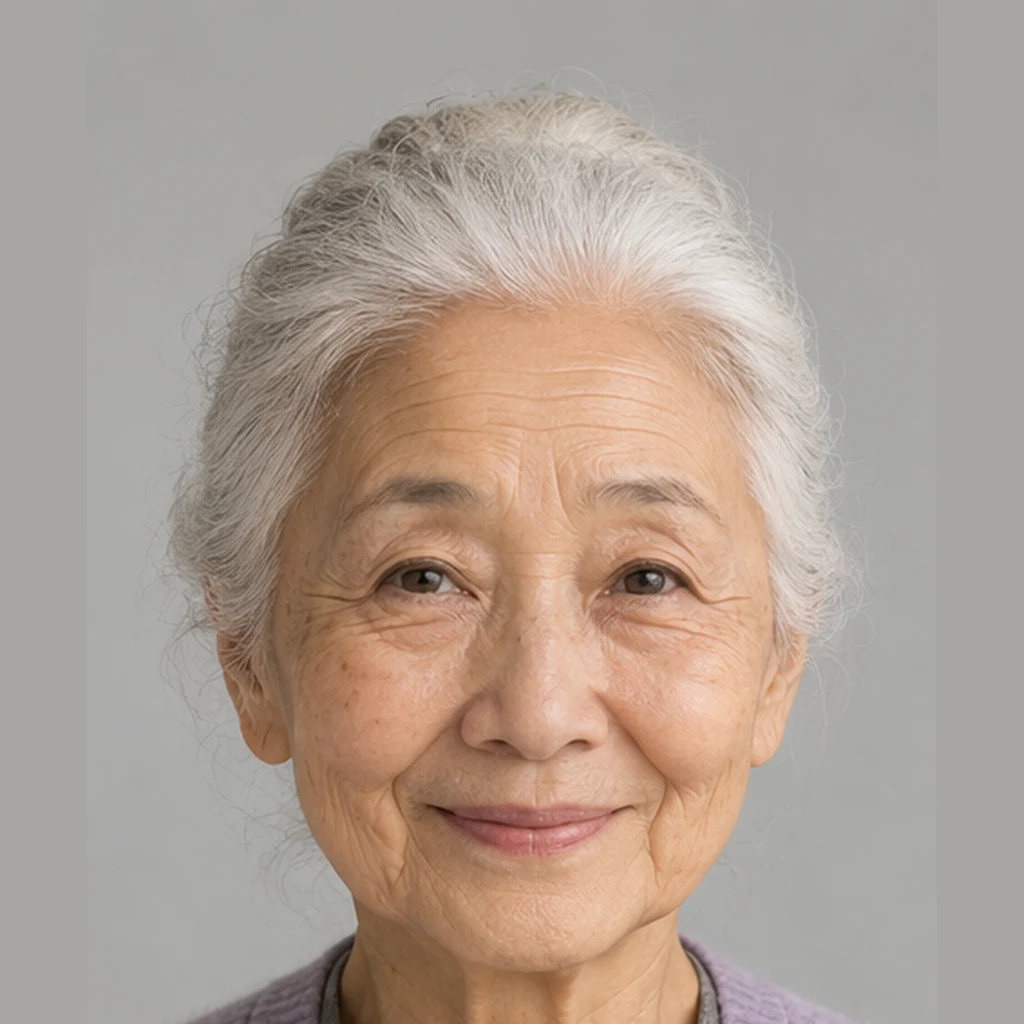 Ono-sanええ、短くて丁寧ですね。Yes, it's brief and thoughtful.
- Leoこの一年、大変お世話になりました。Thank you for everything this year.
- Ono-sanこちらこそ、いつも丁寧に連絡をくださって助かりました。I should thank you too; your careful messages were a real help.
- Leoまた、ご連絡させてください。Please let me stay in touch.
- Ono-sanええ、いつでもどうぞ。Of course, any time.
- Leo turns to the second card, addressed to Mori-san and the team.
 Mori-san仕事のほうの文面も見せてもらえますか。Could I see the wording for the work note too?
- Leo丁寧に教えてくださって、ありがとうございました。Thank you for teaching me so carefully.
- Leo皆様のおかげで、助かりました。I got through it thanks to everyone.
- Mori-sanこちらこそ、チームで進められて助かりました。I should thank you too; it helped to work as a team.
- Leo今後とも、どうぞよろしくお願いいたします。I hope we can keep this connection.
- Mori-sanいいですね。きちんとしています。That works. It's nicely considered.
- Leoありがとうございます。Thank you.
- Leo reads the final words of his short note aloud.
- Leoまずは、お礼まで。Just a note to say thank you.
- Ono-sanそれでは、私はそろそろ。Well then, I should be going.
- Leo今日はありがとうございました。Thank you for today.
Practice — choose a thoughtful closing
Listen for formal wording, then choose, build, and complete short pieces from the notes.
A matching task and brief exchanges help you notice who each thank-you is meant for.
0 of 10 done
What did you hear?
What did you hear?
Fill the gap
Fill the gap
Thank you for teaching me so carefully.
丁寧____教えてくださって、ありがとうございました。
What do you say?
What do you say?
You are writing a formal note and want to ask to stay in touch with the recipient.
Build the line
Build the line
I got through it thanks to everyone.
、。
Tap the words in order.
What does it mean?
What does it mean?
今後とも、どうぞよろしくお願いいたします。
Pick the reply
Mori-san says:
Pick the reply
短いお礼の結びなら、どうしますか。
What compact phrase can close a short thank-you note?
And you reply with:
Match the pairs
Japanese
この一年、大変お世話になりました。Drop the English here皆様のおかげで、助かりました。Drop the English here今後とも、どうぞよろしくお願いいたします。Drop the English hereEnglish
Put the chat in order
- Mori-sanWhat comes first?
- Leo…
- Mori-san…
- Leo…
What do you say?
What do you say?
Mori-san hands your pen back during a draft review. Give her a simple, immediate thank-you for returning it.
What does it mean?
What does it mean?
今日はありがとうございました。
Say it — read your drafts aloud
Imagine you are shaping the notes before sending them. Say each formal line as a written draft, with a pause between the two recipients.
Record yourself reading the drafts aloud, then listen back to hear how each closing fits its recipient.
- Ono-sanこの一年、いろいろ助かりました。You've helped me a lot this year.
- Leo (you)Read the formal thank-you in your note to Ono-san.
Read the formal thank-you in your note to Ono-san.
この一年、大変お世話になりました。
Thank you for everything this year.
0 of 3 said
Recap — what you can say now
| Japanese | English | Play |
|---|---|---|
| この一年、大変お世話になりました。 | Thank you for everything this year. | |
| 丁寧に教えてくださって、ありがとうございました。 | Thank you for teaching me so carefully. | |
| また、ご連絡させてください。 | Please let me stay in touch. | |
| 皆様のおかげで、助かりました。 | I got through it thanks to everyone. | |
| 今後とも、どうぞよろしくお願いいたします。 | I hope we can keep this connection. | |
| まずは、お礼まで。 | Just a note to say thank you. |
Save your progress — it’s free
Keep your place in the course and see which lines you’ve learned.
Want the next lesson in your inbox?
Get the next lesson by email, one a day.
Join the newsletterDaily lesson emails are coming soon. Newsletter subscribers get them first.
Keep practicing with Yak Cards
Save these formal thank-yous for your next note. Open the Yak Cards and review them when you have a quiet moment.
A short review helps you choose a closing that matches the relationship.
Open Yak Cards