
New here? This is lesson 132 of a free 240-lesson Japanese course.
What I can do in Japanese
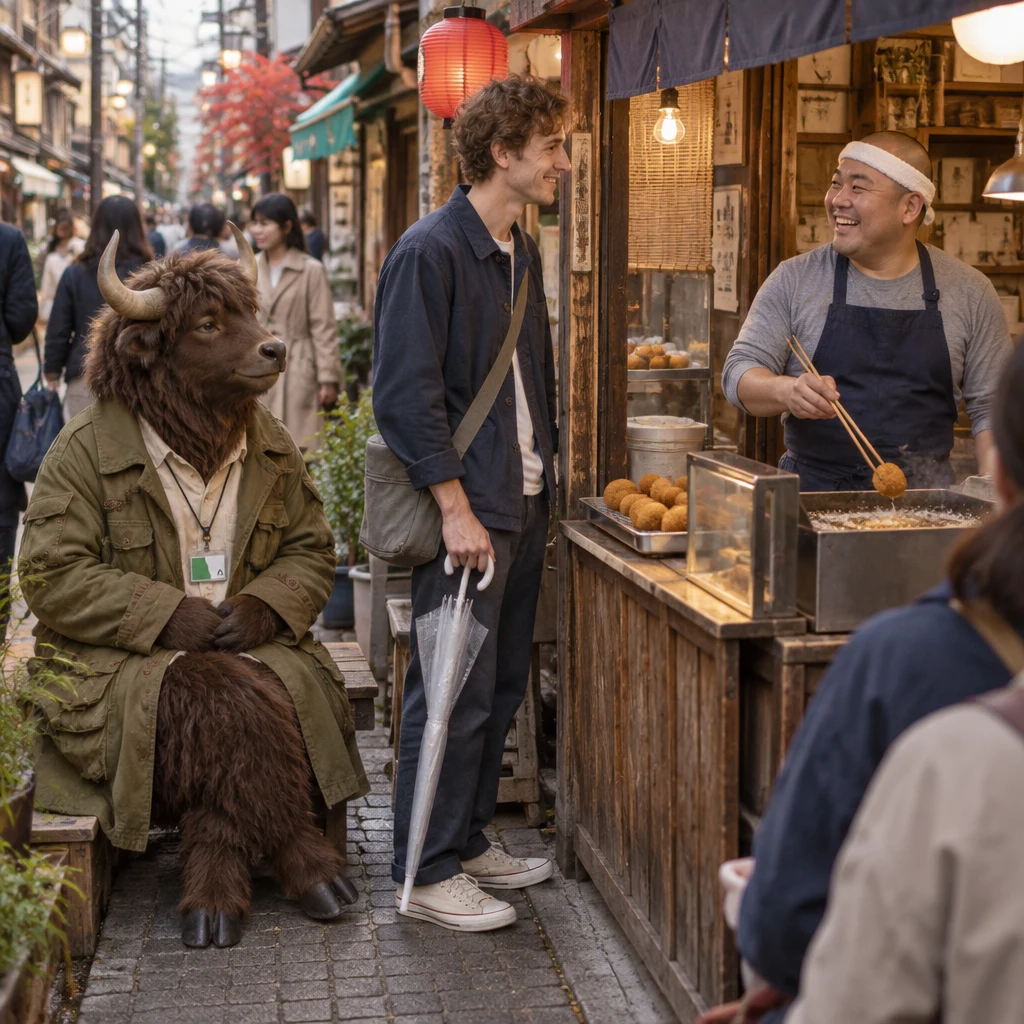
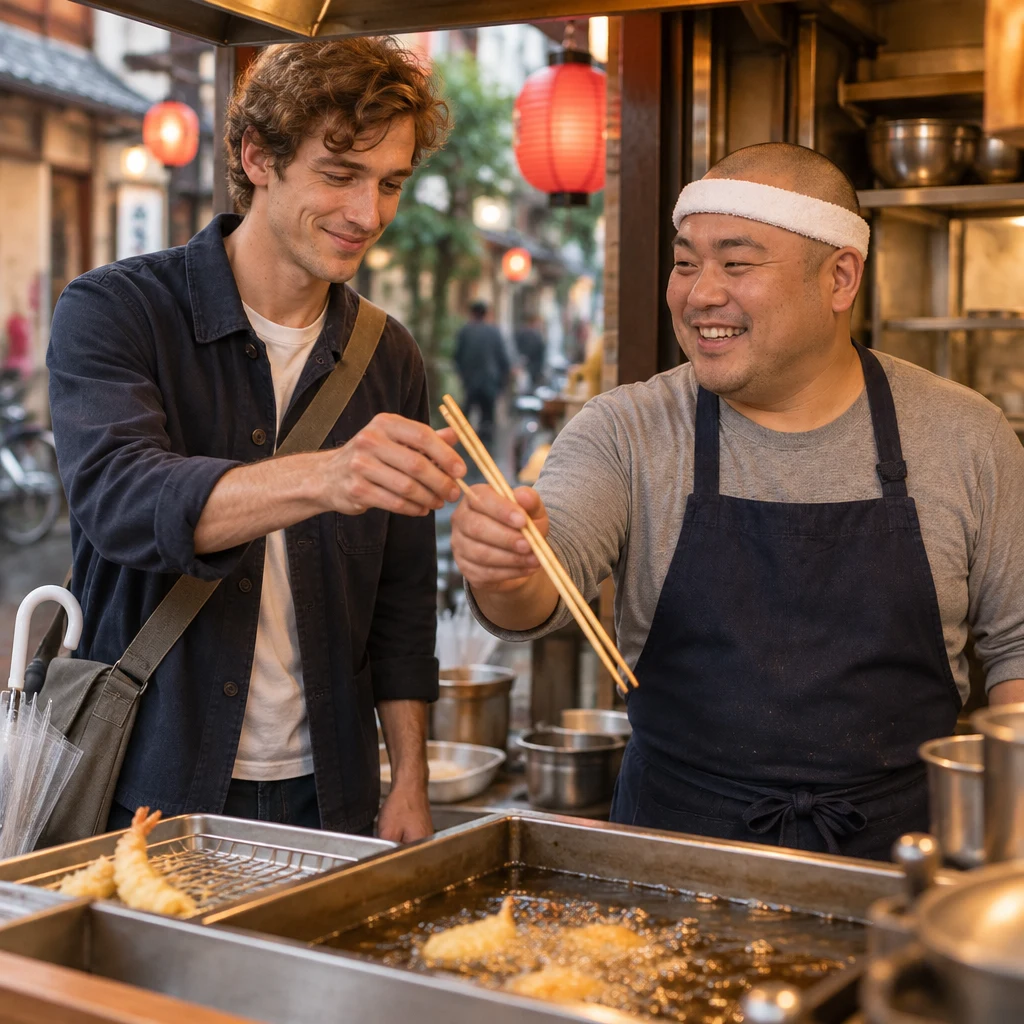
Leo stops at Kenta's croquette stall on Yanaka Ginza. Kenta holds out the long tongs and lets him try a turn in the oil.
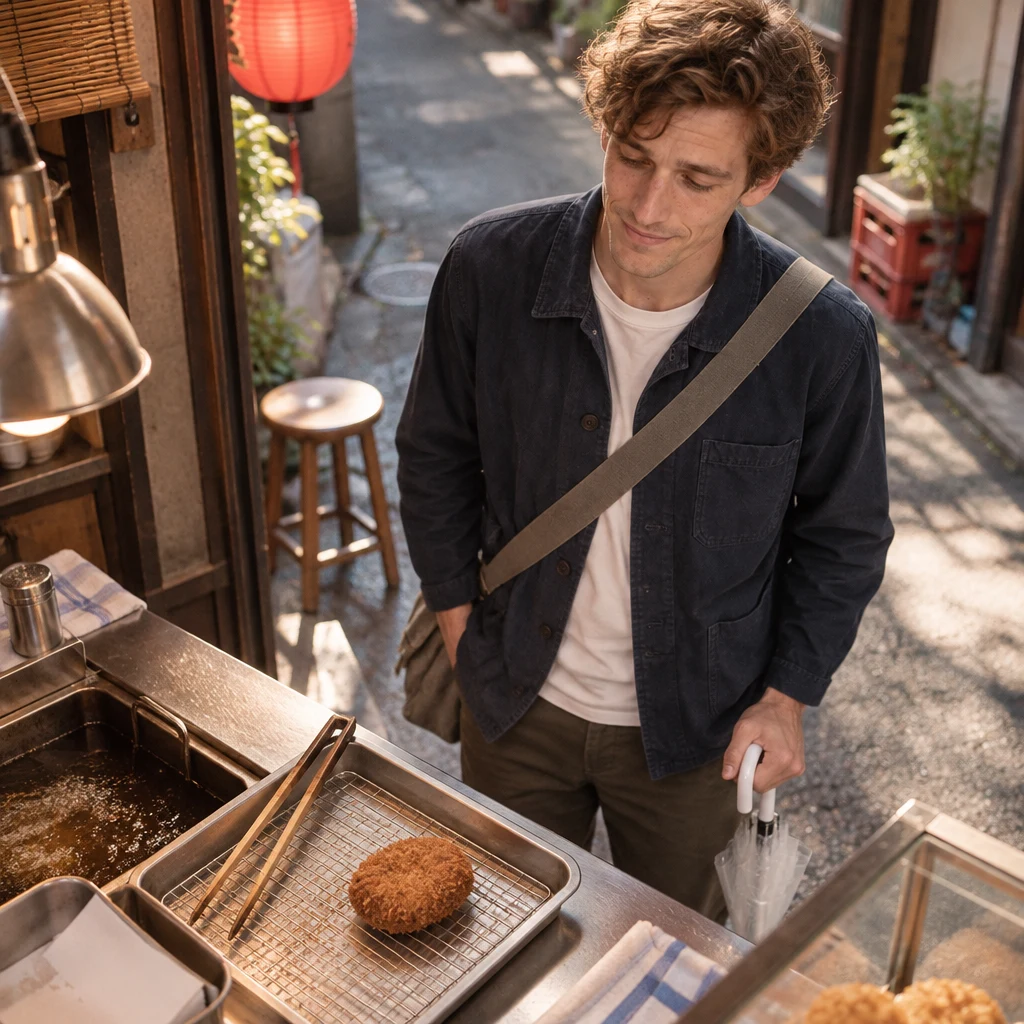
The croquette slips. It is easy for Kenta, and hard for Leo. Goro wants to help, but he cannot quite fit at the stall.
You will say what you can do, what you cannot do well, and whether a task feels easy. Keep these phrases ready for skills and everyday tasks.
By the end of this lesson
Say what you can and cannot do, and how easy or hard it is.
- ___ができます。I can ___.
- うまくできません。I can't do it well.
- 料理が得意です。I'm good at cooking.
- あまり得意じゃありません。I'm not very good at it.
- 私にはかんたんです。It's easy for me.
- やり方がわかります。I know how to do it.
Scene — tongs on Yanaka Ginza
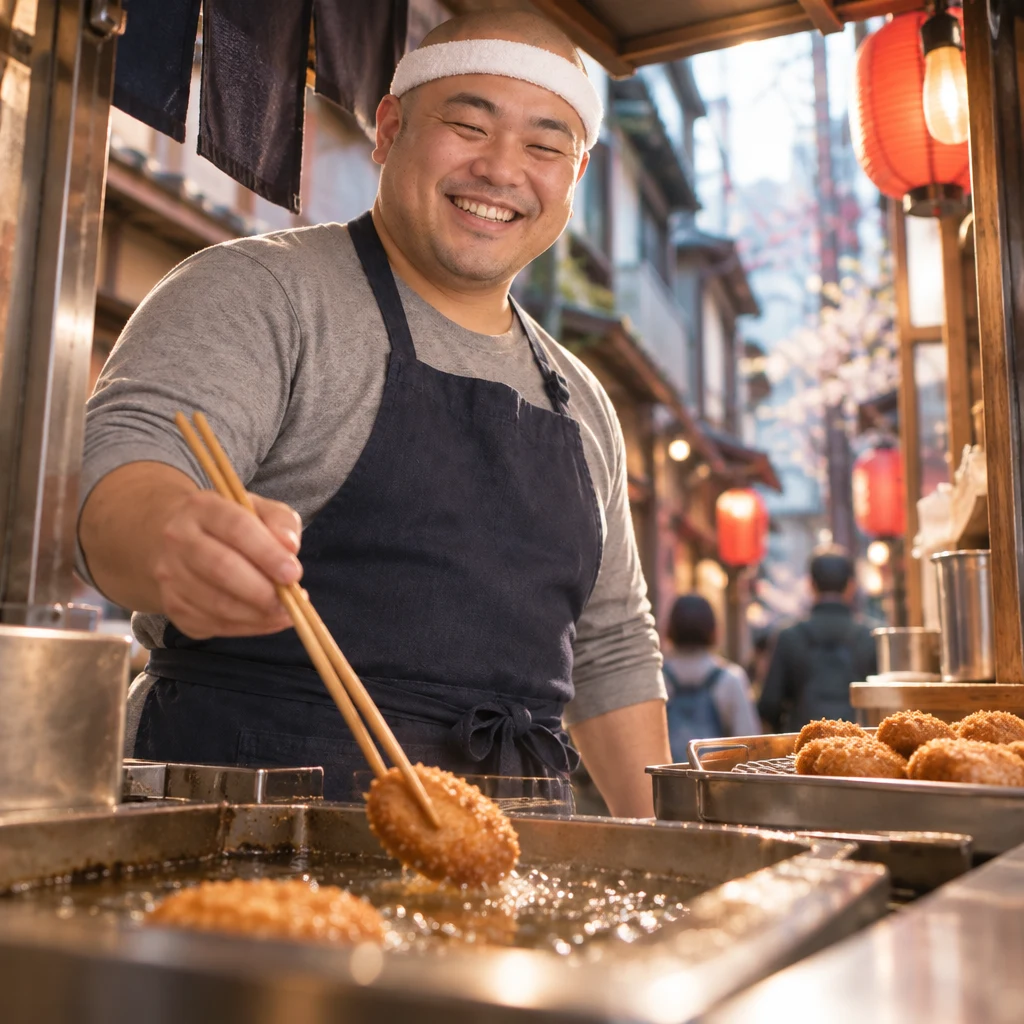
Yanaka Ginza is busy this afternoon. Oil pops at Kenta's croquette stall. He wears his navy apron and holds a pair of long cooking chopsticks.
Leo stands at the small counter. Beside him, Goro tries to share the stall, but two seats of yak do not fit on one step.
Learn — what I can do
These six lines let you name a skill, say you cannot do it well, and say whether it is easy.
You will also say you know how to do it.
___ができます。
I can ___.
When to use it: Use this to name a thing you are able to do.
が marks the skill or action you can do.

うまくできません。
I can't do it well.
When to use it: Use this when you can try, but the result is clumsy.
うまく with a negative means you cannot do it well.
料理が得意です。
I'm good at cooking.
When to use it: Use this when cooking is a skill you do well.
が marks the skill you say you are good at.
あまり得意じゃありません。
I'm not very good at it.
When to use it: Use this to play down a skill without a hard no.
あまり plus a negative means not very.
Say it: Give ん in ありません its own beat.
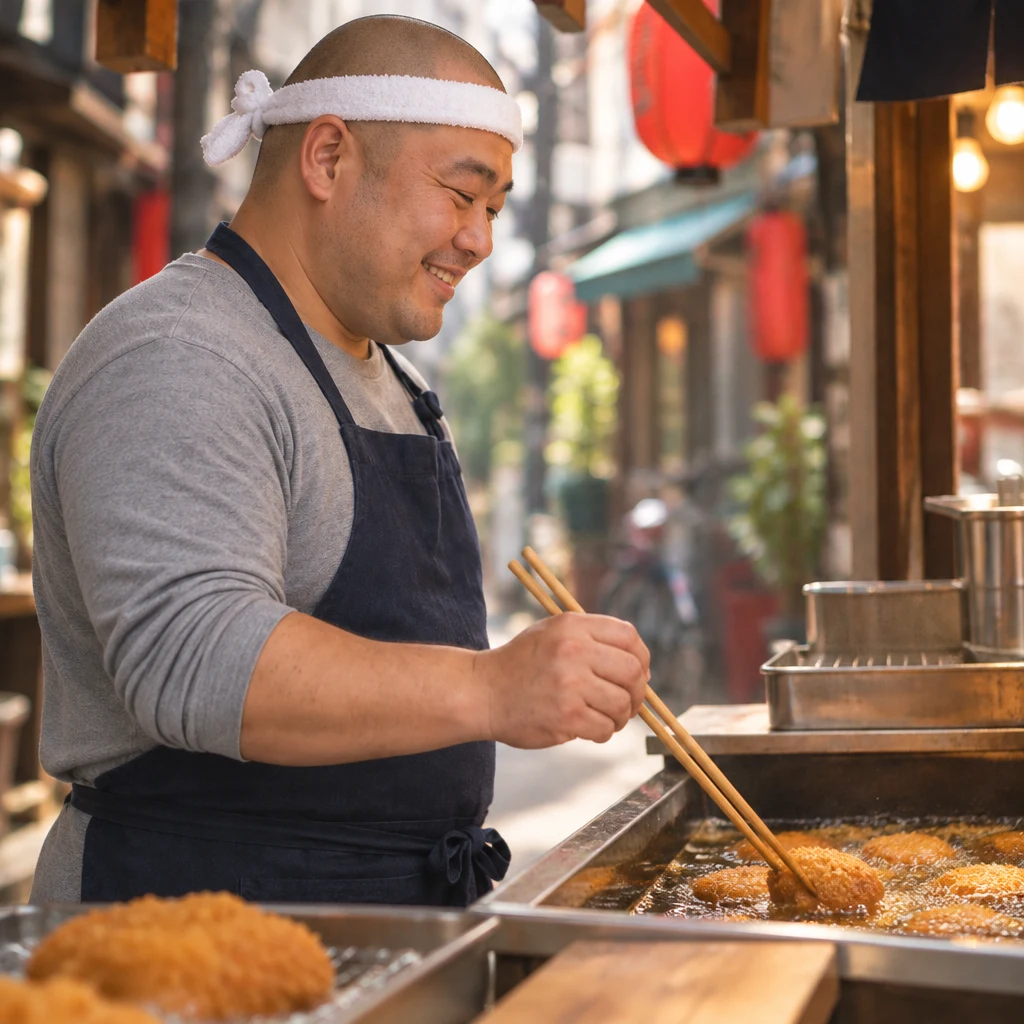
私にはかんたんです。
It's easy for me.
When to use it: Use this when a task feels easy for you.
には marks the person who finds it easy.
Say it: Give each ん in かんたん its own beat.
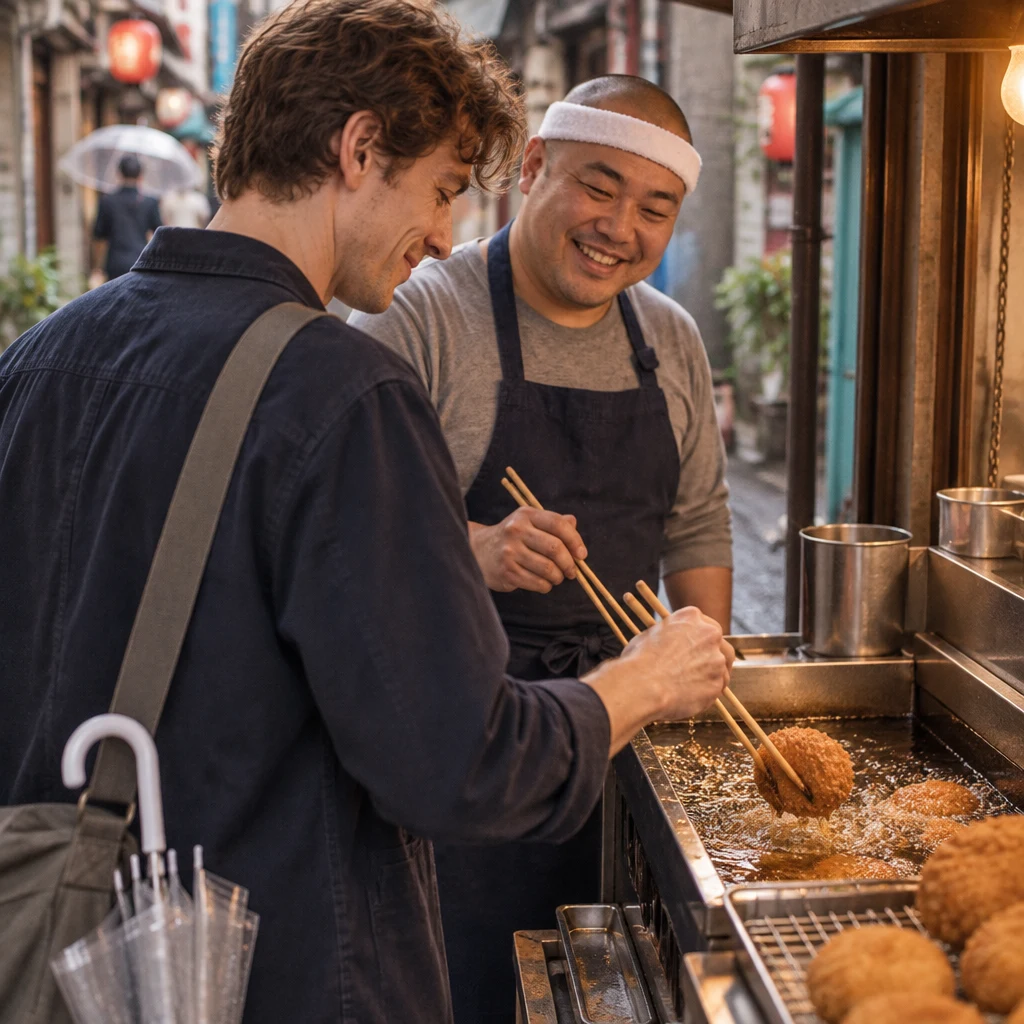
やり方がわかります。
I know how to do it.
When to use it: Use this when you understand the steps for a task.
が marks what you understand: the way to do it.
Story — the croquette slips
Kenta hands Leo the tongs at the stall. The first croquette slips, and Goro cannot quite step in to help.
Highlighted phrases are the new lines. Turn on Show English if you want a gloss.
- Oil pops on Yanaka Ginza. Goro stands sideways at the tiny stall.
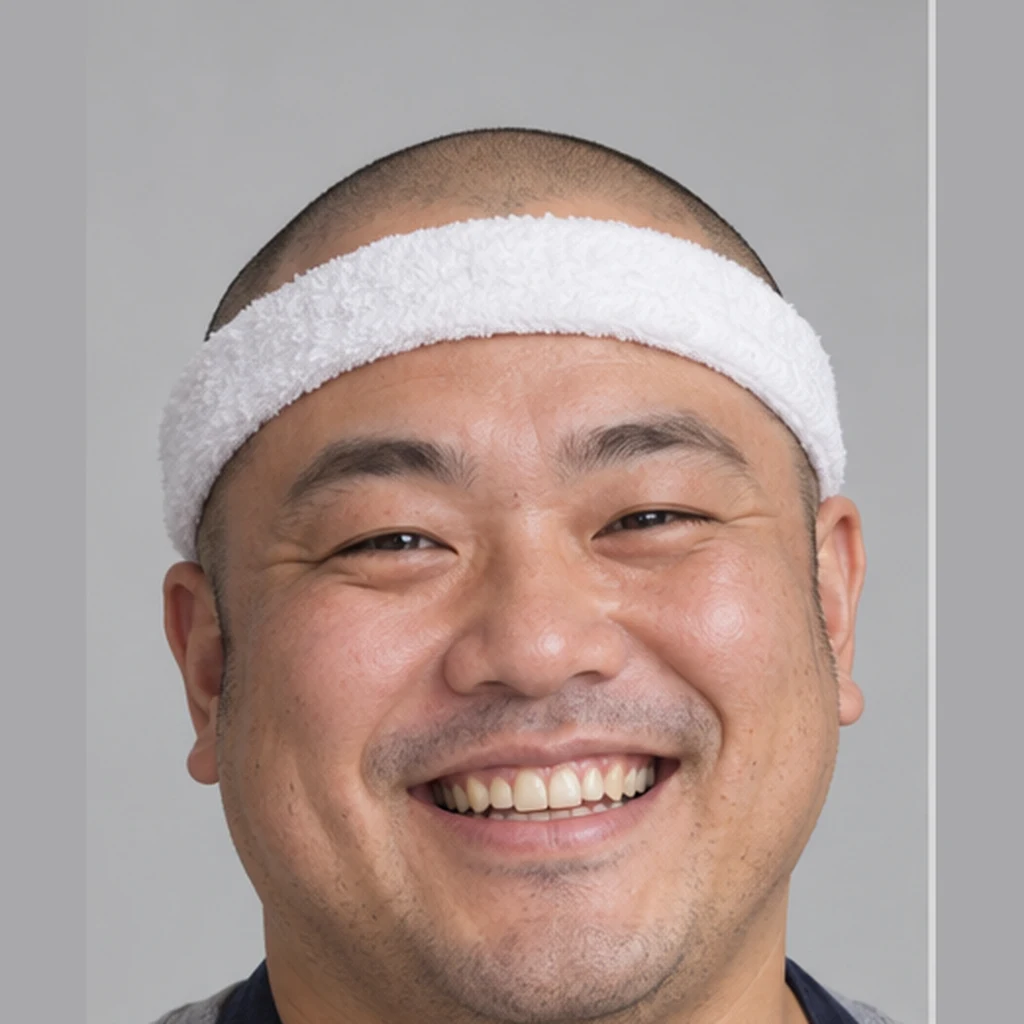 Kentaレオさん、トング、どうぞ。Leo, here, the tongs.
 Leoやってみます。I'll give it a try.
- Leo lifts a croquette. It slips back into the oil.
- Leoうまくできません。I can't do it well.
- Leoこうですか。Like this?
- Kentaもう少しゆっくりです。A little more slowly.
- Leo tries again. The croquette wobbles on the tongs.
- Kentaがんばってください。Do your best.
- Kenta私にはかんたんです。It's easy for me.
- Leoあまり得意じゃありません。I'm not very good at it.
- Kenta料理が得意です。I'm good at cooking.
- Kentaやり方がわかります。I know how to do it.
- Goro leans toward the fryer. His horns sit over the oil.
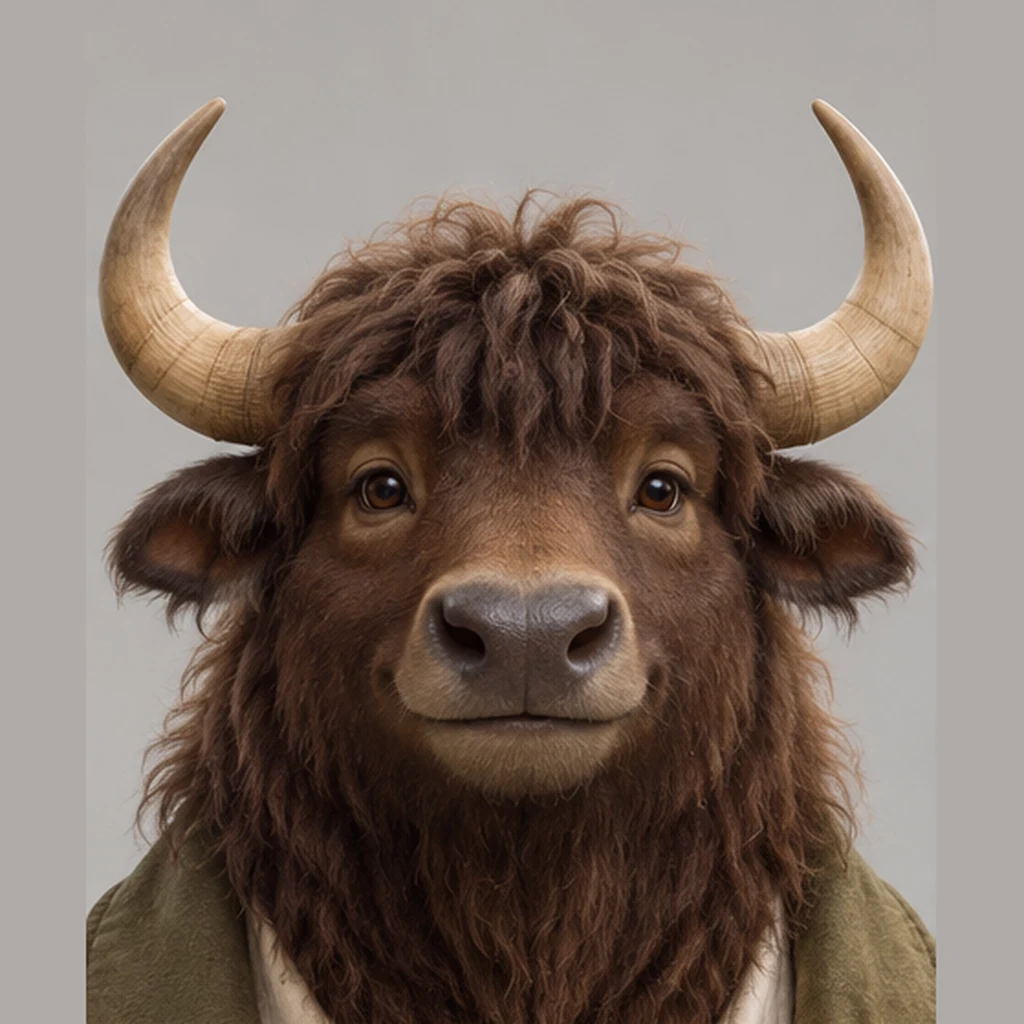 Goroええと、料理ができます。Um, I can cook.
- Kentaゴローさん、ちょっと大きいよ。Goro, you're a bit big.
- Goroそうですね。I see.
Practice — pick what you can say
Eleven short tasks wait in this round. You will listen, fill a gap, build a line, and pick a reply.
Each one is small, so you move on quickly.
0 of 11 done
What did you hear?
What did you hear?
Match the pairs
Japanese
___ができます。Drop the English hereうまくできません。Drop the English here料理が得意です。Drop the English hereあまり得意じゃありません。Drop the English here私にはかんたんです。Drop the English hereEnglish
What do you say?
What do you say?
You try the tongs. The croquette slips back into the oil.
Fill the gap
Fill the gap
I'm good at cooking.
料理____得意です。
What does it mean?
What does it mean?
がんばってください。
Pick the reply
Kenta says:
Pick the reply
レオさん、トング、どうぞ。
Leo, here, the tongs.
And you reply with:
Build the line
Build the line
It's easy for me.
。
Tap the words in order.
Swap the word
Swap the word
Kenta asks what you are good at. Name cooking.
料理____得意です。
What do you say?
What do you say?
You hold the tongs and check your grip with Kenta.
Fill the gap
Fill the gap
I know how to do it.
やり方____わかります。
True or false?
True or false?
This line means you are very good at it.
Say it — your turn to speak
You are Leo at the stall on Yanaka Ginza. When the cue is yours, tap the microphone and say the line.
Tap play first if you want to hear it. The recording stays on this device.
- Kentaレオさん、どうぞ。Here you go, Leo.
- Leo (you)The croquette slipped. Say you can't do it well.
The croquette slipped. Say you can't do it well.
うまくできません。
I can't do it well.
0 of 4 said
Recap — what you can say now
| Japanese | English | Play |
|---|---|---|
| ___ができます。 | I can ___. | |
| うまくできません。 | I can't do it well. | |
| 料理が得意です。 | I'm good at cooking. | |
| あまり得意じゃありません。 | I'm not very good at it. | |
| 私にはかんたんです。 | It's easy for me. | |
| やり方がわかります。 | I know how to do it. |
Save your progress — it’s free
Keep your place in the course and see which lines you’ve learned.
Want the next lesson in your inbox?
Get the next lesson by email, one a day.
Join the newsletterDaily lesson emails are coming soon. Newsletter subscribers get them first.
Keep practicing with Yak Cards
Keep these skill lines in your pocket. Open the Yak Cards for this lesson and run them on the train.
A short Yak Cards round keeps I can and I can't ready at the stall.
Open Yak Cards