
New here? This is lesson 84 of a free 240-lesson Japanese course.
Always, often, never in Japanese
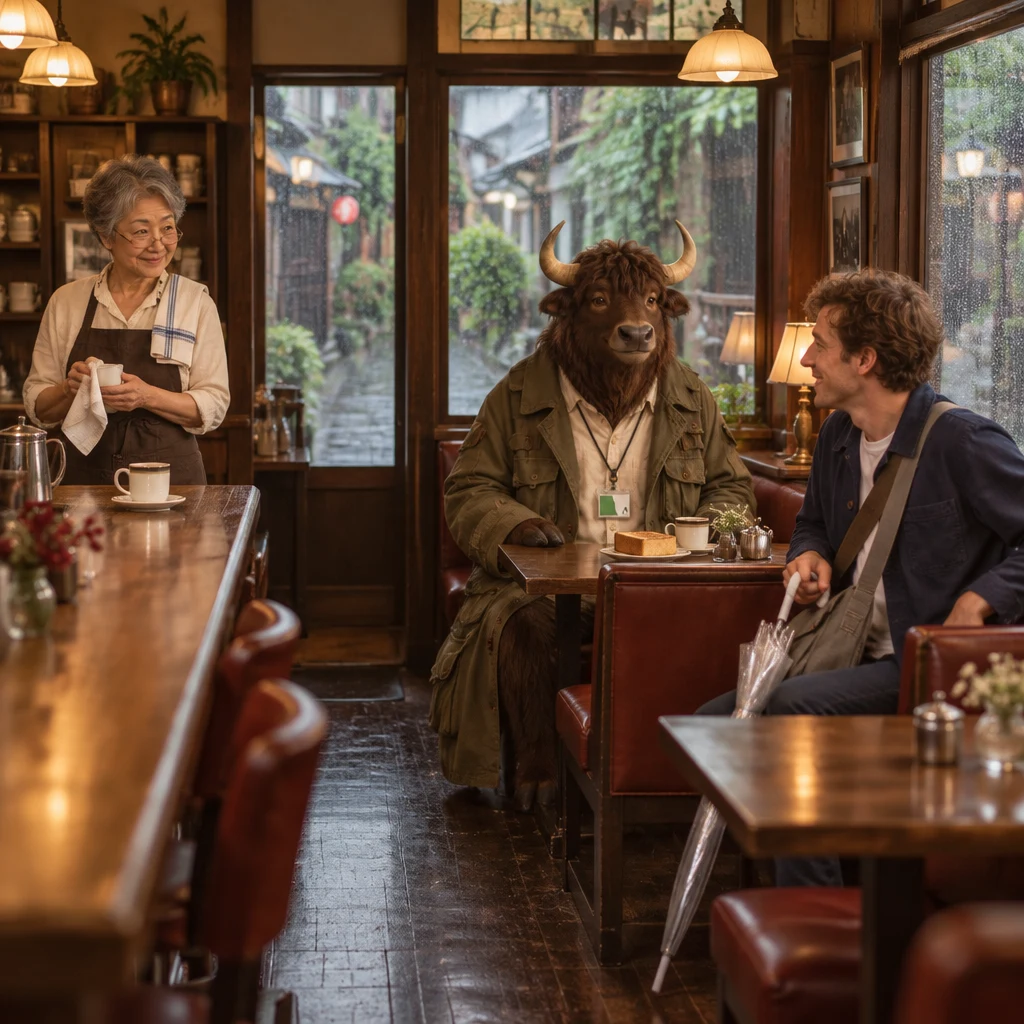
Rain holds the lane outside Kissa Hotaru. Goro's blend coffee sits full, as it always does. Masako names the habit, then asks how often people come, cook, and get up.
Leo starts a line with never, and Goro is already watching the rain.
You will say always, often, once in a while, rarely, and never. Two of those take a negative verb.
Keep it polite. These are habits, not one-off orders.
By the end of this lesson
Say how often you do something.
- いつもブレンドコーヒーを頼みます。I always order a blend coffee.
- よくこの喫茶店に来ます。I often come to this coffee shop.
- たまに自分で作ります。I cook for myself once in a while.
- めったに早く起きません。I rarely get up early.
- 夜食は全然食べません。I never eat late-night snacks.
- 前ほどではないです。Not as often as before.
Scene — a full cup in the rain
Yanaka is grey with rain. Leo slides into the booth across from Goro. A blend coffee sits untouched beside thick toast.
Masako wipes a cup at the counter, then nods at the full mug. Goro is already watching the rain on the lane.
Learn — always to never
These six lines run from always to never. Two of them need a polite negative.
A last line says a habit is weaker than it was.

いつもブレンドコーヒーを頼みます。
I always order a blend coffee.
When to use it: Use this to describe your regular choice whenever you order coffee.
いつも describes what you regularly do every time.
Say it: Keep both long vowels in コーヒー long enough to hear.
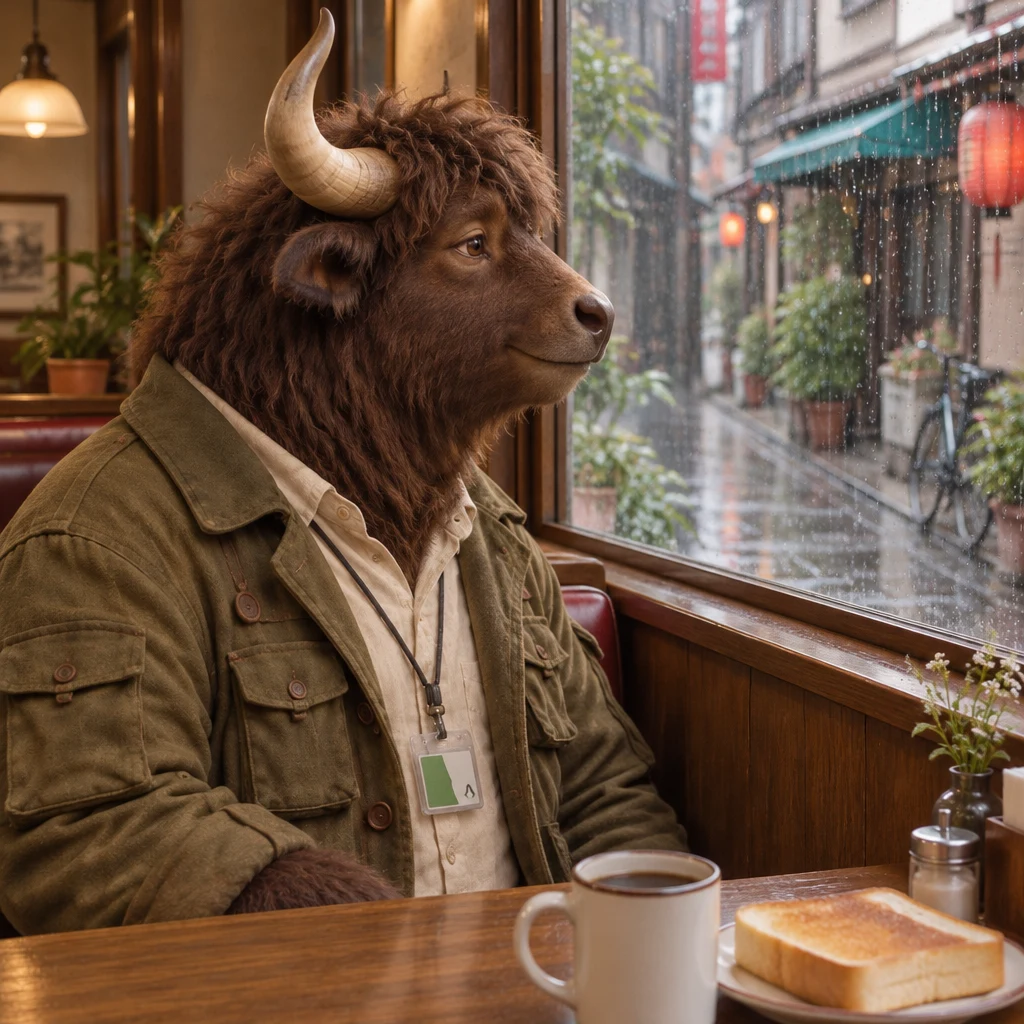
よくこの喫茶店に来ます。
I often come to this coffee shop.
When to use it: Use this to describe frequent visits to this coffee shop.
Here よく means often, not well.
Say it: The small っ in 喫茶店 creates a brief pause before the next consonant.

たまに自分で作ります。
I cook for myself once in a while.
When to use it: Use this for something you do only now and then.
たまに means once in a while; it describes something that happens occasionally.
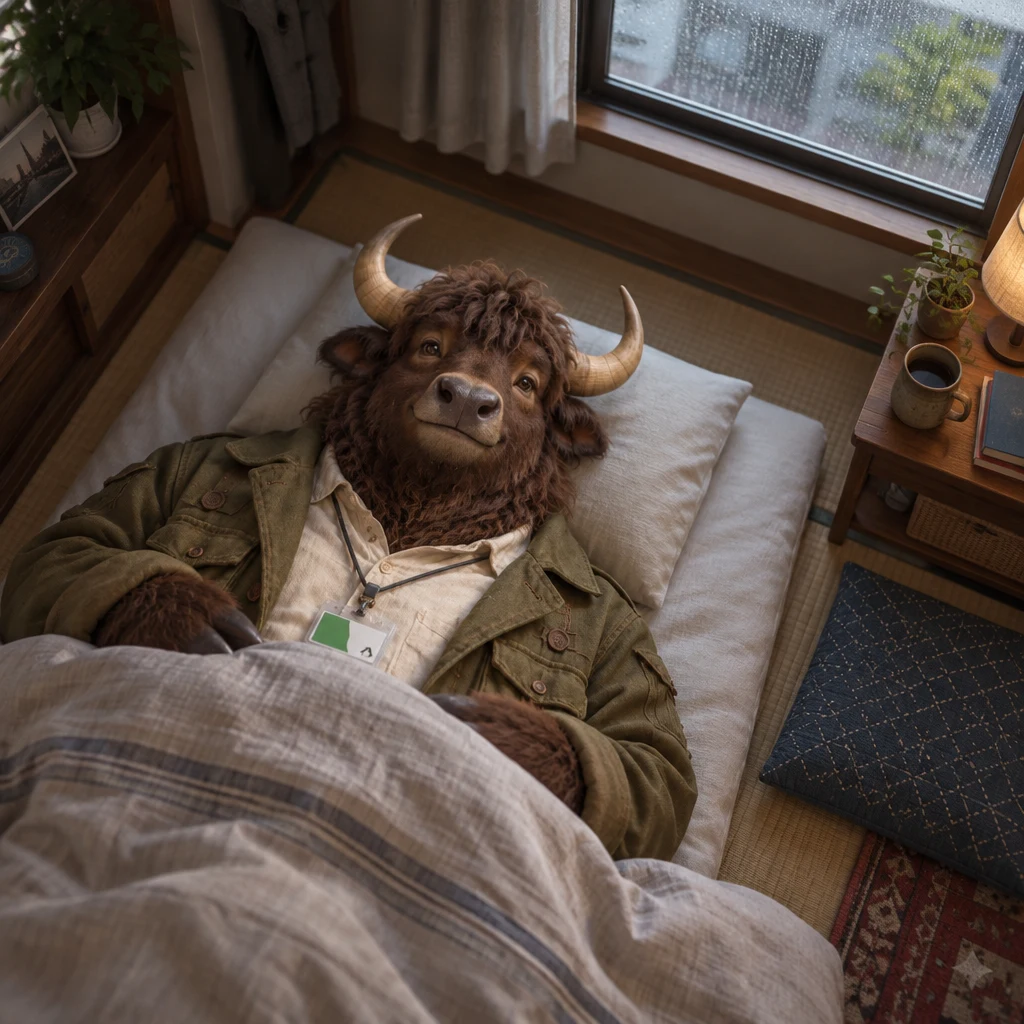
めったに早く起きません。
I rarely get up early.
When to use it: Use this for something that almost never happens.
めったに takes a negative verb, like 起きません.
Say it: Hold the small っ in めったに; do not skip it.

夜食は全然食べません。
I never eat late-night snacks.
When to use it: Use this to say you do not eat late-night snacks at all.
全然 with 食べません means you do not eat them at all.
Say it: Give each ん in 全然 its own beat.
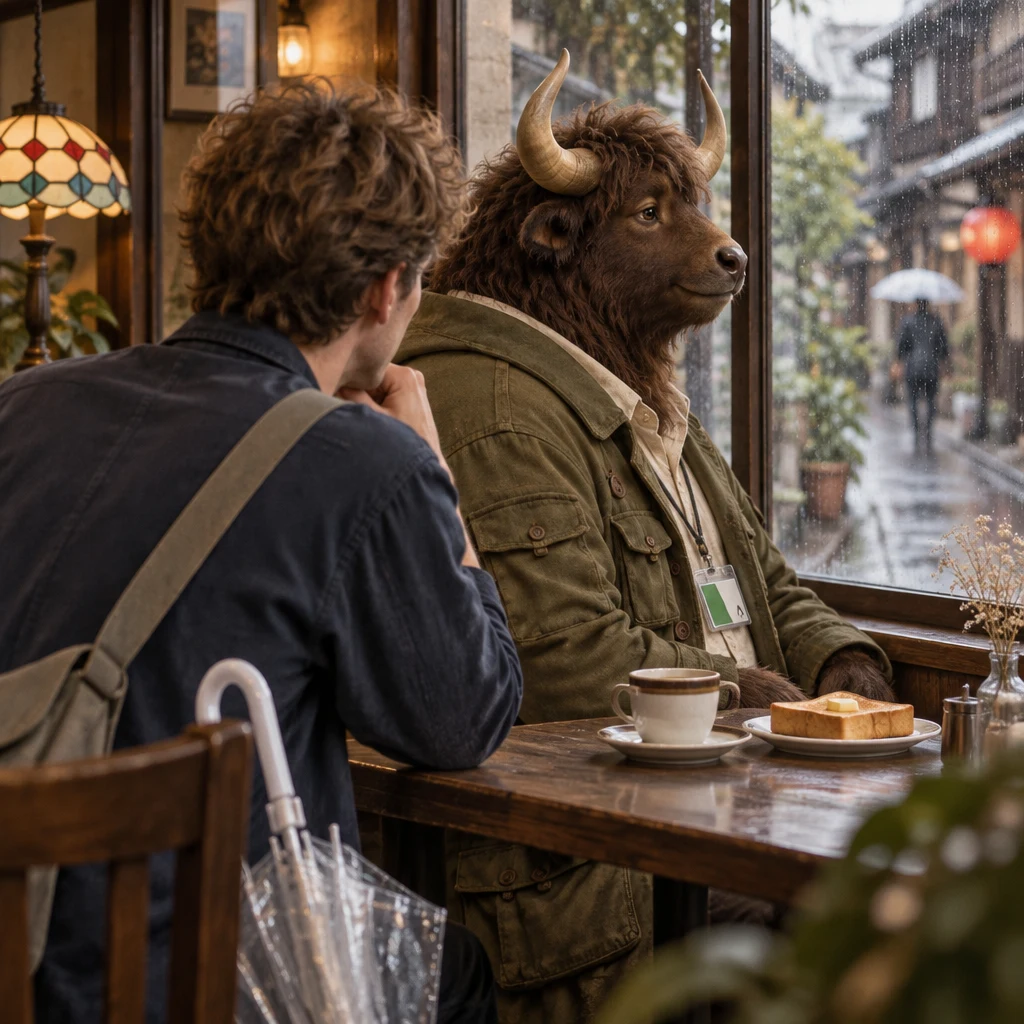
前ほどではないです。
Not as often as before.
When to use it: Use this when you do something less often than you used to.
In a conversation about frequency, this compares how often something happens now with how often it happened before.
Story — Goro watches the rain
Masako names Goro's usual order. He watches the rain and talks about how often he comes, cooks, and gets up.
Highlighted phrases are the new lines. Turn on Show English if you want a gloss.
- Rain on the glass. Masako waits beside Goro's toast with the coffee pot.
 Goroブレンドコーヒーをお願いします。A blend coffee, please.
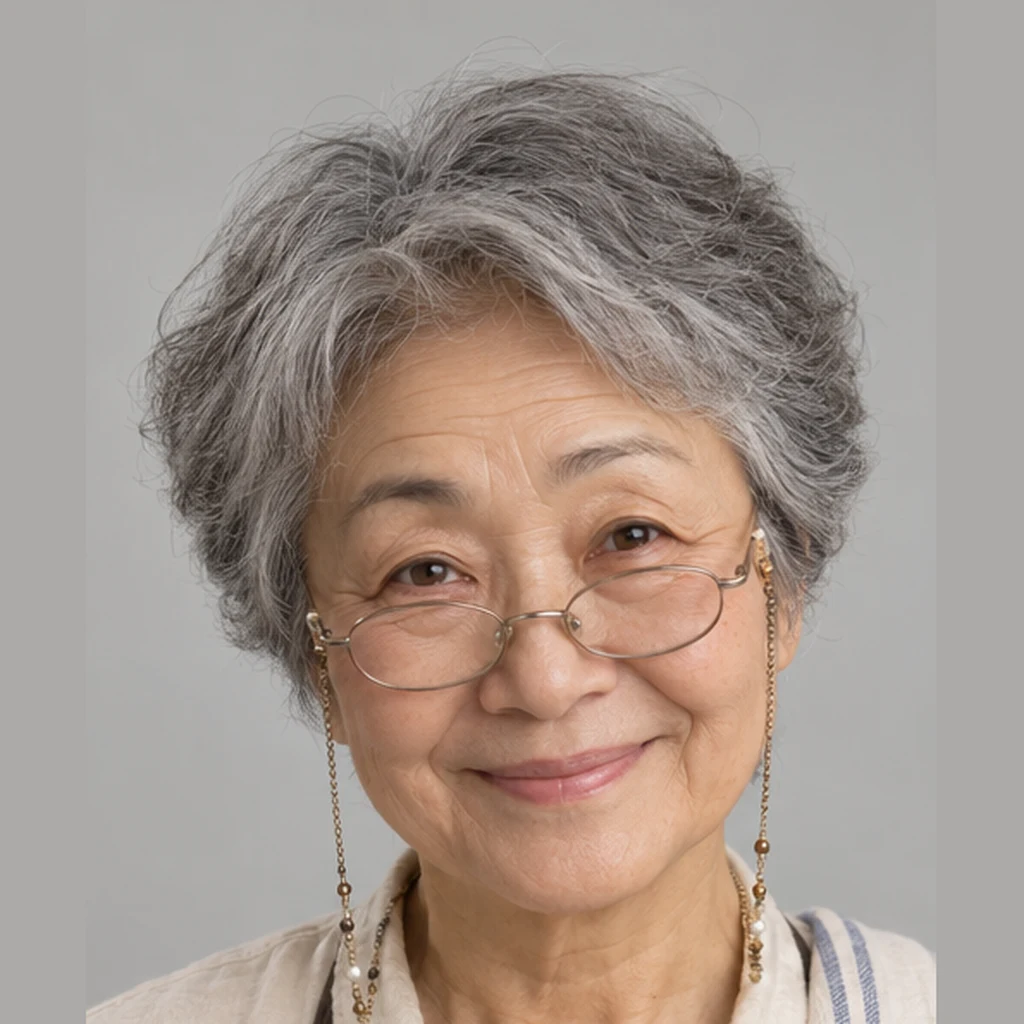 Masakoゴローさんは、いつもブレンドコーヒーを頼みます。Goro always orders a blend coffee.
- Masako fills the cup. Goro watches the rain.
 Leoそれはよくありますか。Does that happen often?
- Masakoええ、毎朝ですよ。でも、いつも飲み残します。Yes, every morning. But he always leaves some coffee.
- Goroよくこの喫茶店に来ます。I often come to this coffee shop.
- Leo前と同じくらい来ますか。Do you come as often as before?
- Goro前ほどではないです。Not as often as before.
- Masako朝ごはんは、自分で作りますか。Do you cook breakfast yourself?
- Goroたまに自分で作ります。I cook for myself once in a while.
- Masako早く起きますか。Do you get up early?
- Goroめったに早く起きません。I rarely get up early.
- Masakoレオさんは、夜食を食べますか。Leo, do you eat late-night snacks?
- Leo begins his answer. Goro has already turned back to the rain; his coffee stays full.
- Leo夜食は全然食べません。I never eat late-night snacks.
Practice — pick how often
Eleven short tasks wait in this round. You will listen, fill a gap, build a line, and choose words for occasional habits.
Each task brings you back to the conversation at the booth.
0 of 11 done
What did you hear?
What did you hear?
Match the pairs
Japanese
よくこの喫茶店に来ます。Drop the English hereたまに自分で作ります。Drop the English here前ほどではないです。Drop the English hereEnglish
What do you say?
What do you say?
Masako asks about your visits. Tell her you come to this coffee shop often.
Fill the gap
Fill the gap
I never eat late-night snacks.
夜食は全然____。
What does it mean?
What does it mean?
何時に起きますか。
Pick the reply
Masako says:
Pick the reply
早く起きますか。
Do you get up early?
And you reply with:
Build the line
Build the line
Not as often as before.
。
Tap the words in order.
Swap the word
Swap the word
Goro orders this drink every time. Replace the word meaning once in a while with always.
____ブレンドコーヒーを頼みます。
What do you say?
What do you say?
Masako asks whether you cook your own meals. Say you do so once in a while.
What do you say?
What do you say?
Masako is ready to take your order. Ask for a blend coffee.
True or false?
True or false?
This asks if something happens often.
Say it — your turn to speak
You are Leo in the booth. When the cue is yours, tap the microphone and say the line.
Tap play first if you want to hear it. Record yourself, then listen back to your conversation.
- Goroレオさんは、いつも何を頼みますか。Leo, what do you always order?
- Leo (you)Say you always order a blend coffee.
Say you always order a blend coffee.
いつもブレンドコーヒーを頼みます。
I always order a blend coffee.
0 of 6 said
Recap — what you can say now
| Japanese | English | Play |
|---|---|---|
| いつもブレンドコーヒーを頼みます。 | I always order a blend coffee. | |
| よくこの喫茶店に来ます。 | I often come to this coffee shop. | |
| たまに自分で作ります。 | I cook for myself once in a while. | |
| めったに早く起きません。 | I rarely get up early. | |
| 夜食は全然食べません。 | I never eat late-night snacks. | |
| 前ほどではないです。 | Not as often as before. |
Save your progress — it’s free
Keep your place in the course and see which lines you’ve learned.
Want the next lesson in your inbox?
Get the next lesson by email, one a day.
Join the newsletterDaily lesson emails are coming soon. Newsletter subscribers get them first.
Keep practicing with Yak Cards
Keep these frequency lines in your pocket. Open the Yak Cards for this lesson and run them on the train.
A short Yak Cards round keeps always and never ready at the counter.
Open Yak Cards