
New here? This is lesson 48 of a free 240-lesson Japanese course.
Where I live in Japanese
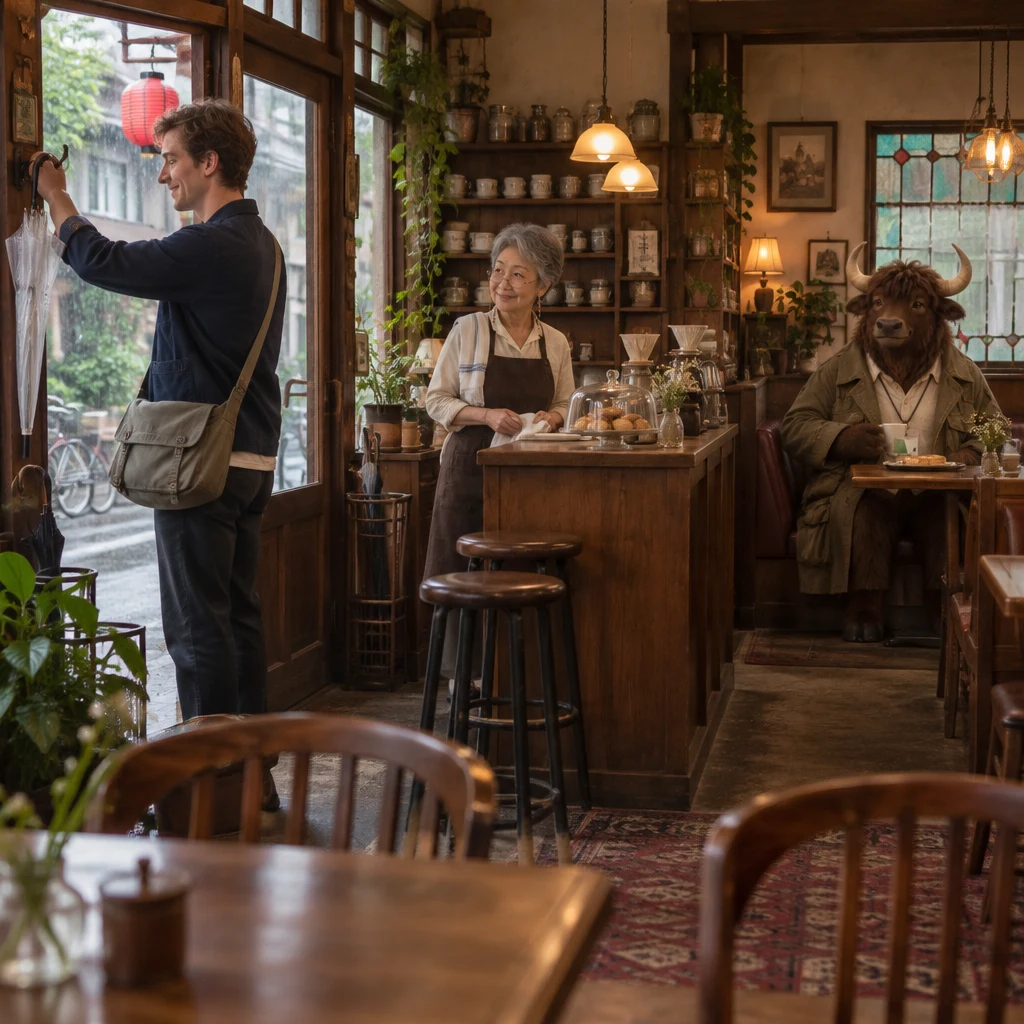
Leo sits at the wooden counter of Kissa Hotaru. Masako already saw him on the metal stairs this morning, but she still asks where he lives.
He tells her Yanaka, near Nippori, in a small rented room he just moved into.
You will ask where someone lives, name the place, and say what it is like.
Keep it polite. Who you live with comes later.
By the end of this lesson
Say where you live and what the place is like.
- どこに住んでいますか。Where do you live?
- 谷中に住んでいます。I live in Yanaka.
- 日暮里の近くです。It's near Nippori.
- アパートを借りています。I rent an apartment.
- 部屋は小さいです。The room is small.
- ここに引っ越しました。I moved here.
Scene — the metal stairs
Yanaka is quiet this morning. Leo steps into Kissa Hotaru and hangs his clear umbrella. Masako looks up from the wooden counter.
She saw him earlier on the metal stairs of the old two-storey building. In the corner booth, Goro sits with toast and an unfinished blend coffee.
Learn — where you live
These six lines ask where you live, name Yanaka and Nippori, and say the room is small.
You also get a line for renting, and one for moving here.

どこに住んでいますか。
Where do you live?
When to use it: Ask this when you want to know someone's neighbourhood.
Learn it as one piece when you ask where someone lives.
Say it: Give ん in 住んでいます its own beat.

谷中に住んでいます。
I live in Yanaka.
When to use it: Use this to name Yanaka as the place you live.
Learn it as one piece to name where you live.

日暮里の近くです。
It's near Nippori.
When to use it: Use this to place your home near Nippori station.
Learn it as one piece to say a place is nearby.
Say it: The small っ in 日暮里 is a stop.
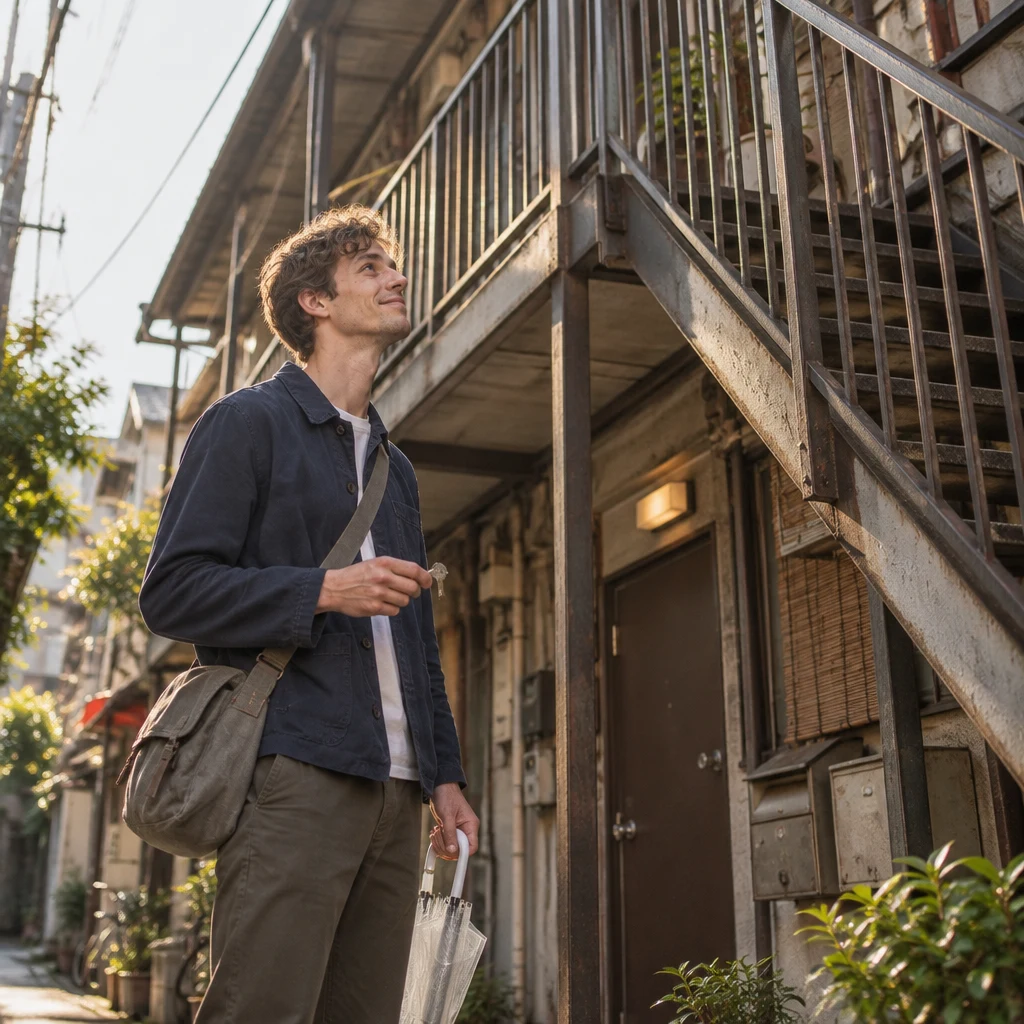
アパートを借りています。
I rent an apartment.
When to use it: Use this to say you rent an apartment.
Learn it as one piece to say you rent a place.
Say it: Keep the long vowel in アパート.
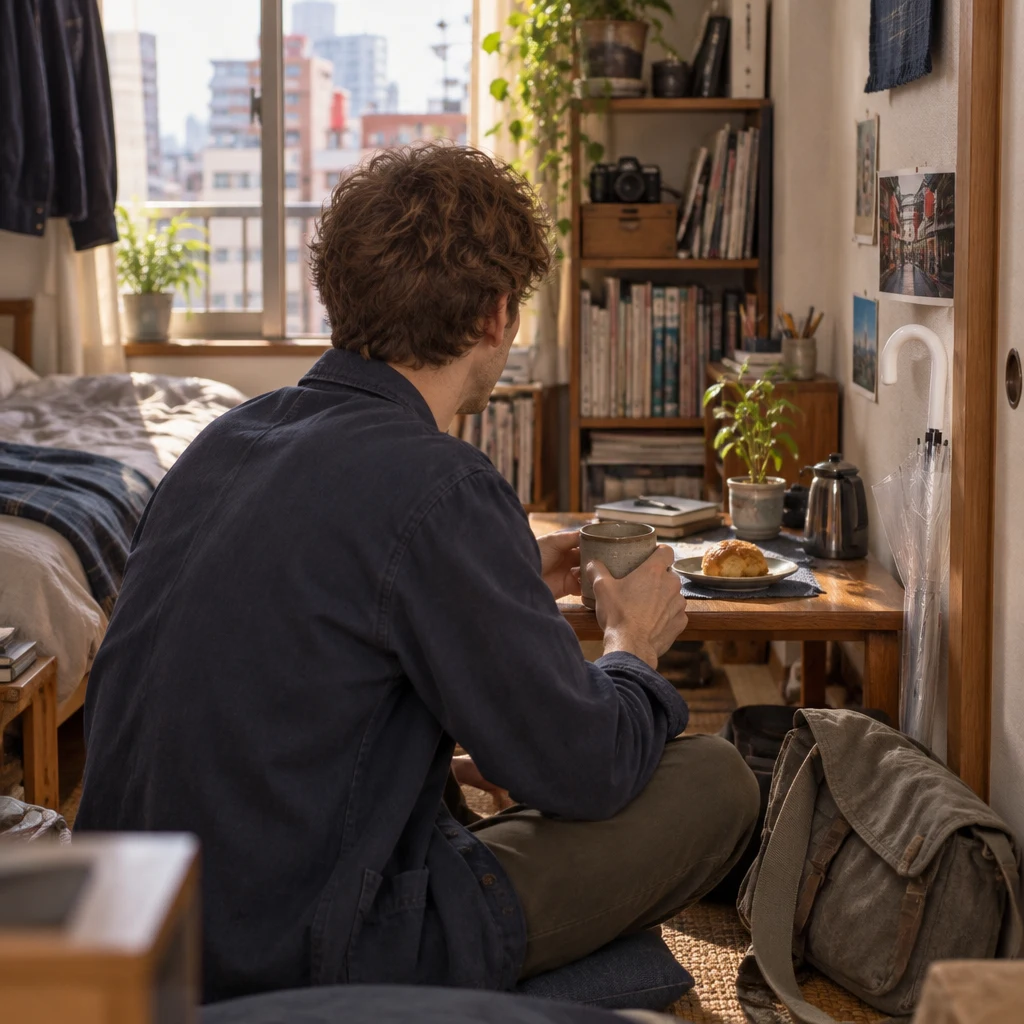
部屋は小さいです。
The room is small.
When to use it: Use this to say your room is small.
Learn it as one piece to say the room is small.
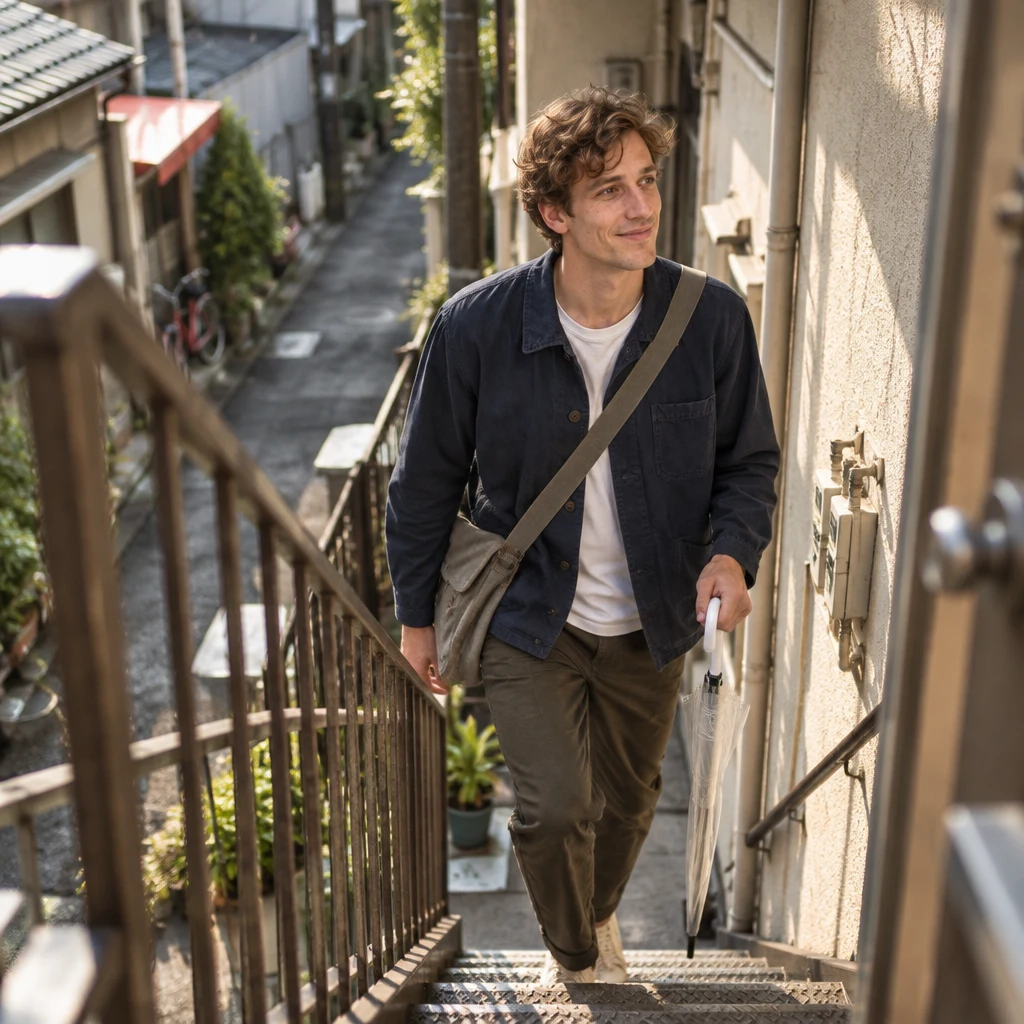
ここに引っ越しました。
I moved here.
When to use it: Use this to say you moved to this place.
Learn it as one piece to say you moved here.
Say it: The small っ in 引っ越しました is a stop.
Story — Masako already knew
Leo tells Masako where he lives. She already saw him on the stairs, so she is not surprised.
Highlighted phrases are the new lines. Turn on Show English if you want a gloss.
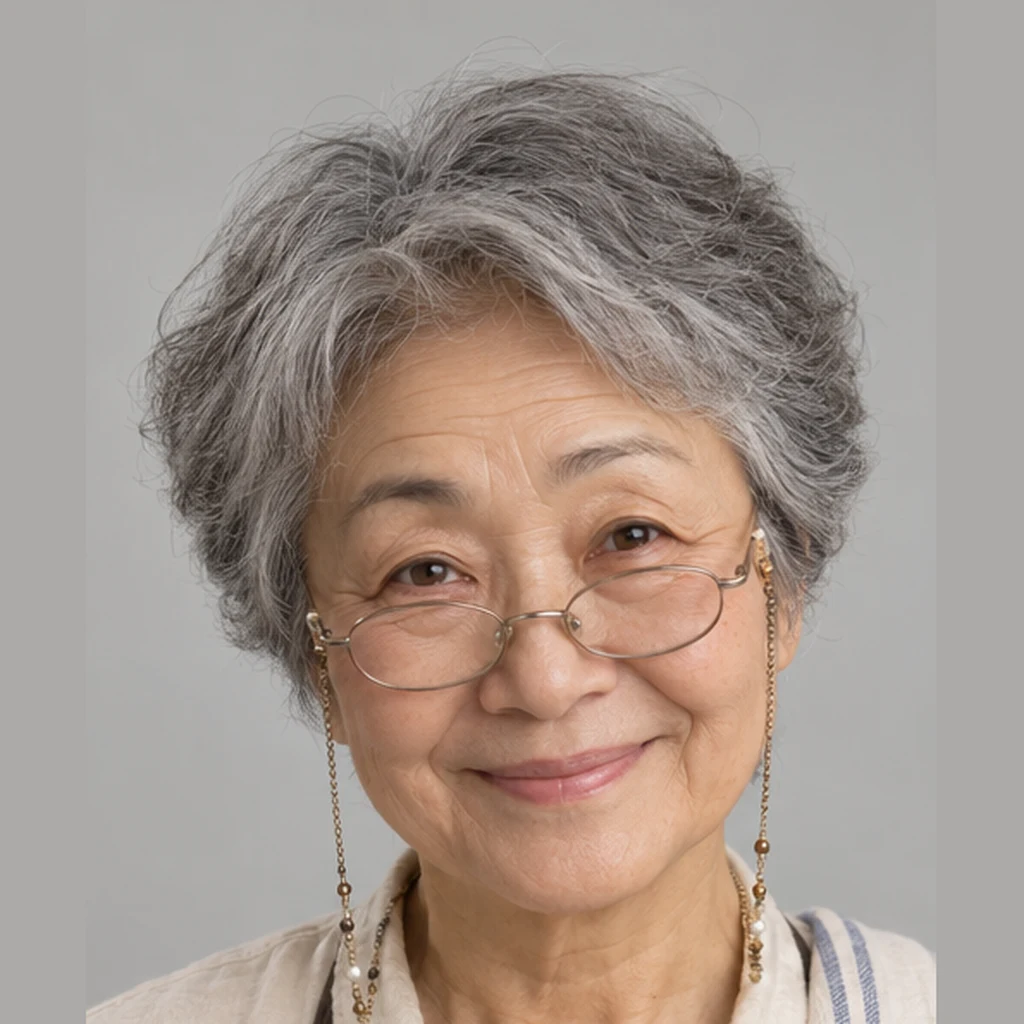
- Masako wipes a cup. This morning she saw Leo on the metal stairs.
 Masakoこんにちは。Hello.
 Leoこんにちは。Hello.
- Masakoどこに住んでいますか。Where do you live?
- Leo谷中に住んでいます。I live in Yanaka.
- Goro looks up from his toast and unfinished blend coffee.
 Goro家はどのあたりですか。What area is your home in?
- Leo日暮里の近くです。It's near Nippori.
- Masakoアパートですか。An apartment?
- Leoアパートを借りています。I rent an apartment.
- Leo部屋は小さいです。The room is small.
- Masakoええ、そうでしょうね。Yes, I can imagine.
- She tips her glasses toward the lane and the old building.
- Leoここに引っ越しました。I moved here.
Practice — pick the right place
Eleven short tasks wait in this practice round. You will listen, match meanings, fill a gap, and build a line.
Each one is small, so you move on quickly.
0 of 11 done
What did you hear?
What did you hear?
Match the pairs
Japanese
谷中に住んでいます。Drop the English here日暮里の近くです。Drop the English hereアパートを借りています。Drop the English hereEnglish
What do you say?
What do you say?
Masako asks where you live. Name the neighbourhood.
Fill the gap
Fill the gap
I live in Yanaka.
谷中____住んでいます。
What does it mean?
What does it mean?
日暮里の近くです。
Build the line
Build the line
I rent an apartment.
。
Tap the words in order.
Which one doesn’t belong?
Which one doesn’t belong?
Swap the word
Swap the word
Your room is small. Fix the word that got swapped.
部屋は____です。
Pick the reply
Masako says:
Pick the reply
どこに住んでいますか。
Where do you live?
And you reply with:
What do you say?
What do you say?
Masako already saw you on the stairs. Tell her you moved here.
True or false?
True or false?
This asks if a place is near here.
Say it — your turn to speak
You are Leo at the kissa counter this morning. When the cue is yours, tap the microphone and say the line.
Tap play first if you want to hear it. The recording stays on this device.
- Masakoどこに住んでいますか。Where do you live?
- Leo (you)Say you live in Yanaka.
Say you live in Yanaka.
谷中に住んでいます。
I live in Yanaka.
0 of 5 said
Recap — what you can say now
| Japanese | English | Play |
|---|---|---|
| どこに住んでいますか。 | Where do you live? | |
| 谷中に住んでいます。 | I live in Yanaka. | |
| 日暮里の近くです。 | It's near Nippori. | |
| アパートを借りています。 | I rent an apartment. | |
| 部屋は小さいです。 | The room is small. | |
| ここに引っ越しました。 | I moved here. |
Save your progress — it’s free
Keep your place in the course and see which lines you’ve learned.
Want the next lesson in your inbox?
Get the next lesson by email, one a day.
Join the newsletterDaily lesson emails are coming soon. Newsletter subscribers get them first.
Keep practicing with Yak Cards
Keep these home lines in your pocket. Open the Yak Cards for this lesson and run them on the train.
A short Yak Cards round after coffee keeps these home lines ready.
Open Yak Cards