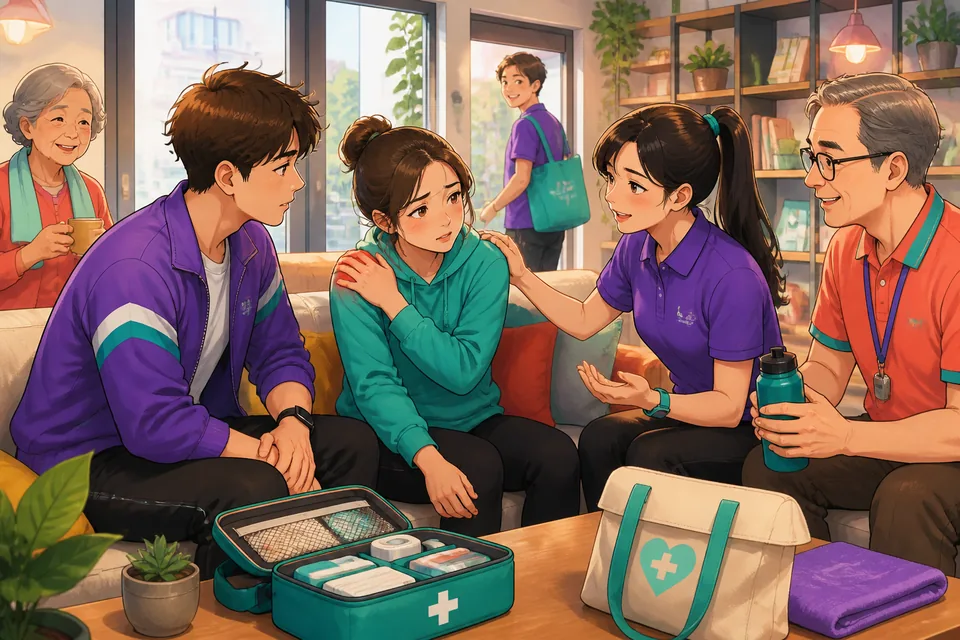
Hi — ready for a quick, practical lesson about checking on someone? This short lesson helps you notice when someone needs care and say the right polite phrases. Listen, repeat, then practice the quiz — quick and useful!
Level A1: Lesson 146 focuses on three polite, everyday phrases for health and safety in Japan: 大丈夫ですか。 (Daijōbu desu ka.) — “Are you okay?”, 無理しないでください。 (Muri shinai de kudasai.) — “Please don’t overdo it.”, and お大事に。 (Odaiji ni.) — “Take care / Get well soon.” You’ll hear the phrases, see them in a short conversation, and practice by choosing and matching — CEFR-aligned and Japan-focused.
After this lesson you'll be able to:
Recognize and say three polite health-and-safety phrases in Japanese.
Use 大丈夫ですか。 (Daijōbu desu ka.) to ask if someone is okay.
Tell someone 無理しないでください。 (Muri shinai de kudasai.) so they don’t overdo it.
Say お大事に。 (Odaiji ni.) to wish someone well when they are sick or injured.
Ready? Let's go!
When you tap play on phrases, we track your progress through this lesson.
1. Reading + Listening Practice
Hear core phrases, repeat aloud.
大丈夫ですか
Daijōbu desu ka.
Are you okay?
Meaning: Are you okay?
When to use: Use when someone seems hurt, confused, or in trouble. Polite question to check if someone is physically or emotionally all right.
Tip: Beginners sometimes drop ですか and use informal 大丈夫? — ok with friends, but use 大丈夫ですか。 with people you don’t know.
道でつまずいた人に「大丈夫ですか。」と聞きます。
Michi de tsumazuita hito ni 'Daijōbu desu ka.' to kikimasu.
You ask 'Are you okay?' to someone who stumbled on the street.
顔色が悪そうなので、心配して「大丈夫ですか。」と言いました。
Kaoiro ga warusō na node, shinpai shite 'Daijōbu desu ka.' to iimashita.
You say 'Are you okay?' because someone's looks pale.
無理しないでください。
Muri shinai de kudasai.
Please don’t overdo it.
Meaning: Please don’t overdo it.
When to use: Say this to someone who is working too hard, recovering from illness, or pushing themselves — a polite request to rest and avoid strain.
Tip: Learners often say 無理しないで (casual). For people you should be polite to, include ください.
毎日残業している同僚に「無理しないでください。」と言いました。
Mainichi zangyō shite iru dōryō ni 'Muri shinai de kudasai.' to iimashita.
You tell a colleague who works overtime every day: 'Please don’t overdo it.'
トレーニング中に友だちがつらそうなら「無理しないでください。」と注意します。
Torēningu chū ni tomodachi ga tsurasō nara 'Muri shinai de kudasai.' to chūi shimasu.
During training, if a friend looks in pain you say 'Please don’t overdo it.'
お大事に
Odaiji ni.
Take care / Get well soon.
Meaning: Take care / Get well soon.
When to use: Said to someone who is sick or injured, often when they leave the hospital or when you part after they mention illness.
Tip: Avoid making it long and formal like お大事にしてください — simple お大事に is natural and polite.
風邪をひいた友だちに別れるとき「お大事に。」と言います。
Kaze o hiita tomodachi ni wakareru toki 'Odaiji ni.' to iimasu.
When parting from a friend with a cold, you say 'Get well soon.'
病院を出る時、看護師さんが患者に『お大事に』と言いました。
Byōin o deru toki, kangoshi-san ga kanja ni 'Odaiji ni' to iimashita.
When leaving the hospital, the nurse said 'Take care' to the patient.
2. Conversational Listening Practice
Hear phrases in a real mini-conversation.
Anna sees David at work looking unwell.
Anna
大丈夫ですか
Daijōbu desu ka.
Are you okay?
David
ちょっと頭が痛いです。昨夜、あまり寝ませんでした。
Chotto atama ga itai desu. Sakuya, amari nemasendeshita.
My head hurts a bit. I didn't sleep much last night.
Anna
それはつらい。無理しないでください。
Sore wa tsurai. Muri shinai de kudasai.
That's tough. Please don’t overdo it.
David
ありがとう。少し休みます。
Arigatō. Sukoshi yasumimasu.
Thanks. I'll rest a bit.
Anna
お大事に
Odaiji ni.
Take care.
3. Guided Practice
Quizzes and matching to lock in meaning.
Which phrase means “Are you okay?”
You see a friend who looks exhausted every day. What do you say to politely tell them not to overwork?
Which phrase do you say when someone is leaving after seeing a doctor, to mean “get well soon”?
Which phrase is a polite question form?
After work your friend looks exhausted. You ask, 'Are you okay?'
仕事が終わった後、友だちがとても疲れている。あなたは「___」と聞きます。
Shigoto ga owatta ato, tomodachi ga totemo tsukarete iru. Anata wa '___' to kikimasu.
When your friend with a cold leaves, you say 'Get well soon.'
親友が風邪で家に帰るとき、あなたは別れに「___」と言います。
Shinyū ga kaze de ie ni kaeru toki, anata wa wakare ni '___' to iimasu.
Worried about a colleague working late, you say 'Please don’t overdo it.'
毎日遅くまで働いている同僚に、あなたは心配して「___」と言いました。
Mainichi osoku made hataraite iru dōryō ni, anata wa shinpai shite '___' to iimashita.
Match the core phrases
Match the extra phrases
4. Speaking Practice
Say phrases yourself (mic/recording).
Recording stays on your device only. Check speech uses your browser's speech tools when available.