
New here? This is lesson 6 of a free 240-lesson Japanese course.
Excuse me, sorry in Japanese
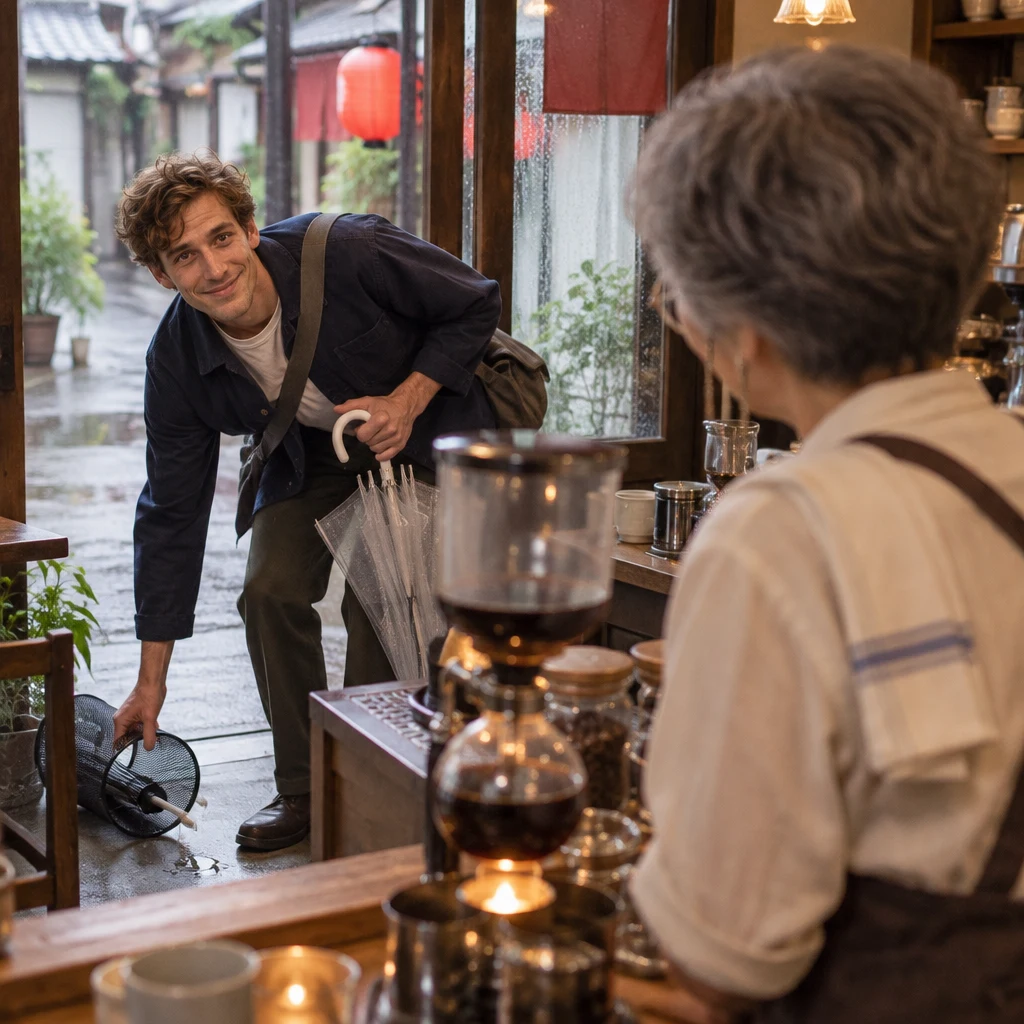
Leo's umbrella knocks the stand at Kissa Hotaru, then drips on the floor. He says sorry for both, and for thanks as well.
Masako will not sit through three sorrys. She cuts in and tells him it is fine.
By the end, you'll get attention, pass through a tight spot, apologise, and accept an apology.
すみません does a lot of jobs. ごめんなさい feels more personal.
By the end of this lesson
Get attention, pass through a crowd, apologise, and accept an apology.
- すみません。Excuse me (to get someone's attention)
- ごめんなさい。I'm sorry (a more personal apology)
- 通らせてください。Please let me through.
- ちょっと待ってください。Just a moment, please.
- いいえ、大丈夫です。No, it's fine.
- すみませんでした。I'm sorry about what just happened.
Scene — the wet stand
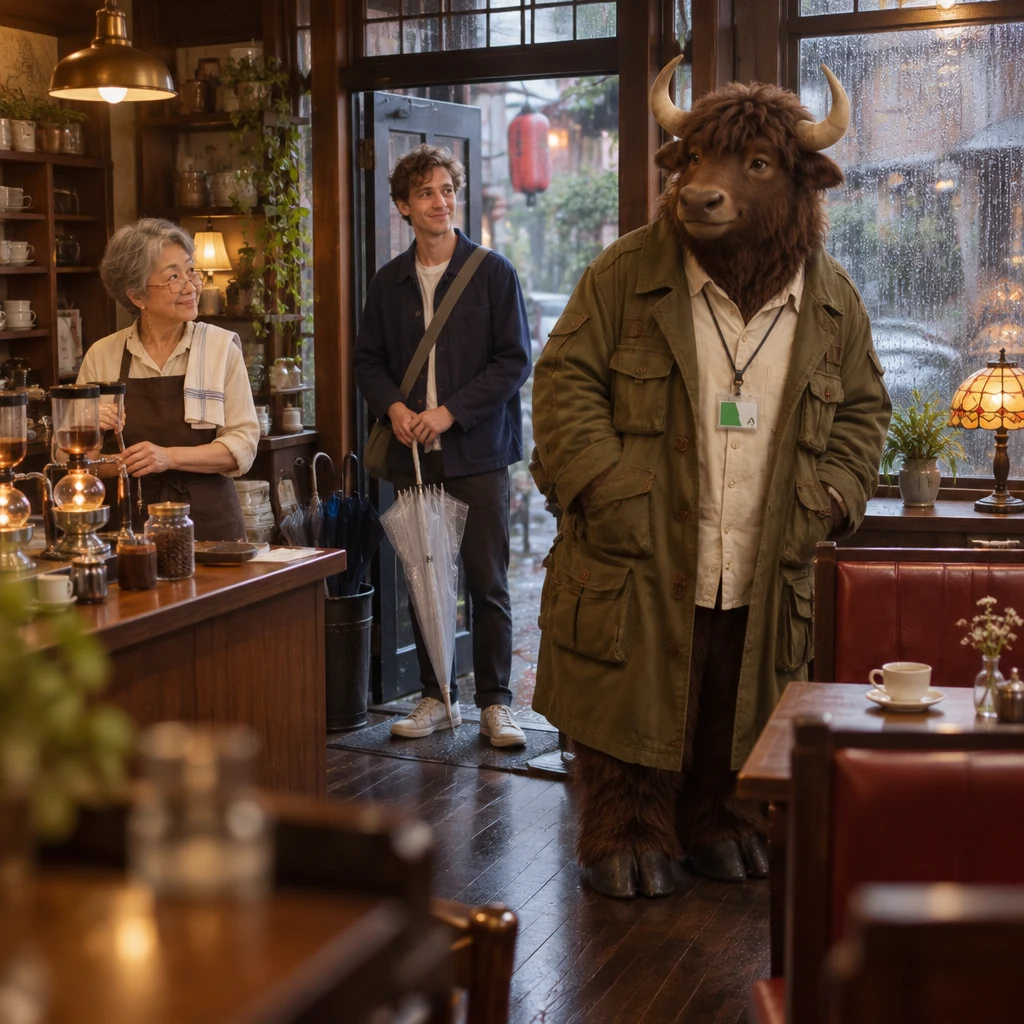
A wet morning at Kissa Hotaru. Leo pushes in with his clear umbrella and knocks the stand by the door.
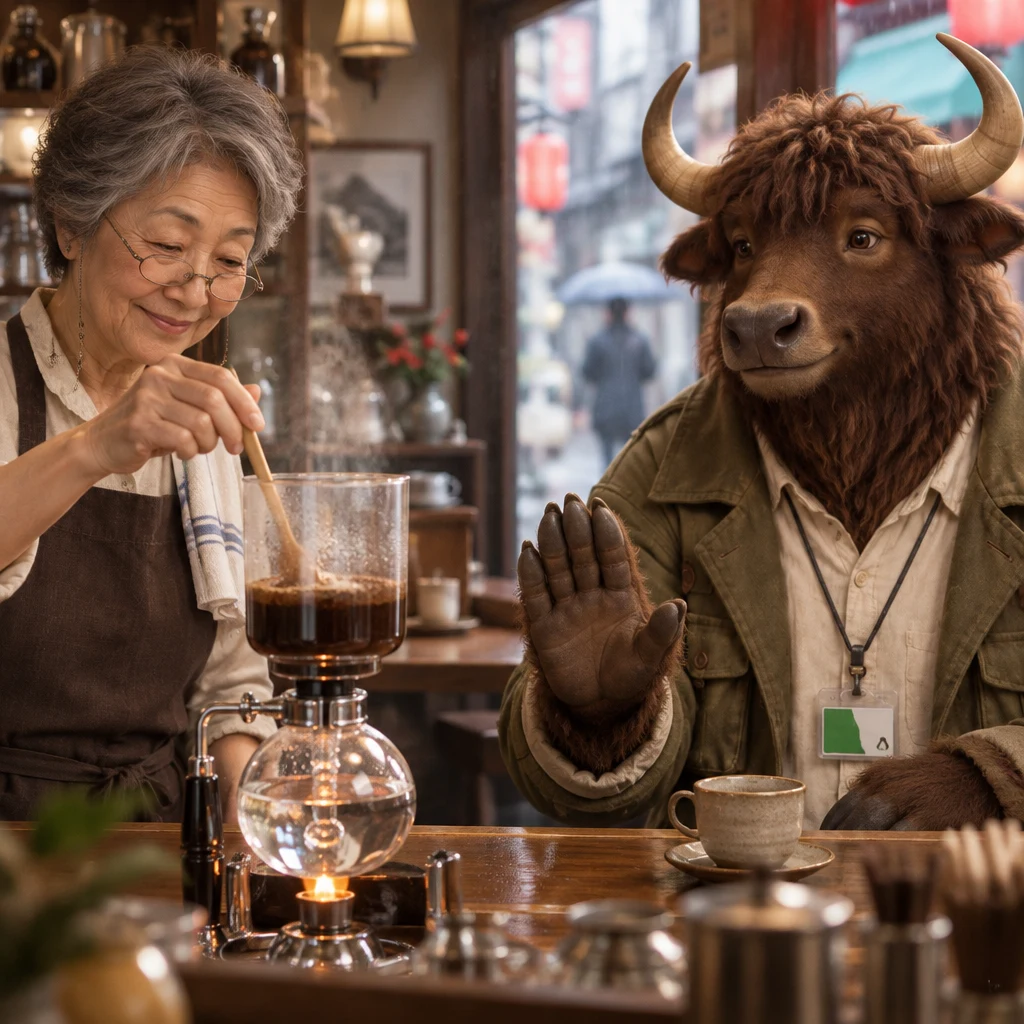
Masako looks up from the siphon. In the aisle, Goro's long coat takes the whole path to the booth, and his blend coffee still sits untouched.
Learn — excuse me and sorry
Six short lines cover excuse me, a personal sorry, and letting someone through.
You'll also learn how to ask for a moment and how to say it is fine.

すみません。
Excuse me (to get someone's attention)
When to use it: Say this to get attention, apologise, or even thank someone.
Learn it as one piece for sorry, excuse me, and thanks.
ごめんなさい。
I'm sorry (a more personal apology)
When to use it: Say this for a personal apology, not just a small bump.
Learn it as one piece when you feel more sorry.

通らせてください。
Please let me through.
When to use it: Say this when you need to pass someone in a tight spot.
Learn it as one piece to ask someone to let you pass.
ちょっと待ってください。
Just a moment, please.
When to use it: Say this when you need someone to wait a short time.
Learn it as one piece when you ask for a short wait.
Say it: The small っ is a short stop before と.

いいえ、大丈夫です。
No, it's fine.
When to use it: Say this to accept an apology and tell them not to worry.
Learn it as one piece when someone says sorry.
Say it: The u in です is almost silent.
すみませんでした。
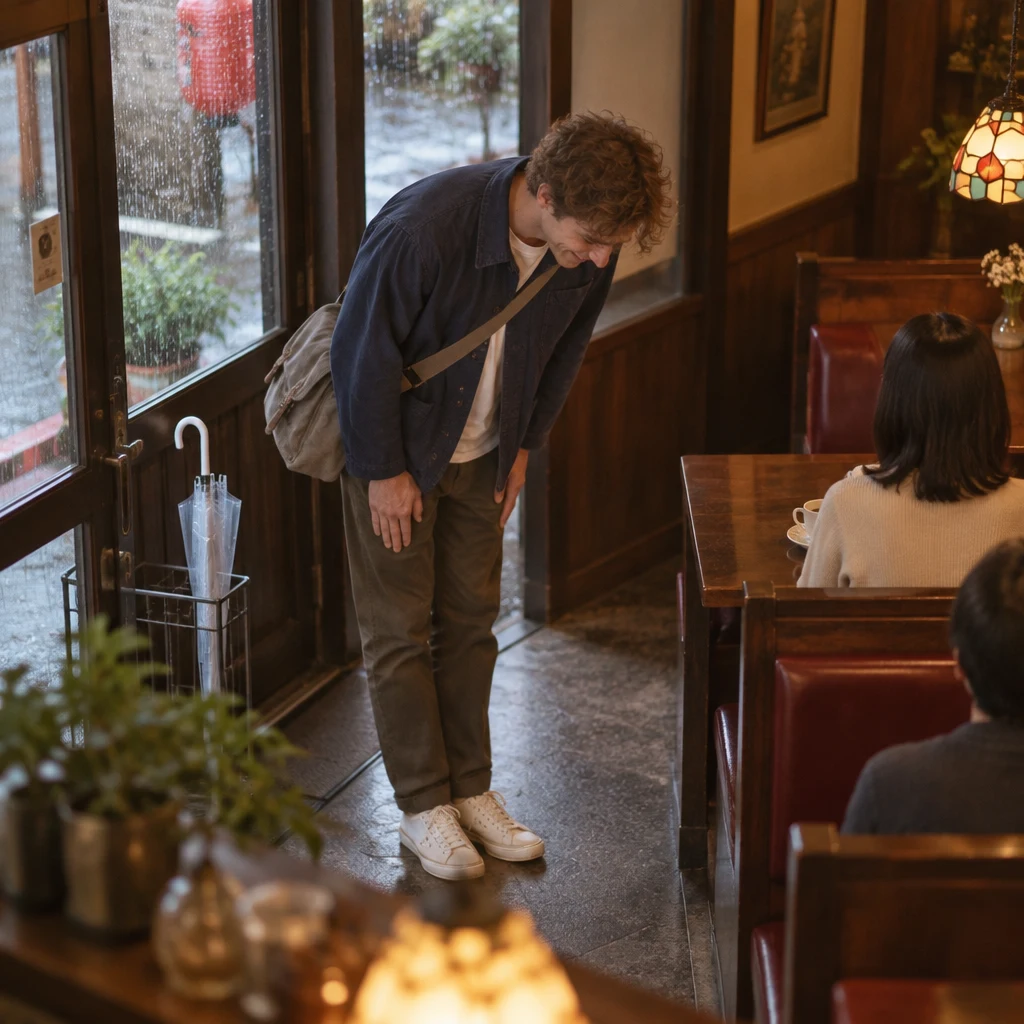
I'm sorry about what just happened.
When to use it: Say this after something already happened, to apologise for it.
Learn it as one piece after something already went wrong.
Story — three sorrys
Watch Leo apologise for the stand, then for a drip on the floor. Masako tells him it is fine. Later he says sorry as thanks, and she answers with thanks.
The highlighted words are the lines you just learned. Turn on Show English if you need it.
- Rain on the glass. Leo's umbrella knocks the stand.
 Leoすみません。Excuse me.
 Masakoいらっしゃいませ。Welcome.
- Leoこんにちは。Hello.
- A drip hits the floor by Masako's shoes.
- Leoごめんなさい。I'm sorry.
- Masakoいいえ、大丈夫です。No, it's fine.
- Goro's long coat fills the path to the booth.
- Leo通らせてください。Please let me through.
 Goroちょっと待ってください。Just a moment, please.
- Goroどうぞ。Go ahead.
- Leoすみませんでした。I'm sorry about that.
- Masako rights the stand and wipes the drip.
- Leoすみません。Thanks.
- Masakoありがとう。Thank you.
Practice — sorry or fine
Eleven quick exercises wait here. You'll listen, pick, match, fill a gap, and build a line.
They stay tiny, so the round moves fast.
0 of 11 done
What did you hear?
What did you hear?
Match the pairs
Japanese
すみません。Drop the English hereごめんなさい。Drop the English hereすみませんでした。Drop the English hereEnglish
What do you say?
What do you say?
It is two in the afternoon at the kissa. Masako looks up. Greet her.
What do you say?
What do you say?
Your umbrella just hit the stand. Get Masako's attention and apologise.
Pick the reply
Goro says:
Pick the reply
あ、すみません。
Sorry, I bumped you.
And you reply with:
Fill the gap
Fill the gap
Please let me through.
通らせて____。
What does it mean?
What does it mean?
ちょっと待ってください。
Swap the word
Swap the word
The drip already hit the floor. Fix the sorry so it looks back.
____でした。
Build the line
Build the line
Just a moment, please.
。
Tap the words in order.
Find the mistake
Find the mistake
What do you say?
What do you say?
Someone is stuck behind you by the stand. Let them through.
Say it — say it back
Now you're Leo in the wet doorway. When it's your turn, tap the microphone and speak the line.
Tap ▶ first if you want to hear the line. Your recording stays on your device.
- Masakoいらっしゃいませ。Welcome.
- Leo (you)You knocked the stand. Get her attention and apologise.
You knocked the stand. Get her attention and apologise.
すみません。
Excuse me (to get someone's attention)
0 of 4 said
Recap — what you can say now
| Japanese | English | Play |
|---|---|---|
| すみません。 | Excuse me (to get someone's attention) | |
| ごめんなさい。 | I'm sorry (a more personal apology) | |
| 通らせてください。 | Please let me through. | |
| ちょっと待ってください。 | Just a moment, please. | |
| いいえ、大丈夫です。 | No, it's fine. | |
| すみませんでした。 | I'm sorry about what just happened. |
Save your progress — it’s free
Keep your place in the course and see which lines you’ve learned.
Want the next lesson in your inbox?
Get the next lesson by email, one a day.
Join the newsletterDaily lesson emails are coming soon. Newsletter subscribers get them first.
Keep practicing with Yak Cards
Want to keep these sorrys handy? Grab the Yak Cards for this lesson and review them anywhere.
A quick round with the Yak Cards each day keeps your sorrys ready for the door.
Open Yak Cards