
New here? This is lesson 199 of a free 240-lesson Japanese course.
Storm day indoors in Japanese
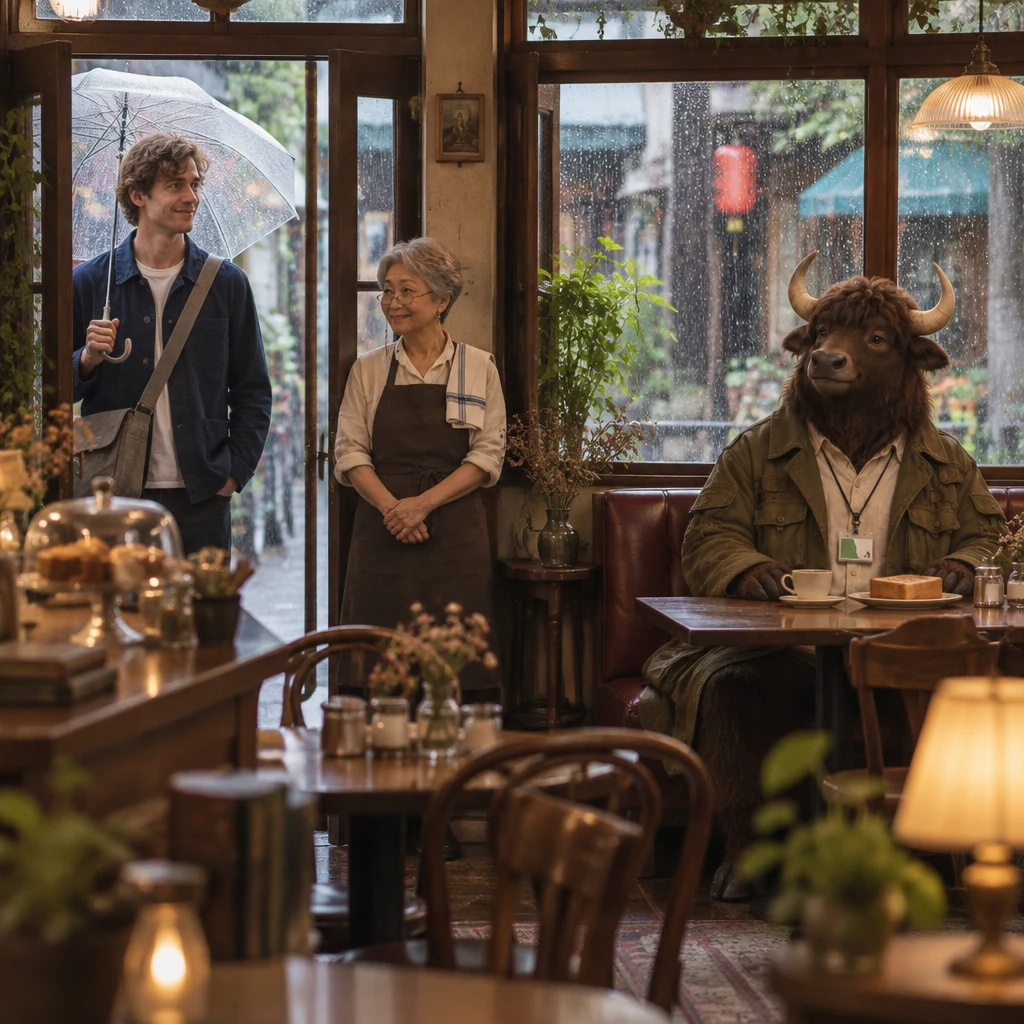
Rainy-season clouds settle over Yanaka, and wind rattles the windows of Kissa Hotaru. Leo stays inside with Masako and Goro.
Goro begins telling them about the first time he came to the shop. The story sounds important, but he keeps getting distracted by his toast.
You will suggest staying indoors, describe the weather, and follow a story that pauses before its ending.
Listen for how the speakers mark a long story and leave its continuation for later.
By the end of this lesson
Talk about staying indoors and follow a story that pauses.
- こんな日は店にいたほうがいいです。On a day like this, better to stay in the shop.
- 外は風が強いですよ。It's really windy out there.
- 実は初めて来たときの話なんです。It's about the first time I came, actually.
- 長い話になります。It's a long story.
- そこで話が途切れました。That's where the story broke off.
- 続きはまた今度にします。I'll leave the rest for another time.
Scene — rain against the windows
Rainy-season rain falls over Yanaka. Leo is inside Kissa Hotaru, where the windows shake a little in the wind. Masako keeps an eye on the door.
Goro sits in the corner booth with his toast and untouched blend coffee. He says he has a story about his first visit, then looks down at the toast.
Learn — stay in and tell a story
These six lines help you talk about staying inside on a windy day and listening to a story.
Notice how Goro introduces his story, then puts it aside when he loses his place.

こんな日は店にいたほうがいいです。
On a day like this, better to stay in the shop.
When to use it: Use this to suggest staying indoors when the weather outside is rough.
ほうがいいです gives advice; here, いたほうがいい means staying inside is the better choice.
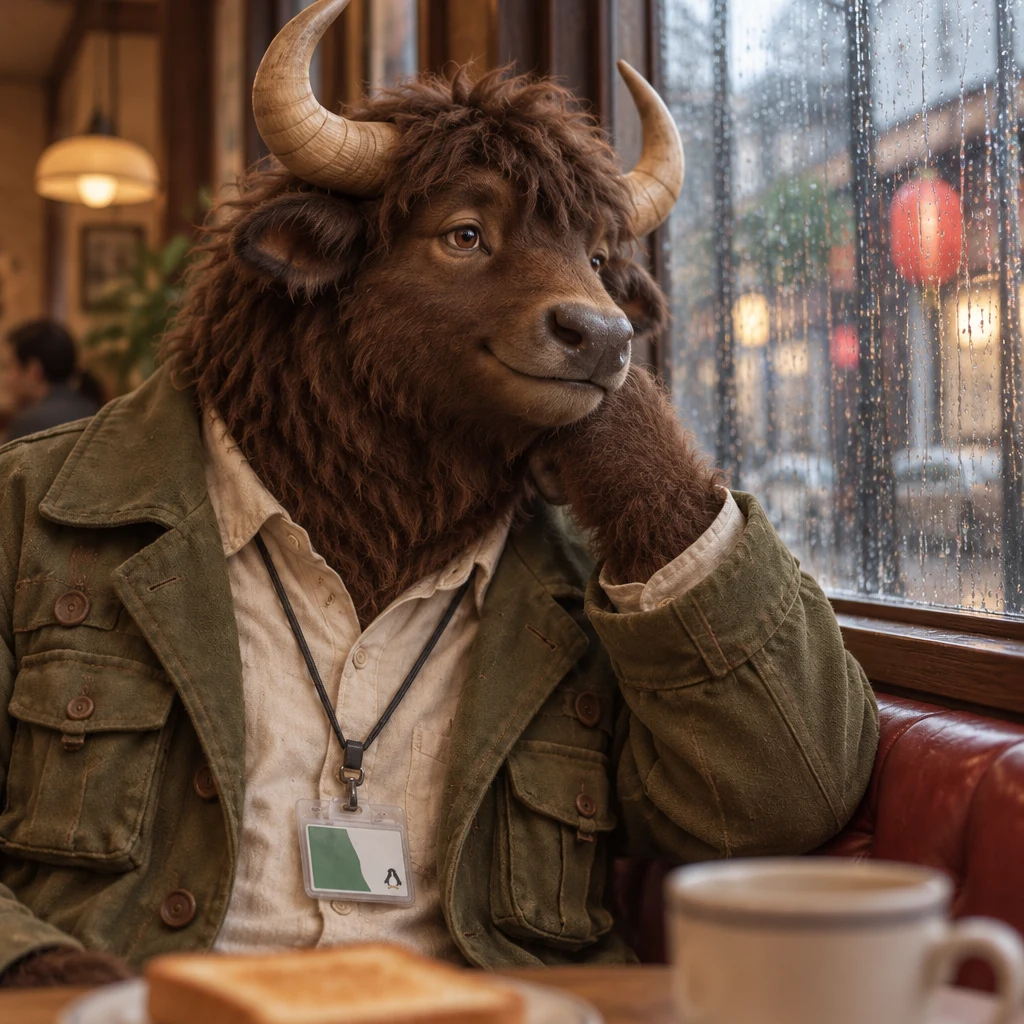
外は風が強いですよ。
It's really windy out there.
When to use it: Use this to warn someone that the wind outside is strong.
よ adds a little emphasis, as if sharing information the other person may not know.
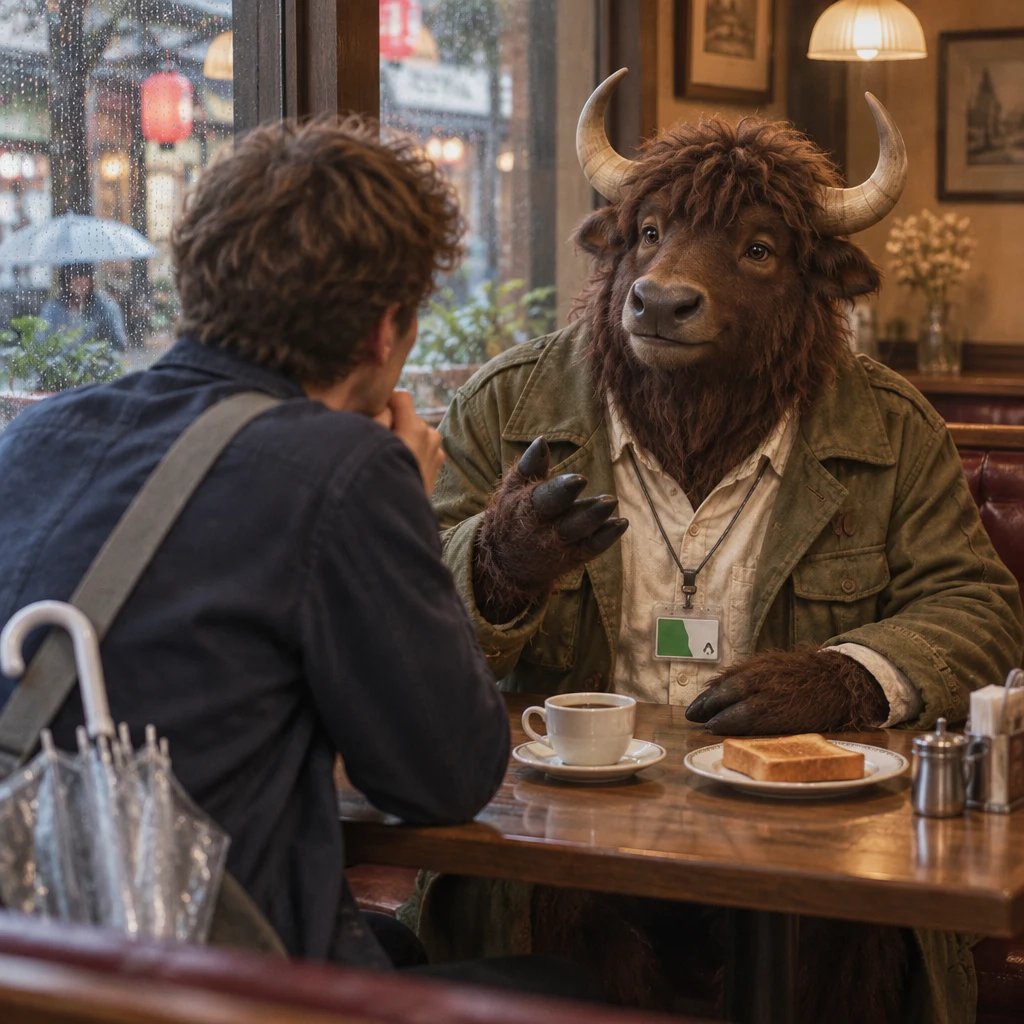
実は初めて来たときの話なんです。
It's about the first time I came, actually.
When to use it: Use this to introduce a story about your first visit somewhere.
なんです gives the line an explanatory tone, introducing what the story is about.
Say it: Keep ん in なんです as a clear nasal beat.
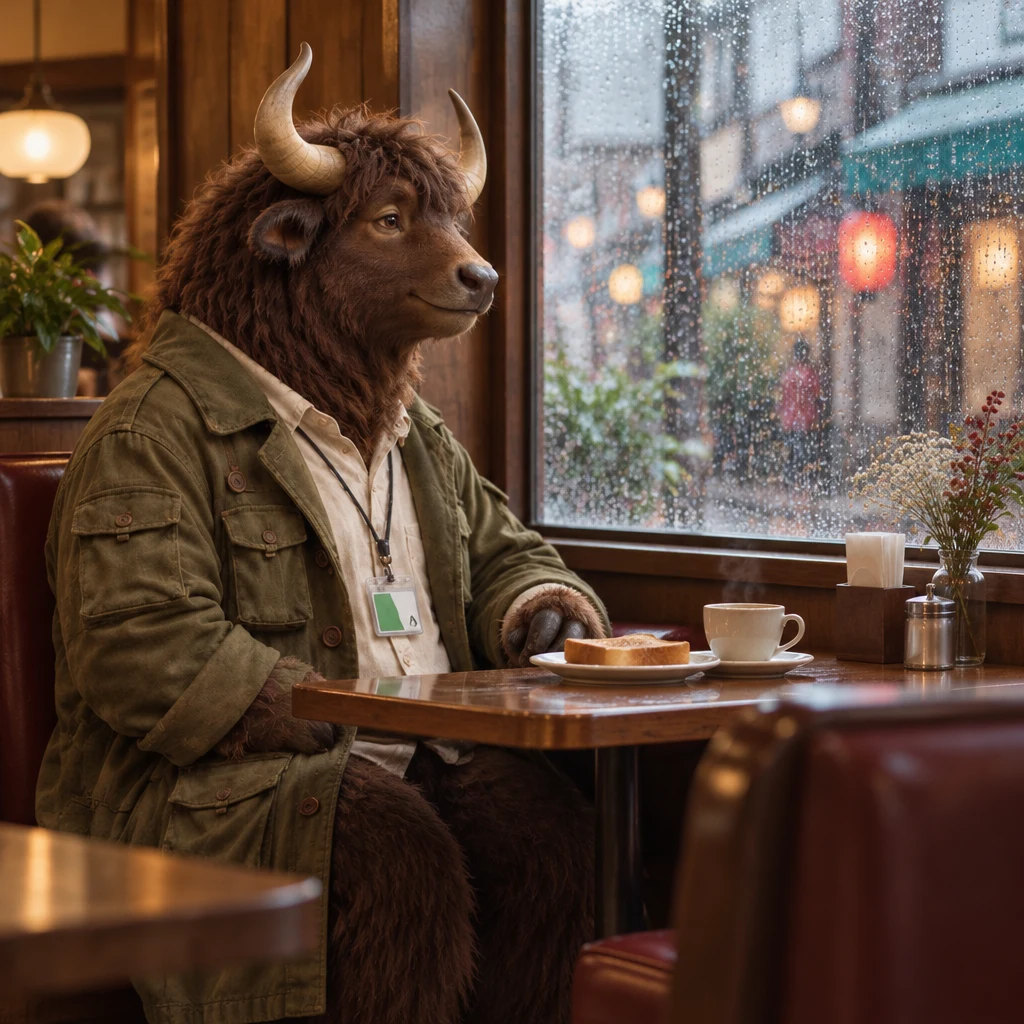
長い話になります。
It's a long story.
When to use it: Use this before starting an explanation that will take a while.
になります presents the story as becoming or turning out to be long.

そこで話が途切れました。
That's where the story broke off.
When to use it: Use this to say where a story or sequence stopped.
そこで points to the moment in a sequence where something happened.

続きはまた今度にします。
I'll leave the rest for another time.
When to use it: Use this when you decide to continue a story another day.
また今度 means another time; the line says you will save the continuation for then.
Story — Goro loses his place
A rainy-season afternoon keeps Leo indoors at Kissa Hotaru. Goro starts a story about his first visit, but the toast distracts him.
Highlighted phrases are the new lines. Turn on Show English if you want a gloss.
- Rain taps the windows. Leo comes in from the lane and greets Masako.
 Leoこんにちは。Hello.
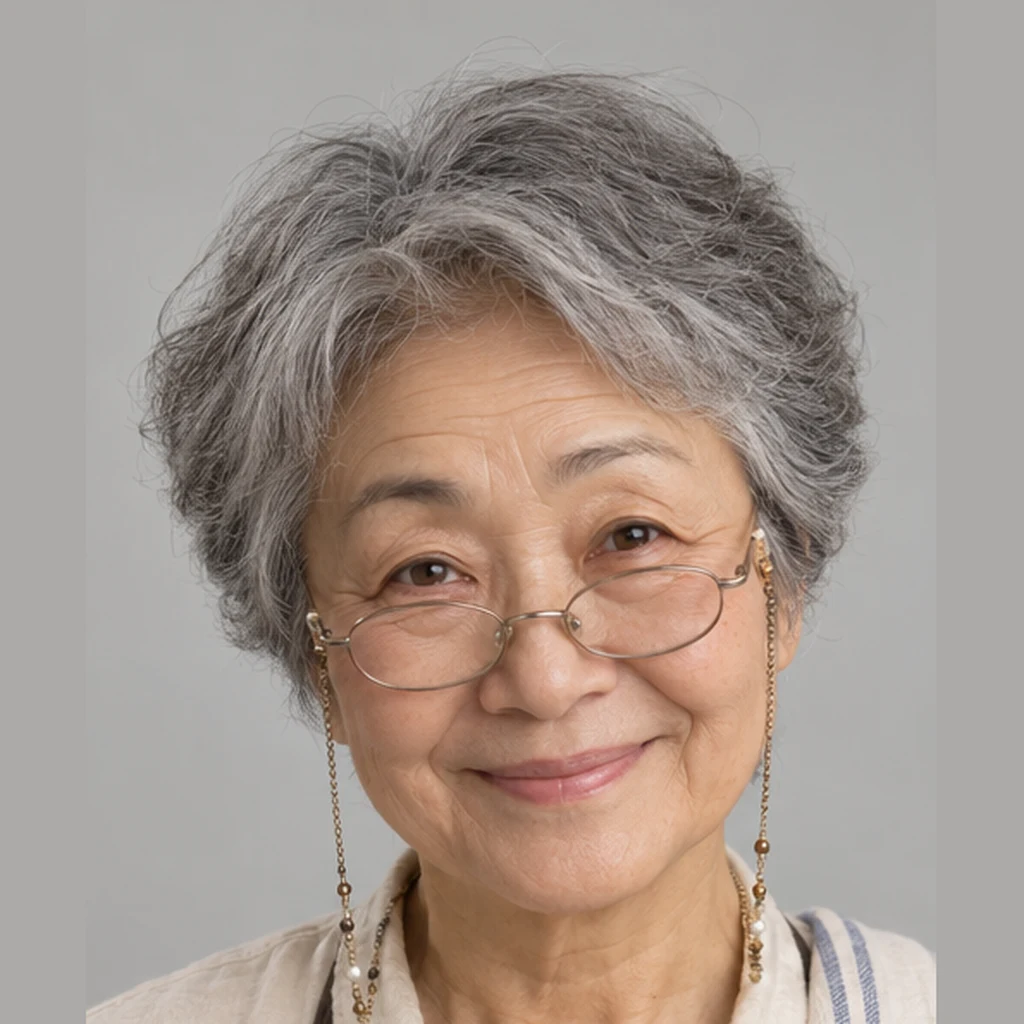 Masakoこんな日は店にいたほうがいいです。On a day like this, better to stay in the shop.
 Goro外は風が強いですよ。It's really windy out there.
- Goro looks up from the booth and begins, carefully.
- Goro実は初めて来たときの話なんです。It's about the first time I came, actually.
- Leoなるほど。That makes sense.
- Goro長い話になります。It's a long story.
- Goroええと、最初に来た日は、窓の外に猫がいました。Well, on the day I first came, there was a cat outside the window.
- He glances at the toast. His story stops while he checks whether it is still warm.
- Goroそこで話が途切れました。That's where the story broke off.
- Goroあ、トーストが冷めていますね。Oh, the toast is getting cold.
- Goro続きはまた今度にします。I'll leave the rest for another time.
- Masakoコーヒーはまだ残っていますよ。You still have coffee left.
Practice — follow the story
Try eight short activities, including listening, building a line, filling a gap, and choosing a response.
The tasks revisit two earlier expressions while keeping the rainy-day conversation in view.
0 of 8 done
Pick the reply
Goro says:
Pick the reply
外に出たほうがいいですか。
Should I go outside?
And you reply with:
What do you say?
What do you say?
You enter Kissa Hotaru and greet Masako politely.
Fill the gap
Fill the gap
It's really windy out there.
外は風が____ですよ。
What does it mean?
What does it mean?
実は初めて来たときの話なんです。
Build the line
Build the line
It's a long story.
。
Tap the words in order.
What do you say?
What do you say?
You have been telling Masako about your first visit to Kissa Hotaru, but need to stop before finishing. Say you will leave the rest for another time.
What did you hear?
What did you hear?
What do you say?
What do you say?
Masako says Goro can tell the rest another time. Acknowledge that you understand.
Say it — your turn to speak
You are Leo inside Kissa Hotaru, telling Masako your own story about your first visit. This is a separate story from Goro's unfinished account.
Listen to the cue, then say your line when it is your turn. This is a recording activity, not a pronunciation score.
- Masakoレオさんの初めての日の話も聞きたいですね。I'd like to hear about your first day here too.
- Leo (you)Introduce your story about the first time you came.
Introduce your story about the first time you came.
実は初めて来たときの話なんです。
It's about the first time I came, actually.
0 of 4 said
Recap — what you can say now
| Japanese | English | Play |
|---|---|---|
| こんな日は店にいたほうがいいです。 | On a day like this, better to stay in the shop. | |
| 外は風が強いですよ。 | It's really windy out there. | |
| 実は初めて来たときの話なんです。 | It's about the first time I came, actually. | |
| 長い話になります。 | It's a long story. | |
| そこで話が途切れました。 | That's where the story broke off. | |
| 続きはまた今度にします。 | I'll leave the rest for another time. |
Save your progress — it’s free
Keep your place in the course and see which lines you’ve learned.
Want the next lesson in your inbox?
Get the next lesson by email, one a day.
Join the newsletterDaily lesson emails are coming soon. Newsletter subscribers get them first.
Keep practicing with Yak Cards
Save these rainy-day expressions in the Yak Cards and review them before your next conversation.
A quick review can help you follow a story even when the speaker loses their place.
Open Yak Cards