
New here? This is lesson 3 of a free 240-lesson Japanese course.
What's your name in Japanese
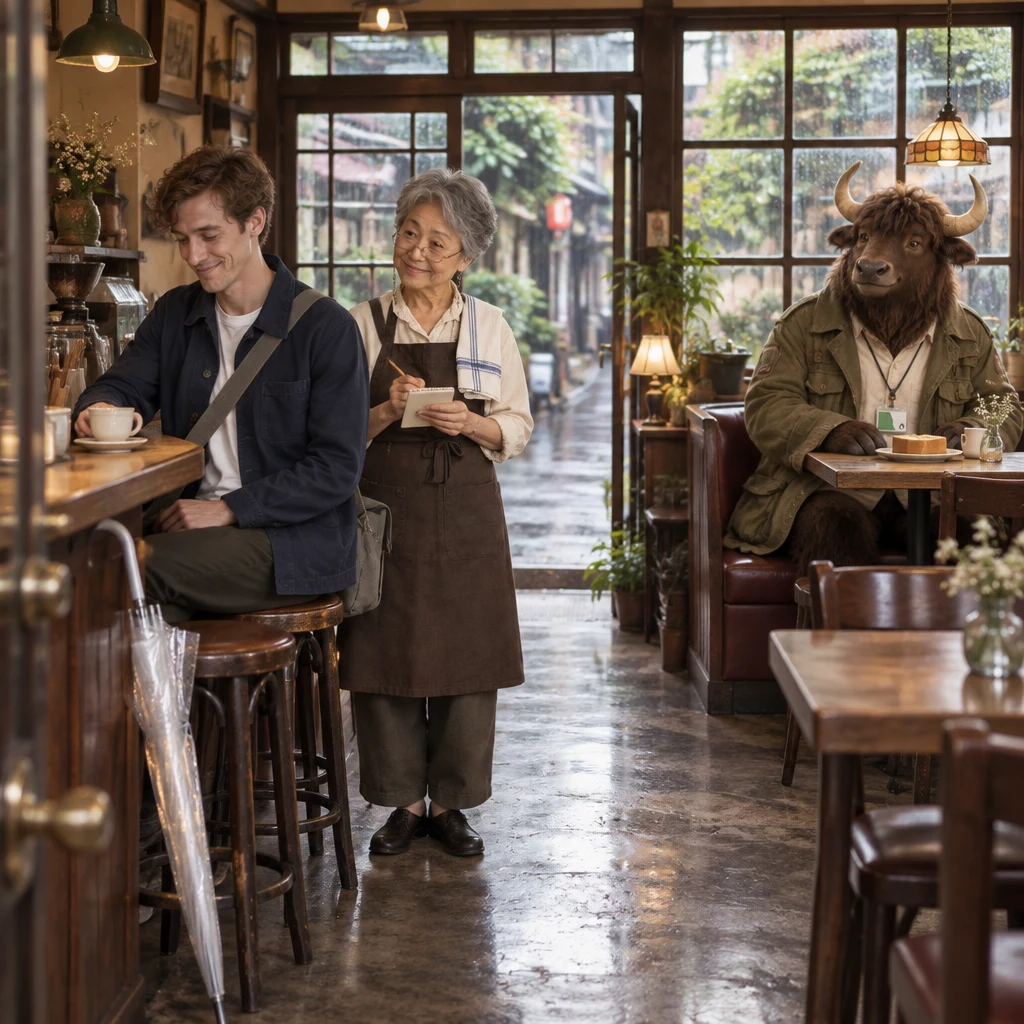
Leo has a seat at Kissa Hotaru, but Masako still does not have a name for the cup.
She asks, and he says Leo. She repeats it twice, slowly, as if the sounds might slip.
Then Goro offers his own name as if Goro were an ordinary Tokyo name.
By the end, you can ask someone's name, say yours, and tell people what to call you.
By the end of this lesson
Say your name, ask someone's name, and give a name to call you.
- お名前を聞いてもいいですか。May I ask your name?
- ___です。I'm ___.
- ___と呼んでください。Please call me ___.
- お名前を教えてください。Please tell me your name.
- 何と呼べばいいですか。What should I call you?
- それでいいです。That name is fine.
Scene — a name for the cup
The rain has eased. Leo sits at the counter with a cup he has not ordered. Masako waits with a pencil, ready for a name.
In the corner booth, Goro looks up from his toast as if this were the first hello of the day.
Learn — ask and give a name
Six short lines cover asking a name, saying yours, and choosing what people call you.
Keep the blank for the name. Never add san to your own name.

お名前を聞いてもいいですか。
May I ask your name?
When to use it: Say this when you want someone's name politely.
Learn it as one piece for a polite ask.
Say it: 聞いて has a long い, not a small っ.

___です。
I'm ___.
When to use it: Put your name in the blank, with no title.
Learn it as one piece when you give your name.

___と呼んでください。
Please call me ___.
When to use it: Fill the blank with the name you want used.
Learn it as one piece to choose your name.
Say it: The ん in 呼んで is its own beat.

お名前を教えてください。
Please tell me your name.
When to use it: Say this when you need someone's name.
Learn it as one piece for a direct ask.

何と呼べばいいですか。
What should I call you?
When to use it: Ask this when a name might have a short form.
Learn it as one piece before you pick a name.

それでいいです。
That name is fine.
When to use it: Say this when the name they offered is fine.
Learn it as one piece to accept a name.
Story — leo, twice
Watch Leo give his name at the counter today. Masako repeats it twice. Goro treats his own name as ordinary.
The highlighted words are the lines you just learned. Turn on Show English if you need it.
- Leo sits. Masako has a pencil by the cup.
 Leoおはようございます。Good morning.
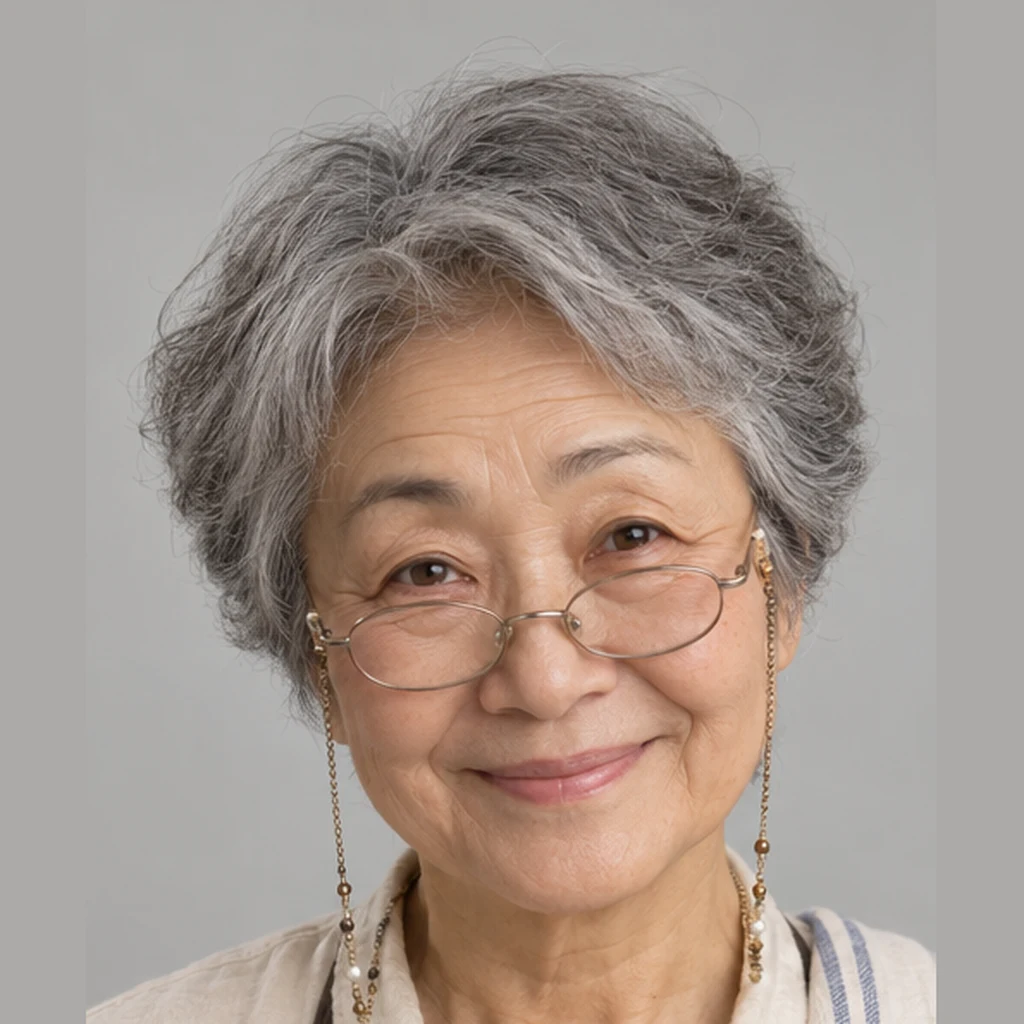 Masakoお名前を聞いてもいいですか。May I ask your name?
- Leoレオです。I'm Leo.
- Masakoレオさんですね。Leo, right?
- She says it again, slower, checking the sounds.
- Masakoレオさん。Leo.
- Leoレオと呼んでください。Please call me Leo.
- Goro looks up from the toast, as if he missed the whole thing.
- Leoお名前を教えてください。Please tell me your name.
- Goro says it as if it were Sato or Tanaka.
 Goroゴローです。I'm Goro.
- Leo何と呼べばいいですか。What should I call you?
- Goroゴローと呼んでください。Please call me Goro.
- Leoそれでいいです。That name is fine.
Practice — who is who
Eleven quick exercises wait here. You'll listen, pick, match, fill a gap, and build a line.
They stay tiny, so the round moves fast.
0 of 11 done
What did you hear?
What did you hear?
What do you say?
What do you say?
You step into Kissa Hotaru at nine in the morning. Greet Masako.
Fill the gap
Fill the gap
Please tell me your name.
お名前を____ください。
What does it mean?
What does it mean?
それでいいです。
Build the line
Build the line
That name is fine.
。
Tap the words in order.
Pick the reply
Masako says:
Pick the reply
お名前を聞いてもいいですか。
May I ask your name?
And you reply with:
Swap the word
Swap the word
You want to know what to call Goro. Fix the verb.
何と____いいですか。
What do you say?
What do you say?
Masako has your name. Tell her to call you Leo.
What do you say?
What do you say?
Which line asks permission for a name, and is not a statement?
Match the pairs
Japanese
お名前を聞いてもいいですか。Drop the English hereお名前を教えてください。Drop the English here何と呼べばいいですか。Drop the English hereEnglish
True or false?
True or false?
This tells someone to have a seat.
Say it — say your name
Now you're Leo at the counter. When it's your turn, tap the microphone and speak the line.
Tap ▶ first if you want to hear the line. Your recording stays on your device.
- Masakoおはようございます。Good morning.
- Leo (you)Ask if you may have her name.
Ask if you may have her name.
お名前を聞いてもいいですか。
May I ask your name?
0 of 5 said
Recap — what you can say now
| Japanese | English | Play |
|---|---|---|
| お名前を聞いてもいいですか。 | May I ask your name? | |
| ___です。 | I'm ___. | |
| ___と呼んでください。 | Please call me ___. | |
| お名前を教えてください。 | Please tell me your name. | |
| 何と呼べばいいですか。 | What should I call you? | |
| それでいいです。 | That name is fine. |
Save your progress — it’s free
Keep your place in the course and see which lines you’ve learned.
Want the next lesson in your inbox?
Get the next lesson by email, one a day.
Join the newsletterDaily lesson emails are coming soon. Newsletter subscribers get them first.
Keep practicing with Yak Cards
Want to keep these name lines handy? Grab the Yak Cards for this lesson and review them anywhere.
A quick round with the Yak Cards each day keeps names ready at the counter.
Open Yak Cards