
New here? This is lesson 175 of a free 240-lesson Japanese course.
A trip that went wrong in Japanese
Leo left Yanaka for a short trip toward Nippori and the lanes turned on him in the rain. He never touched the tagged umbrella by the kissa door.
Back at Kissa Hotaru, dripping, he tells Masako and Kenta what went wrong and how he found his way.
You will sum up a trip that failed, say you got lost, compare it to what you expected, and name what you want next time.
Keep the story short. The weather did the rest.
By the end of this lesson
Tell what went wrong on a trip and how you got through it.
- 旅行は予定どおりにいきませんでした。The trip didn't go as planned.
- 道に迷いましたが、なんとか戻れました。I got lost, but I found my way back.
- 思ったより___でした。It was more ___ than I expected.
- 次は、___たいです。Next time I want to ___.
- 行く途中で、雨が降りました。On the way there, it rained.
- あのときのことは、ずっと忘れません。I'll never forget that moment.
Scene — wet from Nippori
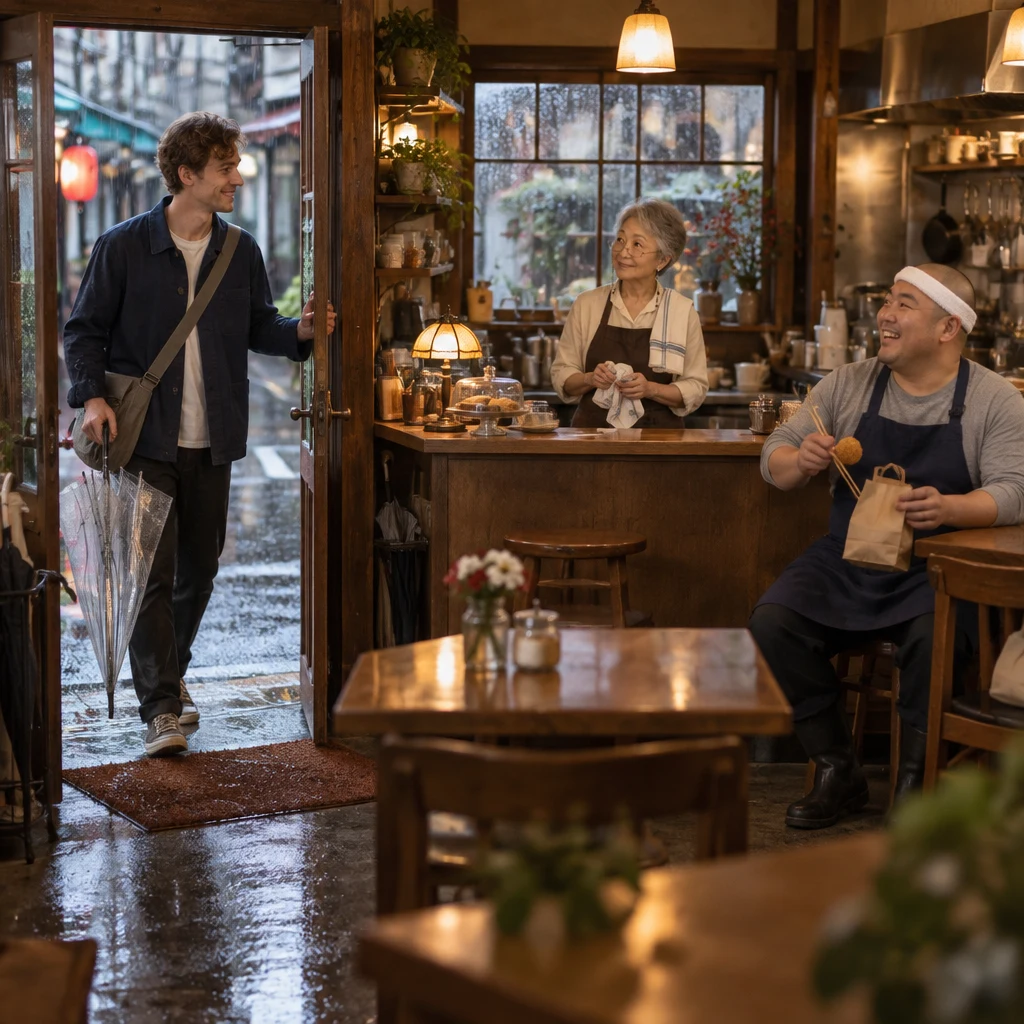
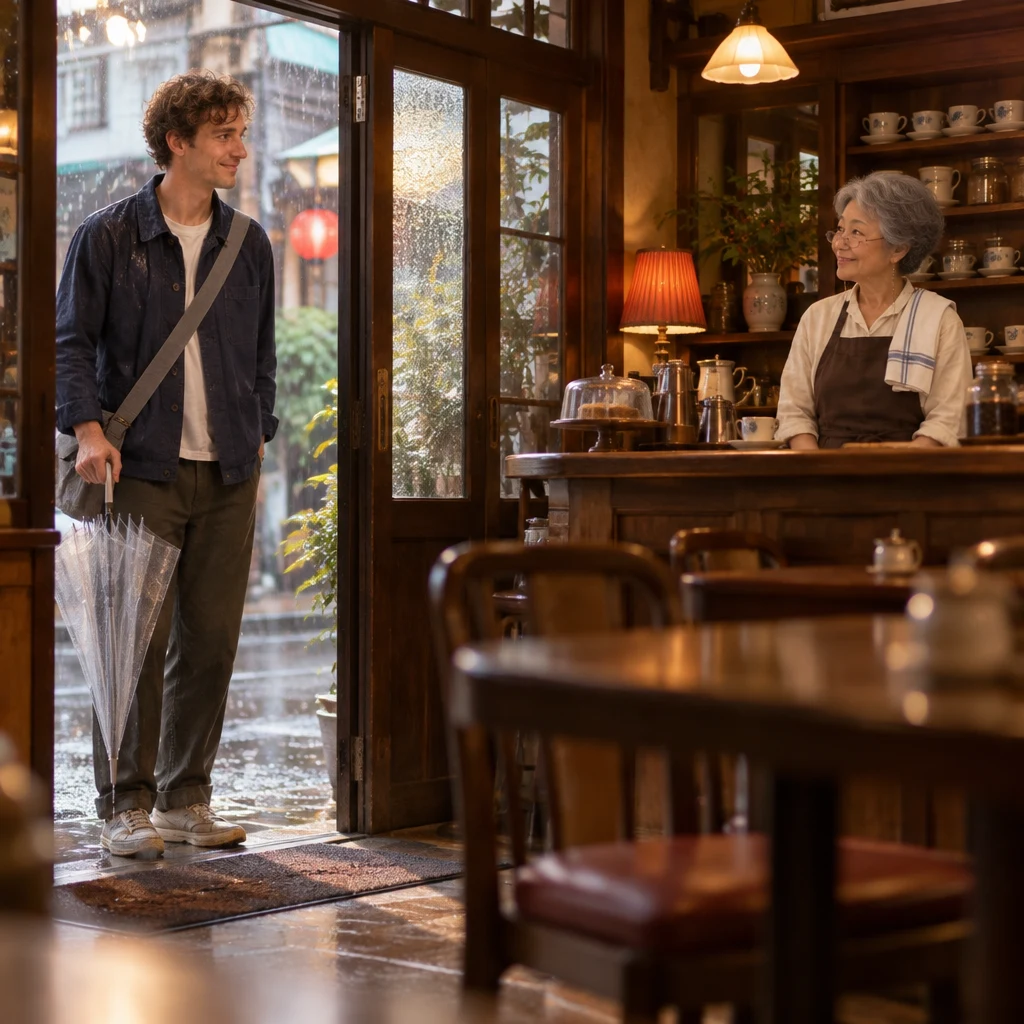
Rain still hangs over Yanaka. Leo pushes the kissa door with a soaked sleeve and a clear umbrella that did little good near Nippori.
Masako looks up from the counter. Kenta is on a stool with a paper bag of croquettes.
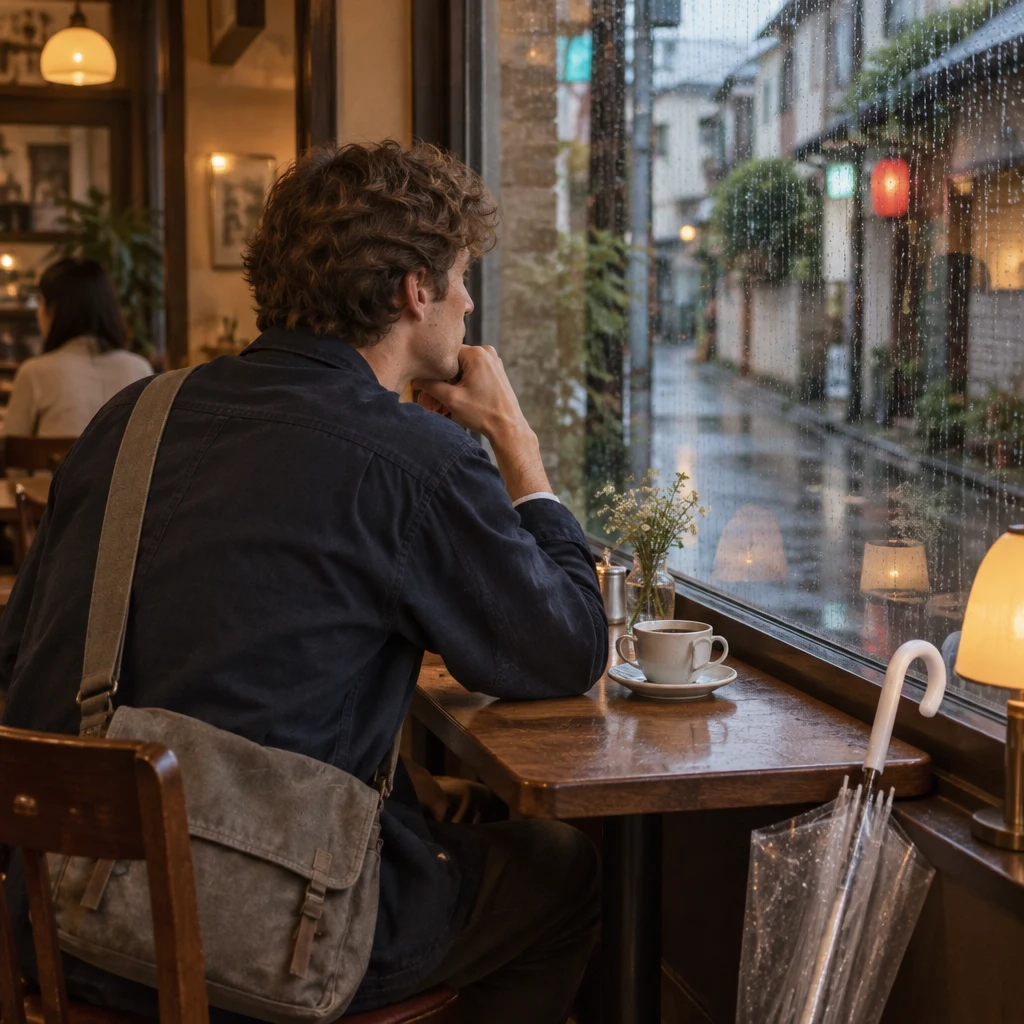
Goro sits in the corner booth, blend coffee untouched, and does not reach for the old black umbrella.
Learn — when a trip goes wrong
These six lines help you tell a trip that went wrong: the plan failed, you got lost, and rain hit on the way.
You also compare it with what you expected, and say what you want next time.
旅行は予定どおりにいきませんでした。
The trip didn't go as planned.
When to use it: Use this to sum up a trip that did not follow the plan.
予定どおりに plus a negative verb means the plan did not happen.
Say it: Keep the long お in どおり; do not shorten it.

道に迷いましたが、なんとか戻れました。
I got lost, but I found my way back.
When to use it: Use this when you got lost and still made it back.
が links the problem to how you got through it.
Say it: Give ん in なん its own beat.

思ったより___でした。
It was more ___ than I expected.
When to use it: Use this to say it was more than you expected.
より after 思った compares what happened with your guess.
Say it: Hold the small っ in 思った before た.
次は、___たいです。
Next time I want to ___.
When to use it: Use this to say what you want to do next time.
たい after the action word means you want to do it.

行く途中で、雨が降りました。
On the way there, it rained.
When to use it: Use this when rain started while you were on the way.
で after 途中 marks the moment in the trip when it happened.

あのときのことは、ずっと忘れません。
I'll never forget that moment.
When to use it: Use this when a moment will stay with you.
ずっと before 忘れません means the memory stays.
Say it: Give ん in ません its own beat.
Story — back at the kissa
Leo comes in wet from a short trip near Nippori. Masako asks what happened, and Kenta listens.
Highlighted phrases are the new lines. Turn on Show English if you want a gloss.
- Leo hangs his clear umbrella. The old black one stays in the stand.
 Masakoどうしたんですか。What happened?
 Leo旅行は予定どおりにいきませんでした。The trip didn't go as planned.
 Kenta雨、すごかったね。The rain was wild, huh.
- Leo行く途中で、雨が降りました。On the way there, it rained.
- Masakoそれで、どうしたんですか。And what did you do then?
- Leo道に迷いましたが、なんとか戻れました。I got lost, but I found my way back.
- Masakoそれは大変でしたね。I'm sorry that happened.
- Leo思ったより大変でした。It was harder than I expected.
- Goro glances at the lane, then at his unfinished blend coffee.
 Goroなるほど。I see.
- Kenta次は、その日だよ。Next time will be the day.
- Leo次は、確認したいです。Next time I want to check.
- Kentaそれがいいよ。That's a good call.
- Leoあのときのことは、ずっと忘れません。I'll never forget that moment.
- Masakoお茶を出しますね。I'll bring you some tea.
Practice — tell what went wrong
Ten short tasks wait in this round. You will listen, fill a gap, build a line, and pick a reply.
Each one is small, so you move on quickly.
0 of 10 done
What did you hear?
What did you hear?
What does it mean?
What does it mean?
行く途中で、雨が降りました。
What do you say?
What do you say?
You got lost near Nippori, but you found the kissa again. Tell them.
True or false?
True or false?
This frame compares what happened with what you expected.
Pick the reply
Leo says:
Pick the reply
道に迷いましたが、なんとか戻れました。
I got lost, but I found my way back.
And you reply with:
Build the line
Build the line
I'm lost.
。
Tap the words in order.
What do you say?
What do you say?
You got lost this time. Say that next time you want to check the way.
Swap the word
Swap the word
You got lost, but you made it back. Restore the link.
道に迷いました____、なんとか戻れました。
True or false?
True or false?
This line means you will never forget that moment.
What do you say?
What do you say?
Kenta walks in soaked from the rain. Ask what happened.
Say it — your turn to speak
You are Leo, back from that wet mix-up near Nippori. When the cue is yours, tap the microphone and say the line.
Tap play first if you want to hear it. The recording stays on this device.
- Masakoどうしたんですか。What happened?
- Leo (you)Sum up that the trip did not follow the plan.
Sum up that the trip did not follow the plan.
旅行は予定どおりにいきませんでした。
The trip didn't go as planned.
0 of 6 said
Recap — what you can say now
| Japanese | English | Play |
|---|---|---|
| 旅行は予定どおりにいきませんでした。 | The trip didn't go as planned. | |
| 道に迷いましたが、なんとか戻れました。 | I got lost, but I found my way back. | |
| 思ったより___でした。 | It was more ___ than I expected. | |
| 次は、___たいです。 | Next time I want to ___. | |
| 行く途中で、雨が降りました。 | On the way there, it rained. | |
| あのときのことは、ずっと忘れません。 | I'll never forget that moment. |
Save your progress — it’s free
Keep your place in the course and see which lines you’ve learned.
Want the next lesson in your inbox?
Get the next lesson by email, one a day.
Join the newsletterDaily lesson emails are coming soon. Newsletter subscribers get them first.
Keep practicing with Yak Cards
Keep these trip lines in your pocket. Open the Yak Cards for this lesson and run them on the train.
A short Yak Cards round after a rainy walk keeps the story ready.
Open Yak Cards