
New here? This is lesson 207 of a free 240-lesson Japanese course.
Although, but in Japanese
At Kenta's croquette stand in Yanaka Ginza, Leo hears that prices have gone up. He agrees that they cost more, then explains why he still thinks they're worth buying.
A mix-up with the change makes the moment awkward, but Leo stays friendly. The two talk about trying the cooking, even though it may not be as easy as Kenta says.
Learn ways to concede one point and keep your own: が, ても, それでも, and a few useful transitions. These polite lines help you sound balanced, not argumentative.
By the end of this lesson
Acknowledge a drawback, then make your own point.
- 高いですが価値はあります。It's expensive, but it's worth it.
- まだ下手でもやってみたいです。Even if I'm still bad at it, I want to try.
- それでも行ってよかったです。Even so, I'm glad I went.
- そうは言っても簡単じゃないです。That said, it's not easy.
- せっかく来たので見てみます。Since I've come all this way, I'll take a look.
- 忙しいのは分かっていますがお願いします。I know you're busy, but please.
Scene — a price and a mistake
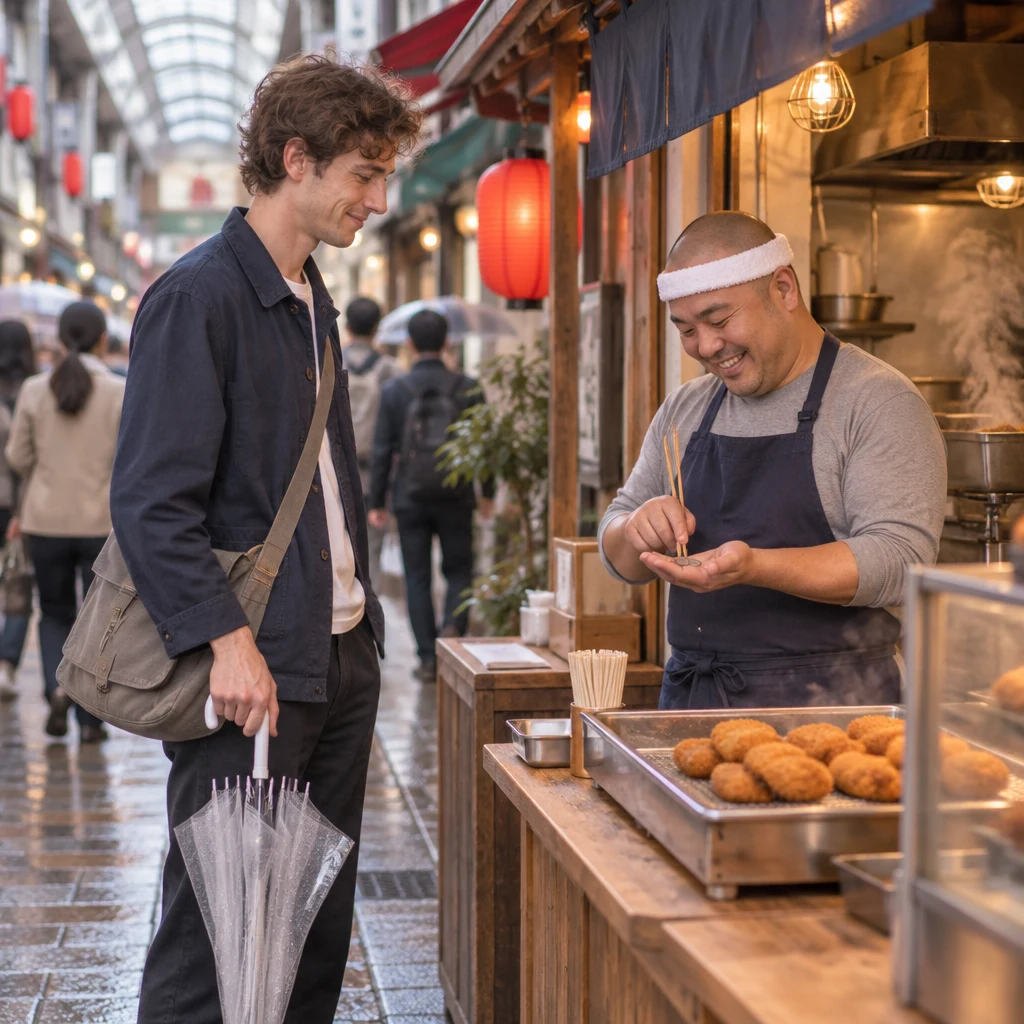
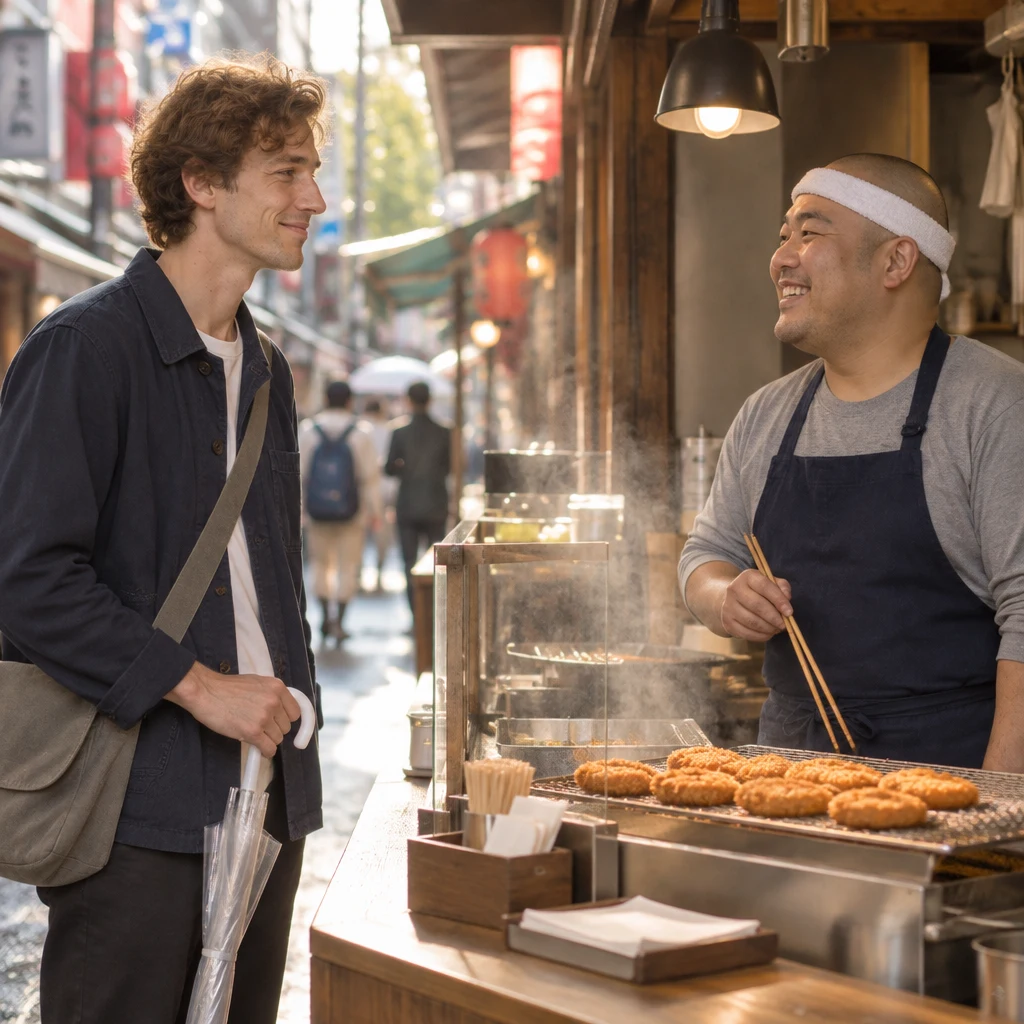
Yanaka Ginza is busy after lunch. Leo stops at Kenta's croquette stand, where a fresh batch cools behind the counter. Kenta tells him the price has gone up.
Leo pays with a five-hundred-yen coin. Kenta gives him too little change, notices the mistake, and corrects it. The fryer hisses while they talk about cooking.
Learn — concede, then add your point
Each line lets you acknowledge a drawback without giving up your view. Notice how が, ても, and それでも can lead into a different point.
The final lines help you add a request or explain what you will do.

高いですが価値はあります。
It's expensive, but it's worth it.
When to use it: Use this to accept that something costs a lot while saying it is still worthwhile.
が connects the concession, and は marks the point you want to emphasize afterward.
Say it: The u in the polite ending です is often barely voiced.

まだ下手でもやってみたいです。
Even if I'm still bad at it, I want to try.
When to use it: Say this when you want to try something despite not being good at it yet.
でも after 下手 makes the lack of skill a condition that does not stop you.
Say it: Keep a brief stop at the small っ in やって.
それでも行ってよかったです。
Even so, I'm glad I went.
When to use it: Use this when a plan or trip had a drawback, but you are glad you went.
それでも means even so and points back to a drawback you have already mentioned.
Say it: Keep a brief stop at the small っ in 行って.

そうは言っても簡単じゃないです。
That said, it's not easy.
When to use it: Use this to qualify what someone has just said without directly dismissing it.
そうは言っても acknowledges the previous point before adding a limit or correction.
Say it: Keep a brief stop at the small っ in 言って.
せっかく来たので見てみます。
Since I've come all this way, I'll take a look.
When to use it: Say this when you want to make use of the effort or trip you have already made.
せっかく highlights that you made an effort, giving a reason to go ahead.
Say it: Keep a brief stop at the small っ in せっかく.

忙しいのは分かっていますがお願いします。
I know you're busy, but please.
When to use it: Use this to recognize someone's workload before making a polite request.
の turns 忙しい into the situation you recognize before が introduces your request.
Say it: The u in います is often barely voiced.
Story — croquettes worth the trip
Leo buys a croquette from Kenta and notices the change is short. After Kenta fixes it, they talk about the higher price and whether Leo might try making croquettes himself.
Highlighted phrases are the new lines. Turn on Show English if you want a gloss.
- Leo reaches Kenta's stand as a fresh batch comes out of the fryer.
 Leoコロッケを一つください。One croquette, please.
 Kenta今日は一個二百円だよ。材料が上がってさ。It's two hundred yen each today. The ingredients got more expensive.
- Leo高いですが価値はあります。It's expensive, but it's worth it.
- Leo pays with a five-hundred-yen coin. Kenta gives him too little change.
- Leoお釣りが少ないです。The change is short.
- Kentaあっ、ごめん。三百円だね。Oh, sorry. It should be three hundred yen.
- Leoありがとうございます。Thank you.
- Kenta作るのは、衣をつけて揚げるだけだよ。Making them is just coating and frying them.
- Leoそうは言っても簡単じゃないです。That said, it's not easy.
- Kenta今度、一緒に作ってみる?Want to try making them together sometime?
- Leoまだ下手でもやってみたいです。Even if I'm still bad at it, I want to try.
- Kentaレシピなら店の奥にあるよ。見る?There's a recipe at the back of the shop. Want to look?
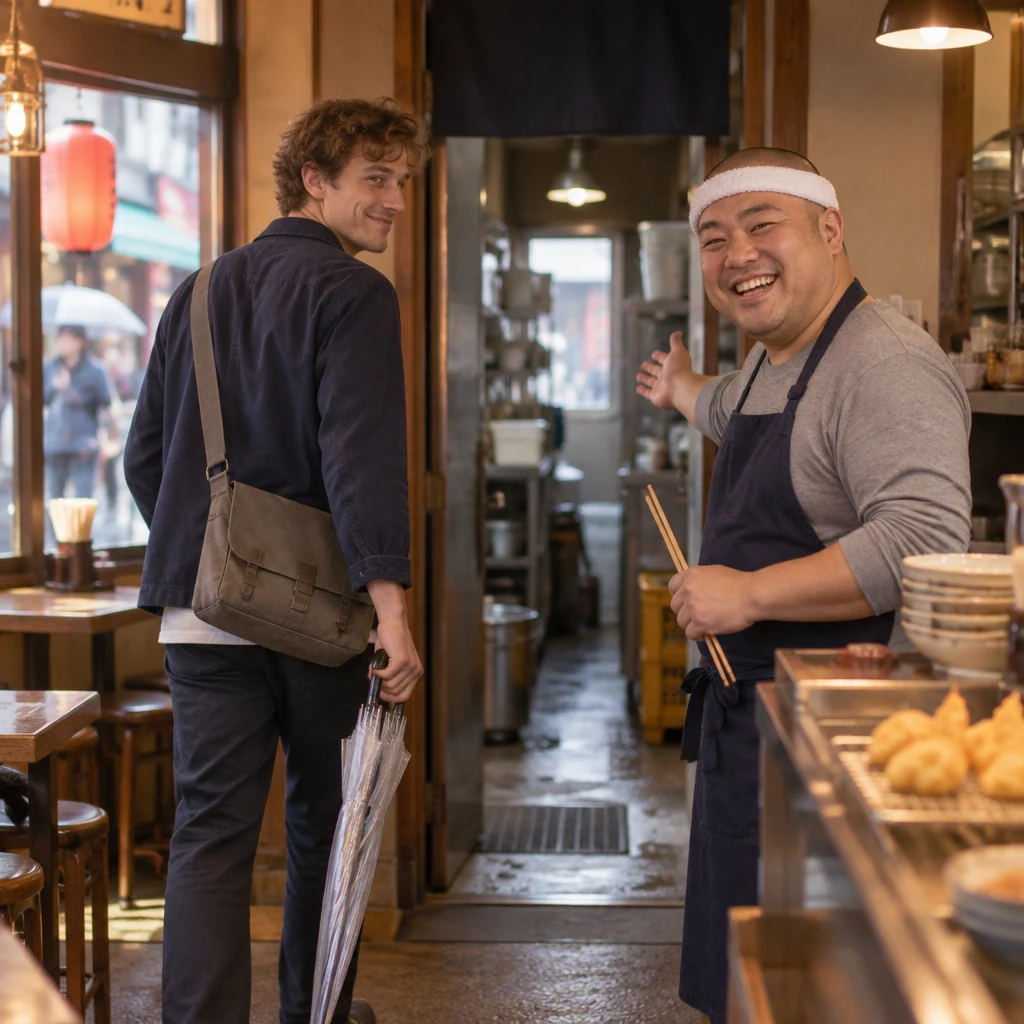
- Leoせっかく来たので見てみます。Since I've come all this way, I'll take a look.
- Kenta悪い、今ちょっと忙しいんだ。Sorry, I'm a little busy right now.
- Leo忙しいのは分かっていますがお願いします。I know you're busy, but please.
- Kentaじゃあ、あとで教えるよ。All right, I'll show you later.
- Kenta高かったし、お釣りも間違えたけど、今日、谷中銀座に行ったかいはあった?It was expensive, and I got your change wrong. Was it worth going to Yanaka Ginza today?
- Leoそれでも行ってよかったです。Even so, I'm glad I went.
Practice — keep your point
Work through ten short tasks to recognize, build, and choose these balanced responses. A few questions return to familiar ordering and thanks.
Check how each phrase fits the moment, not just its translation.
0 of 10 done
What does it mean?
What does it mean?
高いですが価値はあります。
What do you say?
What do you say?
Kenta invites you to try making croquettes. You are not good at cooking yet, but you want to try.
Pick the reply
Kenta says:
Pick the reply
値上がりしたけど、まだ買う?
The price went up, but are you still buying one?
And you reply with:
Build the line
Build the line
That said, it's not easy.
。
Tap the words in order.
Fill the gap
Fill the gap
It's expensive, but it's worth it.
高いです____価値はあります。
Swap the word
Swap the word
You have arrived at the back of the shop and are about to inspect the recipe, not already looking at it. Fix the verb.
せっかく来たので____。
Find the mistake
Find the mistake
What did you hear?
What did you hear?
What do you say?
What do you say?
You are ready to order one croquette from Kenta's stand.
Pick the reply
Kenta says:
Pick the reply
あっ、ごめん。三百円だね。
Oh, sorry. It should be three hundred yen.
And you reply with:
Say it — your turn to answer
Take Leo's place at the stand and respond to Kenta one turn at a time. The cues tell you when to concede a point and add your own.
Listen first if you like, then record your reply. This activity does not give a speaking score.
- Kenta一個二百円だけど、買う?They're two hundred yen each, though. Want one?
- Leo (you)Say it's expensive, but worth it.
Say it's expensive, but worth it.
高いですが価値はあります。
It's expensive, but it's worth it.
0 of 5 said
Recap — what you can say now
| Japanese | English | Play |
|---|---|---|
| 高いですが価値はあります。 | It's expensive, but it's worth it. | |
| まだ下手でもやってみたいです。 | Even if I'm still bad at it, I want to try. | |
| それでも行ってよかったです。 | Even so, I'm glad I went. | |
| そうは言っても簡単じゃないです。 | That said, it's not easy. | |
| せっかく来たので見てみます。 | Since I've come all this way, I'll take a look. | |
| 忙しいのは分かっていますがお願いします。 | I know you're busy, but please. |
Save your progress — it’s free
Keep your place in the course and see which lines you’ve learned.
Want the next lesson in your inbox?
Get the next lesson by email, one a day.
Join the newsletterDaily lesson emails are coming soon. Newsletter subscribers get them first.
Keep practicing with Yak Cards
Save these balanced replies for the next lively conversation. Open the Yak Cards for this lesson and review them on the train.
A quick Yak Cards round can help you concede a point without losing your own.
Open Yak Cards