Ready for lesson 84 — quick, useful social phrases! These short fillers help you buy time, soften what you say, and keep conversations friendly. Have fun trying them out aloud.
Level A2: In this short lesson you'll practice common Japanese fillers (social glue) like "ちょっと待ってください。" and "実はですね、___。" that help you pause, soften a point, or search for words. This CEFR-aligned mini-lesson focuses on listening, repeating, and using these phrases naturally in conversation.
After this lesson you'll be able to:
Recognize and use polite and casual fillers to pause and think.
Practice softening statements and recovering the conversation.
Build confidence saying these phrases aloud in short dialogues (A2).
Ready? Let's go!
When you tap play on phrases, we track your progress through this lesson.
1. Reading + Listening Practice
Hear core phrases, repeat aloud.
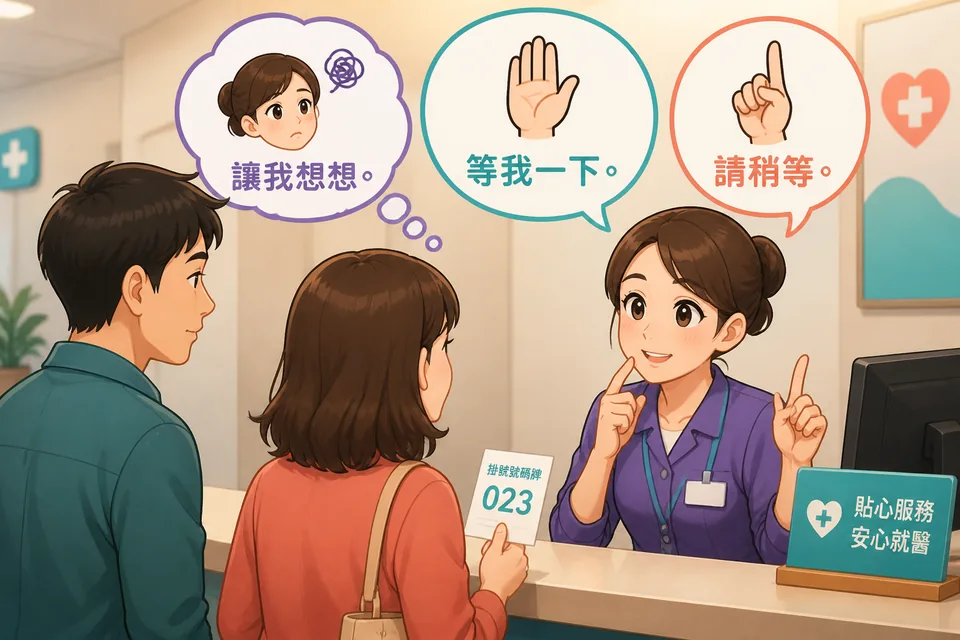
ちょっと考えさせてください。
Chotto kangaesasete kudasai.
Let me think.
Meaning: Let me think.
When to use: Use this polite phrase when you need a moment to consider an answer or idea. Casual: ちょっと考えさせて。
いいですね。ちょっと考えさせてください。
Ii desu ne. Chotto kangaesasete kudasai.
That's nice. Let me think for a moment.
その計画は…ちょっと考えさせてください。
Sono keikaku wa... Chotto kangaesasete kudasai.
About that plan... let me think.
ちょっと待ってください。
Chotto matte kudasai.
Just a moment.
Meaning: Just a moment. (polite)
When to use: Say this politely when you need someone to wait a very short time. Casual: ちょっと待って。
Tip: Don't use this with very close friends; they expect the casual ちょっと待って instead.
電話が来ています。ちょっと待ってください。
Denwa ga kite imasu. Chotto matte kudasai.
There's a call. Just a moment, please.
すみません、確認しますからちょっと待ってください。
Sumimasen, kakunin shimasu kara chotto matte kudasai.
Sorry, I'll check — please wait a moment.
ちょっと待って。
Chotto matte.
One second.
Meaning: One second. (casual)
When to use: Use this informal phrase with friends or family when you want them to wait briefly. Polite version: ちょっと待ってください。
ちょっと待って。今メッセージを返すから。
Chotto matte. Ima messēji o kaesu kara.
One sec. I'll reply to the message now.
写真撮るから、ちょっと待って。
Shashin toru kara, chotto matte.
I'm taking a photo, wait a sec.
何て言えばいいですかね。
Nan te ieba ii desu ka ne.
How can I say this?
Meaning: How can I say this?
When to use: Use this polite phrase while searching for the right words during speech. Casual: 何て言えばいいかな。
説明が難しいですね。何て言えばいいですかね。
Setsumei ga muzukashii desu ne. Nan te ieba ii desu ka ne.
This is hard to explain. How can I say this?
その色は…何て言えばいいですかね。
Sono iro wa... Nan te ieba ii desu ka ne.
That color is... how should I say it?
つまり、___。
Tsumari, ___.
I mean, ___.
Meaning: I mean, ___.
When to use: Use つまり to restate or summarize what you just said; add a sentence after it to clarify.
Tip: Beginners sometimes put つまり at the end of a sentence; it usually introduces the summary at the start of the clause.
彼は忙しい、つまり、手伝えないということです。
Kare wa isogashii, tsumari, tetsudaenai to iu koto desu.
He's busy — in other words, he can't help.
問題は時間です。つまり、もう少し猶予が必要です。
Mondai wa jikan desu. Tsumari, mō sukoshi yūyo ga hitsuyō desu.
The problem is time. In short, we need more time.
ええと、___。
Ēto, ___.
Well, ___.
Meaning: Well, ___.
When to use: Say ええと before you begin an answer as a natural thinking filler. Follow with the sentence you want to say.
Tip: Don't overuse ええと in formal writing — it's a spoken filler, not a formal phrase.
ええと、来週なら大丈夫です。
Ēto, raishū nara daijōbu desu.
Well, next week would be fine.
ええと、何と言えばいいか…もう少し調べます。
Ēto, nan to ieba ii ka... Mō sukoshi shirabemasu.
Well, what should I say... I'll check a bit more.
実は、___
Jitsu wa, ___.
Actually, ___.
Meaning: Actually, ___.
When to use: Use this neutral phrase to introduce a small correction or a contrast; continue with the new information.
実は、明日は都合が悪くなりました。
Jitsu wa, ashita wa tsugō ga waruku narimashita.
Actually, tomorrow doesn't work for me.
実は、もうその本を読み終えました。
Jitsu wa, mō sono hon o yomi oemashita.
Actually, I've already finished that book.
それで、___。
Sore de, ___.
So, ___.
Meaning: So, ___.
When to use: Use それで to continue the story or connect to what comes next; add the next sentence after it.
それで、彼に電話をしましたが出ませんでした。
Sore de, kare ni denwa o shimashita ga demasen deshita.
So, I called him but he didn't answer.
買い物に行きました。それで、新しい靴を買いました。
Kaimono ni ikimashita. Sore de, atarashii kutsu o kaimashita.
I went shopping. So, I bought new shoes.
実はですね、___。
Jitsu wa desu ne, ___.
The thing is, ___.
Meaning: The thing is, ___.
When to use: Use this polite phrase to gently introduce the main point or a slightly awkward fact; follow with the explanation.
実はですね、来月は休みを取りたいんです。
Jitsu wa desu ne, raigetsu wa yasumi o toritai n desu.
The thing is, I want to take time off next month.
実はですね、少し予算が足りませんでした。
Jitsu wa desu ne, sukoshi yobudgeto ga tarimasen deshita.
Actually, the thing is we were a little short on budget.
よく分かりませんが、___。
Yoku wakarimasen ga, ___.
I'm not sure, but ___.
Meaning: I'm not sure, but ___.
When to use: Use this polite phrase to give an uncertain answer while still contributing to the conversation.
よく分かりませんが、明日が都合いいかもしれません。
Yoku wakarimasen ga, ashita ga tsugō ii kamoshiremasen.
I'm not sure, but tomorrow might work.
よく分かりませんが、彼はその会議に来ないと思います。
Yoku wakarimasen ga, kare wa sono kaigi ni konai to omoimasu.
I don't really know, but I think he won't come to that meeting.
いい質問ですね。
Ii shitsumon desu ne.
That's a good question.
Meaning: That's a good question.
When to use: Use this polite phrase before answering a question; it buys a moment and shows you appreciate the question.
いい質問ですね。少し調べてから答えます。
Ii shitsumon desu ne. Sukoshi shirabete kara kotaemasu.
That's a good question. I'll check a bit before answering.
いい質問ですね。どう思いますか?
Ii shitsumon desu ne. Dō omoimasu ka?
That's a good question. What do you think?
何の話をしていましたっけ?
Nan no hanashi o shite imashita kke?
What was I saying?
Meaning: What was I saying?
When to use: Use this polite question when you lose the thread and want to return to a previous topic.
あれ、何の話をしていましたっけ?ちょっと忘れちゃって。
Are, nan no hanashi o shite imashita kke? Chotto wasurechatte.
Oh, what was I talking about? I forgot a bit.
会議の途中で席を外した後に: 何の話をしていましたっけ?
Kaigi no tochū de seki o hazushita ato ni: Nan no hanashi o shite imashita kke?
After stepping out of the meeting: What were we talking about?
どこまで話しましたっけ?
Doko made hanashimashita kke?
Where was I?
Meaning: Where was I?
When to use: Use this polite phrase to check where you left off after an interruption.
ごめん、電話があった。どこまで話しましたっけ?
Gomen, denwa ga atta. Doko made hanashimashita kke?
Sorry, I had a call. Where was I?
少し中断した後に: どこまで話しましたっけ?続きをお願いします。
Sukoshi chūdan shita ato ni: Doko made hanashimashita kke? Tsuzuki o onegaishimasu.
After a short interruption: Where was I? Please continue.
2. Conversational Listening Practice
Hear phrases in a real mini-conversation.
Anna is answering a question at a small meeting; she uses fillers while thinking and then continues.
Anna
いい質問ですね。ちょっと考えさせてください。
Ii shitsumon desu ne. Chotto kangaesasete kudasai.
That's a good question. Let me think for a moment.
David
いいですよ。ゆっくりどうぞ。
Ii desu yo. Yukkuri dōzo.
Sure. Take your time.
Anna
ええと、要点は二つです。それで、まず時間の問題が…
Ēto, yōten wa futatsu desu. Sore de, mazu jikan no mondai ga...
Well, there are two main points. So first, the issue of time is...
David
なるほど。実はですね、その日程は調節できますか?
Naruhodo. Jitsu wa desu ne, sono nittei wa chōsetsu dekimasu ka?
I see. Actually, can that schedule be adjusted?
3. Guided Practice
Quizzes and matching to lock in meaning.
Which phrase politely asks someone to wait a short moment?
Which phrase means 'That's a good question'?
Which phrase would you use when you lost the topic and want to recover it?
Which phrase gently introduces a slightly awkward main point?
In a meeting after an interruption, you would say "何の話をしていましたっけ?" to ask 'What was I saying?'
会議で中断して戻るときに: ごめん、___?
Kaigi de chūdan shite modoru toki ni: Gomen, ___?
Say "いい質問ですね" before pausing to think; it buys time politely.
質問の前に時間を作るとき: ___、ちょっと考えます。
Shitsumon no mae ni jikan o tsukuru toki: ___, chotto kangaemasu.
Use "ええと、" when you're thinking before asking for directions: "Well, which way is the station?"
道を聞かれて少し迷ったとき: ___、駅はどちらですか?
Michi o kikanarete sukoshi mayotta toki: ___, eki wa dochira desu ka?
Match the core phrases
Match the extra phrases
4. Speaking Practice
Say phrases yourself (mic/recording).
Recording stays on your device only. Check speech uses your browser's speech tools when available.