
New here? This is lesson 237 of a free 240-lesson Japanese course.
The trip story in Japanese
Leo is back at Kissa Hotaru, retelling the Kyoto weekend to Masako and Goro.
The train was slow, but Haruka's version is getting bigger with every message she sends on LINE.
You will set the scene, explain a turn of events, invite a guess, and save the funniest detail for the end.
Keep the story moving with short details and room for listeners to react.
By the end of this lesson
Retell a trip with clear details, a turning point, and a punchline.
- その日は、最初うまくいっていました。That day, at first, everything was going well.
- それが、遅いほうの新幹線に乗ってしまったんです。Then we ended up on the slow shinkansen.
- そこで、遥さんが話を大きくし始めました。That's when Haruka started exaggerating the story.
- で、どうなったと思いますか。And what do you think happened?
- 今思い出しても、笑えます。It's still funny when I think about it.
- 一番おもしろいのは、終わり方です。The funniest part is how it ends.
Scene — back in the booth
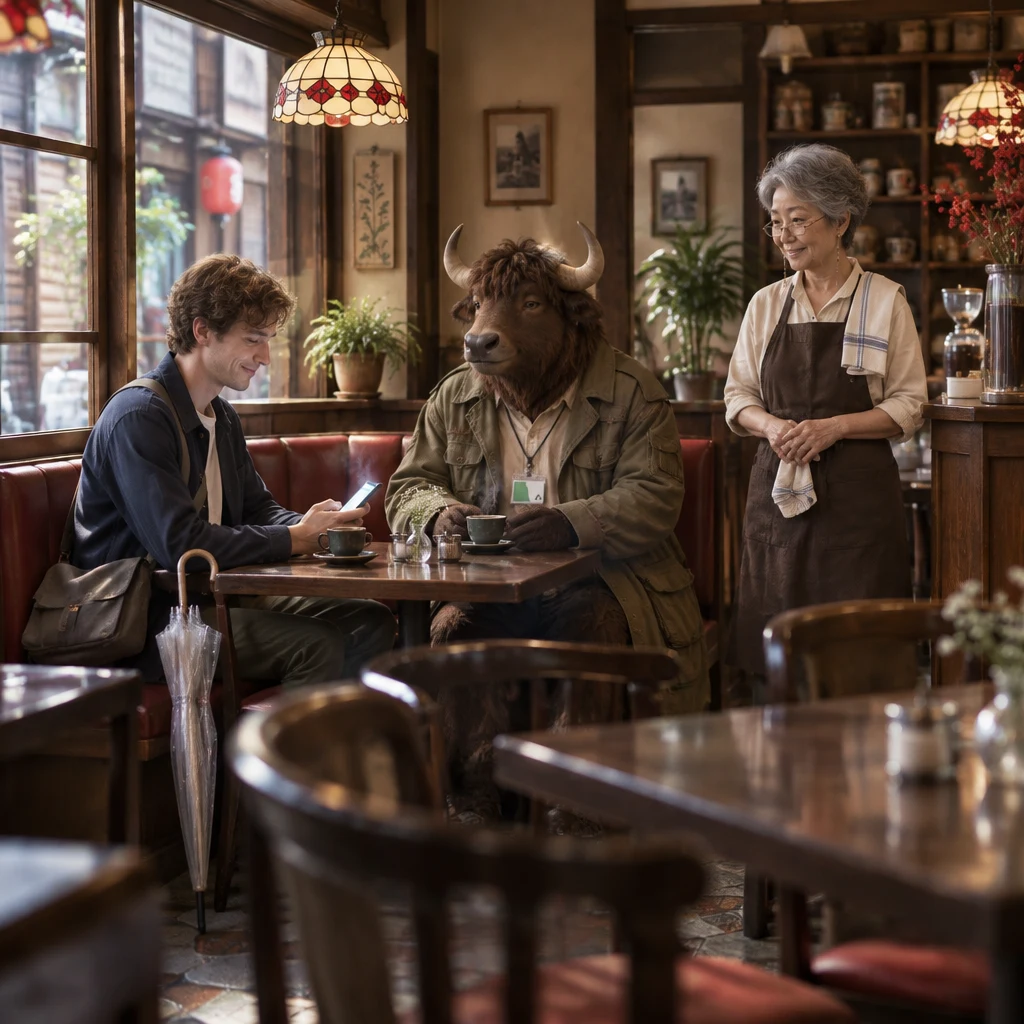
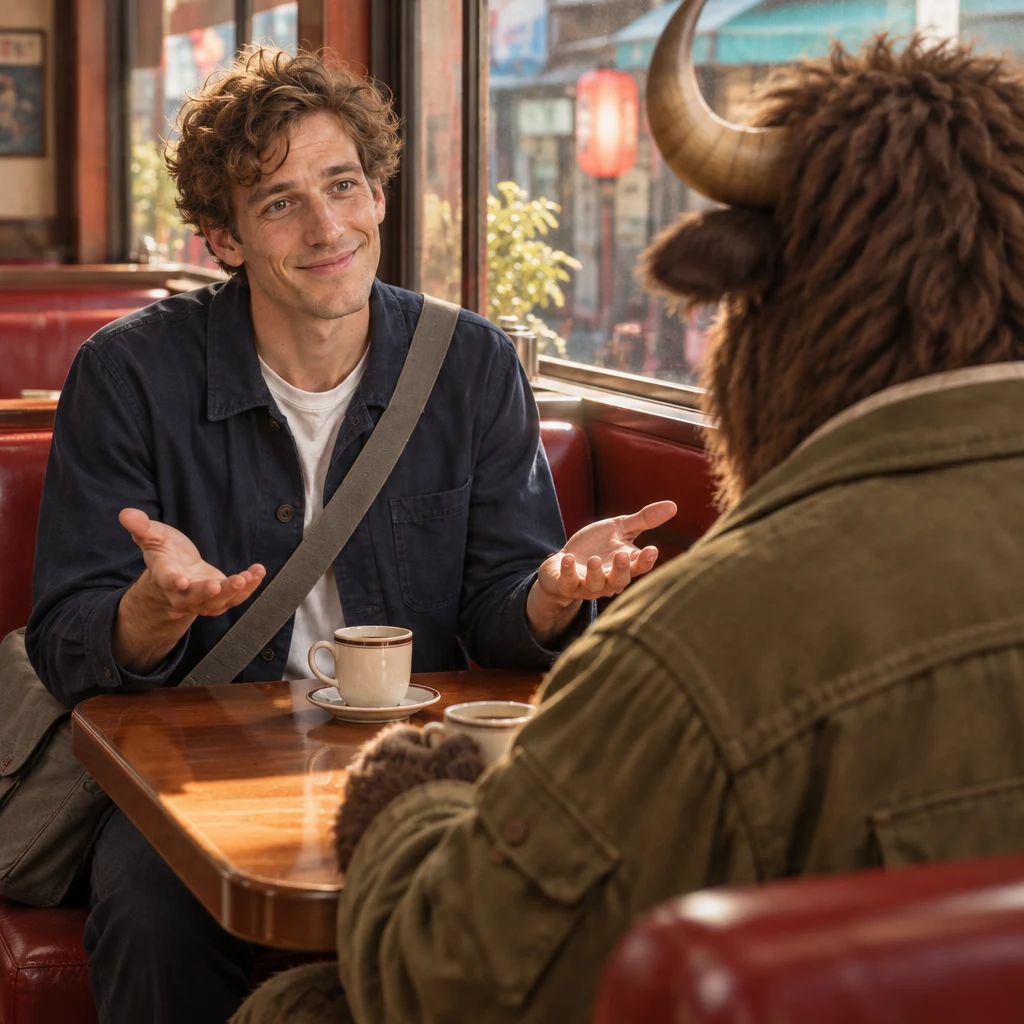
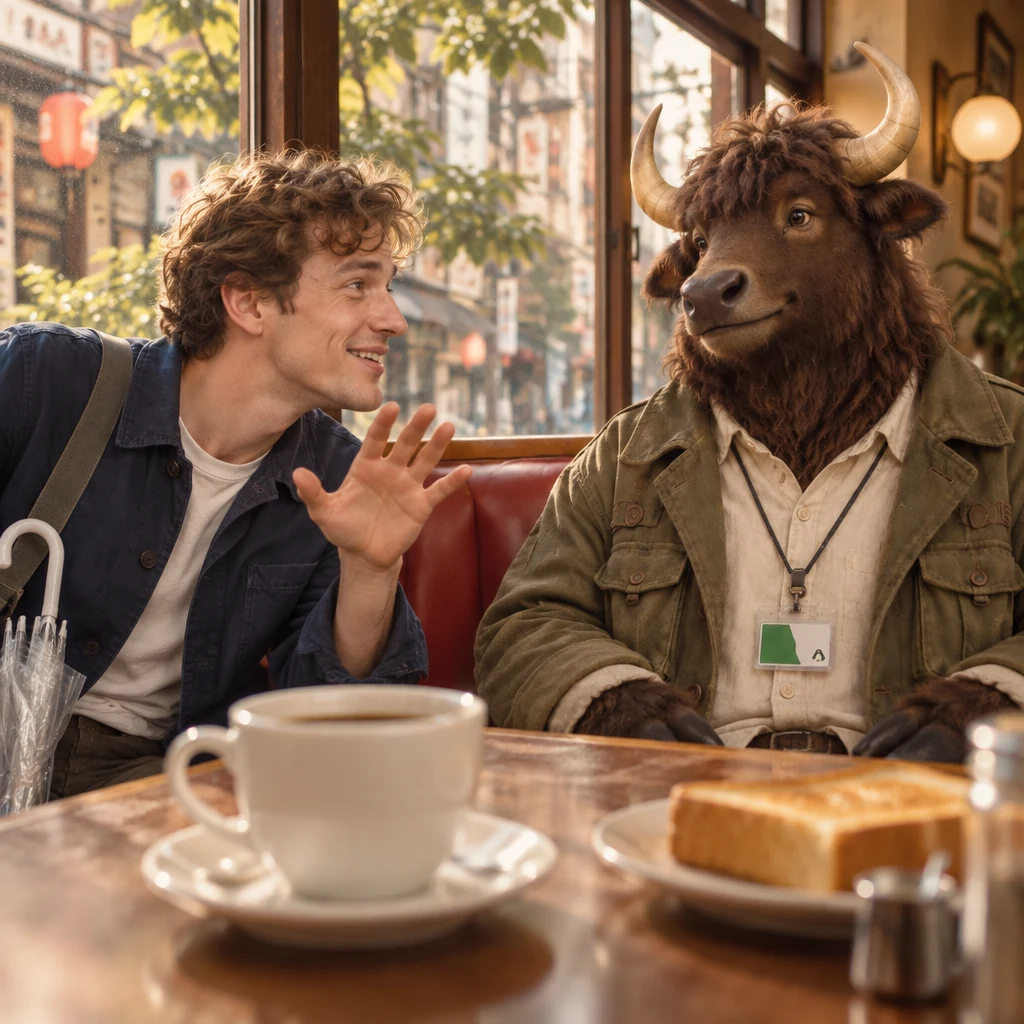
At Kissa Hotaru in Yanaka, Leo settles into the red booth opposite Goro, whose blend coffee remains unfinished.
Masako pauses beside them with a cloth over her shoulder. Leo's phone lights up with another LINE message from Haruka about Kyoto.
Learn — build toward the punchline
These six lines take a travel story from its promising start to its funny ending.
Notice how each line gives your listeners a reason to keep listening.
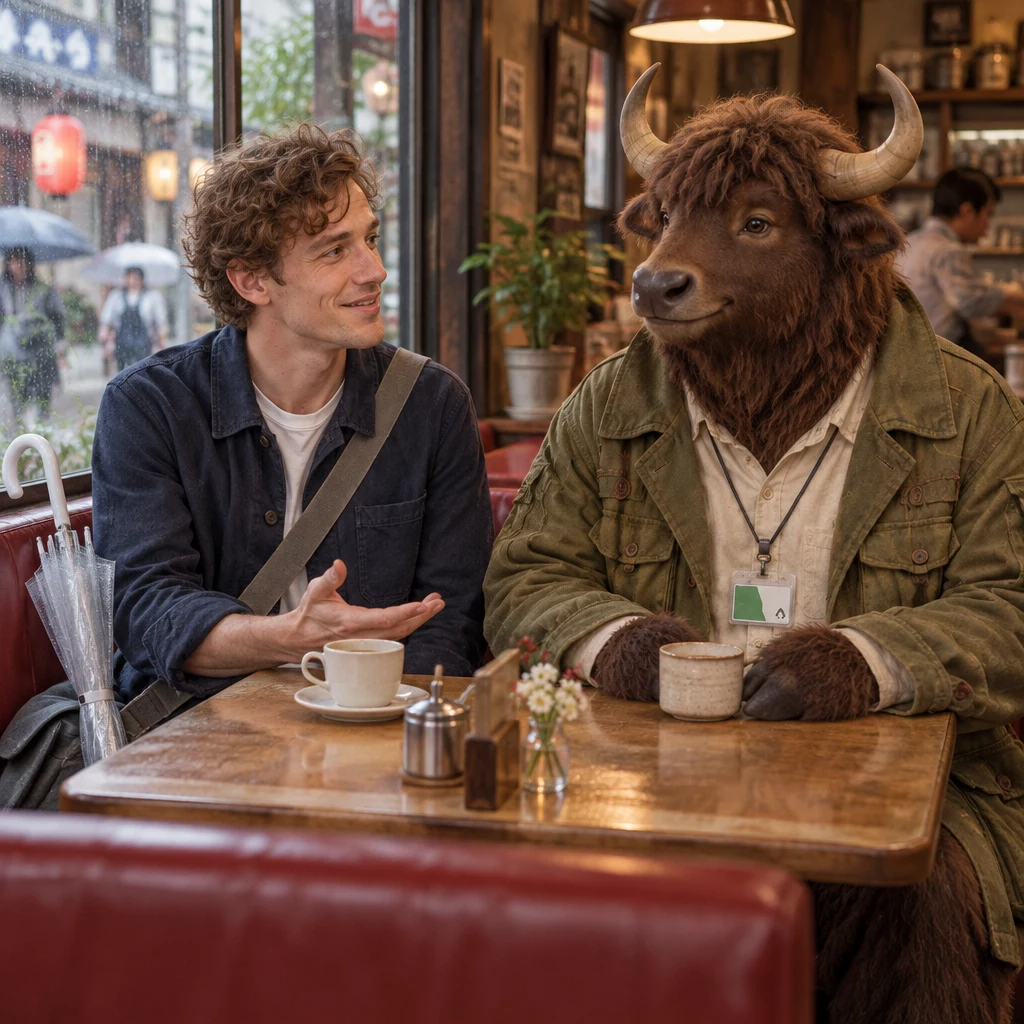
その日は、最初うまくいっていました。
That day, at first, everything was going well.
When to use it: Open a story with a smooth beginning before explaining what changed.
The past ongoing form describes how things were going at that stage of the story.
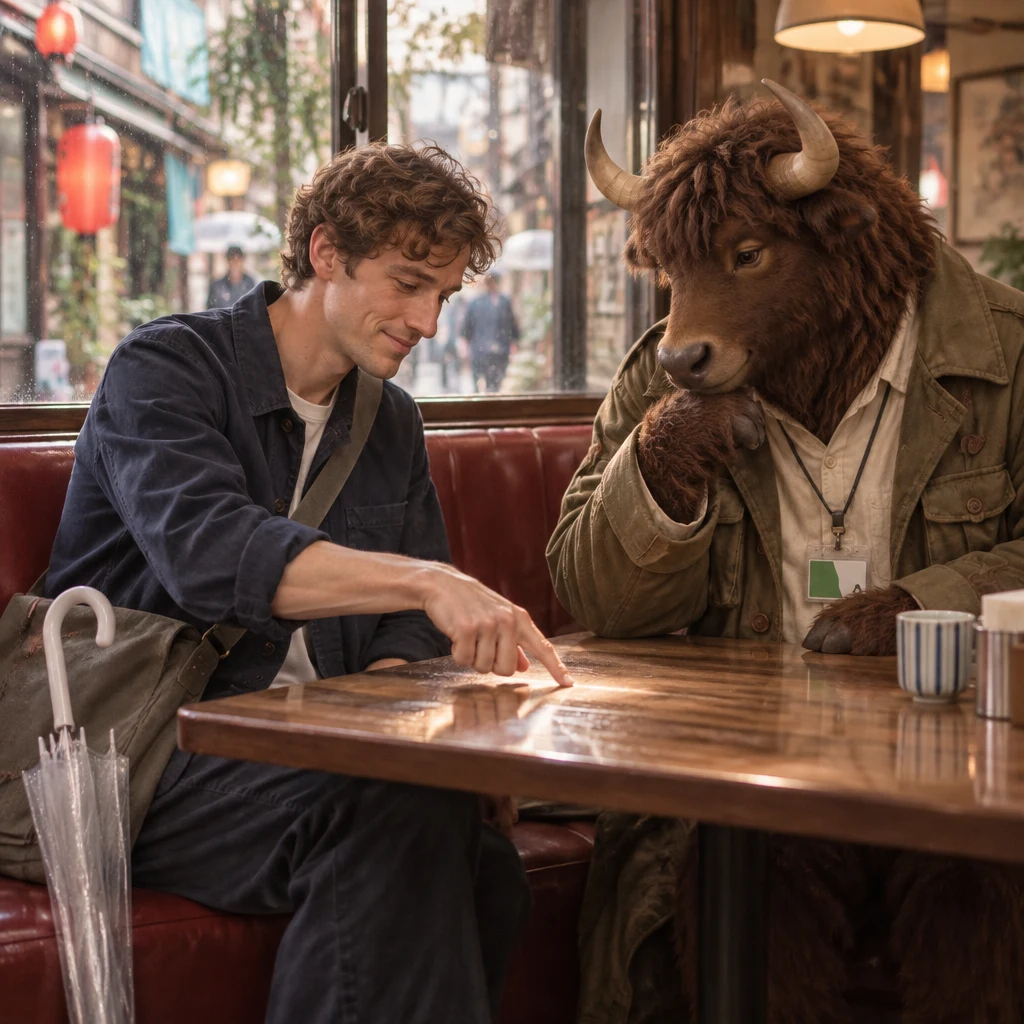
それが、遅いほうの新幹線に乗ってしまったんです。
Then we ended up on the slow shinkansen.
When to use it: Reveal the train mistake that interrupted your promising start.
The completed action ending here suggests that boarding this train was an unintended outcome.
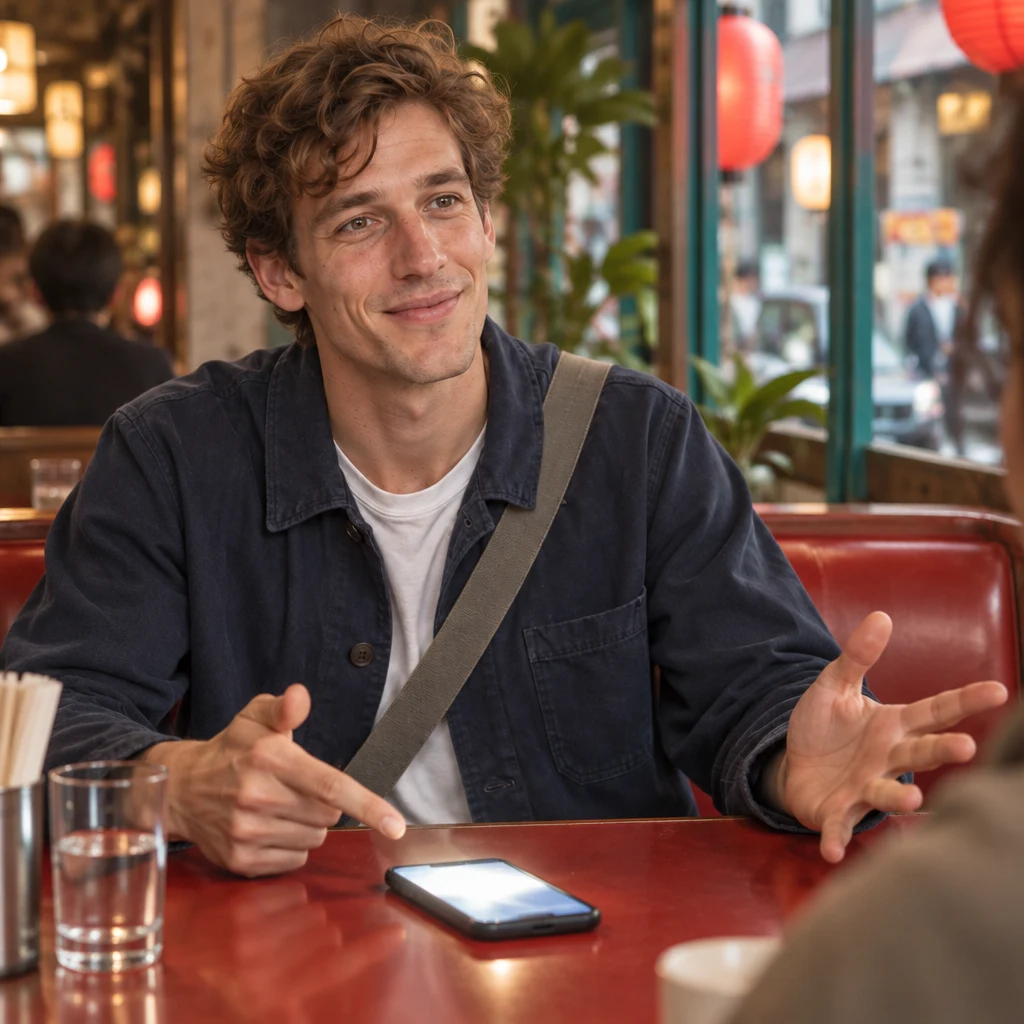
そこで、遥さんが話を大きくし始めました。
That's when Haruka started exaggerating the story.
When to use it: Connect the train incident to Haruka's increasingly dramatic account.
The object particle marks the story as the thing Haruka starts making bigger.
で、どうなったと思いますか。
And what do you think happened?
When to use it: Pause before the reveal and invite a listener to guess.
The particle before the thinking verb marks the content you ask the listener to imagine.

今思い出しても、笑えます。
It's still funny when I think about it.
When to use it: React warmly after sharing a memory that still makes you laugh.
The remembering phrase means that even recalling the incident now brings the laughter back.
一番おもしろいのは、終わり方です。
The funniest part is how it ends.
When to use it: Direct attention to the ending before delivering your punchline.
The wording turns the funniest part into the topic, then identifies it as the ending.
Story — the slower the train, the bigger the story
Leo tells the Kyoto story while Haruka sends an expanding version through LINE.
Watch how the listeners' questions help him add details and delay the punchline.
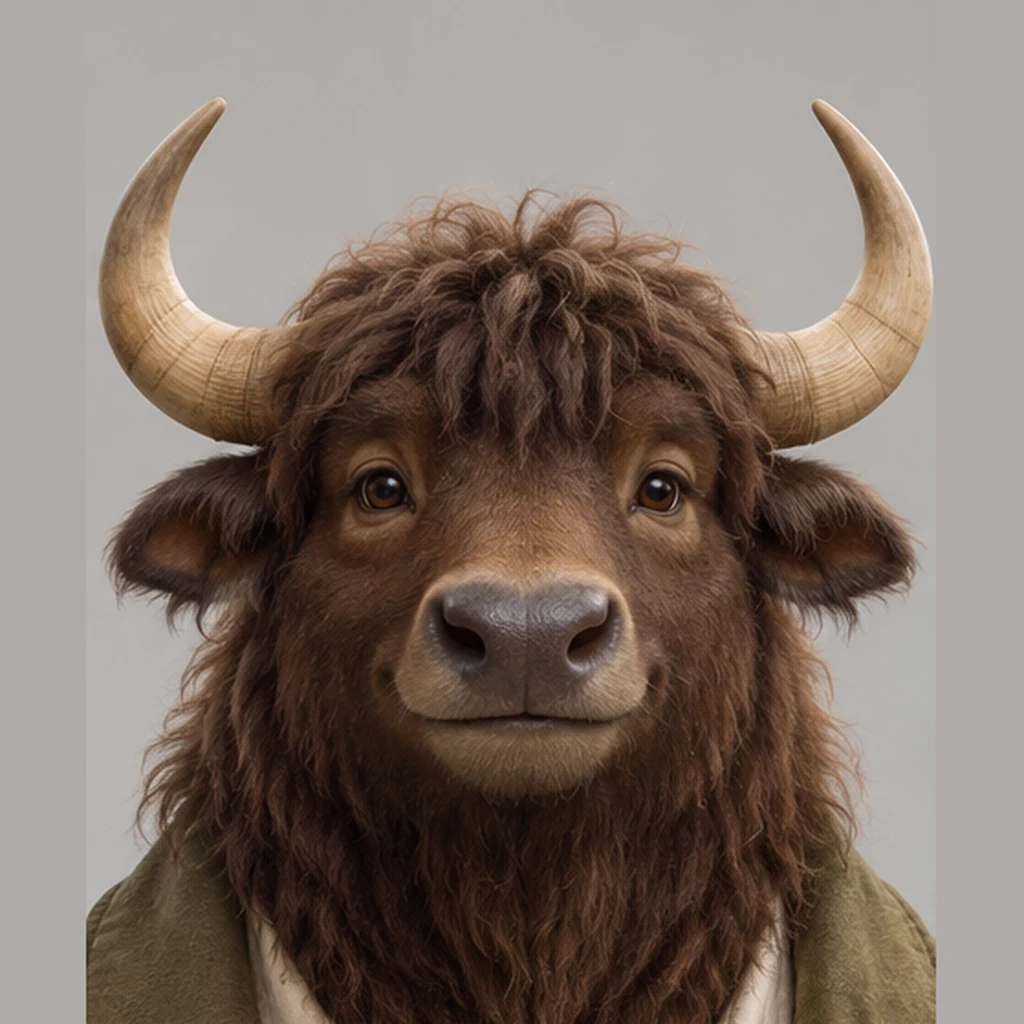
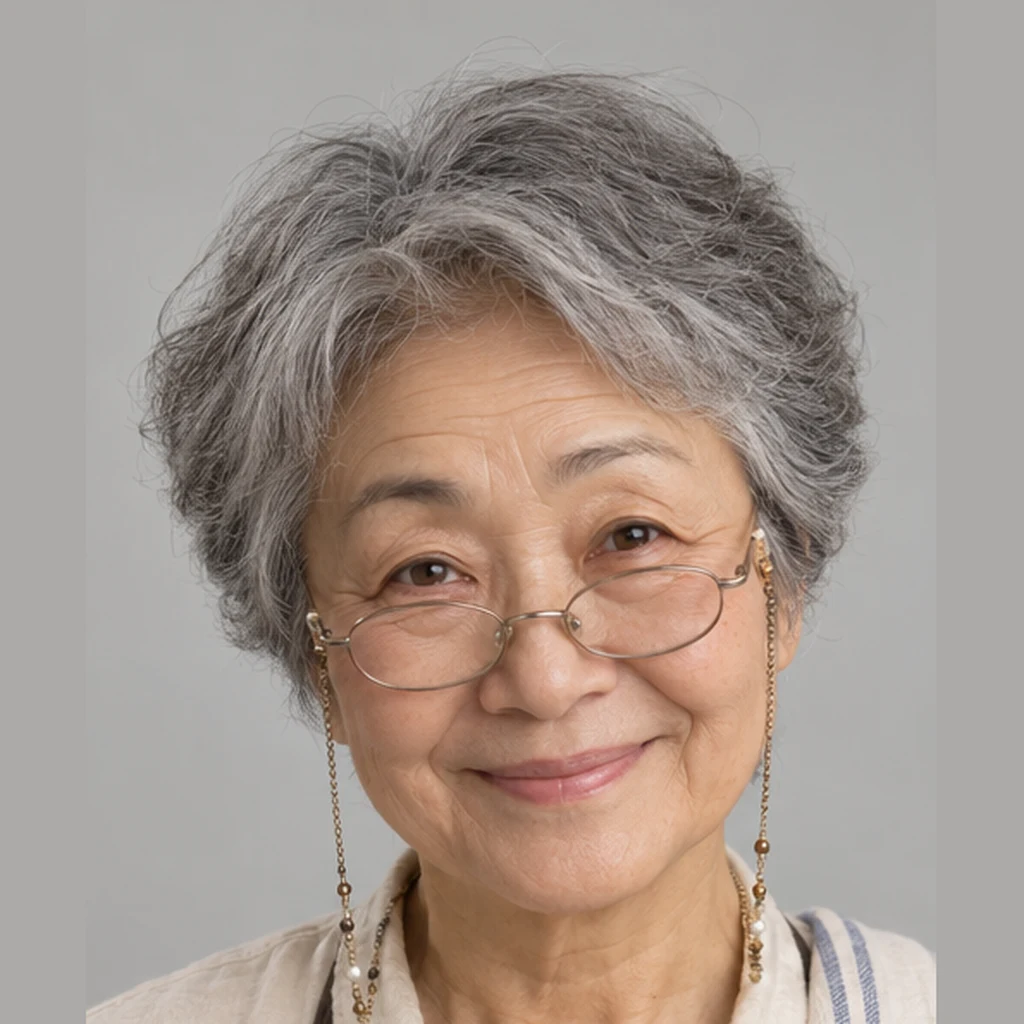
- Goro shifts across his two seats. Masako stops beside the booth.
 Goro京都の旅行の話、聞かせてもらえますか。Could you tell us about your Kyoto trip?
 Leoその日は、最初うまくいっていました。That day, at first, everything was going well.
- Leo駅には早く着いて、席にも座れました。We reached the station early and even got seats.
 Masakoそこまでは順調だったんだね。So things were going smoothly up to that point.
- Leoそれが、遅いほうの新幹線に乗ってしまったんです。Then we ended up on the slow shinkansen.
- Goroそのあと、どうなりましたか。What happened next?
- Leo遥さんは、友達にすぐメッセージを送っていました。Haruka was already messaging her friends.
- Leoそこで、遥さんが話を大きくし始めました。That's when Haruka started exaggerating the story.
- Masakoどんな話になったの。What version did she come up with?
- Leo電車が遅いから、歩いたほうが早いって。She said the train was so slow that walking would be faster.
- Goro本当に歩いたんですか。Did you actually walk?
- Leoいいえ。歩いていません。新幹線で行きました。No. We didn't walk; we went by shinkansen.
- Leoちゃんと京都で降りて、お菓子を買いました。We got off in Kyoto as planned and bought sweets.
- Masakoじゃあ、普通の旅行だったんだ。So it was an ordinary trip, then.
- Leo一番おもしろいのは、終わり方です。The funniest part is how it ends.
- Goro終わり方、気になります。Now I'm curious about the ending.
- Leoで、どうなったと思いますか。And what do you think happened?
- Goroお菓子を全部、落としてしまったんですか。Did you drop all the sweets?
- Leoいいえ。遥さんが、帰りもこだまがいいって言ったんです。No. Haruka said she wanted to take the Kodama back, too.
- Masako話を大きくする時間が欲しかったんだね。She wanted more time to embellish the story.
- Leo今思い出しても、笑えます。It's still funny when I think about it.
- Another LINE message lights up Leo's phone. Goro's coffee sits beside his toast.
- Leo今度は、京都まで歩いた話になっています。Now her story has us walking all the way to Kyoto.
- Masako次はどこまで歩くんだろうね。I wonder how far you'll walk in the next version.
Practice — keep your listeners with you
Work through ten tasks about the trip and its retelling, including listening, word building, and choosing a response.
Pay attention to who is telling and who is listening.
0 of 10 done
What does it mean?
What does it mean?
その日は、最初うまくいっていました。
What did you hear?
What did you hear?
Build the line
Build the line
That's when Haruka started exaggerating the story.
、。
Tap the words in order.
What do you say?
What do you say?
You have kept the ending secret and now want Goro to guess what happened before you reveal it.
Build the line
Build the line
It's still funny when I think about it.
、。
Tap the words in order.
What do you say?
What do you say?
The ending is the funniest part of your trip story, and you want to draw attention to it before revealing the details.
What do you say?
What do you say?
Someone pauses after describing a sweet shop during their trip story; as the listener, ask what happened next.
Pick the reply
Goro says:
Pick the reply
遥さんの話だと、京都まで歩いたんですか。
From Haruka's version, did you walk all the way to Kyoto?
And you reply with:
What does it mean?
What does it mean?
で、どうなったと思いますか。
Build the line
Build the line
The funniest part is how it ends.
、。
Tap the words in order.
Say it — tell it your way
Take Leo's place and retell the trip in six short steps, responding to your listeners as you go.
Record each cued line and listen back for a clear, engaging story.
- Goro京都の旅行の話、聞かせてもらえますか。Could you tell us about your Kyoto trip?
- Leo (you)Begin by saying that things were going well at first that day.
Begin by saying that things were going well at first that day.
その日は、最初うまくいっていました。
That day, at first, everything was going well.
0 of 6 said
Recap — what you can say now
| Japanese | English | Play |
|---|---|---|
| その日は、最初うまくいっていました。 | That day, at first, everything was going well. | |
| それが、遅いほうの新幹線に乗ってしまったんです。 | Then we ended up on the slow shinkansen. | |
| そこで、遥さんが話を大きくし始めました。 | That's when Haruka started exaggerating the story. | |
| で、どうなったと思いますか。 | And what do you think happened? | |
| 今思い出しても、笑えます。 | It's still funny when I think about it. | |
| 一番おもしろいのは、終わり方です。 | The funniest part is how it ends. |
Save your progress — it’s free
Keep your place in the course and see which lines you’ve learned.
Want the next lesson in your inbox?
Get the next lesson by email, one a day.
Join the newsletterDaily lesson emails are coming soon. Newsletter subscribers get them first.
Keep practicing with Yak Cards
Revisit these storytelling lines with Yak Cards and keep the turning point and punchline ready.
Recall each line's job, then use it to guide a listener through the Kyoto story.
Open Yak Cards