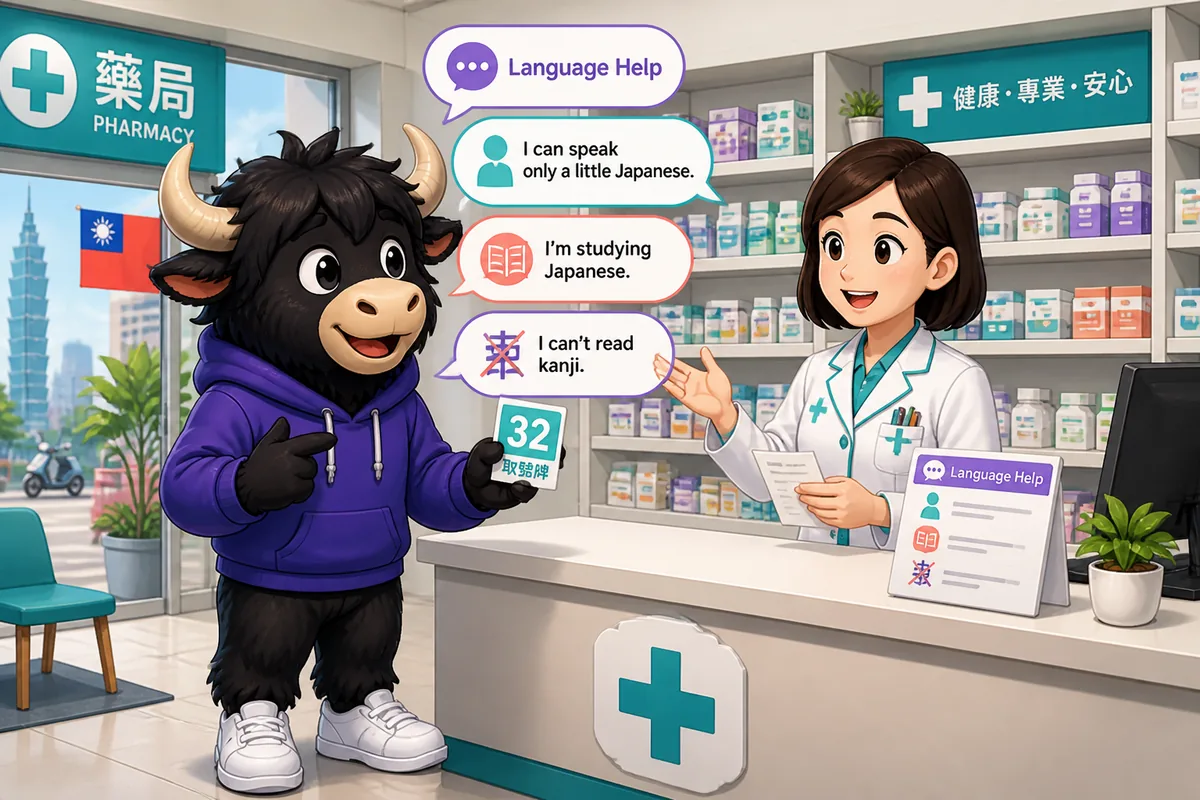
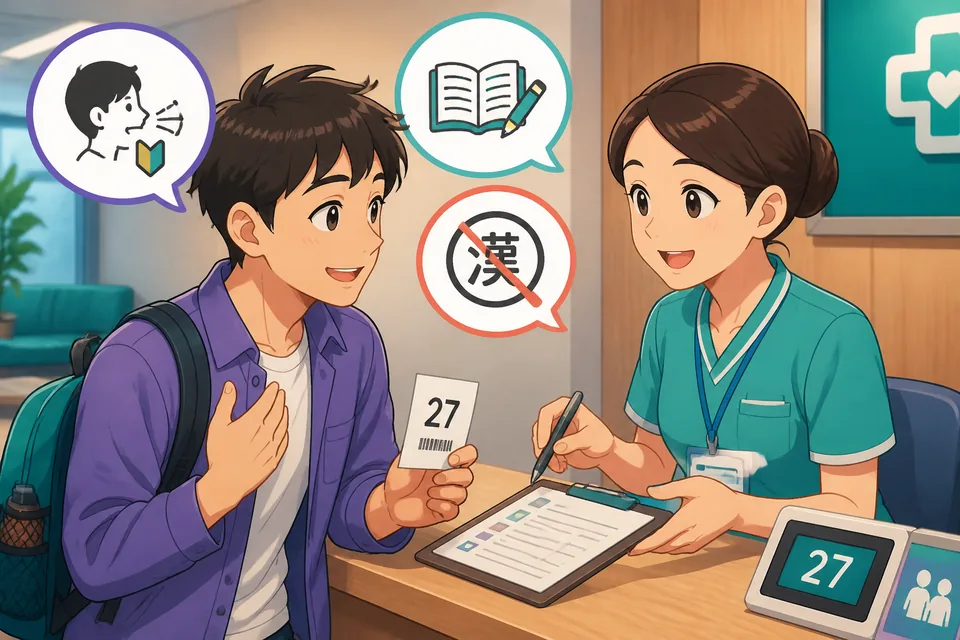
Welcome — this short lesson helps you ask for simple language help in Japan. We'll practice useful polite phrases so you can ask someone to write things more simply or explain why your Japanese is limited.
Have fun — listen, repeat, and try the short quizzes.
Level A1: In Lesson 165 you'll learn four polite phrases for asking language help in Japan. You'll practice saying "I can speak only a little Japanese" (日本語は少しだけ話せます。), how to say you're studying Japanese, telling someone you can't read kanji, and asking them to write in hiragana. This CEFR-aligned lesson focuses on hearing the phrases, using them in a short conversation, and speaking them out loud.
After this lesson you'll be able to:
Recognize and say four polite help phrases for everyday situations in Japan (A1).
Use these phrases to explain your level (日本語は少しだけ話せます。) or ask for reading help (漢字が読めません。/ひらがなで書いてください。).
Understand short replies when you say "日本語を勉強しています。"
Ready? Let's go!
When you tap play on phrases, we track your progress through this lesson.
1. Reading + Listening Practice
Hear core phrases, repeat aloud.
日本語は少しだけ話せます。
Nihongo wa sukoshi dake hanasemasu.
I can speak only a little Japanese.
Meaning: I can speak only a little Japanese.
When to use: Use this to modestly explain your speaking ability when you meet someone in Japan — for example when ordering, asking for directions, or meeting new people.
Tip: Don't use が instead of は here; は marks the topic (Japanese) politely.
旅行中で日本語は少しだけ話せます。
Ryokō-chū de nihongo wa sukoshi dake hanasemasu.
I'm travelling and can speak only a little Japanese.
すみません、日本語は少しだけ話せますが、聞くのは難しいです。
Sumimasen, nihongo wa sukoshi dake hanasemasu ga, kiku no wa muzukashii desu.
Sorry, I can speak only a little Japanese, but understanding is hard for me.
日本語を勉強しています。
Nihongo o benkyō shite imasu.
I’m studying Japanese.
Meaning: I’m studying Japanese.
When to use: Say this when explaining why you're trying to use Japanese, or to tell someone you're learning and may make mistakes.
日本語を勉強していますので、ゆっくり話してください。
Nihongo o benkyō shite imasu node, yukkuri hanashite kudasai.
I'm studying Japanese, so please speak slowly.
今、日本語を勉強していますが、まだ漢字は難しいです。
Ima, nihongo o benkyō shite imasu ga, mada kanji wa muzukashii desu.
I'm studying Japanese now, but kanji are still difficult.
漢字が読めません。
Kanji ga yomemasen.
I can’t read kanji.
Meaning: I can’t read kanji.
When to use: Use this to ask for help reading signs, menus, forms, or labels when kanji are too hard for you.
Tip: Some learners say 読めない (informal). Use 読めません for polite situations.
このメニューの漢字が読めません。説明してもらえますか?
Kono menyū no kanji ga yomemasen. Setsumei shite moraemasu ka?
I can't read the kanji on this menu. Can you explain?
駅の案内板の漢字が読めません。ひらがなでお願いします。
Eki no annaiban no kanji ga yomemasen. Hiragana de onegaishimasu.
I can't read the kanji on the station sign. Please (write) in hiragana.
ひらがなで書いてください。
Hiragana de kaite kudasai.
Please write it in hiragana.
Meaning: Please write it in hiragana.
When to use: Ask this when someone writes something in kanji and you need a simpler writing system you can read.
この住所をひらがなで書いてください。読めません。
Kono jūsho o hiragana de kaite kudasai. Yomemasen.
Please write this address in hiragana. I can't read it.
すみません、漢字が難しいです。ひらがなで書いてください。
Sumimasen, kanji ga muzukashii desu. Hiragana de kaite kudasai.
Sorry, kanji are difficult. Please write it in hiragana.
2. Conversational Listening Practice
Hear phrases in a real mini-conversation.
At a small cafe counter when ordering and asking for help reading the menu
Anna
すみません、日本語は少しだけ話せます。メニューの漢字が読めません。
Sumimasen, nihongo wa sukoshi dake hanasemasu. Menyū no kanji ga yomemasen.
Excuse me, I can speak only a little Japanese. I can't read the kanji on the menu.
David
わかりました。どの料理ですか?
Wakarimashita. Dono ryōri desu ka?
Understood. Which dish is it?
Anna
この漢字の部分をひらがなで書いてください。私は日本語を勉強しています。
Kono kanji no bubun o hiragana de kaite kudasai. Watashi wa nihongo o benkyō shite imasu.
Please write this kanji part in hiragana. I'm studying Japanese.
David
いいですよ。ひらがなで書きますね。
Ii desu yo. Hiragana de kakimasu ne.
Sure. I'll write it in hiragana.
3. Guided Practice
Quizzes and matching to lock in meaning.
Which Japanese sentence means: "Please write it in hiragana."?
Which phrase would you use to explain you are learning Japanese right now?
If you cannot read a sign with kanji, which phrase fits best?
Which phrase politely downplays your speaking ability?
Excuse me, I can't read the kanji on this guide. Please (write) in hiragana.
すみません、この案内の漢字が___。ひらがなでお願いします。
Sumimasen, kono annai no kanji ga ___. Hiragana de onegaishimasu.
At the airport I told staff 'I can speak only a little Japanese' and they showed me the way.
空港でスタッフに「___」と言って、道を教えてもらいました。
Kūkō de sutaffu ni "___" to itte, michi o oshiete moraimashita.
The menu was difficult, so I asked the staff 'Please write it in hiragana.'
メニューが難しいので、店員さんに「___」と頼みました。
Menyū ga muzukashii node, ten'in-san ni "___" to tanomimashita.
Match the core phrases
Match the extra phrases
4. Speaking Practice
Say phrases yourself (mic/recording).
Recording stays on your device only. Check speech uses your browser's speech tools when available.