
New here? This is lesson 213 of a free 240-lesson Japanese course.
Festivals and traditions in Japanese
New Year brings familiar greetings, while spring and summer bring festivals and family visits. In Yanaka, the seasons give people easy ways to start a conversation.
You will greet someone for the new year, ask about cherry-blossom plans, and talk about summer festivals and Obon.
Keep the questions polite, even with a friend. Listen for what people do with family, and share what you look forward to.
By the end of this lesson
Greet people and talk about seasonal festivals and traditions.
- あけましておめでとうございます。Happy New Year.
- お花見の予定はありますか。Do you have plans for cherry-blossom viewing?
- 夏祭りに行ってみたいです。I'd like to go to the summer festival.
- お盆は、家族と過ごします。I'll spend Obon with family.
- そちらでは、どう過ごしますか。How do you spend it where you're from?
- 季節の行事が楽しみです。I look forward to the seasonal festivals.
Scene — greetings through the seasons
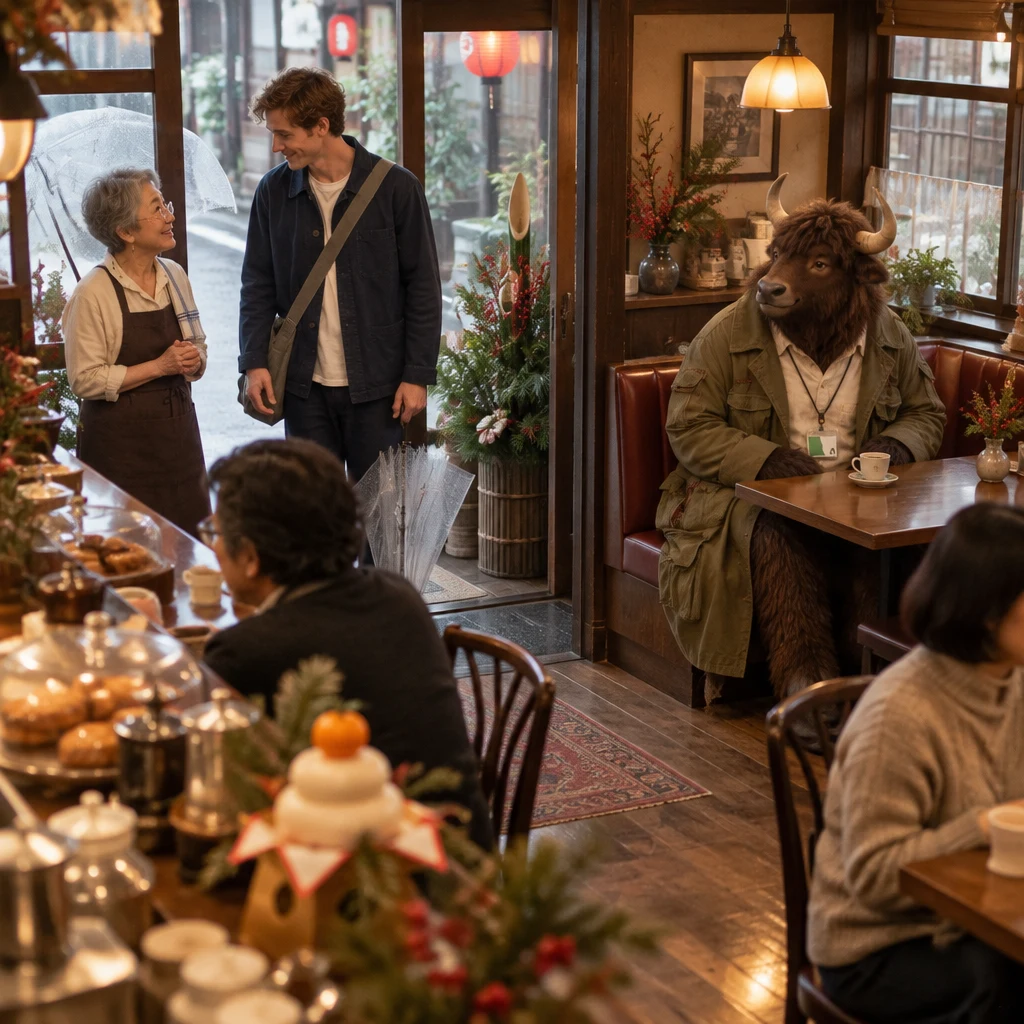
On New Year's morning, Kissa Hotaru is warm and busy with greetings. Masako welcomes Leo, and Goro sits in the corner booth with his blend coffee still untouched as usual.
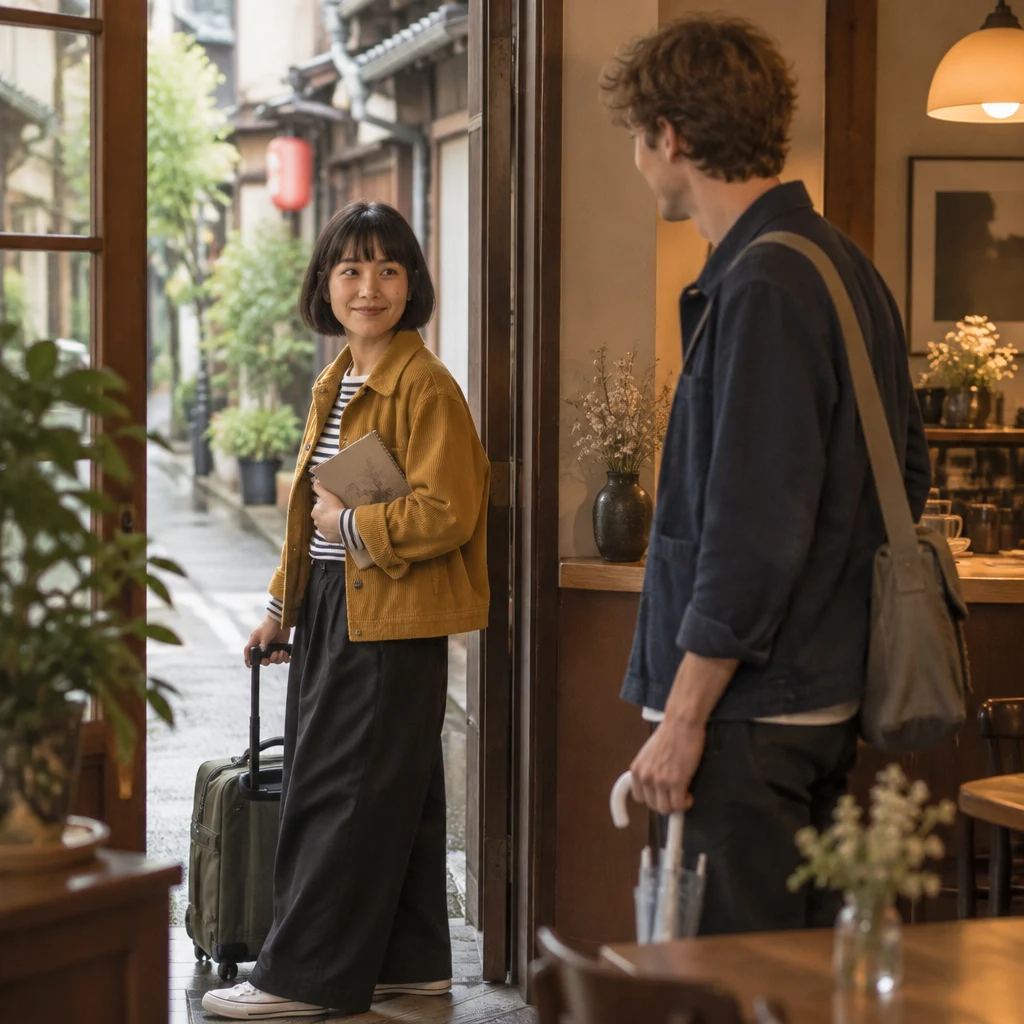
Months later, Leo meets Haruka near Ueno Park under the cherry trees.
Their talk turns to summer festivals and Obon, while the old black umbrella remains in the kissa stand by the door.
Learn — seasonal greetings
These six polite lines cover New Year wishes, a question about hanami, a festival you want to try, and family plans for Obon.
Notice how a short follow-up question invites someone to share their customs.
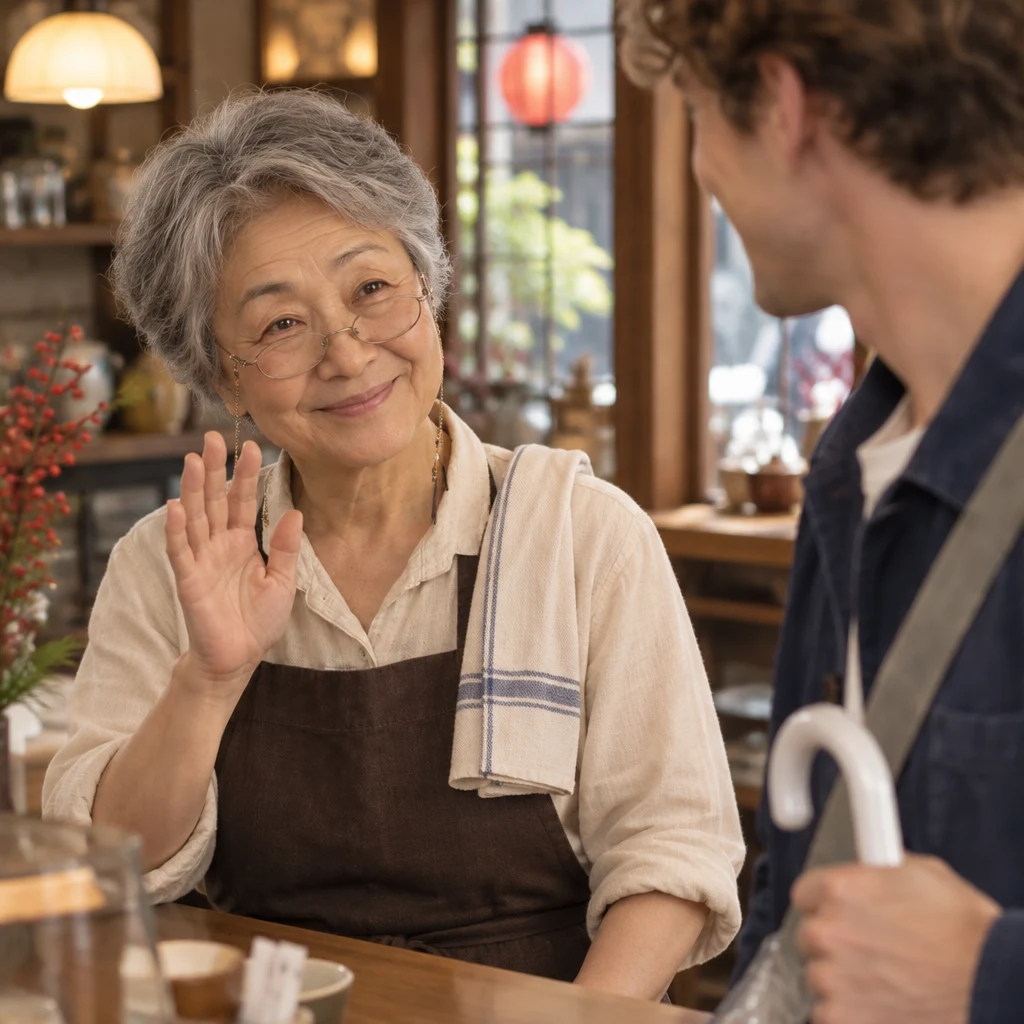
あけましておめでとうございます。
Happy New Year.
When to use it: Use this as a polite greeting at New Year.
This is the standard polite New Year greeting.

お花見の予定はありますか。
Do you have plans for cherry-blossom viewing?
When to use it: Ask someone if they have plans to see the cherry blossoms.
The particle の connects お花見 with the plans being asked about.

夏祭りに行ってみたいです。
I'd like to go to the summer festival.
When to use it: Say this when you want to try going to a summer festival.
行ってみたい means you want to try going.
Say it: Keep the small pause in 行って before continuing.
お盆は、家族と過ごします。
I'll spend Obon with family.
When to use it: Use this to say you spend Obon with your family.
The particle と marks the people you spend time with here.

そちらでは、どう過ごしますか。
How do you spend it where you're from?
When to use it: Ask how someone observes a custom in their home region.
そちら refers politely to the other person's place or side.

季節の行事が楽しみです。
I look forward to the seasonal festivals.
When to use it: Use this to share your enthusiasm for seasonal events.
The particle が marks the events you look forward to.
Story — blossoms and Obon
The new year begins at Kissa Hotaru, then Leo and Haruka meet under the cherry blossoms in Ueno. Their conversation travels through summer and Obon.
Highlighted phrases are the new lines. Turn on Show English if you want a gloss.
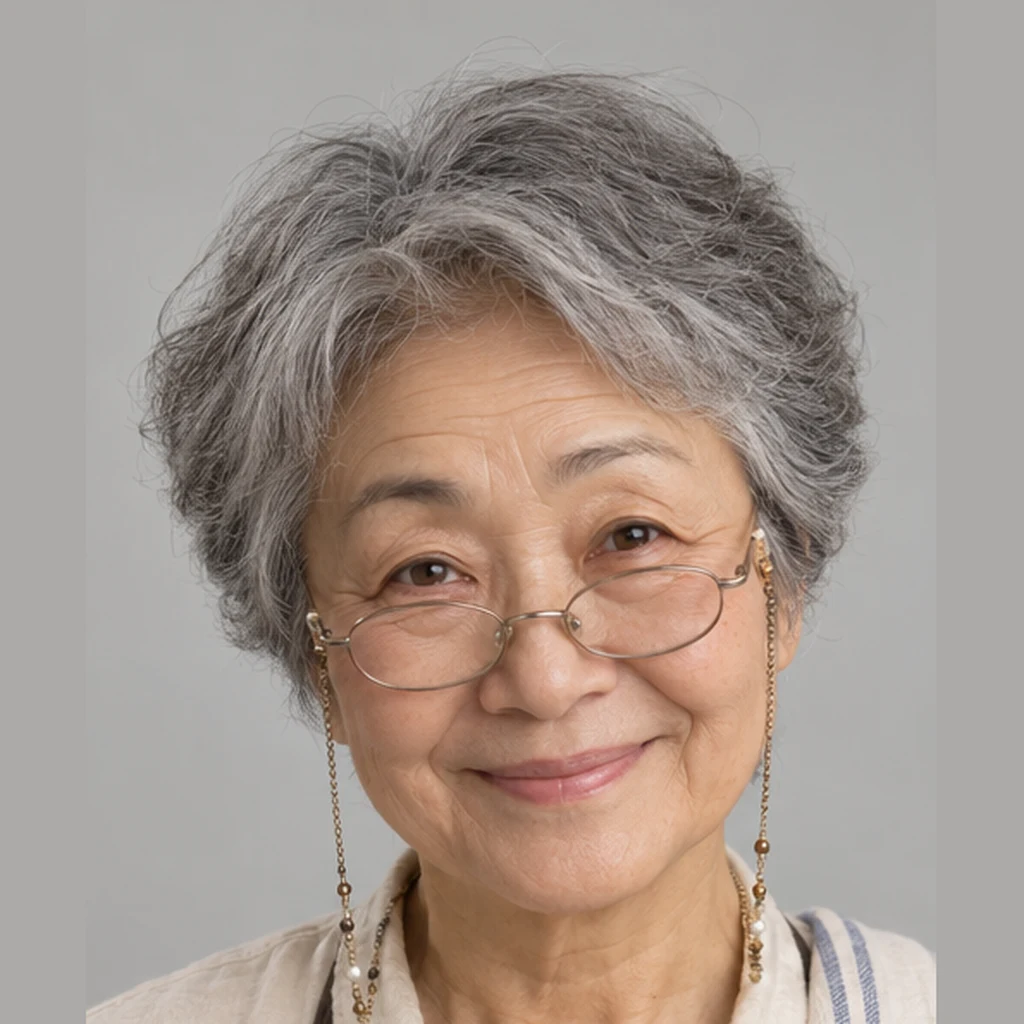 Masakoおはようございます。Good morning.
 Leoおはようございます。Good morning.
- Masakoあけましておめでとうございます。Happy New Year.
 Goroあけましておめでとうございます。Happy New Year.
- Leoあけましておめでとうございます。Happy New Year.
- Goro今年もよろしくお願いします。I hope we get along this year, too.
- Spring arrives. Goro's blend coffee is still unfinished.
- Leoこんにちは。Hello.
 Harukaお花見の予定はありますか。Do you have plans for cherry-blossom viewing?
- Leoまだ決めていません。I haven't decided yet.
- Harukaじゃあ、今年は上野で一緒にお花見しようよ。Then let's go see the blossoms together in Ueno this year.
- Leoいいね、ぜひ行こう。Sounds good; let's go.
- Leo季節の行事が楽しみです。I look forward to the seasonal festivals.
- Later, the conversation turns to summer.
- Haruka夏祭りも行ってみる?Want to try going to a summer festival, too?
- Leo夏祭りに行ってみたいです。I'd like to go to the summer festival.
- Harukaいいね、屋台も見てみよう。Sounds good; let's check out the food stalls, too.
- By Obon, Haruka is getting ready to return to Kyoto.
- Harukaお盆は京都に帰るよ。I'm going back to Kyoto for Obon.
- Leoそちらでは、どう過ごしますか。How do you spend it where you're from?
- Harukaお盆は、家族と過ごします。I'll spend Obon with family.
- Back at the kissa, Goro's blend remains unfinished, and the old umbrella stays in its stand.
Practice — talk about traditions
Eleven quick tasks mix listening, speaking, particles, and sentence building. You will also compare holiday phrases and fix one small particle mistake.
Use the situation to decide what sounds right.
0 of 11 done
What does it mean?
What does it mean?
あけましておめでとうございます。
Fill the gap
Fill the gap
Do you have plans for cherry-blossom viewing?
お花見の予定____ありますか。
Build the line
Build the line
I'd like to go to the summer festival.
。
Tap the words in order.
Pick the reply
Haruka says:
Pick the reply
お盆はどうするの?
What are you doing for Obon?
And you reply with:
What do you say?
What do you say?
You want to ask a friend how people spend a tradition where they are from.
What did you hear?
What did you hear?
Swap the word
Swap the word
Ask politely how someone spends a custom where they are from.
そちらで____、どう過ごしますか。
Find the mistake
Find the mistake
What do you say?
What do you say?
You meet a friend by Ueno Park in the afternoon and want to greet them.
What do you say?
What do you say?
It is an ordinary day, not New Year, and you meet Masako early in the morning. Greet her politely.
Match the pairs
Japanese
あけましておめでとうございます。Drop the English hereお盆は、家族と過ごします。Drop the English here季節の行事が楽しみです。Drop the English hereEnglish
Say it — your turn to speak
Goro offers a New Year greeting, and Haruka talks with you about seasonal plans. When the cue is yours, say the line out loud.
Tap play first if you want to hear the model.
- Goroあけましておめでとうございます。Happy New Year.
- Leo (you)Wish him a happy new year, politely.
Wish him a happy new year, politely.
あけましておめでとうございます。
Happy New Year.
0 of 4 said
Recap — what you can say now
| Japanese | English | Play |
|---|---|---|
| あけましておめでとうございます。 | Happy New Year. | |
| お花見の予定はありますか。 | Do you have plans for cherry-blossom viewing? | |
| 夏祭りに行ってみたいです。 | I'd like to go to the summer festival. | |
| お盆は、家族と過ごします。 | I'll spend Obon with family. | |
| そちらでは、どう過ごしますか。 | How do you spend it where you're from? | |
| 季節の行事が楽しみです。 | I look forward to the seasonal festivals. |
Save your progress — it’s free
Keep your place in the course and see which lines you’ve learned.
Want the next lesson in your inbox?
Get the next lesson by email, one a day.
Join the newsletterDaily lesson emails are coming soon. Newsletter subscribers get them first.
Keep practicing with Yak Cards
Save these seasonal greetings for the next holiday conversation. Open the Yak Cards for this lesson and practise them on the train.
A quick Yak Cards round will keep these festival phrases ready when the season changes.
Open Yak Cards