
New here? This is lesson 32 of a free 240-lesson Japanese course.
Where shall we meet in Japanese
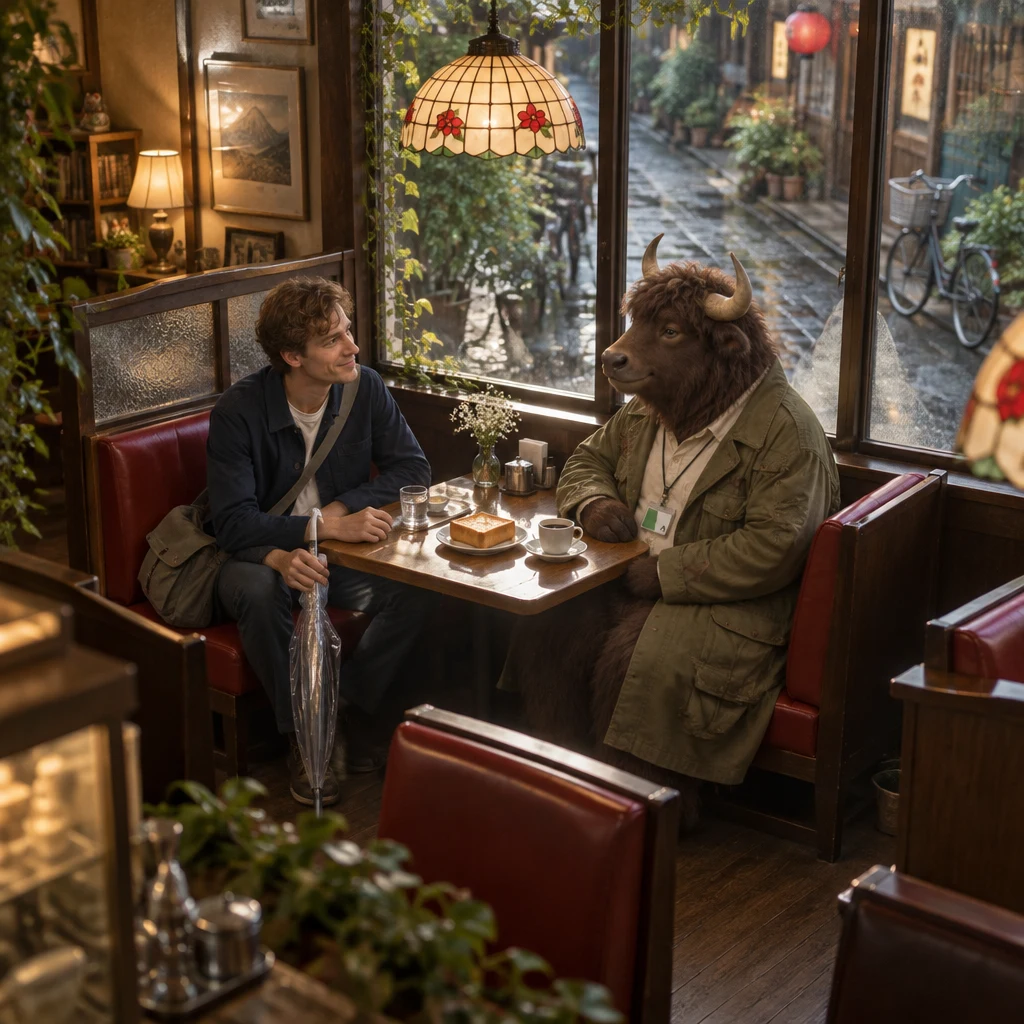
Leo and Goro already share the corner booth at Kissa Hotaru. The yak still has not finished his blend coffee, yet he wants a meeting later.
He asks where they should meet, as if they were not already sitting together.
You will set a simple meeting: the place, the time, and whether that time is okay.
Keep it polite. You will say you have plans, then offer a later time.
By the end of this lesson
Set a meeting time and place.
- 待ち合わせはどこですか。Where shall we meet?
- 何時に会いますか。What time shall we meet?
- ___時ごろで大丈夫ですか。Is around ___ o'clock okay?
- 予定があります。I have plans.
- 駅の前で会います。We'll meet in front of the station.
- 後で大丈夫ですか。Is later okay?
Scene — a plan in the booth
The corner booth at Kissa Hotaru is quiet this afternoon. Leo sits across from Goro, whose blend coffee still sits untouched beside thick toast.
Rain has stopped. Goro looks at the lane, then at Leo, and starts to plan a meeting as if they were not already here.
Learn — time and place
These six lines set a meeting. You ask where and when, check a time, and name a place.
You can also say you have plans, then ask if later is okay.
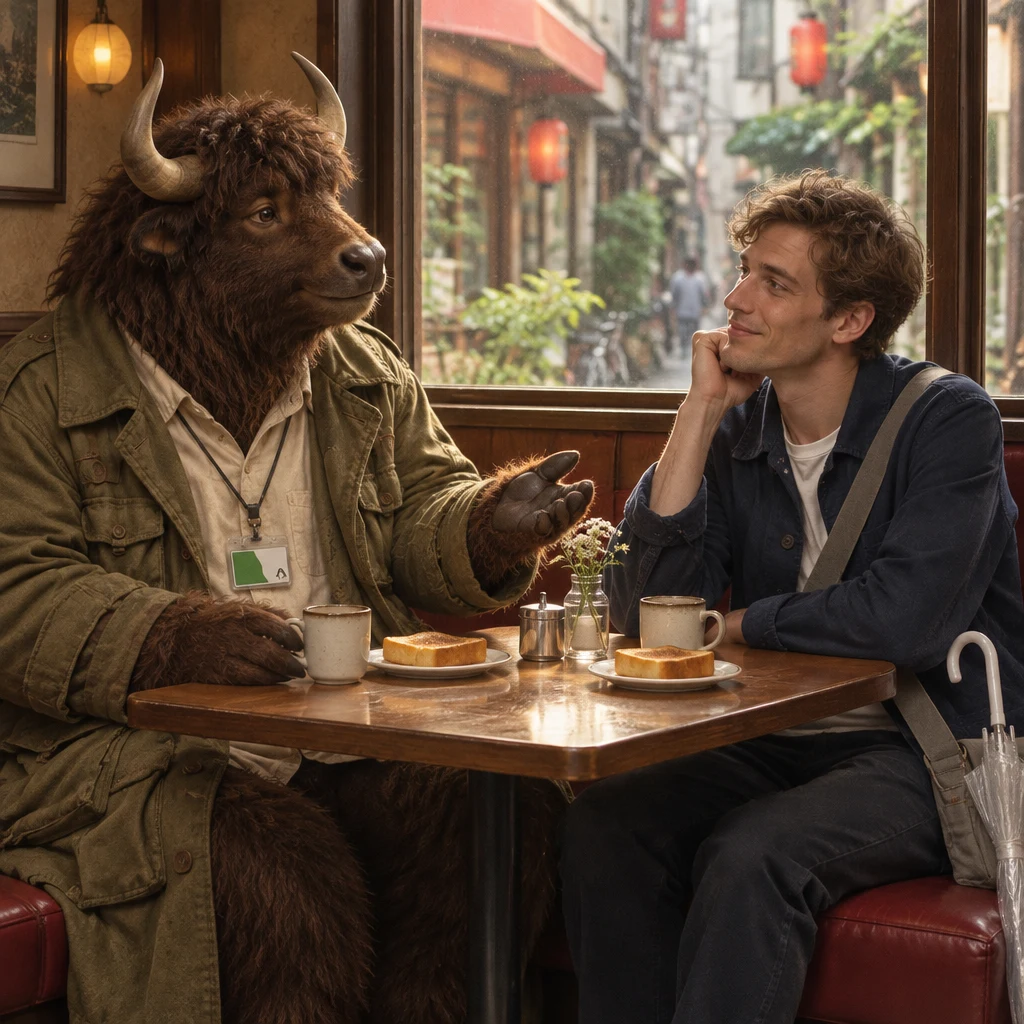
待ち合わせはどこですか。
Where shall we meet?
When to use it: Ask this when you need a meeting place.
Learn it as one piece to ask where to meet.

何時に会いますか。
What time shall we meet?
When to use it: Ask this when you need a meeting time.
Learn it as one piece to ask what time to meet.
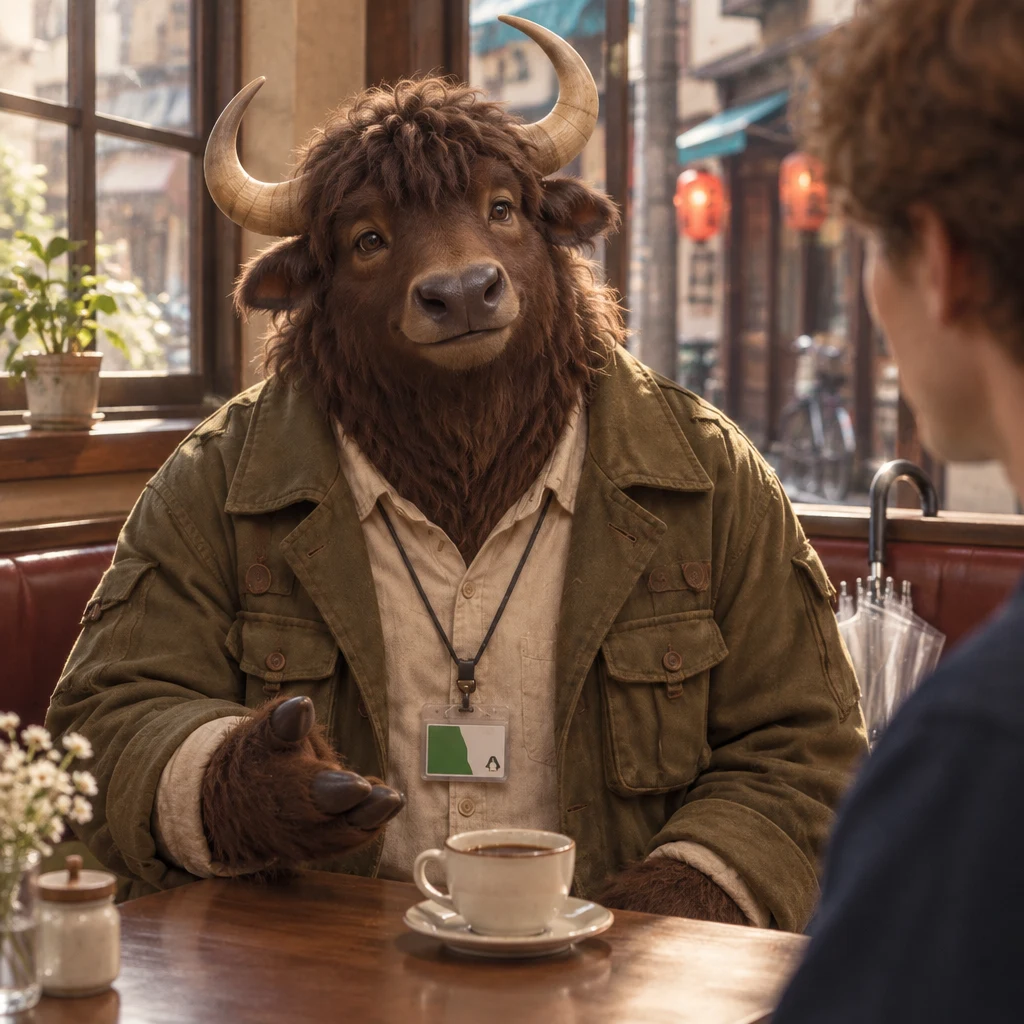
___時ごろで大丈夫ですか。
Is around ___ o'clock okay?
When to use it: Offer a rough clock time and check it is okay.
Learn it as one piece to check a rough time.

予定があります。
I have plans.
When to use it: Say this when that time does not work for you.
Learn it as one piece when you cannot meet then.

駅の前で会います。
We'll meet in front of the station.
When to use it: Name the station front as the meeting place.
Learn it as one piece for meeting at the station.
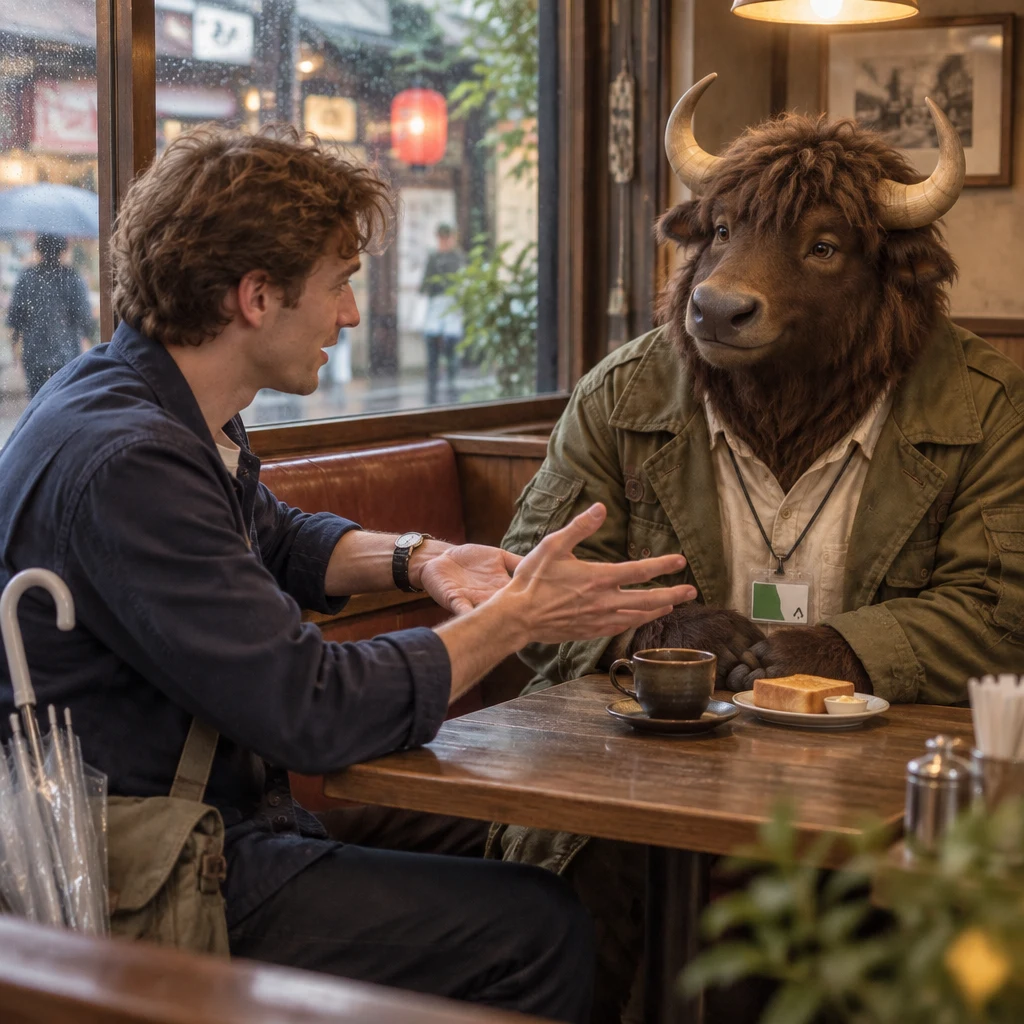
後で大丈夫ですか。
Is later okay?
When to use it: Ask this when an earlier time does not work.
Learn it as one piece to offer a later time.
Story — later, at the station
Goro wants a meeting later, even though he and Leo already share the booth.
Highlighted phrases are the new lines. Turn on Show English if you want a gloss.
- Afternoon light on the booth. Goro's blend coffee still sits untouched.
 Goro待ち合わせはどこですか。Where shall we meet?
 Leo駅の前で会います。We'll meet in front of the station.
- Goro何時に会いますか。What time shall we meet?
- They are already sharing the two red seats. Goro looks at the lane.
- Goroええと、3時ごろで大丈夫ですか。Um, is around three o'clock okay?
- Leo予定があります。I have plans.
- Leo checks the clock. Three o'clock is too soon.
- Leo後で大丈夫ですか。Is later okay?
- Goroいいですよ。Sure.
- Leo4時ごろで大丈夫ですか。Is around four o'clock okay?
- Goroいいですよ。Sure.
Practice — pick the right plan
Eleven short tasks wait in this round. You will listen, fill a gap, build a line, and pick a reply.
Each one is small, so you move on quickly.
0 of 11 done
What did you hear?
What did you hear?
What do you say?
What do you say?
You are making a plan. Ask what time you will meet.
Fill the gap
Fill the gap
Is around ___ o'clock okay?
___時____で大丈夫ですか。
Pick the reply
Goro says:
Pick the reply
3時ごろで大丈夫ですか。
Is around three o'clock okay?
And you reply with:
Build the line
Build the line
We'll meet in front of the station.
。
Tap the words in order.
What does it mean?
What does it mean?
後で大丈夫ですか。
Swap the word
Swap the word
You want to ask what time you will meet.
何時に____か。
Find the mistake
Find the mistake
Pick the reply
Goro says:
Pick the reply
後で大丈夫ですか。
Is later okay?
And you reply with:
True or false?
True or false?
This asks where you should meet later.
What do you say?
What do you say?
You need the time on the clock right now, not a meeting time.
Say it — your turn to speak
You are Leo in the corner booth. When the cue is yours, tap the microphone and say the line.
Tap play first if you want to hear it. The recording stays on this device.
- Goro待ち合わせはどこですか。Where shall we meet?
- Leo (you)Say you will meet in front of the station.
Say you will meet in front of the station.
駅の前で会います。
We'll meet in front of the station.
0 of 5 said
Recap — what you can say now
| Japanese | English | Play |
|---|---|---|
| 待ち合わせはどこですか。 | Where shall we meet? | |
| 何時に会いますか。 | What time shall we meet? | |
| ___時ごろで大丈夫ですか。 | Is around ___ o'clock okay? | |
| 予定があります。 | I have plans. | |
| 駅の前で会います。 | We'll meet in front of the station. | |
| 後で大丈夫ですか。 | Is later okay? |
Save your progress — it’s free
Keep your place in the course and see which lines you’ve learned.
Want the next lesson in your inbox?
Get the next lesson by email, one a day.
Join the newsletterDaily lesson emails are coming soon. Newsletter subscribers get them first.
Keep practicing with Yak Cards
Keep these meeting lines in your pocket. Open the Yak Cards for this lesson and run them on the train.
A short Yak Cards round keeps where and when ready before you go.
Open Yak Cards