Japanese - Phone Messages

Lesson 138 of 168

A friendly receptionist speaking Japanese on the phone, demonstrating polite phone message phrases for the lesson 'Phone Messages'.

Goal: Quick polite phrases for leaving and taking messages

Free Japanese lessons with guided practice, audio, and speaking support.

A short, friendly lesson to help you handle phone messages politely. We'll practice asking who is calling, leaving contact details, and offering to take messages.

Level A2: In this lesson you'll practice common polite phone phrases for asking who is calling, requesting someone, leaving messages, and saying you'll call back. This CEFR-aligned mini-pack focuses on realistic phone lines like “___さんをお願いします。” and “伝言をお預かりしましょうか。” — perfect for short calls and workplace voicemail handling.

After this lesson you'll be able to:

  • Recognize and use polite phone phrases to ask who is calling and request a person.
  • Leave or take a short message and give a phone number politely.
  • Handle simple problems on the phone (wrong number, ask to call back).
  • Level A2: build confidence in polite telephone exchanges.
A close-up of a phone on a desk with a sticky note of a name and number, showing Japanese polite phone vocabulary for messages.

Ready? Let's go!

When you tap play on phrases, we track your progress through this lesson.

1. Reading + Listening Practice

Hear core phrases, repeat aloud.

___さんをお願いします。

___-san o onegai shimasu.

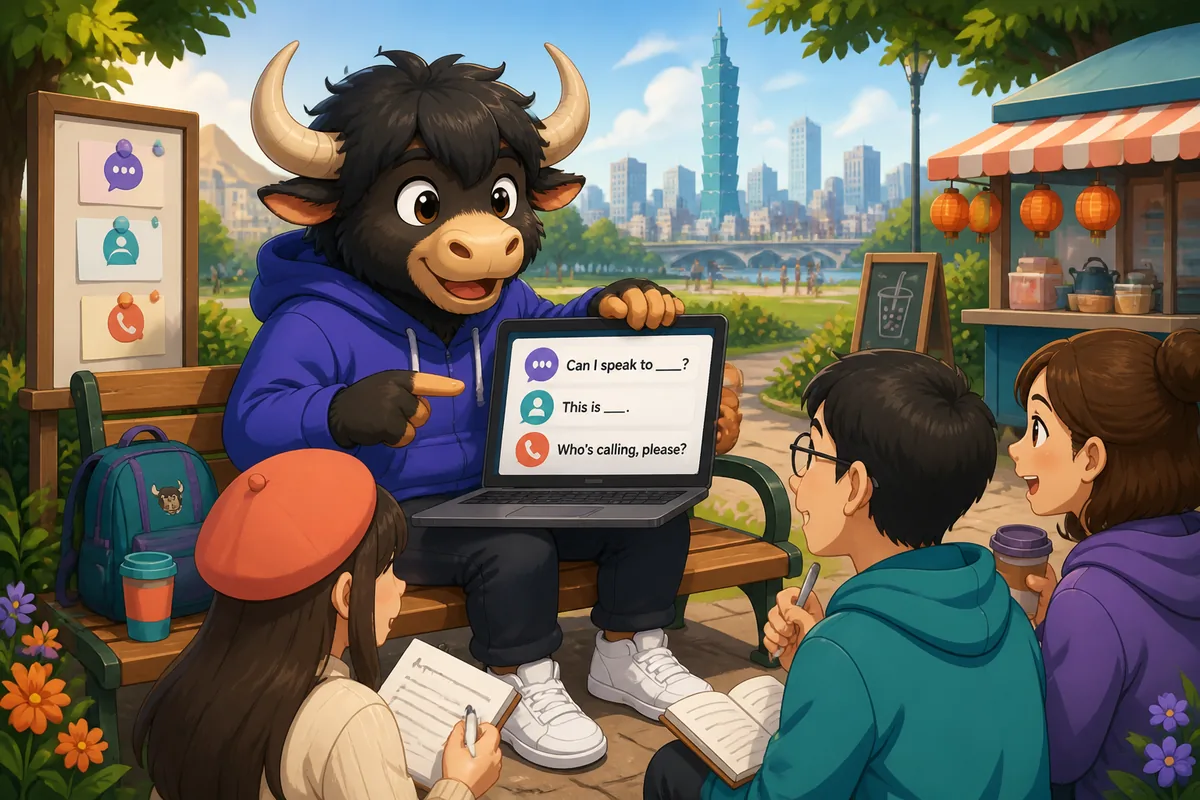
Can I speak to ___?

Meaning: Can I speak to ___?

When to use: Use this polite request at the start of a call when you want to speak with a specific person. Put the person's name in the blank and add さん for politeness.

Tip: Don't drop さん with a colleague's name in polite calls — e.g., saying just 山田をお願いします sounds impolite.

もしもし、田中さんをお願いします。

Moshi moshi, Tanaka-san o onegai shimasu.

Hello — can I speak to Mr./Ms. Tanaka, please?
会社電話: すみません、山田さんをお願いします。

Kaisha denwa: Sumimasen, Yamada-san o onegai shimasu.

At a company: Excuse me, could I speak to Yamada, please?

___です

___ desu.

This is ___.

Meaning: This is ___.

When to use: Use this when identifying yourself on the phone. Put your name in the blank. It's short and polite.

Tip: Beginners sometimes say 私はアンナです in very short calls; 私は is fine but short 'アンナです' sounds more natural on the phone.

もしもし、アンナです。

Moshi moshi, Anna desu.

Hello, this is Anna.
初めまして、デビッドです。よろしくお願いします。

Hajimemashite, Debiddo desu. Yoroshiku onegai shimasu.

Nice to meet you — this is David. Pleased to meet you.

失礼ですが、どちら様ですか。

Shitsurei desu ga, dochira-sama desu ka.

Who's calling, please?

Meaning: Who's calling, please?

When to use: A polite way to ask who is on the line when you need the caller's name. Use at the start of a call when you haven't heard an introduction.

受付: 失礼ですが、どちら様ですか。

Uketsuke: Shitsurei desu ga, dochira-sama desu ka.

Reception: Excuse me, who is calling, please?
家族の電話: 失礼ですが、どちら様ですか。と聞かれた。

Kazoku no denwa: Shitsurei desu ga, dochira-sama desu ka. to kikareta.

On a family call I was asked: 'Who is calling, please?'

___さんはいらっしゃいますか。

___-san wa irasshaimasu ka.

Is ___ there?

Meaning: Is ___ there?

When to use: Ask this politely when you want to know if someone is available to take the call. Put the person's name in the blank.

もしもし、佐藤さんはいらっしゃいますか。

Moshi moshi, Satō-san wa irasshaimasu ka.

Hello, is Mr./Ms. Satō there?
会社: 課長はいらっしゃいますか。少し急ぎです。

Kaisha: Kachō wa irasshaimasu ka. Sukoshi isogi desu.

At work: Is the section chief there? It's a bit urgent.

___は今、電話に出られません。

___ wa ima, denwa ni deraremasen.

___ is not available right now.

Meaning: ___ is not available right now.

When to use: Use this to tell a caller that the person they want cannot answer at the moment. Use は after the name; you can add 'さん' if appropriate.

Tip: Don't forget は after the name; saying 田中さん今、電話に出られません sounds unnatural.

すみません、田中さんは今、電話に出られません。

Sumimasen, Tanaka-san wa ima, denwa ni deraremasen.

Sorry, Tanaka can't answer the phone right now.
申し訳ございません、部長は今、電話に出られません。

Mōshiwake gozaimasen, buchō wa ima, denwa ni deraremasen.

I'm sorry, the manager can't take the call now.

伝言をお預かりしましょうか。

Dengon o oazukari shimashō ka.

Can I take a message?

Meaning: Can I take a message?

When to use: Offer this when the person asked for is absent, and you can record a message for them.

受付: 伝言をお預かりしましょうか。

Uketsuke: Dengon o oazukari shimashō ka.

Reception: Shall I take a message?
同僚に: 伝言をお預かりしましょうか。後で渡します。

Dōryō ni: Dengon o oazukari shimashō ka. Ato de watashimasu.

To a colleague: Shall I take a message? I'll give it to them later.

___さんに、折り返し電話してくださいと伝えてもらえますか。

___-san ni, orikaeshi denwa shite kudasai to tsutaete moraemasu ka.

Could you ask ___ to call me back?

Meaning: Could you ask ___ to call me back?

When to use: Use this when you want the caller to pass a request to the person you tried to reach. Put the person's name in the blank.

私: 佐藤さんに、折り返し電話してくださいと伝えてもらえますか。

Watashi: Satō-san ni, orikaeshi denwa shite kudasai to tsutaete moraemasu ka.
Me: Could you tell Mr./Ms. Satō to call me back?
伝言お願い: 鈴木さんに、折り返し電話してくださいと伝えてください。

Dengon onegai: Suzuki-san ni, orikaeshi denwa shite kudasai to tsutaete kudasai.

Message request: Please tell Mr./Ms. Suzuki to call back.

私の番号は___です。

Watashi no bangō wa ___ desu.

My number is ___.

Meaning: My number is ___.

When to use: Give this when leaving a callback number. Put your full phone number in the blank.

私の番号は090-1234-5678です。

Watashi no bangō wa 090-1234-5678 desu.

My number is 090-1234-5678.
念のため、私の番号は03-9876-5432です。

Nen no tame, watashi no bangō wa 03-9876-5432 desu.

Just in case, my number is 03-9876-5432.

すみません、番号を間違えました。

Sumimasen, bangō o machigaemashita.

Sorry, I have the wrong number.

Meaning: Sorry, I have the wrong number.

When to use: Say this politely after you realize you dialed the wrong person. It ends the call clearly.

すみません、番号を間違えました。失礼します。

Sumimasen, bangō o machigaemashita. Shitsurei shimasu.

Sorry, I dialed the wrong number. Excuse me.
あ、すみません。番号を間違えました。ありがとうございました。

A, sumimasen. Bangō o machigaemashita. Arigatō gozaimashita.

Oh, sorry. I dialed the wrong number. Thank you.

あとでかけ直します。

Ato de kakenaoshimasu.

I'll call back later.

Meaning: I'll call back later.

When to use: Use this to tell someone you'll try again later. It's polite and clear when the person isn't available.

わかりました。あとでかけ直します。

Wakarimashita. Ato de kakenaoshimasu.

Understood. I'll call back later.
今は出られないそうです。じゃ、あとでかけ直します。

Ima wa derarenai sō desu. Ja, ato de kakenaoshimasu.

They can't come to the phone now. Okay, I'll call again later.

伝言を残したいんですが。

Dengon o nokoshitai n desu ga.

I'd like to leave a message.

Meaning: I'd like to leave a message.

When to use: Use this to gently ask if you can leave a message. The phrase sounds polite and slightly tentative.

すみません、伝言を残したいんですが。山田さんはいらっしゃいますか。

Sumimasen, dengon o nokoshitai n desu ga. Yamada-san wa irasshaimasu ka.

Excuse me, I'd like to leave a message. Is Mr./Ms. Yamada there?
受付: 伝言を残したいんですが。内容は簡単です。

Uketsuke: Dengon o nokoshitai n desu ga. Naiyō wa kantan desu.

Reception: I'd like to leave a message. The content is short.

伝言は___です。

Dengon wa ___ desu.

The message is ___.

Meaning: The message is ___.

When to use: State the content of a message. Put either a short phrase or a full quoted sentence after は.

伝言は『会議は午後3時に変更です』です。

Dengon wa 'Kaigi wa gogo san-ji ni henkō desu' desu.

The message is: 'The meeting was moved to 3 PM.'
伝言は明日到着します、ということです。

Dengon wa ashita tōchaku shimasu, to iu koto desu.

The message is that it will arrive tomorrow.

___に、私から電話があったと伝えてください。

___ ni, watashi kara denwa ga atta to tsutaete kudasai.

Please tell ___ I called.

Meaning: Please tell ___ I called.

When to use: Ask someone to pass on a simple piece of information that you called. Put the person's name in the blank followed by に.

田中さんに、私から電話があったと伝えてください。

Tanaka-san ni, watashi kara denwa ga atta to tsutaete kudasai.

Please tell Tanaka that I called.
部長に、私から電話があったと伝えてもらえますか。

Buchō ni, watashi kara denwa ga atta to tsutaete moraemasu ka.

Could you tell the manager I called?

2. Conversational Listening Practice

Hear phrases in a real mini-conversation.

Anna calls an office to reach Mr. Tanaka. The receptionist answers and they arrange a message.

Two people on a short phone call: one asking for a colleague and the other offering to take a message in polite Japanese.

Who does Anna ask for?

Portrait of Anna in a Japanese lesson dialogue

Anna

もしもし、田中さんをお願いします。

Moshi moshi, Tanaka-san o onegai shimasu.

Hello — could I speak to Mr. Tanaka, please?

Portrait of David in a Japanese lesson dialogue

David

失礼ですが、どちら様ですか。

Shitsurei desu ga, dochira-sama desu ka.

Excuse me — who is calling?

Portrait of Anna in a Japanese lesson dialogue

Anna

アンナです。田中さんはいらっしゃいますか。

Anna desu. Tanaka-san wa irasshaimasu ka.

This is Anna. Is Mr. Tanaka there?

Portrait of David in a Japanese lesson dialogue

David

申し訳ありません、田中さんは今、電話に出られません。伝言をお預かりしましょうか。

Mōshiwake arimasen, Tanaka-san wa ima, denwa ni deraremasen. Dengon o oazukari shimashō ka.

Sorry — Tanaka can't answer now. Shall I take a message?

Portrait of Anna in a Japanese lesson dialogue

Anna

はい。伝言は『午後3時に戻ります』です。私の番号は070-1111-2222です。

Hai. Dengon wa 'Gogo san-ji ni modorimasu' desu. Watashi no bangō wa 070-1111-2222 desu.

Yes. The message is 'I'll return at 3 PM.' My number is 070-1111-2222.

Portrait of David in a Japanese lesson dialogue

David

かしこまりました。田中さんに、アンナさんから電話があったと伝えておきます。

Kashikomarimashita. Tanaka-san ni, Anna-san kara denwa ga atta to tsutaete okimasu.

Understood. I'll tell Mr. Tanaka that Anna called.

3. Guided Practice

Quizzes and matching to lock in meaning.

What does '失礼ですが、どちら様ですか。' mean?

Someone asks '佐藤さんはいらっしゃいますか。' What is the best reply if Sato is not available now?

Which phrase politely offers to write down a message?

How do you ask someone to tell Mr. Suzuki to call you back?

The caller identifies themself: 'This is Anna.'

受付: 失礼ですが、どちら様ですか。電話の相手: 「___」

The receptionist replies that Yamada can't answer right now.

私: もしもし、山田さんはいらっしゃいますか。受付: 「___」

You politely say you'd like to leave a message.

相手: 伝言をお預かりしましょうか。自分: 「___」

Match the core phrases

Match the extra phrases

4. Speaking Practice

Say phrases yourself (mic/recording).

Recording stays on your device only. Check speech uses your browser's speech tools when available.

Say this phrase out loud:

___さんをお願いします。

___-san o onegai shimasu.

Can I speak to ___?

Say this phrase out loud:

___です

___ desu.

This is ___.

Say this phrase out loud:

失礼ですが、どちら様ですか。

Shitsurei desu ga, dochira-sama desu ka.

Who's calling, please?

Say this phrase out loud:

___さんはいらっしゃいますか。

___-san wa irasshaimasu ka.

Is ___ there?

Say this phrase out loud:

___は今、電話に出られません。

___ wa ima, denwa ni deraremasen.

___ is not available right now.

Say this phrase out loud:

伝言をお預かりしましょうか。

Dengon o oazukari shimashō ka.

Can I take a message?

Say this phrase out loud:

___さんに、折り返し電話してくださいと伝えてもらえますか。

___-san ni, orikaeshi denwa shite kudasai to tsutaete moraemasu ka.

Could you ask ___ to call me back?

Say this phrase out loud:

私の番号は___です。

Watashi no bangō wa ___ desu.

My number is ___.

Say this phrase out loud:

すみません、番号を間違えました。

Sumimasen, bangō o machigaemashita.

Sorry, I have the wrong number.

Say this phrase out loud:

あとでかけ直します。

Ato de kakenaoshimasu.

I'll call back later.

Say this phrase out loud:

伝言を残したいんですが。

Dengon o nokoshitai n desu ga.

I'd like to leave a message.

Say this phrase out loud:

伝言は___です。

Dengon wa ___ desu.

The message is ___.

Say this phrase out loud:

___に、私から電話があったと伝えてください。

___ ni, watashi kara denwa ga atta to tsutaete kudasai.

Please tell ___ I called.