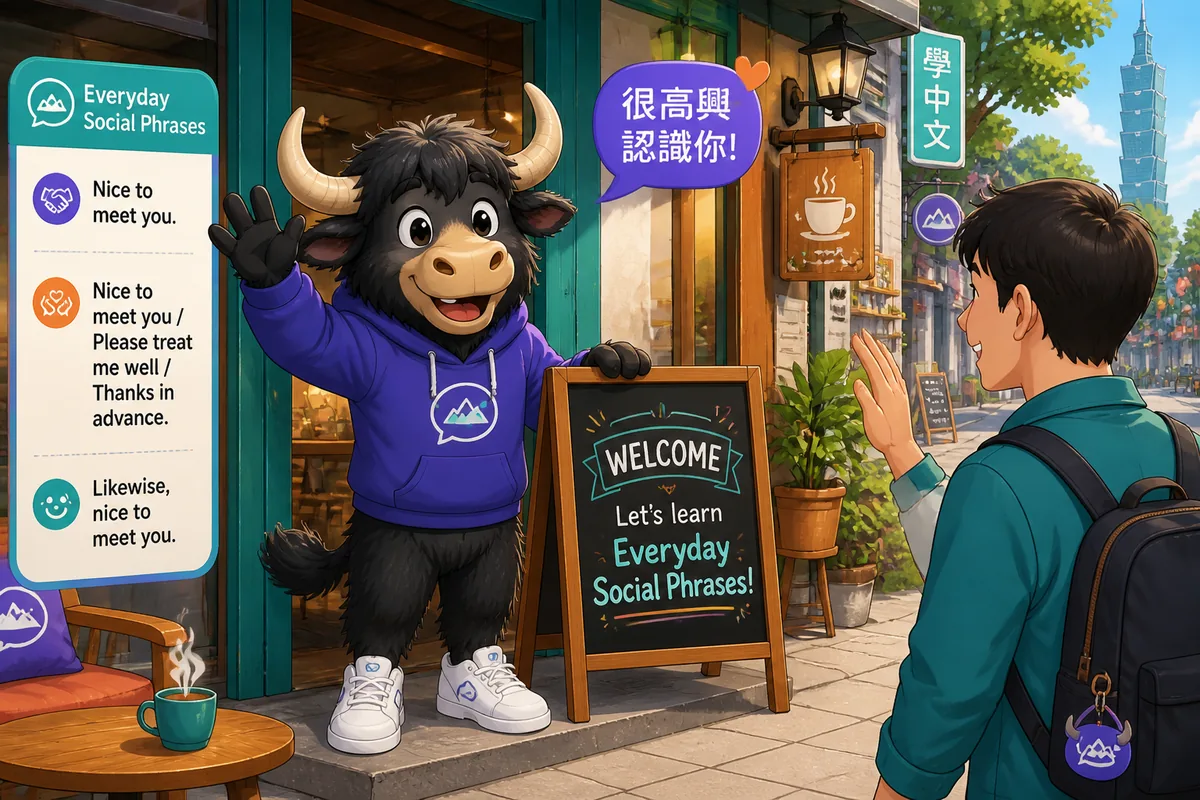
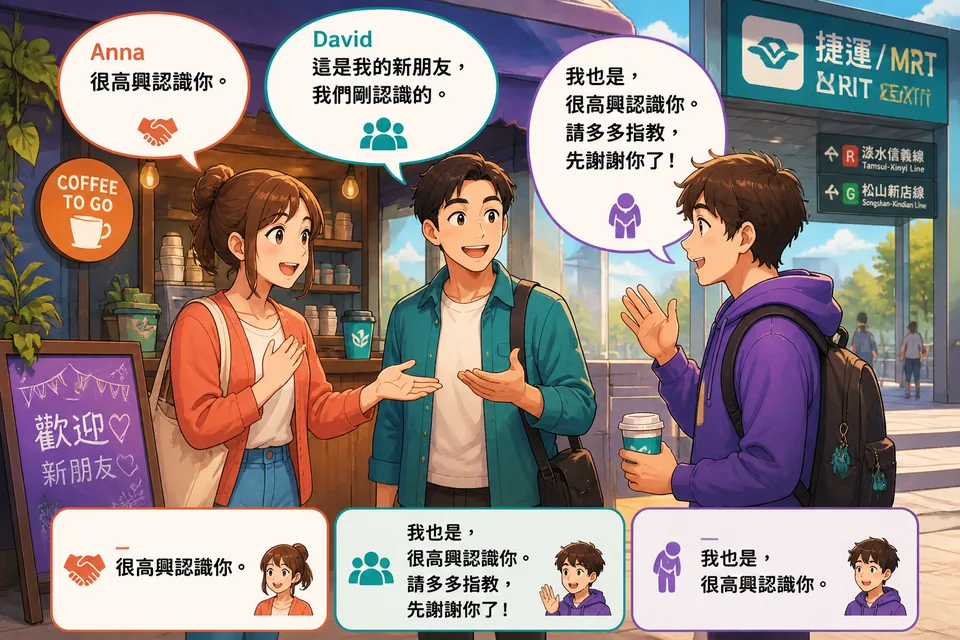
はじめまして
Hajimemashite.
Nice to meet you.
Meaning: Nice to meet you.
When to use: Use this the first time you meet someone, before saying your name or よろしくお願いします.
Tip: Don't use はじめまして after you've already met someone; it's for first meetings only.
Examples ▼ はじめまして。私はアンナです。
Hajimemashite. Watashi wa Anna desu.
Nice to meet you. I’m Anna.
はじめまして。日本に来て嬉しいです。
Hajimemashite. Nihon ni kite ureshii desu.
Nice to meet you. I’m happy to be in Japan.
よろしくお願いします。
Yoroshiku onegai shimasu.
Nice to meet you / Please treat me well / Thanks in advance.
Meaning: Nice to meet you / Please treat me well / Thanks in advance.
When to use: Say this after introductions, when starting work together, or when asking for someone's help.
Examples ▼ 田中さん、よろしくお願いします。
Tanaka-san, yoroshiku onegai shimasu.
Mr. Tanaka, nice to meet you / please take care of me.
今日から一緒に働きます。よろしくお願いします。
Kyō kara issho ni hatarakimasu. Yoroshiku onegai shimasu.
I’ll be working with you from today. Nice to meet you.
こちらこそ、よろしくお願いします。
Kochira koso, yoroshiku onegai shimasu.
Likewise, nice to meet you.
Meaning: Likewise, nice to meet you.
When to use: Use this polite reply after someone says よろしくお願いします to you.
Examples ▼ A: よろしくお願いします。 B: こちらこそ、よろしくお願いします。
A: Yoroshiku onegai shimasu. B: Kochira koso, yoroshiku onegai shimasu.
A: Nice to meet you. B: Likewise, nice to meet you.
紹介していただきありがとうございます。こちらこそ、よろしくお願いします。
Shōkai shite itadaki arigatō gozaimasu. Kochira koso, yoroshiku onegai shimasu.
Thank you for the introduction. Likewise, please treat me well.
お先に失礼します。
Osaki ni shitsurei shimasu.
Excuse me for leaving before you.
Meaning: Excuse me for leaving before you.
When to use: Say this when you leave work, class, or a group before others remain.
Examples ▼ 先に帰ります。お先に失礼します。
Saki ni kaerimasu. Osaki ni shitsurei shimasu.
I’m leaving early. Excuse me for leaving before you.
会議が終わったら、部屋を出て『お先に失礼します』と言います。
Kaigi ga owattara, heya o dete 'Osaki ni shitsurei shimasu' to iimasu.
After the meeting I leave the room and say 'Excuse me for leaving first.'
お疲れさまです。
Otsukare-sama desu.
Good work / Hello at work.
Meaning: Good work / Hello at work.
When to use: A common greeting or acknowledgment at work; say it when you arrive, see coworkers, or notice effort.
Tip: Beginners sometimes use お疲れさまです only at the end; it’s also used as a general workplace greeting anytime.
Examples ▼ お疲れさまです。今日もよろしくお願いします。
Otsukare-sama desu. Kyō mo yoroshiku onegai shimasu.
Good work. Let’s work well today too.
会議が終わったら、みんなに『お疲れさまです』と言います。
Kaigi ga owattara, minna ni 'Otsukare-sama desu' to iimasu.
After the meeting, I say 'Good work' to everyone.
お疲れさまでした。
Otsukare-sama deshita.
Good work today.
Meaning: Good work today.
When to use: Often said after work, class, practice, or an event ends to acknowledge the effort.
Examples ▼ 今日の練習お疲れさまでした。
Kyō no renshū otsukare-sama deshita.
Good work today on practice.
もう帰ります。お疲れさまでした。
Mō kaerimasu. Otsukare-sama deshita.
I’m heading home. Good work today.
おめでとうございます。
Omedetō gozaimasu.
Congratulations.
Meaning: Congratulations.
When to use: A polite phrase for birthdays, weddings, promotions, exam passes, and other good news.
Examples ▼ 合格おめでとうございます!
Gōkaku omedetō gozaimasu!
Congratulations on passing!
ご結婚おめでとうございます。とても嬉しいです。
Gokekkon omedetō gozaimasu. Totemo ureshii desu.
Congratulations on your marriage. I’m very happy.
また今度お願いします。
Mata kondo onegai shimasu.
Maybe another time, please.
Meaning: Maybe another time, please.
When to use: A polite, gentle way to decline an invitation or postpone plans.
Examples ▼ ご飯はまた今度お願いします。今日は忙しいです。
Gohan wa mata kondo onegai shimasu. Kyō wa isogashii desu.
Maybe another time for a meal please. I’m busy today.
映画の誘いに『また今度お願いします』と答えました。
Eiga no sasoi ni 'Mata kondo onegai shimasu' to kotaemashita.
I replied 'Maybe another time' to the movie invitation.
今日はちょっと難しいです。
Kyō wa chotto muzukashii desu.
Today is a bit difficult.
Meaning: Today is a bit difficult.
When to use: A polite and indirect way to say you cannot do something today.
Examples ▼ すみません、今日はちょっと難しいです。また連絡します。
Sumimasen, kyō wa chotto muzukashii desu. Mata renraku shimasu.
Sorry, today is a bit difficult. I’ll contact you again.
先生に『今日はちょっと難しいです』と説明しました。
Sensei ni 'Kyō wa chotto muzukashii desu' to setsumei shimashita.
I told the teacher 'Today is a bit difficult.'
写真を撮りましょうか。
Shashin o torimashō ka.
Shall I take a photo for you?
Meaning: Shall I take a photo for you?
When to use: Offer this when someone wants a picture taken, especially at tourist spots.
Examples ▼ 写真を撮りましょうか。みんな一緒に写りますか?
Shashin o torimashō ka. Minna issho ni utsurimasu ka?
Shall I take a photo? Will everyone be in it?
写真を撮りましょうか、と親切に声をかけました。
Shashin o torimashō ka, to shinsetsu ni koe o kakemashita.
I kindly offered, 'Shall I take a photo?'
Which phrase do you say when meeting someone for the first time? はじめまして お先に失礼します。 お疲れさまです。 おめでとうございます。
Which phrase is a polite way to say 'Maybe another time'? こちらこそ、よろしくお願いします。 また今度お願いします。 写真を撮りましょうか。 今日はちょっと難しいです。
Which phrase would you say to someone leaving after a long day of practice? よろしくお願いします。 お疲れさまでした。 お先に失礼します。 おめでとうございます。
Which phrase offers help by asking to take a photo? 写真を撮りましょうか。 はじめまして また今度お願いします。 今日はちょっと難しいです。
Maybe another time, please. 友だちに誘われたけれど今日は都合が悪いと答える:『___』
Tomodachi ni sasowareta keredo kyō wa tsugō ga warui to kotaeru: '___'
おめでとうございます。 お疲れさまです。 また今度お願いします。 はじめまして
Excuse me for leaving before you. 会議の途中で先に帰るときに同僚に言う:『___』
Kaigi no tochū de saki ni kaeru toki ni dōryō ni iu: '___'
また今度お願いします。 おめでとうございます。 お先に失礼します。 写真を撮りましょうか。
Congratulations. 友だちが昇進したと聞いてあなたが言う:『___』
Tomodachi ga shōshin shita to kiite anata ga iu: '___'
お疲れさまです。 おめでとうございます。 今日はちょっと難しいです。 こちらこそ、よろしくお願いします。
はじめまして Hajimemashite. よろしくお願いします。 Yoroshiku onegai shimasu. こちらこそ、よろしくお願いします。 Kochira koso, yoroshiku onegai shimasu. お先に失礼します。 Osaki ni shitsurei shimasu. お疲れさまです。 Otsukare-sama desu. お疲れさまでした。 Otsukare-sama deshita. おめでとうございます。 Omedetō gozaimasu. また今度お願いします。 Mata kondo onegai shimasu. Nice to meet you. Please treat me well / Nice to meet you. Likewise — nice to meet you. Excuse me for leaving before you. Hello/good work (workplace greeting). Good work today (after finishing). Congratulations. Maybe another time, please.
今日はちょっと難しいです。 Kyō wa chotto muzukashii desu. 写真を撮りましょうか。 Shashin o torimashō ka. よろしくお願いします。 Yoroshiku onegai shimasu. お先に失礼します。 Osaki ni shitsurei shimasu. お疲れさまです。 Otsukare-sama desu. お疲れさまでした。 Otsukare-sama deshita. Today is a bit difficult (I can’t today). Shall I take a photo for you? Please treat me well / Thanks in advance. Excuse me for leaving. Good work / workplace greeting. Thanks for your hard work today.
Recording stays on your device only. Check speech uses your browser's speech tools when available.
Say this phrase out loud:
はじめまして
Hajimemashite.
Nice to meet you.
Check speech
Record Play back
Say this phrase out loud:
よろしくお願いします。
Yoroshiku onegai shimasu.
Nice to meet you / Please treat me well.
Check speech
Record Play back
Say this phrase out loud:
こちらこそ、よろしくお願いします。
Kochira koso, yoroshiku onegai shimasu.
Likewise, nice to meet you.
Check speech
Record Play back
Say this phrase out loud:
お先に失礼します。
Osaki ni shitsurei shimasu.
Excuse me for leaving before you.
Check speech
Record Play back
Say this phrase out loud:
お疲れさまです。
Otsukare-sama desu.
Good work / Hello at work.
Check speech
Record Play back
Say this phrase out loud:
お疲れさまでした。
Otsukare-sama deshita.
Good work today.
Check speech
Record Play back
Say this phrase out loud:
おめでとうございます。
Omedetō gozaimasu.
Congratulations.
Check speech
Record Play back
Say this phrase out loud:
また今度お願いします。
Mata kondo onegai shimasu.
Maybe another time, please.
Check speech
Record Play back
Say this phrase out loud:
今日はちょっと難しいです。
Kyō wa chotto muzukashii desu.
Today is a bit difficult.
Check speech
Record Play back
Say this phrase out loud:
写真を撮りましょうか。
Shashin o torimashō ka.
Shall I take a photo for you?
Check speech
Record Play back