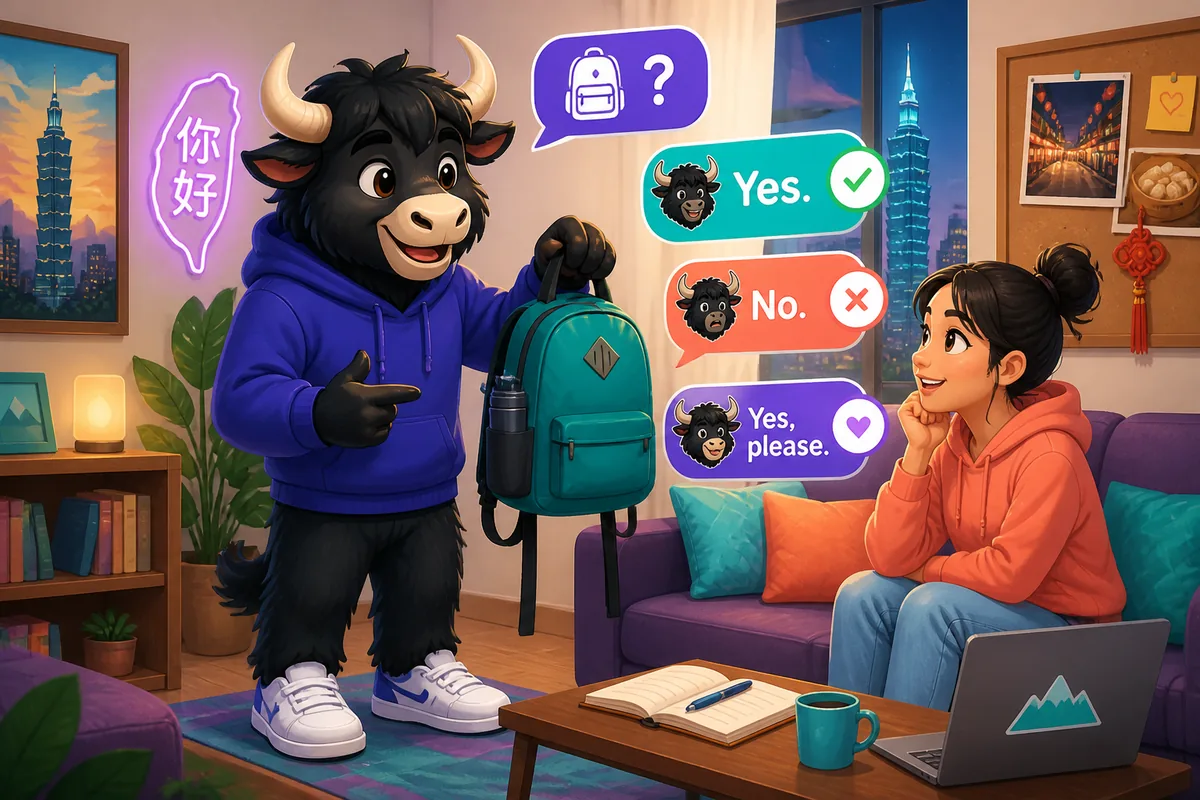
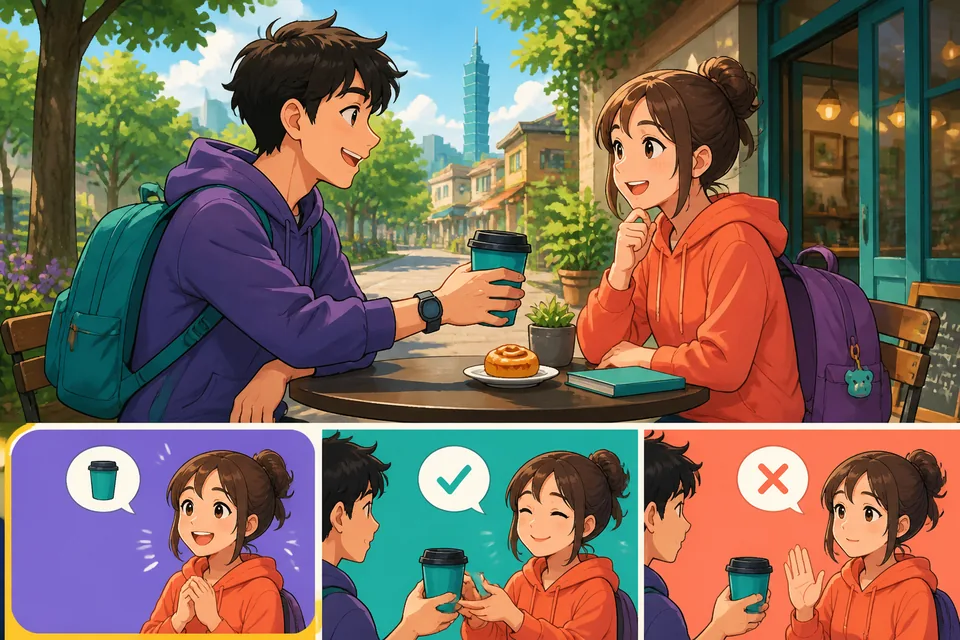
はい
Hai.
Yes.
Meaning: Yes.
When to use: Use this simple, polite affirmative answer to agree with a question or accept something.
Examples ▼ 店員: 包装しますか? 客: はい。
Ten'in: Hōsō shimasu ka? Kyaku: Hai.
Clerk: Shall I wrap it? Customer: Yes.
先生: 準備はいいですか? 学生: はい。
Sensei: Junbi wa ii desu ka? Gakusei: Hai.
Teacher: Ready? Student: Yes.
いいえ
Iie.
No.
Meaning: No.
When to use: Use this polite negative answer to say no to a question or offer.
Examples ▼ 友だち: 手伝おうか? 私: いいえ。大丈夫です。
Tomodachi: Tetsudao u ka? Watashi: Iie. Daijōbu desu.
Friend: Shall I help? Me: No. I'm fine.
店員: 領収書は要りますか? 客: いいえ。
Ten'in: Ryōshūsho wa irimasu ka? Kyaku: Iie.
Clerk: Do you need a receipt? Customer: No.
はい、お願いします。
Hai, onegai shimasu.
Yes, please.
Meaning: Yes, please.
When to use: Accept an offer politely or ask someone to do something for you.
Examples ▼ 店員: 温めますか? 客: はい、お願いします。
Ten'in: Atatamemasu ka? Kyaku: Hai, onegai shimasu.
Clerk: Shall I heat it? Customer: Yes, please.
友だち: 写真を撮りましょうか? あなた: はい、お願いします。
Tomodachi: Shashin o torimashō ka? Anata: Hai, onegai shimasu.
Friend: Shall I take a photo? You: Yes, please.
いいえ、けっこうです。
Iie, kekkō desu.
No, thank you.
Meaning: No, thank you.
When to use: Politely decline an offer or help without sounding rude.
Tip: Beginners sometimes say just いいえ and sound blunt; add けっこうです to be polite.
Examples ▼ 店員: 試着なさいますか? 客: いいえ、けっこうです。
Ten'in: Shichaku nasaimasu ka? Kyaku: Iie, kekkō desu.
Clerk: Would you like to try it on? Customer: No, thank you.
友だち: デザート食べる? 私: いいえ、けっこうです。
Tomodachi: Dezāto taberu? Watashi: Iie, kekkō desu.
Friend: Want dessert? Me: No, thank you.
いいですよ
Ii desu yo.
Sure.
Meaning: Sure.
When to use: Agree to a request or give permission in a polite but friendly way.
Examples ▼ 同僚: このファイル使ってもいいですか? あなた: いいですよ。
Dōryō: Kono fairu tsukattemo ii desu ka? Anata: Ii desu yo.
Colleague: Can I use this file? You: Sure.
先生: ドアを閉めてください。 学生: はい、いいですよ。
Sensei: Doa o shimete kudasai. Gakusei: Hai, ii desu yo.
Teacher: Please close the door. Student: Okay, sure.
はい、そうです。
Hai, sō desu.
Yes, I am.
Meaning: Yes, I am.
When to use: Confirm your identity, role, or status politely when asked.
Examples ▼ 相手: あなたは山田さんですか? あなた: はい、そうです。
Aite: Anata wa Yamada-san desu ka? Anata: Hai, sō desu.
Other: Are you Mr. Yamada? You: Yes, I am.
人事: 学生ですか? 学生: はい、そうです。
Jinji: Gakusei desu ka? Gakusei: Hai, sō desu.
HR: Are you a student? Student: Yes, I am.
いいえ、ちがいます。
Iie, chigaimasu.
No, I'm not.
Meaning: No, I'm not.
When to use: Politely deny an identity or correct a wrong assumption about yourself.
Examples ▼ 相手: 彼は先生ですか? あなた: いいえ、ちがいます。
Aite: Kare wa sensei desu ka? Anata: Iie, chigaimasu.
Other: Is he a teacher? You: No, he's not.
受付: 山田さんですか? 私: いいえ、ちがいます。
Uketsuke: Yamada-san desu ka? Watashi: Iie, chigaimasu.
Reception: Is this Mr. Yamada? Me: No, it's not.
はい、します
Hai, shimasu.
Yes, I do.
Meaning: Yes, I do.
When to use: Answer affirmatively about actions, habits, or abilities.
Examples ▼ 先生: 毎日走りますか? 学生: はい、します。
Sensei: Mainichi hashirimasu ka? Gakusei: Hai, shimasu.
Teacher: Do you run every day? Student: Yes, I do.
友だち: ピアノを弾きますか? あなた: はい、します。
Tomodachi: Piano o hikimasu ka? Anata: Hai, shimasu.
Friend: Do you play piano? You: Yes, I do.
いいえ、しません。
Iie, shimasen.
No, I don't.
Meaning: No, I don't.
When to use: Say you do not do an action or do not have a habit politely.
Examples ▼ 先生: タバコを吸いますか? 学生: いいえ、しません。
Sensei: Tabako o suimasu ka? Gakusei: Iie, shimasen.
Teacher: Do you smoke? Student: No, I don't.
友だち: 毎週映画を見ますか? 私: いいえ、しません。
Tomodachi: Maishū eiga o mimasu ka? Watashi: Iie, shimasen.
Friend: Do you watch movies every week? Me: No, I don't.
あまり
Amari…
Not really.
Meaning: Not really.
When to use: Use this short soft negative to say you don't like or do something much — often followed by more words.
Tip: Don't leave the listener confused — continue the sentence when you mean a softer negative (e.g., あまり好きじゃないです).
Examples ▼ 友だち: 寿司は好き? 私: あまり…(好きじゃないです)。
Tomodachi: Sushi wa suki? Watashi: Amari... (suki ja nai desu).
Friend: Do you like sushi? Me: Not really (I don't like it).
相手: 運動しますか? 私: あまり…(時間がないです)。
Aite: Undō shimasu ka? Watashi: Amari... (jikan ga nai desu).
Other: Do you exercise? Me: Not really (I don't have time).
はい
Hai.
Okay.
Meaning: Okay.
When to use: Use as a simple polite affirmation to agree or accept.
Examples ▼ 先生: 窓を閉めてください。 学生: はい。
Sensei: Mado o shimete kudasai. Gakusei: Hai.
Teacher: Please close the window. Student: Okay.
相手: じゃあ午後に会いましょう。 あなた: はい。
Aite: Jā gogo ni aimashō. Anata: Hai.
Other: Let's meet this afternoon. You: Okay.
いいですよ
Ii desu yo.
All right.
Meaning: All right.
When to use: Agree to or accept a suggestion or request politely and casually.
Examples ▼ 友だち: 一緒に行こうか? あなた: いいですよ。
Tomodachi: Issho ni ikō ka? Anata: Ii desu yo.
Friend: Shall we go together? You: All right.
同僚: この仕事を手伝ってくれる? あなた: いいですよ。
Dōryō: Kono shigoto o tetsudatte kureru? Anata: Ii desu yo.
Colleague: Can you help with this job? You: Sure.
そうだと思います。
Sō da to omoimasu.
I think so.
Meaning: I think so.
When to use: Give a tentative affirmative when you're not 100% sure — polite and natural.
Examples ▼ 相手: 明日は雨かな? あなた: そうだと思います。
Aite: Ashita wa ame kana? Anata: Sō da to omoimasu.
Other: Will it rain tomorrow? You: I think so.
同僚: 彼は来ますか? あなた: そうだと思います。
Dōryō: Kare wa kimasu ka? Anata: Sō da to omoimasu.
Colleague: Will he come? You: I think so.
If someone offers to take your photo and you want them to, which is the best polite reply? はい いいえ、けっこうです。 あまり はい、お願いします。
How do you politely say 'No, I'm not' when someone asks if you are a teacher? はい、そうです。 そうだと思います。 いいえ、ちがいます。 いいですよ
Someone asks if you exercise every day and you do — which reply fits? そうだと思います。 あまり いいえ、しません。 はい、します
You are offered something but want to politely decline. Which phrase is most natural? はい、そうです。 いいえ、けっこうです。 はい、お願いします。 いいですよ
Clerk: Would you like to try that shirt on? Customer: Yes, please. 店員: そのシャツを試着しますか? 客: ___
Ten'in: Sono shatsu o shichaku shimasu ka? Kyaku: ___
あまり いいえ、けっこうです。 いいですよ はい、お願いします。
Teacher: Do you study Japanese every day? Student: Yes, I do. 先生: 日本語を毎日勉強しますか? 学生: ___
Sensei: Nihongo o mainichi benkyō shimasu ka? Gakusei: ___
いいえ、しません。 そうだと思います。 はい、します はい、お願いします。
Reception: Do you need breakfast? Guest: No, thank you. 受付: 朝食は必要ですか? 客: ___
Uketsuke: Chōshoku wa hitsuyō desu ka? Kyaku: ___
はい いいえ、ちがいます。 いいえ、けっこうです。 いいですよ
はい、お願いします。 Hai, onegai shimasu. いいえ、けっこうです。 Iie, kekkō desu. いいですよ Ii desu yo. はい、そうです。 Hai, sō desu. いいえ、ちがいます。 Iie, chigaimasu. はい、します Hai, shimasu. いいえ、しません。 Iie, shimasen. あまり Amari… Yes, please. No, thank you. Sure / That's fine. Yes, I am / That's right. No, that's not correct / I'm not. Yes, I do. No, I don't. Not really / Not much (soft negative).
はい Hai. いいえ Iie. いいですよ Ii desu yo. そうだと思います。 Sō da to omoimasu. いいですよ Ii desu yo. はい Hai. Yes / Okay. No. All right / Sure. I think so. Okay — used to accept a suggestion. A short polite affirmation.
Recording stays on your device only. Check speech uses your browser's speech tools when available.
Say this phrase out loud:
はい
Hai.
Okay.
Check speech
Record Play back
Say this phrase out loud:
いいえ
Iie.
No.
Check speech
Record Play back
Say this phrase out loud:
はい、お願いします。
Hai, onegai shimasu.
Yes, please.
Check speech
Record Play back
Say this phrase out loud:
いいえ、けっこうです。
Iie, kekkō desu.
No, thank you.
Check speech
Record Play back
Say this phrase out loud:
いいですよ
Ii desu yo.
All right.
Check speech
Record Play back
Say this phrase out loud:
はい、そうです。
Hai, sō desu.
Yes, I am.
Check speech
Record Play back
Say this phrase out loud:
いいえ、ちがいます。
Iie, chigaimasu.
No, I'm not.
Check speech
Record Play back
Say this phrase out loud:
はい、します
Hai, shimasu.
Yes, I do.
Check speech
Record Play back
Say this phrase out loud:
いいえ、しません。
Iie, shimasen.
No, I don't.
Check speech
Record Play back
Say this phrase out loud:
あまり
Amari…
Not really.
Check speech
Record Play back
Say this phrase out loud:
はい
Hai.
Okay.
Check speech
Record Play back
Say this phrase out loud:
いいですよ
Ii desu yo.
All right.
Check speech
Record Play back
Say this phrase out loud:
そうだと思います。
Sō da to omoimasu.
I think so.
Check speech
Record Play back