
New here? This is lesson 108 of a free 240-lesson Japanese course.
Left something in the car in Japanese
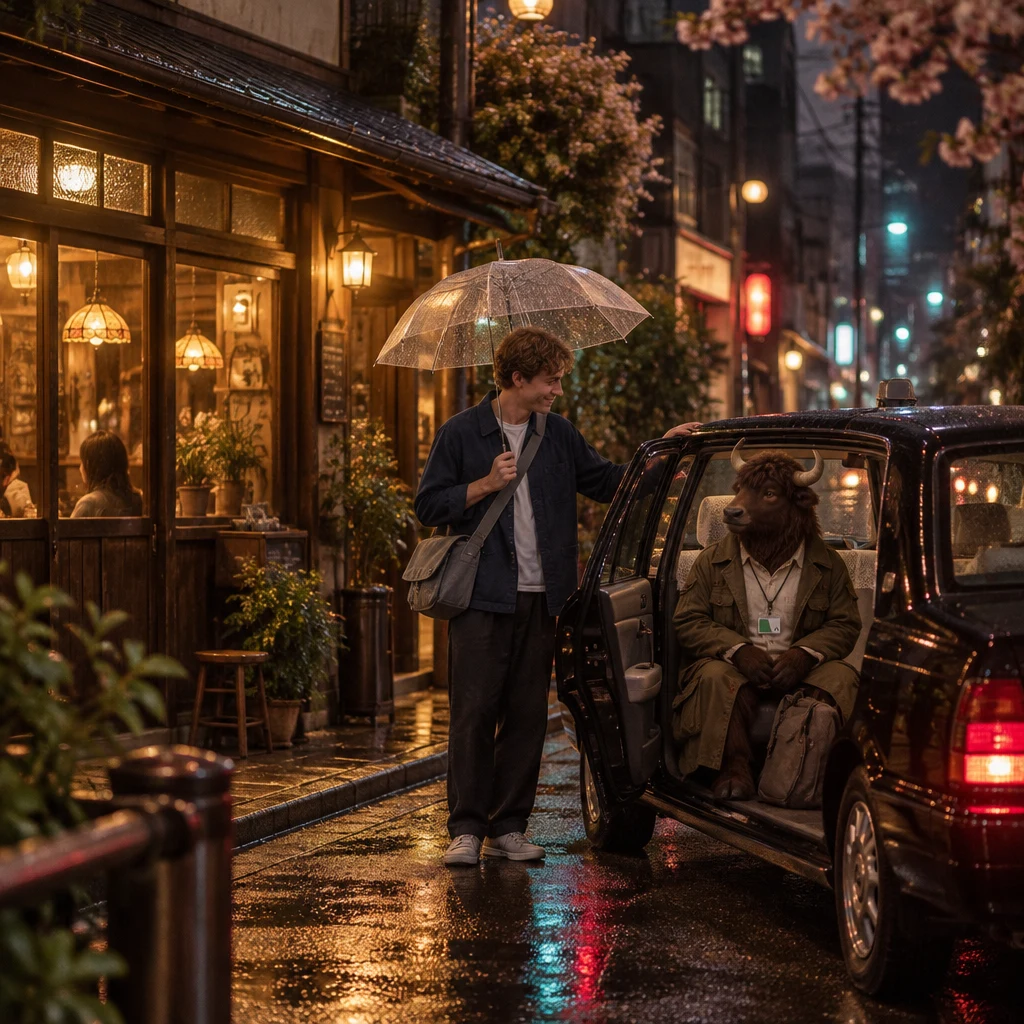
A late taxi drops Leo and Goro at Kissa Hotaru. Leo reaches for his grey bag and finds only air.
Goro checks every pocket of the olive coat first, as if a messenger bag could hide there.
You will tell a driver you left something, name the bag, and sort out the fare.
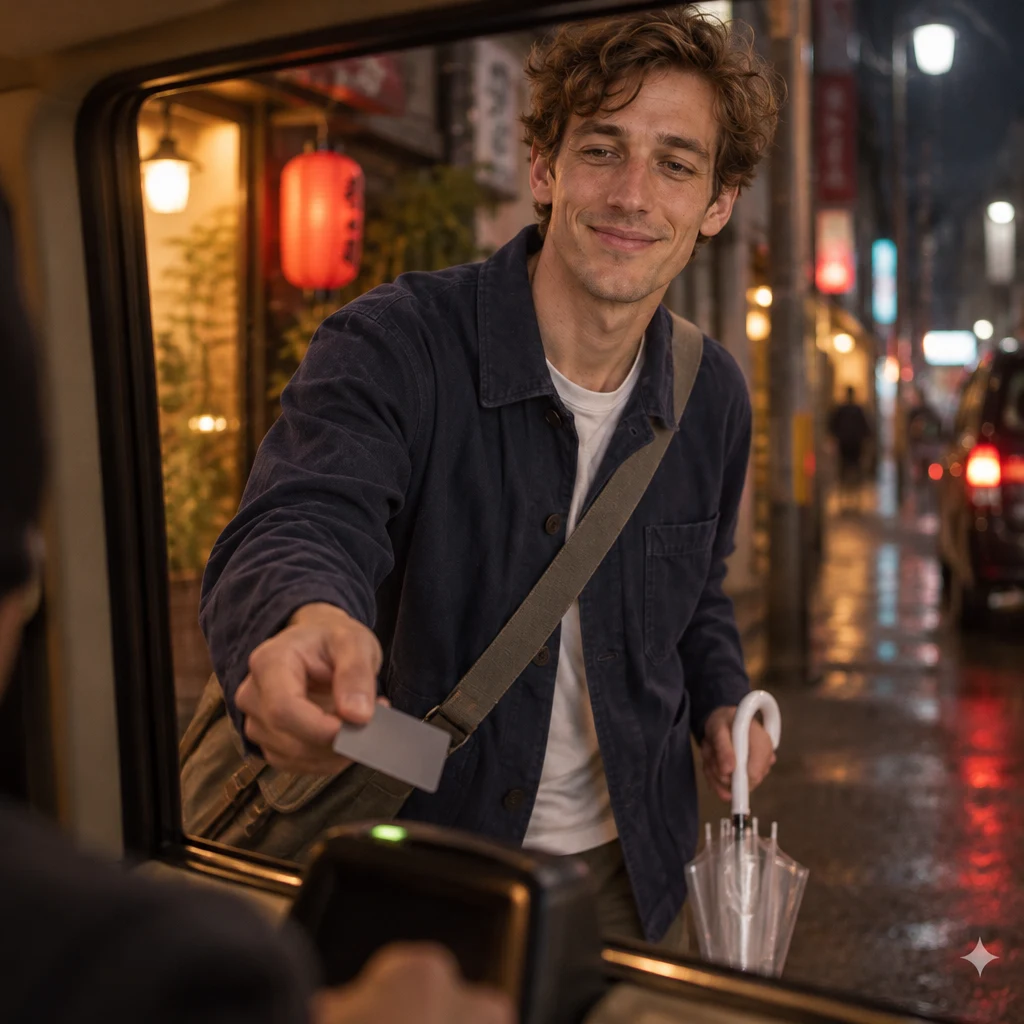
Ask about cards and a late-night surcharge, then check the meter.
By the end of this lesson
Report a left bag and sort out a taxi fare.
- 車に忘れ物をしました。I left something in the car.
- バッグを忘れました。I left my bag.
- カードは使えますか。Can I pay by card?
- 深夜料金はかかりますか。Is there a late-night surcharge?
- 行き先を変えたいです。I'd like to change the destination.
- この運賃でいいですか。Is this fare all right?
Scene — a late taxi
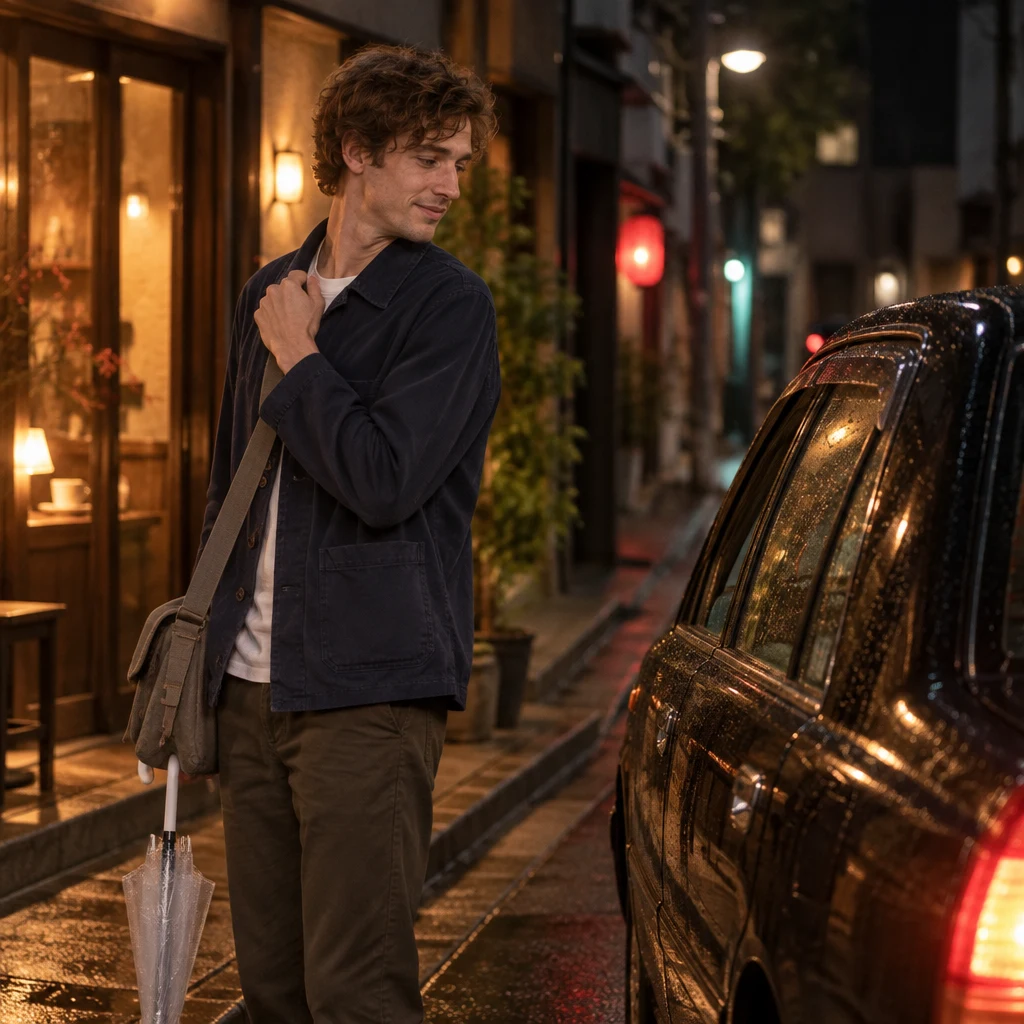
Yanaka is quiet after ten. A taxi idles at the Kissa Hotaru curb. Leo steps onto the lane with his clear umbrella, then pats his shoulder.
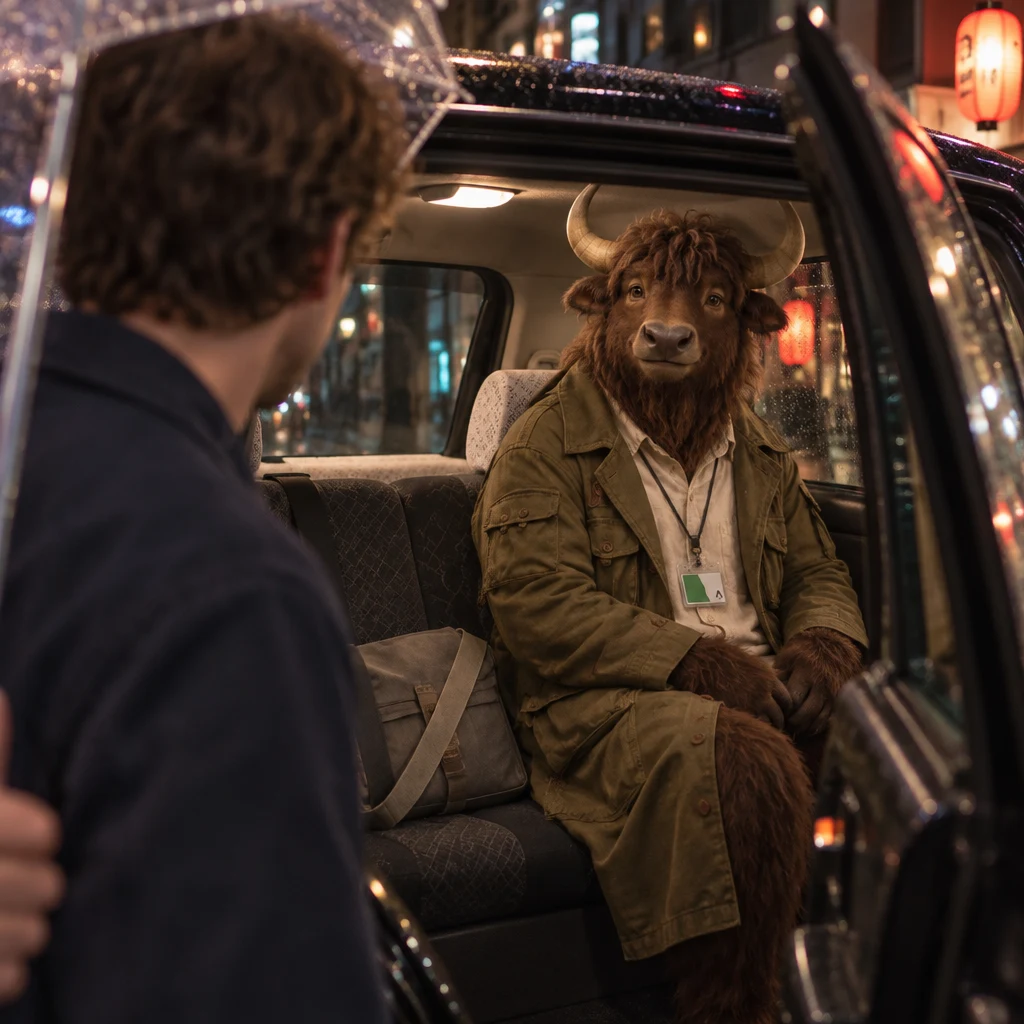
The grey canvas bag is still on the back seat. Goro fills two seats of the taxi, olive coat pockets already open.
Learn — left in the car
These six lines cover a left bag in a taxi and the fare at the window.
You report the loss, then ask about cards, a late-night extra, and the meter.
車に忘れ物をしました。
I left something in the car.
When to use it: Tell a driver you left an item in the vehicle.
に marks the place where you left the thing.
バッグを忘れました。
I left my bag.
When to use it: Name the bag after you say you left something.
を marks the thing you forgot.
Say it: Hold the g briefly in バッグ; っ marks the doubled consonant.
カードは使えますか。
Can I pay by card?
When to use it: Ask a driver if they take card before you pay.
は marks card as the thing you ask about.
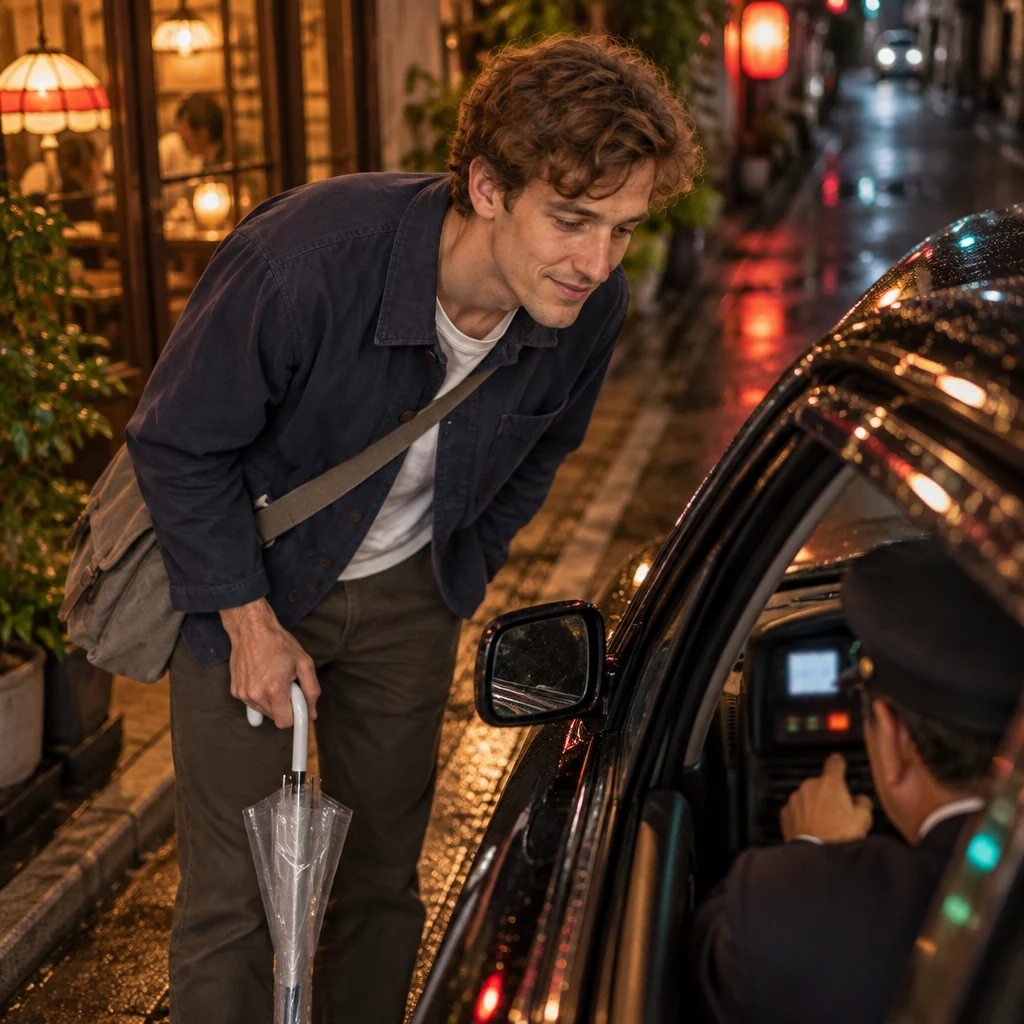
深夜料金はかかりますか。
Is there a late-night surcharge?
When to use it: Ask this after ten when a taxi might add extra.
は marks the extra charge as the topic.
Say it: Give ん in 深夜 its own beat.
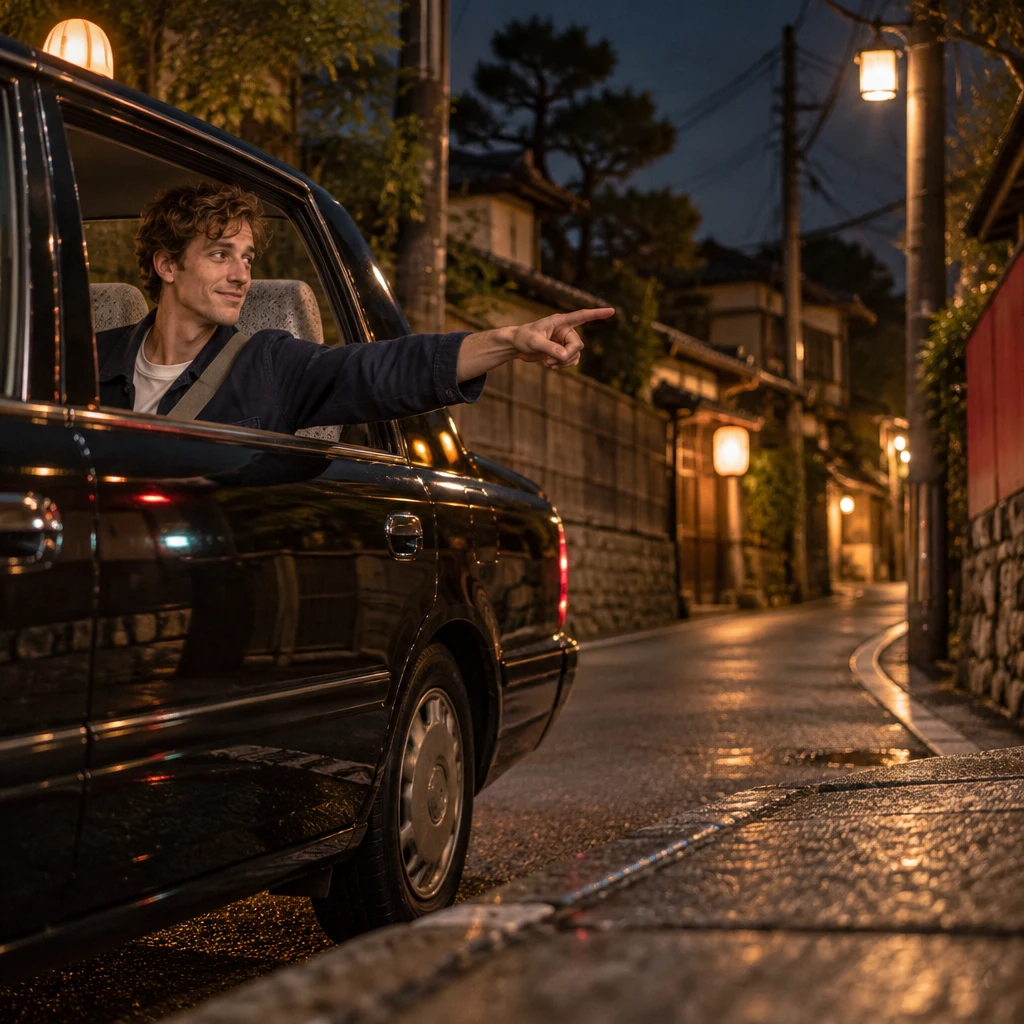
行き先を変えたいです。
I'd like to change the destination.
When to use it: Tell the driver you want a different stop.
たい after the verb means you want to do that action.
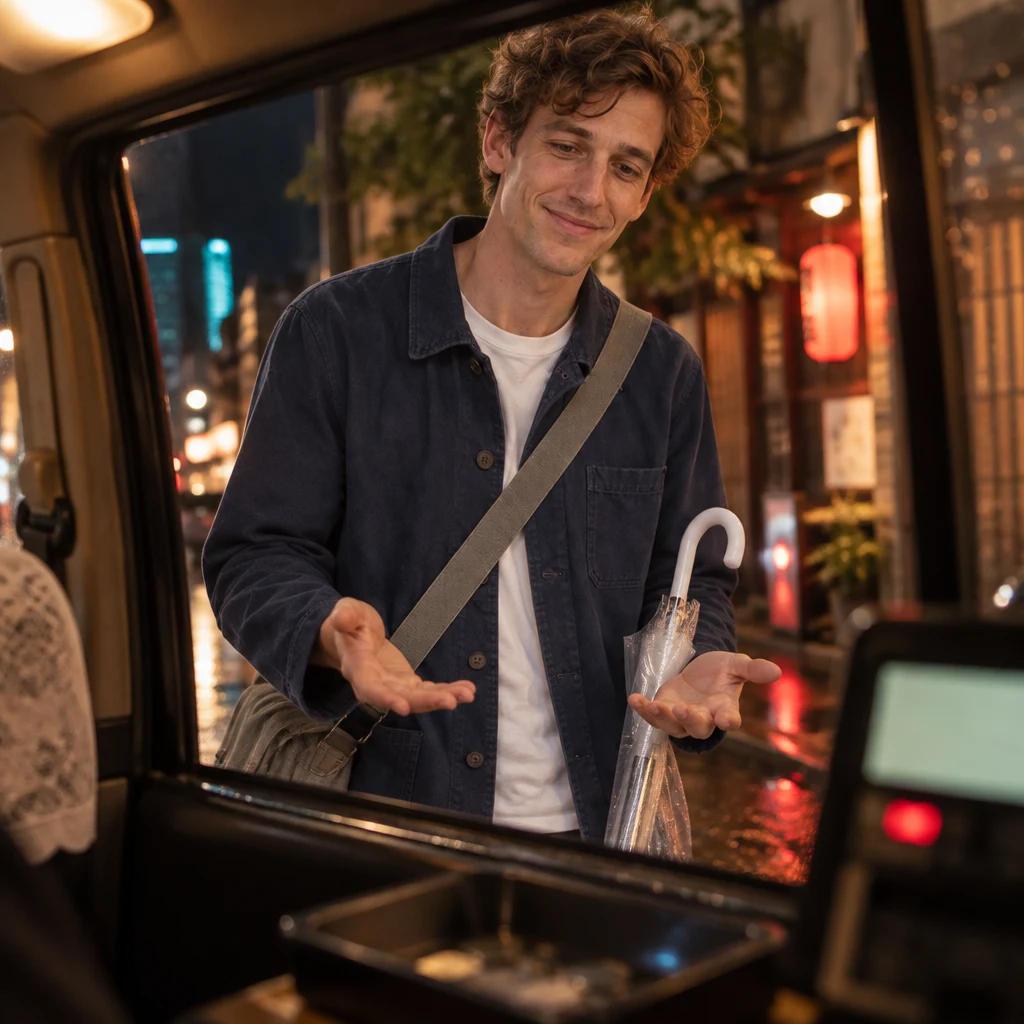
この運賃でいいですか。
Is this fare all right?
When to use it: Check the meter with the driver before you pay.
で marks this fare as the amount you check.
Say it: Give each ん in 運賃 its own beat.
Story — the bag on the seat
Leo left his grey bag on the taxi seat. Goro searches the olive coat before anyone checks the car.
Highlighted phrases are the new lines. Turn on Show English if you want a gloss.
- The taxi is heading toward Leo's street. The kissa lights sit closer.
 Leo行き先を変えたいです。I'd like to change the destination.
- Driverはい、かしこまりました。Yes, certainly.
- They stop at Kissa Hotaru. Leo's shoulder is empty.
- Leo車に忘れ物をしました。I left something in the car.
 Goroどうしたんですか。What happened?
- Leoバッグを忘れました。I left my bag.
- Goro checks every pocket of the olive coat. The Suica cord swings.
- Goroええと、ポケットにはありません。Um, it isn't in the pockets.
- Leoすみません。Excuse me.
- Driver後ろの席ですよ。It's on the back seat.
- The meter is still running. It is after ten.
- Leo深夜料金はかかりますか。Is there a late-night surcharge?
- Driverはい、かかります。Yes, there is.
- Leoカードは使えますか。Can I pay by card?
- Driverはい、使えます。Yes, you can.
- Leoこの運賃でいいですか。Is this fare all right?
- Driverはい、大丈夫です。Yes, that's fine.
- Leoありがとうございます。Thank you.
Practice — pick the right line
Eleven short tasks wait in this round. You will listen, match meanings, fill a gap, and build a line.
Each one is small, so you move on quickly.
0 of 11 done
What did you hear?
What did you hear?
Match the pairs
Japanese
カードは使えますか。Drop the English here深夜料金はかかりますか。Drop the English hereこの運賃でいいですか。Drop the English hereEnglish
What do you say?
What do you say?
Goro wants the name of the thing you left on the taxi seat.
Fill the gap
Fill the gap
I left something in the car.
車に忘れ物____しました。
What does it mean?
What does it mean?
カードは使えますか。
Pick the reply
Driver says:
Pick the reply
メーターはこちらです。
The meter is here.
And you reply with:
Build the line
Build the line
I'd like to change the destination.
。
Tap the words in order.
Swap the word
Swap the word
You want the late-night extra, not a cancel fee.
____料金はかかりますか。
What do you say?
What do you say?
The taxi is still at the curb. You need the driver's attention.
True or false?
True or false?
This asks how someone is feeling.
Pick the reply
Driver says:
Pick the reply
お忘れ物です。
Here's what you left.
And you reply with:
Say it — your turn to speak
You are Leo at the taxi window after ten. When the cue is yours, tap the microphone and say the line.
Tap play first if you want to hear it. The recording stays on this device.
- Driverこのままでよろしいですか。Is this destination all right?
- Leo (you)Say you want a different stop.
Say you want a different stop.
行き先を変えたいです。
I'd like to change the destination.
0 of 6 said
Recap — what you can say now
| Japanese | English | Play |
|---|---|---|
| 車に忘れ物をしました。 | I left something in the car. | |
| バッグを忘れました。 | I left my bag. | |
| カードは使えますか。 | Can I pay by card? | |
| 深夜料金はかかりますか。 | Is there a late-night surcharge? | |
| 行き先を変えたいです。 | I'd like to change the destination. | |
| この運賃でいいですか。 | Is this fare all right? |
Save your progress — it’s free
Keep your place in the course and see which lines you’ve learned.
Want the next lesson in your inbox?
Get the next lesson by email, one a day.
Join the newsletterDaily lesson emails are coming soon. Newsletter subscribers get them first.
Keep practicing with Yak Cards
Keep these taxi lines in your pocket. Open the Yak Cards for this lesson and run them on the train.
A short Yak Cards round before a night ride keeps the fare window ready.
Open Yak Cards