
New here? This is lesson 197 of a free 240-lesson Japanese course.
Being unsure in Japanese
Saturday class at the community centre gives Leo a simple vocabulary prompt. He knows what he means, but the Japanese word has slipped away.
His teacher does not rush him. Leo asks what the word was again, then tries a careful description while he searches his memory.
Learn ways to say you are unsure, ask for a moment, and describe a half-remembered idea. These phrases help keep a conversation moving.
By the end of this lesson
Buy time and say you are not sure.
- うーん、はっきりわかりません。Well, I'm not really sure.
- 少し考える時間をください。Give me a moment to think.
- 何て言うんでしたっけ?What's the word again?
- なんか___みたいな感じです。It's kind of like ___.
- たぶん___かなと思います。I think maybe ___.
- 今、思い出そうとしています。I'm trying to remember.
Scene — a word on the board
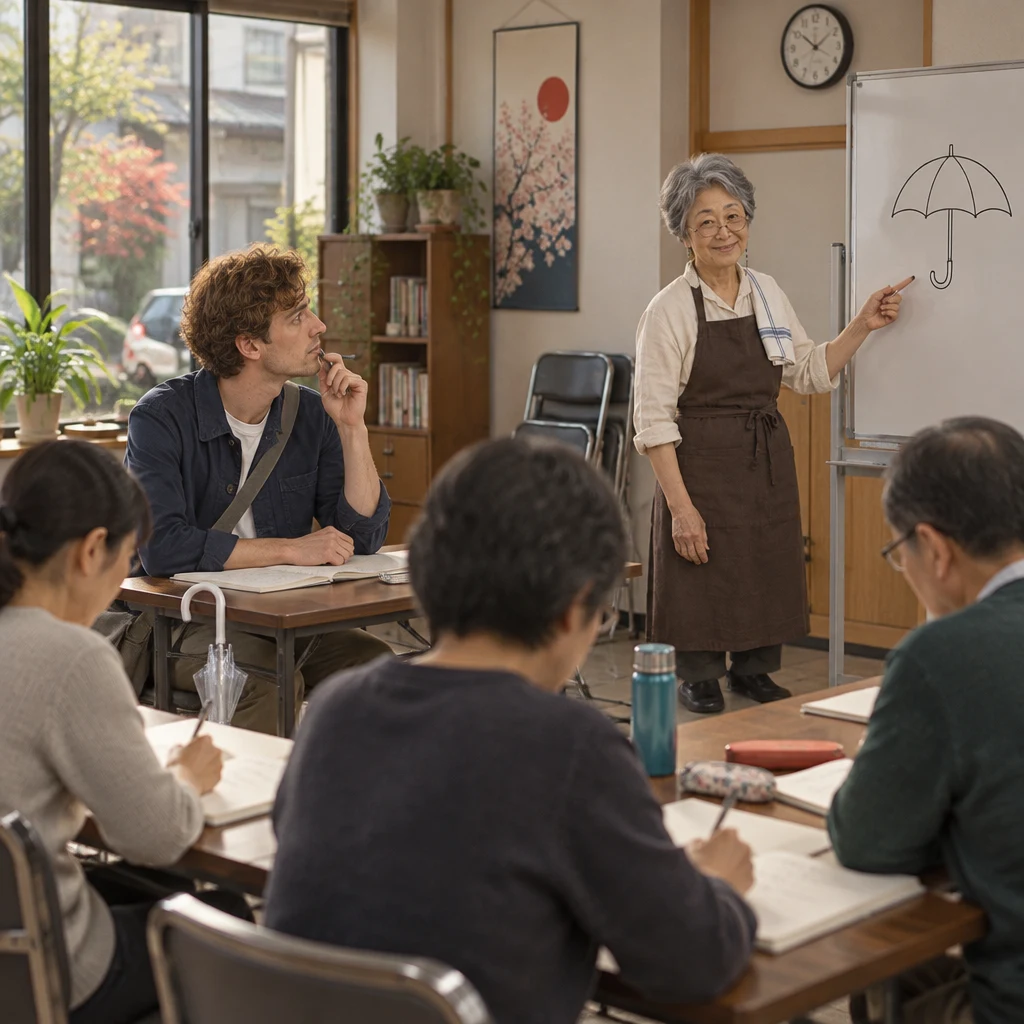
At the community centre in Yanaka, Leo sits with the Saturday Japanese class. The teacher has drawn a familiar object, but Leo cannot bring its name to mind.
He remembers its shape and use, and pauses before answering. The teacher waits patiently while the other students look down at their notebooks.
Learn — when the word slips away
These phrases help when an answer is not ready yet. You can ask for thinking time, check a word you half-remember, or offer a careful description.
The final lines let you make a guess without pretending to know.

うーん、はっきりわかりません。
Well, I'm not really sure.
When to use it: Use this when you cannot give a clear answer.
はっきりわかりません says you are not sure, rather than simply unable to understand.
Say it: Let うーん last as a drawn-out hesitation, not a clipped うん.

少し考える時間をください。
Give me a moment to think.
When to use it: Ask for this when you need a little time before answering.
時間をください is a polite way to ask someone to give you time.

何て言うんでしたっけ?
What's the word again?
When to use it: Use this when you are trying to recall a word you once knew.
っけ makes this a conversational question about something you are trying to remember.
Say it: Make a brief stop at っ before saying け.

なんか___みたいな感じです。
It's kind of like ___.
When to use it: Use this when you can describe an idea only approximately.
みたいな感じ softens a description when you are unsure of the exact details.
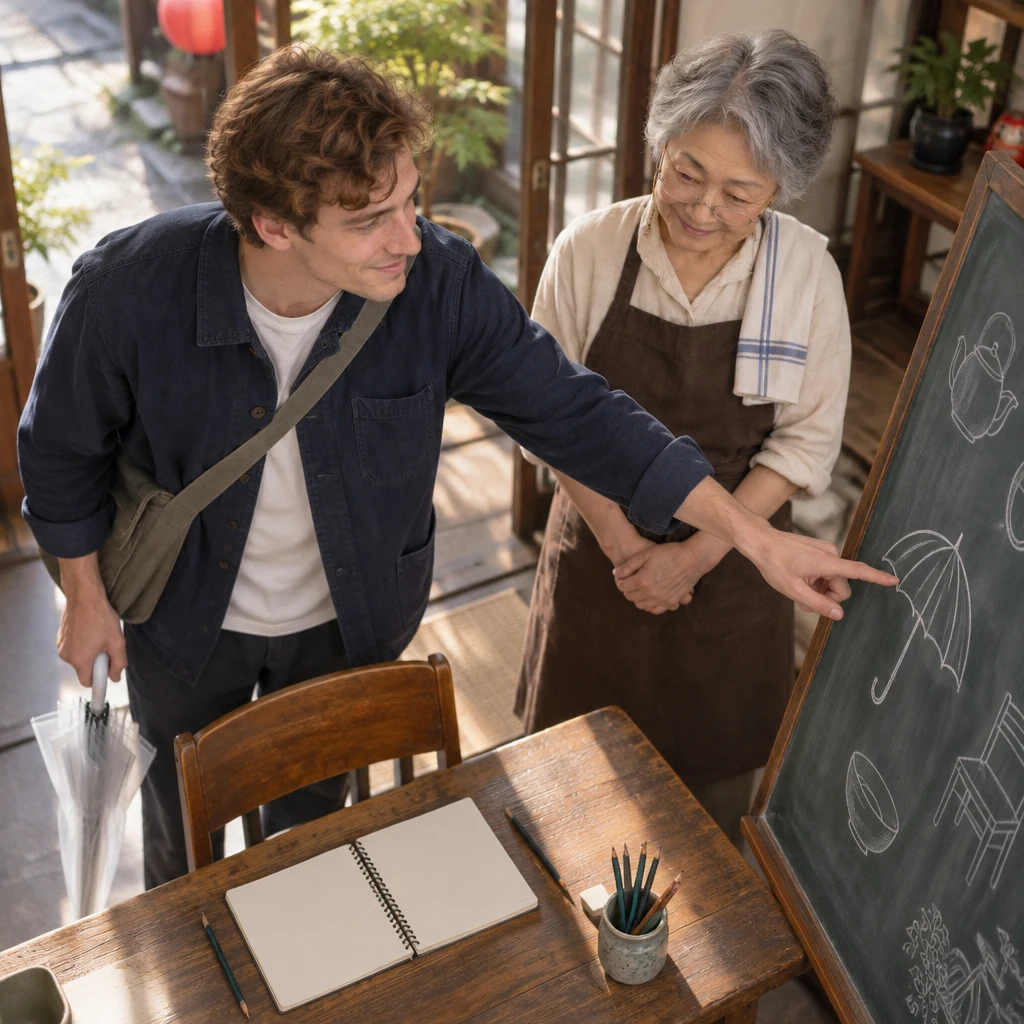
たぶん___かなと思います。
I think maybe ___.
When to use it: Use this to offer a guess without claiming certainty.
かなと思います makes your guess sound tentative.
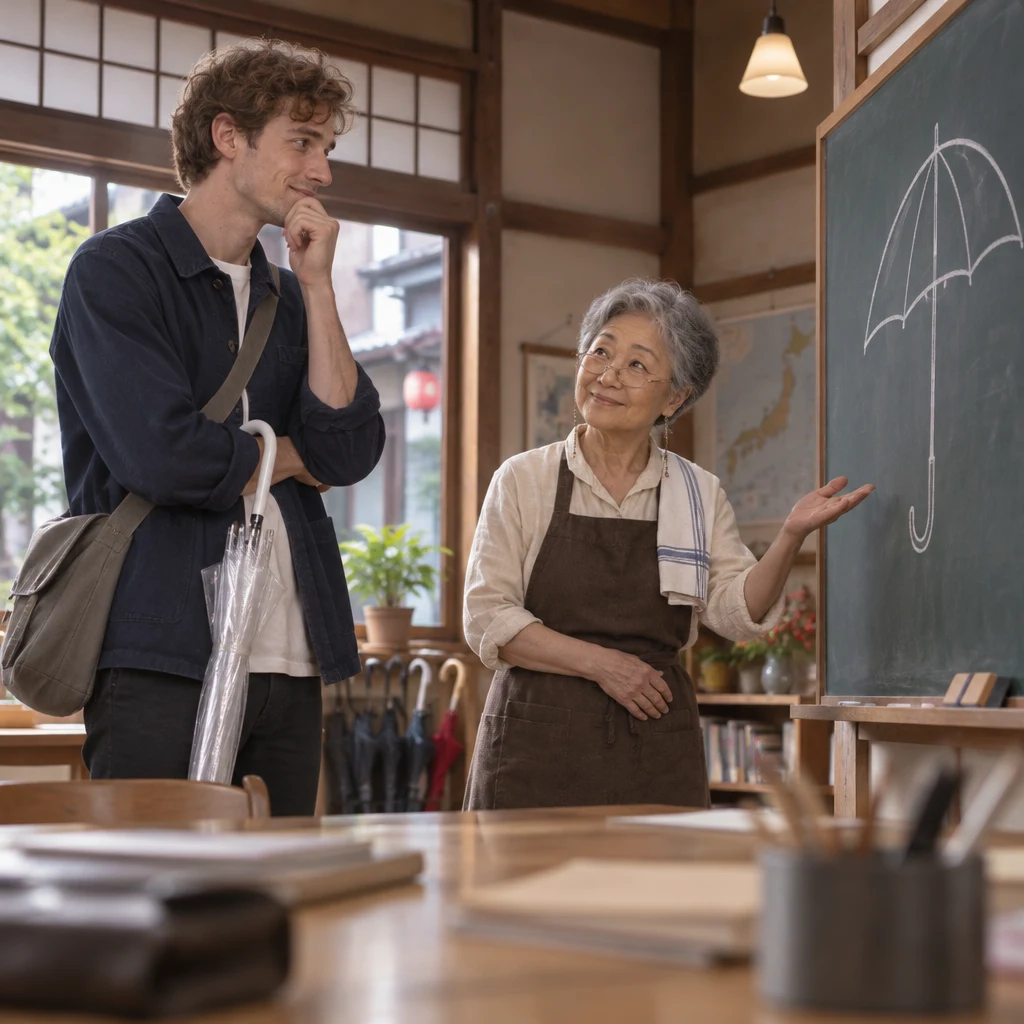
今、思い出そうとしています。
I'm trying to remember.
When to use it: Say this when you are actively trying to recall something.
思い出そうとしています describes an attempt that is happening now.
Story — a patient teacher
During Saturday class, Leo recognises the object in the teacher's drawing but cannot recall its Japanese name.
The teacher gives him time to think and helps him describe what he remembers.
- Teacherこの絵の物、分かりますか。Do you know the object in this picture?
 Leo日本語で何と言いますか。How do you say it in Japanese?
- Teacherすぐに答えなくても大丈夫ですよ。It's okay if you can't answer right away.
- Leoうーん、はっきりわかりません。Well, I'm not really sure.
- Leo何て言うんでしたっけ、何でしたか。What's the word again?
- Teacher急がなくて大丈夫ですよ。ゆっくり考えてください。There's no need to hurry. Take your time.
- Leo少し考える時間をください。Give me a moment to think.
- Teacherもちろんです。何か説明できますか。Of course. Can you describe it at all?
- Leo何て言えばいいですかね。How can I put this?
- Teacher形や使い方から考えてみましょう。Let's think about its shape and how it's used.
- Leo今、思い出そうとしています。I'm trying to remember.
- Leoなんか丸くて開くものみたいな感じです。It's kind of like something round that opens.
- Leoたぶん傘かなと思います。I think maybe it's an umbrella.
- Teacherそうです。傘ですね。That's right. It's an umbrella.
Practice — say you are unsure
Try listening, choosing a response, filling a gap, and building a phrase. Some prompts ask you to recall a word; others give you space to make a tentative guess.
Take your time before answering.
0 of 11 done
What did you hear?
What did you hear?
What does it mean?
What does it mean?
何て言うんでしたっけ?
What do you say?
What do you say?
Your teacher explicitly says you may take a moment before answering. Ask for that time, rather than saying you are unsure or asking them to repeat a word.
Fill the gap
Fill the gap
What's the word again?
何て言うんでした____?
Build the line
Build the line
I'm trying to remember.
、。
Tap the words in order.
Swap the word
Swap the word
You are not certain and want to say you do not know clearly.
うーん、____わかりません。
Find the mistake
Find the mistake
What do you say?
What do you say?
The teacher asks you to guess the object's name. Give a complete, tentative answer: maybe it's an umbrella.
Pick the reply
Teacher says:
Pick the reply
この言葉、分かりますか。
Do you know this word?
And you reply with:
What do you say?
What do you say?
You want your teacher to tell you the Japanese word for an object.
What do you say?
What do you say?
You are asked to describe something but are unsure how to phrase it. Ask how to put it.
Say it — take a moment
Imagine your teacher has asked about a word you learned earlier. Give yourself time before answering, and ask again when the word still will not come.
Tap play if you want to listen first; the speaking turn is for practice, not a score.
- Teacher前に習った言葉、覚えていますか。Do you remember the word we learned before?
- Leo (you)Say you are not really sure.
Say you are not really sure.
うーん、はっきりわかりません。
Well, I'm not really sure.
0 of 3 said
Recap — what you can say now
| Japanese | English | Play |
|---|---|---|
| うーん、はっきりわかりません。 | Well, I'm not really sure. | |
| 少し考える時間をください。 | Give me a moment to think. | |
| 何て言うんでしたっけ? | What's the word again? | |
| なんか___みたいな感じです。 | It's kind of like ___. | |
| たぶん___かなと思います。 | I think maybe ___. | |
| 今、思い出そうとしています。 | I'm trying to remember. |
Save your progress — it’s free
Keep your place in the course and see which lines you’ve learned.
Want the next lesson in your inbox?
Get the next lesson by email, one a day.
Join the newsletterDaily lesson emails are coming soon. Newsletter subscribers get them first.
Keep practicing with Yak Cards
Keep these phrases for the moments when a word slips away. Open the Yak Cards for this lesson and review them later.
A quick review helps you ask for time without losing your place in the conversation.
Open Yak Cards