
New here? This is lesson 239 of a free 240-lesson Traditional Chinese course.
Everyone around the counter in Traditional Chinese
After a year in Taipei, Maya has renewed her lease and is gathering everyone at Banyan Breakfast. She wants to thank each person, not give a speech.
She says what she plans to keep doing, then reaches for one more familiar order. A-Li says goodbye, then stays for one more, his soy milk still unfinished.
Auntie Lin takes the folded slip from the till and searches for her glasses. The moment stays warm and small, just before the story's final answer.
By the end of this lesson
Thank several people for their care, say what you plan to keep doing, and ask whether anything has been left unsaid.
- 謝謝你們這一年的照顧Thank you all for looking after me this year.
- 我會常常回來I'll come back often.
- 蛋餅我還是要加蛋I still want egg in my 蛋餅.
- 你們沒有變,我變了You didn't change; I did.
- 我們是不是漏了什麼?Did we leave something out?
- 有件事我一直沒問There's something I never asked.
Scene — one more at the counter
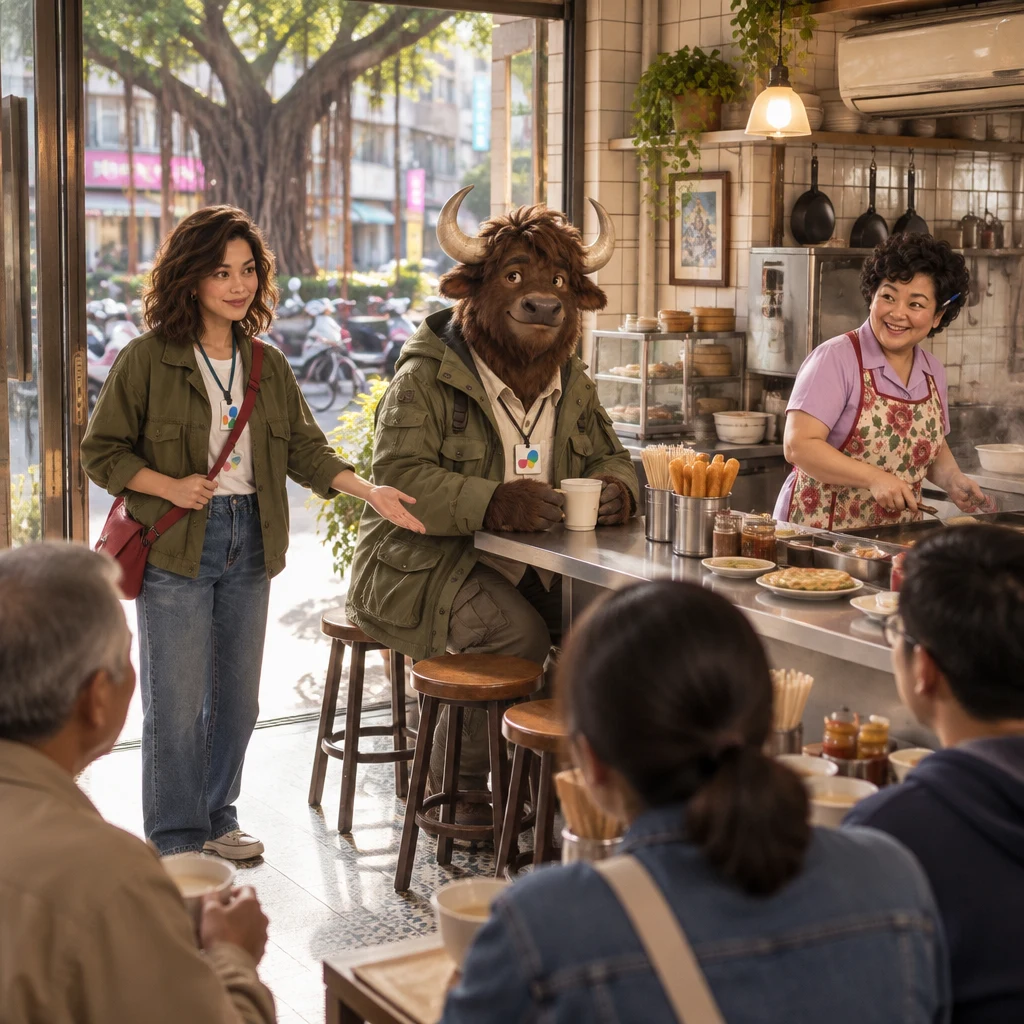
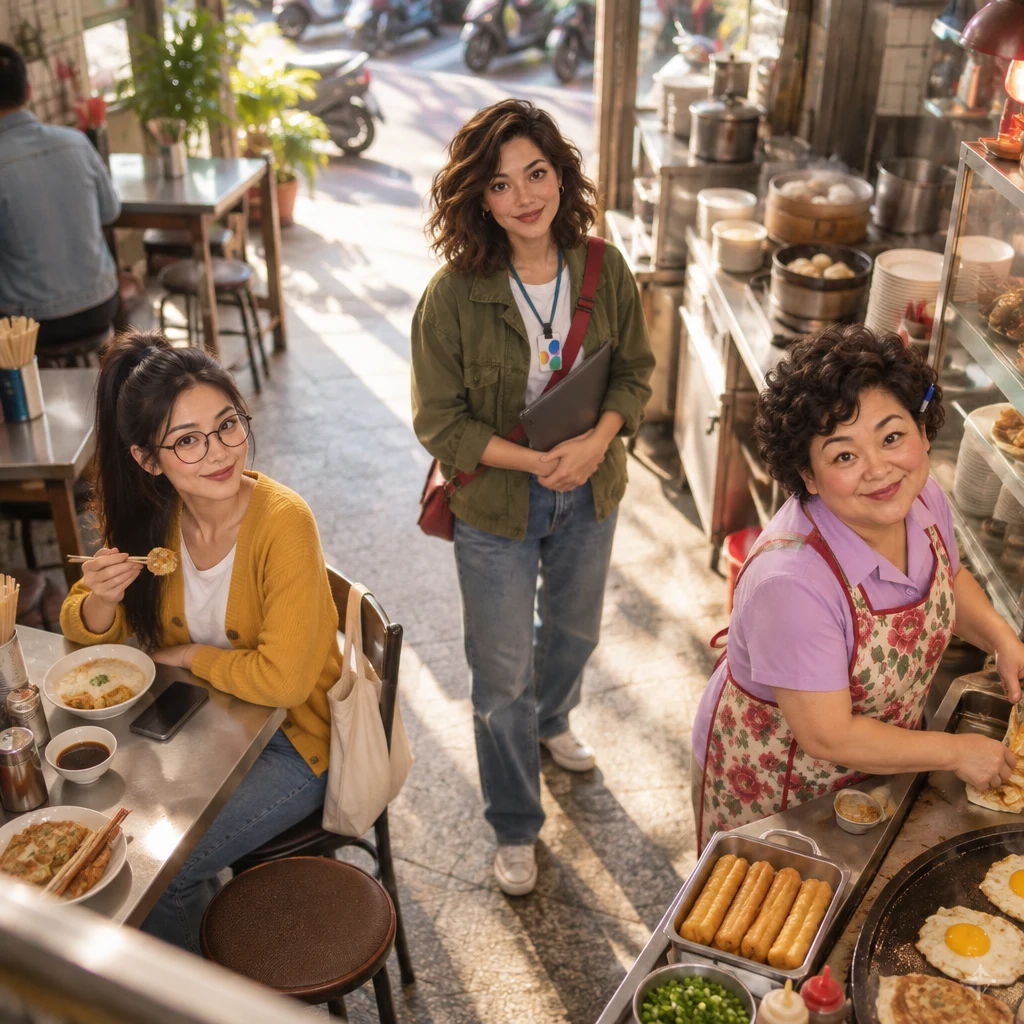
At Banyan Breakfast, Maya has renewed her lease and gathers the neighbors around the counter. The mood is warm, but nobody makes a speech.
A-Li gives a genuine goodbye, then stays for one more egg pancake, his soy milk still unfinished. Auntie Lin takes out the folded slip and searches for her glasses.
Learn — thanks and familiar plans
Learn how to thank a whole group, describe a change, and say you plan to return. These lines can sound personal without becoming formal or dramatic.
Notice how a small question can leave room for something important without naming it yet.
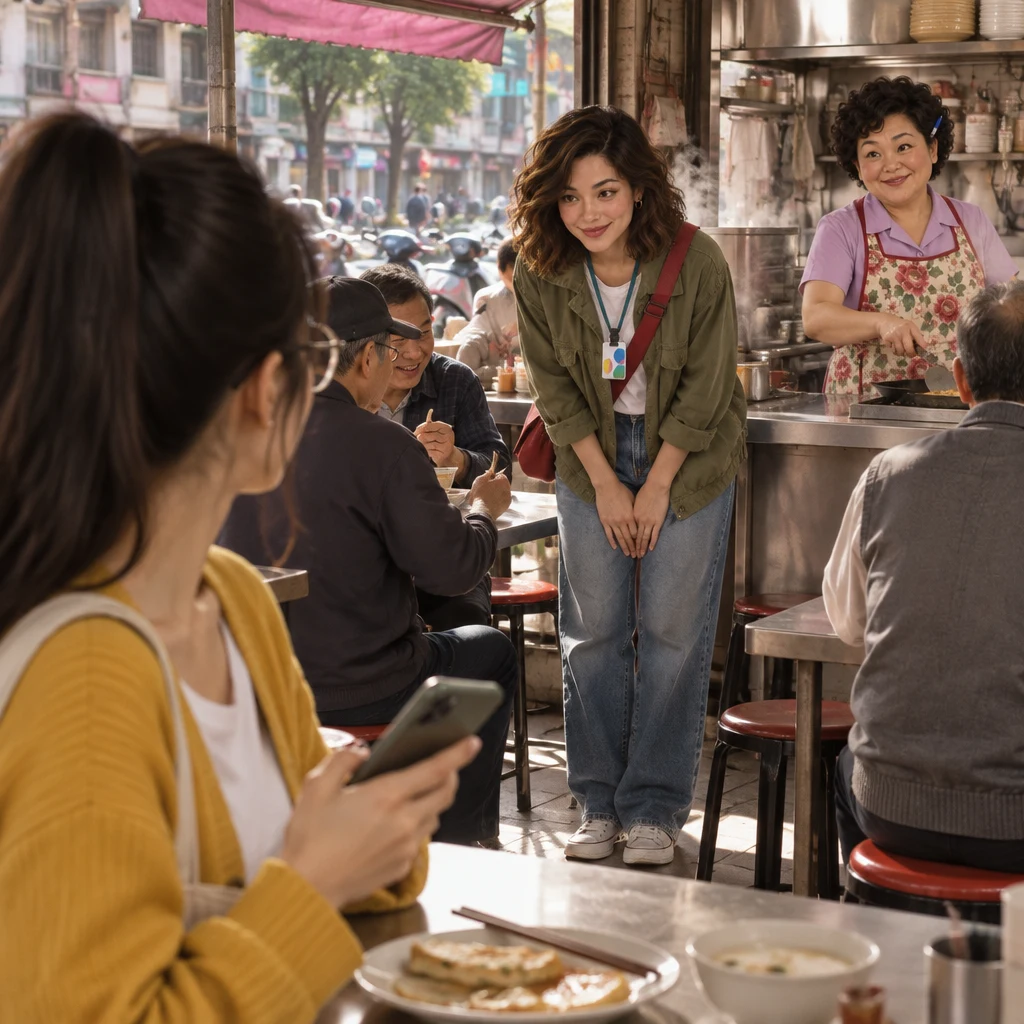
謝謝你們這一年的照顧
Thank you all for looking after me this year.
When to use it: Use this to thank a group for looking after you over a meaningful stretch of time.
你們 addresses more than one person, keeping the thanks directed to the whole group.
Say it: The second 謝 is usually light and neutral in everyday speech.
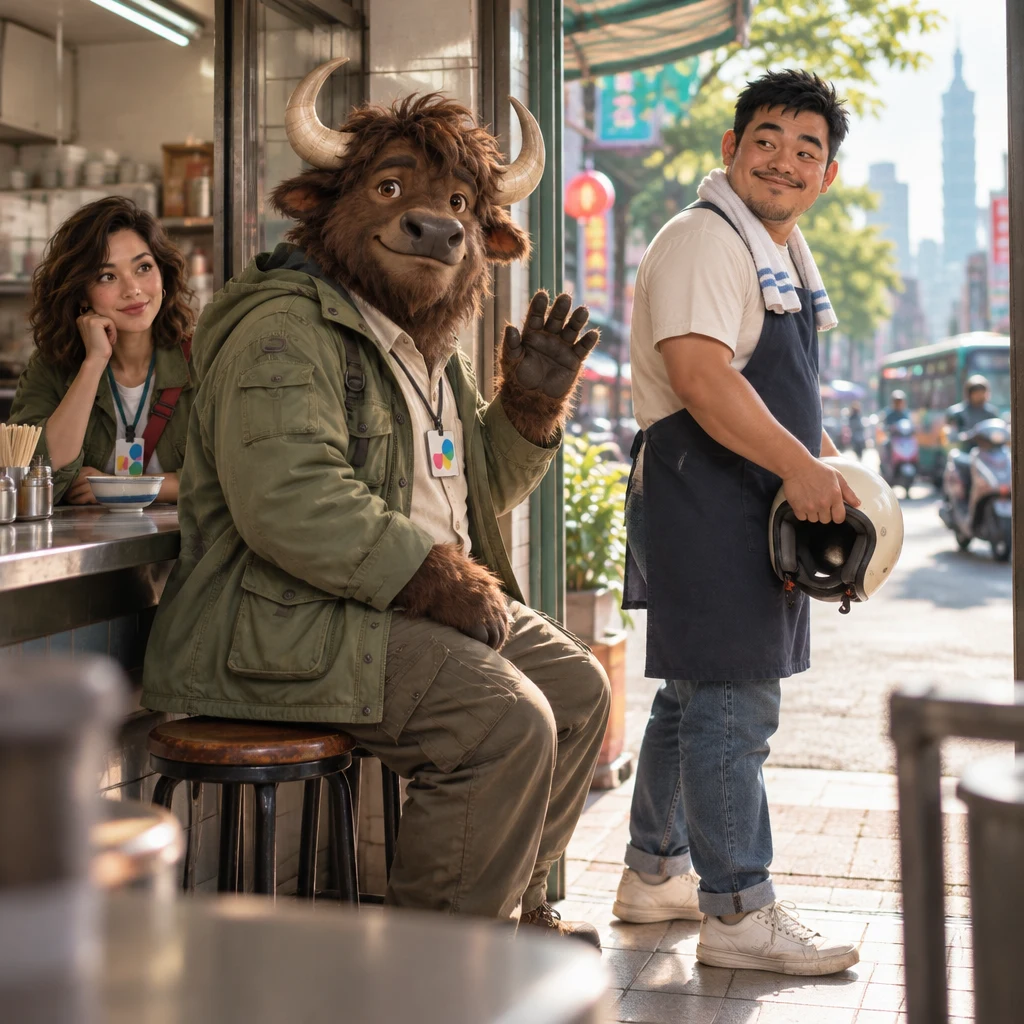
我會常常回來
I'll come back often.
When to use it: Say this when you intend to return regularly to a familiar place or group.
會 can mark an intention or expected future action, while 常常 describes repeated frequency.
Say it: Keep both syllables of 常常 in the second tone.
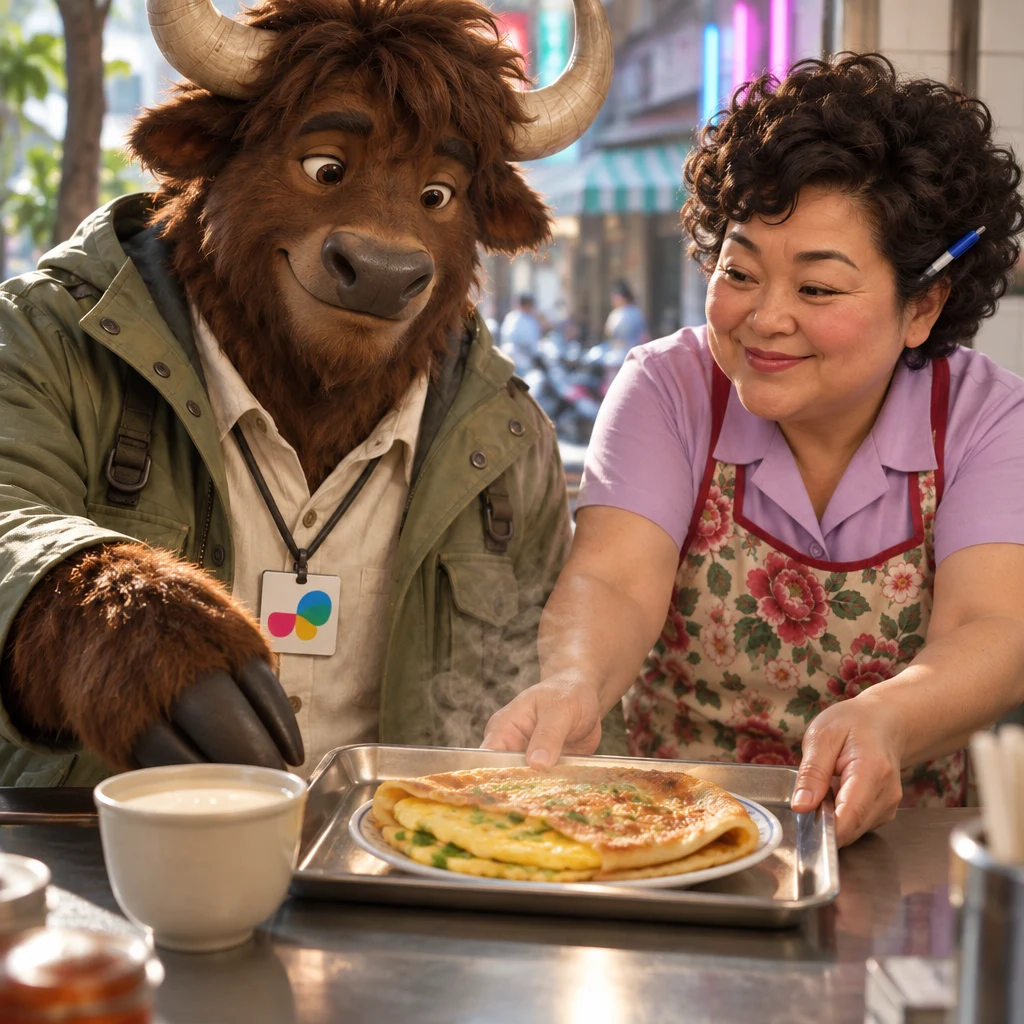
蛋餅我還是要加蛋
I still want egg in my 蛋餅.
When to use it: Use this to insist on your usual order even when the situation feels special.
還是 means “still” here, showing that Maya wants the same familiar choice despite the occasion.
Say it: The final 蛋 has a clear falling tone, unlike the third tone in 餅.
你們沒有變,我變了
You didn't change; I did.
When to use it: Use this contrast when a place feels familiar but you have changed.
變了 presents a change as a new state; the comma contrasts the group with Maya.
Say it: 了 is usually a light, neutral syllable here.
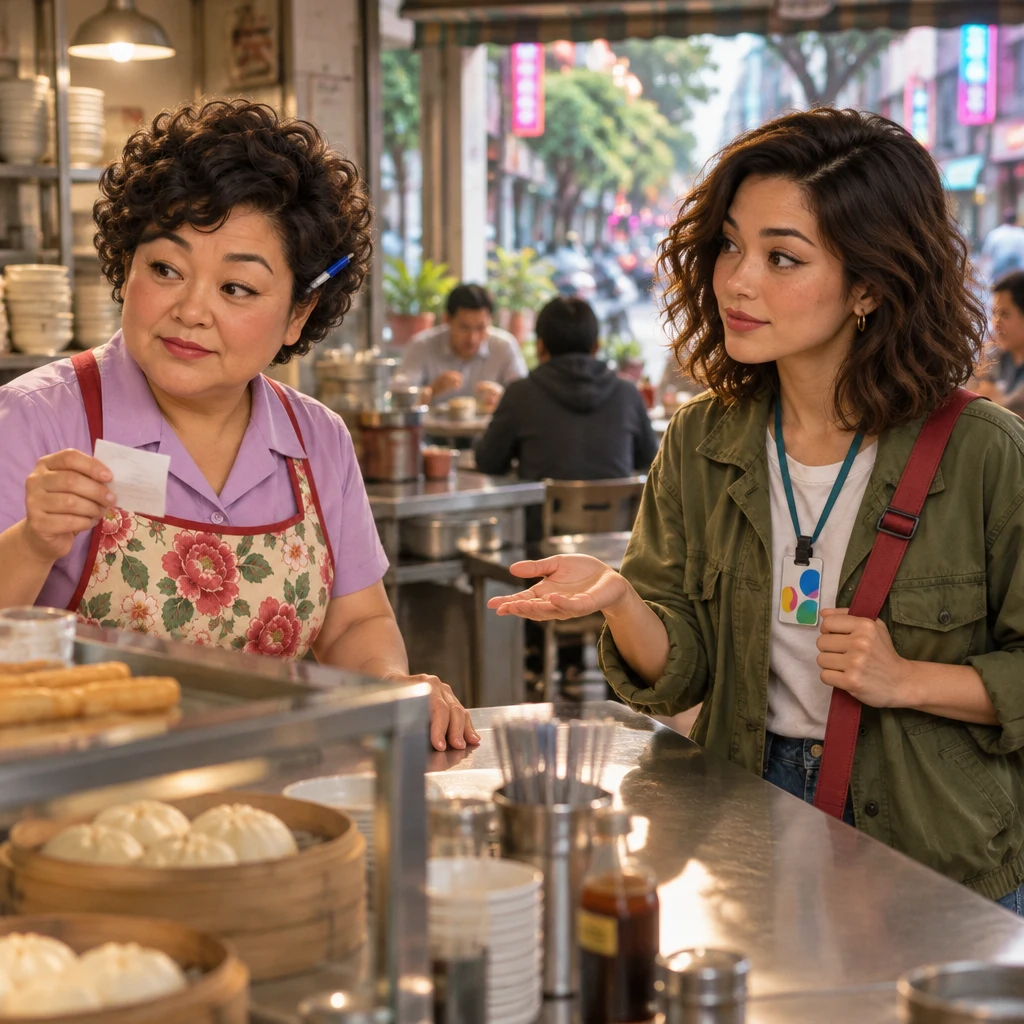
我們是不是漏了什麼?
Did we leave something out?
When to use it: Ask this when everyone senses that one thing may still be missing.
是不是 makes a yes-or-no question, while 什麼 stays in place after 漏了.
Say it: 麼 is usually light and neutral in 什麼.
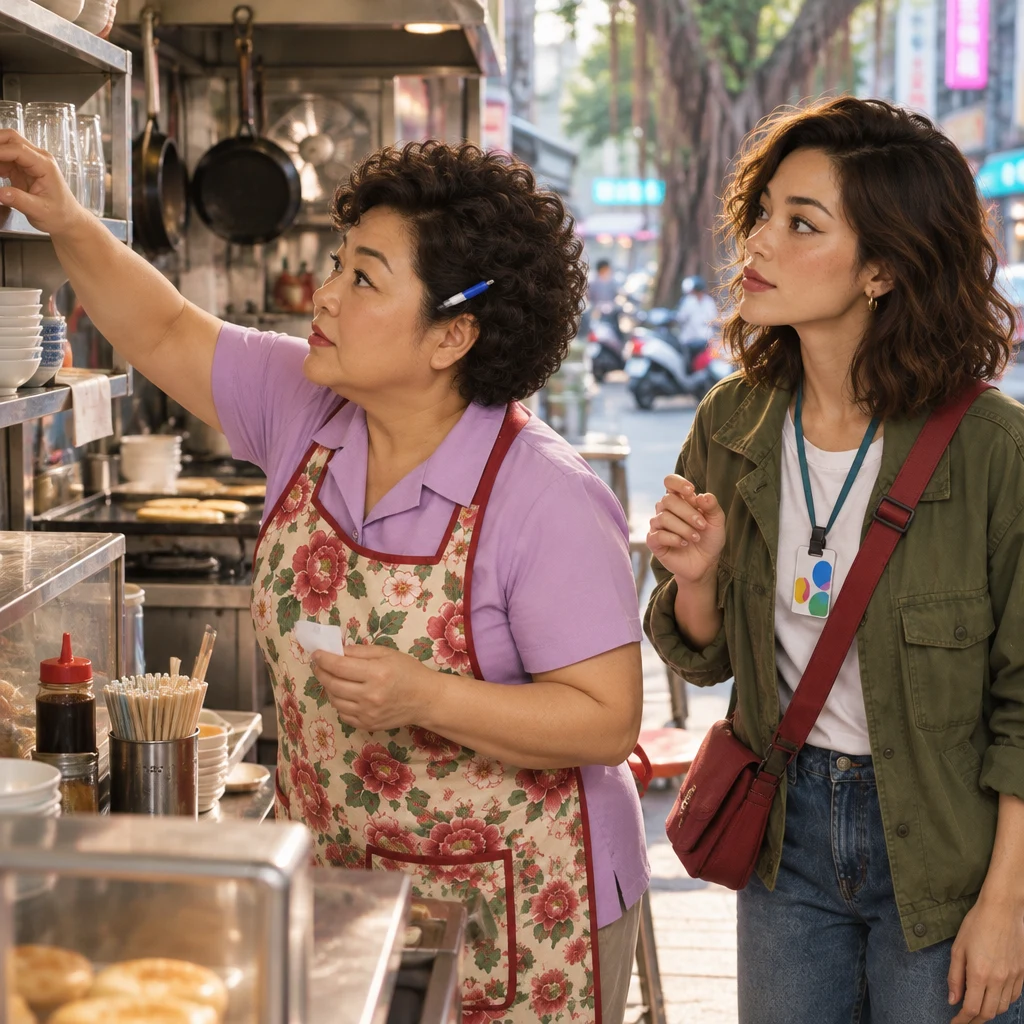
有件事我一直沒問
There's something I never asked.
When to use it: Use this to introduce a question you have been holding back.
有件事 introduces one matter; 沒問 says the asking has not happened.
Say it: In 一直, 一 changes to a falling tone before 直.
Story — one more goodbye
The neighbors gather at Banyan Breakfast after Maya signs her new lease. She thanks them one by one, and A-Li's soy milk is still unfinished.
He says goodbye, then settles in for one more egg pancake. Auntie Lin takes the folded slip from the till and goes looking for her glasses.
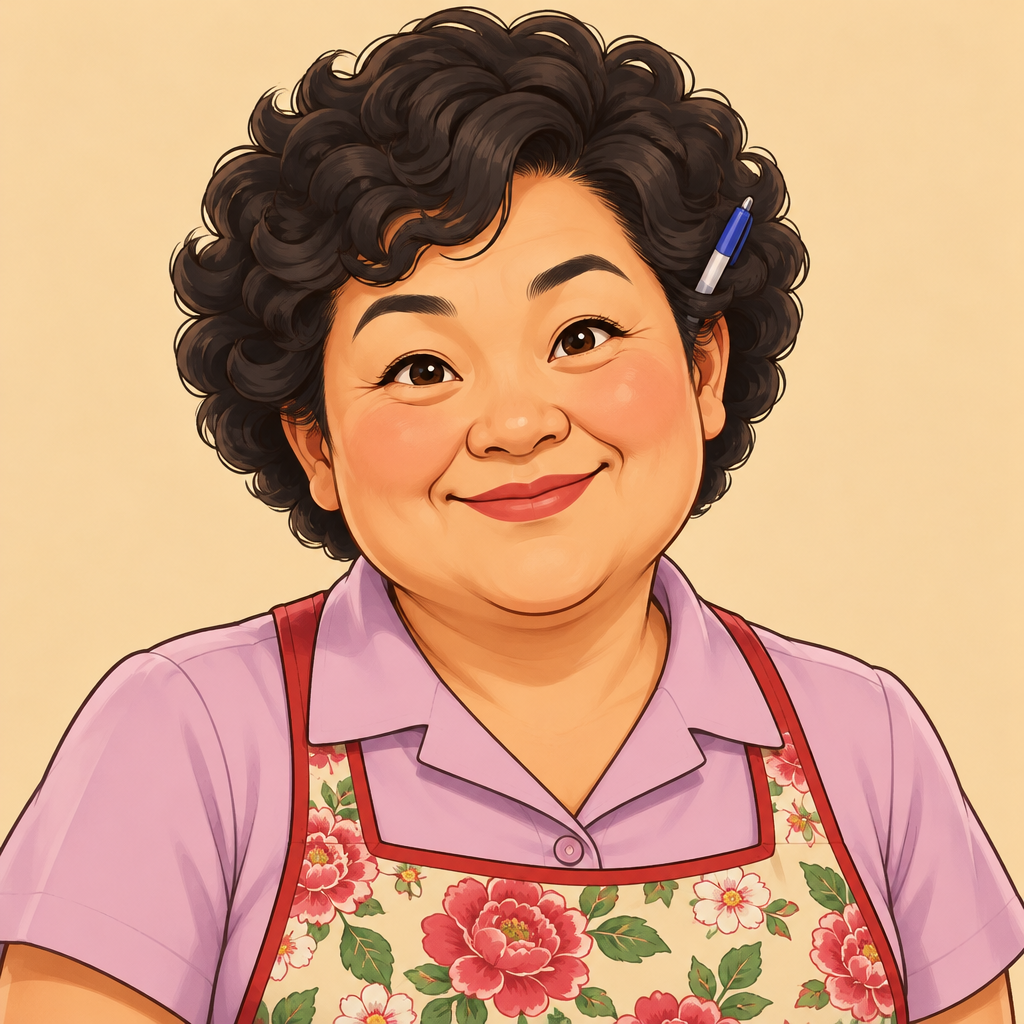 Auntie Lin瑪雅,王先生說新租約已經簽好了。Maya, Mr. Wang says the new lease has been signed.
 Maya我決定留下來。I've decided to stay.
 Yi-Jun那我們就還是常在這裡碰面。Then we'll keep meeting here like usual.
- Auntie Lin今天大家都在,剛好可以好好道謝。Everyone's here today, so it's a good chance to say thanks.
- Maya謝謝你們這一年的照顧。Thank you all for looking after me this year.
- Auntie Lin你也幫了我們很多,別只謝我們。You've helped us a lot too; don't thank only us.
- Maya我會常常回來。I'll come back often.
- Yi-Jun好,那我下次先幫你留位子。Okay, I'll save you a seat next time.
- Maya你們沒有變,我變了。You didn't change; I did.
- Auntie Lin你的口味倒沒變,還是要加蛋?Your taste hasn't changed, though. Still want egg?
- Maya蛋餅我還是要加蛋。I still want egg in my 蛋餅.
 A-Li等一下,我好像該走了。Wait, I think I should go.
- Auntie Lin阿犛,你現在真的要走了嗎?A-Li, are you really leaving now?
- A-Li我得走了,明天見。I have to go. See you tomorrow.
- Maya明天見。See you tomorrow.
- A-Li欸,我再坐一下,還想點一份蛋餅。Oh, I'll sit a little longer. I still want to order an egg pancake.
- Auntie Lin好喔,照舊加蛋。Sure, egg as usual.
- Maya我們是不是漏了什麼?Did we leave something out?
- Yi-Jun你是說櫃檯裡那張摺起來的紙嗎?Do you mean that folded paper in the counter?
- Auntie Lin我先拿出來,眼鏡放哪裡了?我去找一下。I'll take it out first. Where did I put my glasses? I'll go look.
- Maya有件事我一直沒問。There's something I never asked.
- A-Li等林阿姨找到眼鏡再說吧。Let's wait until Auntie Lin finds her glasses.
Practice — keep the words close
Try ten short activities to recall the new lines and choose what fits the moment. You will also revisit a couple of useful phrases from earlier lessons.
Build each line from word tiles, then listen for its meaning in the scene.
0 of 10 done
What does it mean?
What does it mean?
謝謝你們這一年的照顧
What do you say?
What do you say?
You are leaving the neighborhood but plan to return regularly. Tell the group.
Build the line
Build the line
I still want egg in my 蛋餅.
Tap the words in order.
Fill the gap
Fill the gap
There's something I never asked.
有件事我一直沒____
Match the pairs
Traditional Chinese
謝謝你們這一年的照顧Drop the English here我會常常回來Drop the English here你們沒有變,我變了Drop the English here我們是不是漏了什麼?Drop the English hereEnglish
What did you hear?
What did you hear?
Pick the reply
Auntie Lin says:
Pick the reply
這一年大家都照顧你很多。
Everyone looked after you a lot this year.
And you reply with:
Fill the gap
Fill the gap
Did we leave something out?
我們是不是____了什麼?
What do you say?
What do you say?
After renewing your lease, tell your friends that you have decided to stay.
What do you say?
What do you say?
You are leaving the shop and expect to see everyone tomorrow. Say goodbye.
Say it — your words for the neighbors
You are Maya at the counter, speaking to the neighbors who have become familiar over the year. Listen to each cue, then answer in your own voice.
Keep each response natural and brief, just as you would in a real conversation.
- Maya joins the group after signing her new lease.
- Auntie Lin這一年大家都很照顧你。Everyone has looked after you a lot this year.
- Maya (you)Thank everyone for looking after you this year.
Thank everyone for looking after you this year.
謝謝你們這一年的照顧
Thank you all for looking after me this year.
0 of 6 said
Recap — what you can say now
| Traditional Chinese | English | Play |
|---|---|---|
| 謝謝你們這一年的照顧 | Thank you all for looking after me this year. | |
| 我會常常回來 | I'll come back often. | |
| 蛋餅我還是要加蛋 | I still want egg in my 蛋餅. | |
| 你們沒有變,我變了 | You didn't change; I did. | |
| 我們是不是漏了什麼? | Did we leave something out? | |
| 有件事我一直沒問 | There's something I never asked. |
Save your progress — it’s free
Keep your place in the course and see which lines you’ve learned.
Want the next lesson in your inbox?
Get the next lesson by email, one a day.
Join the newsletterDaily lesson emails are coming soon. Newsletter subscribers get them first.
Keep practicing with Yak Cards
Today's lines for thanking people and staying in touch are in Yak Cards.
Review the expressions you want to keep using, then try them with someone you know.
Open Yak Cards