
Hello, how are you in Traditional Chinese
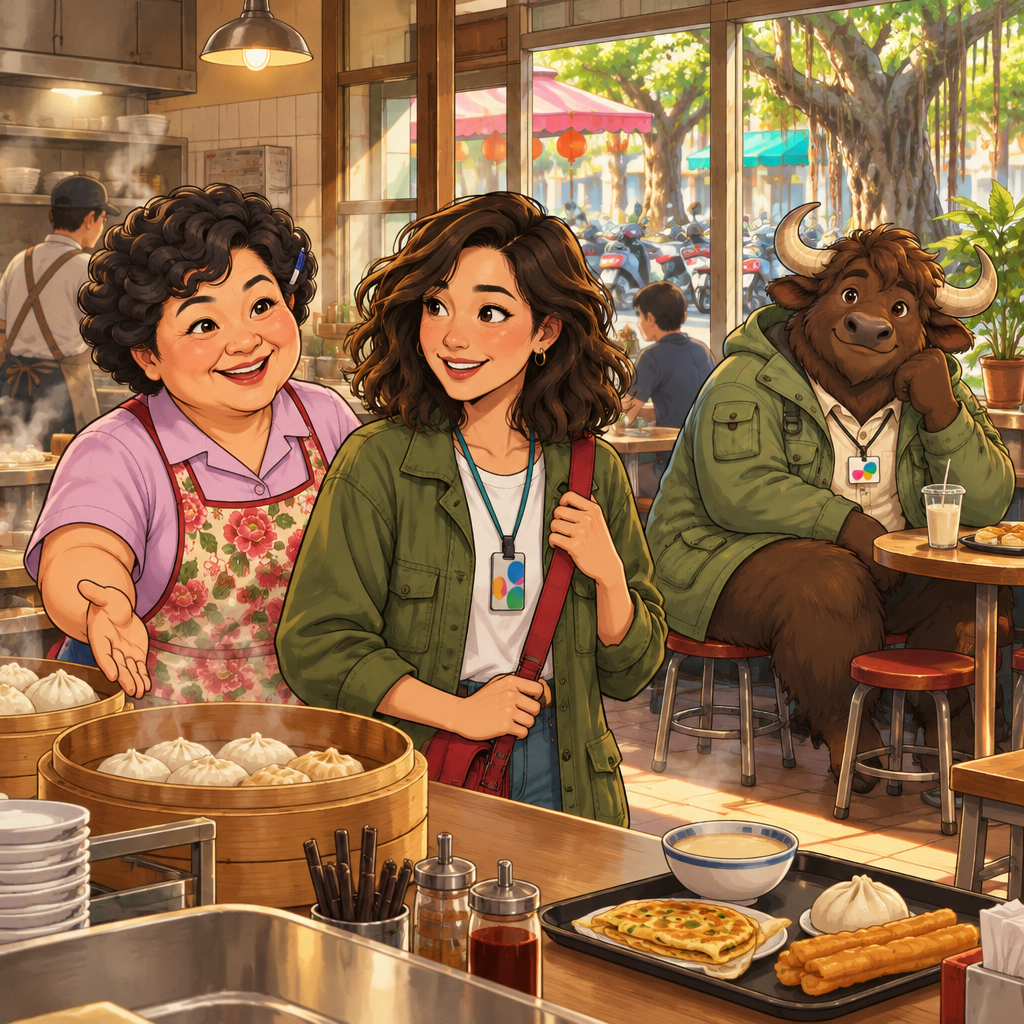
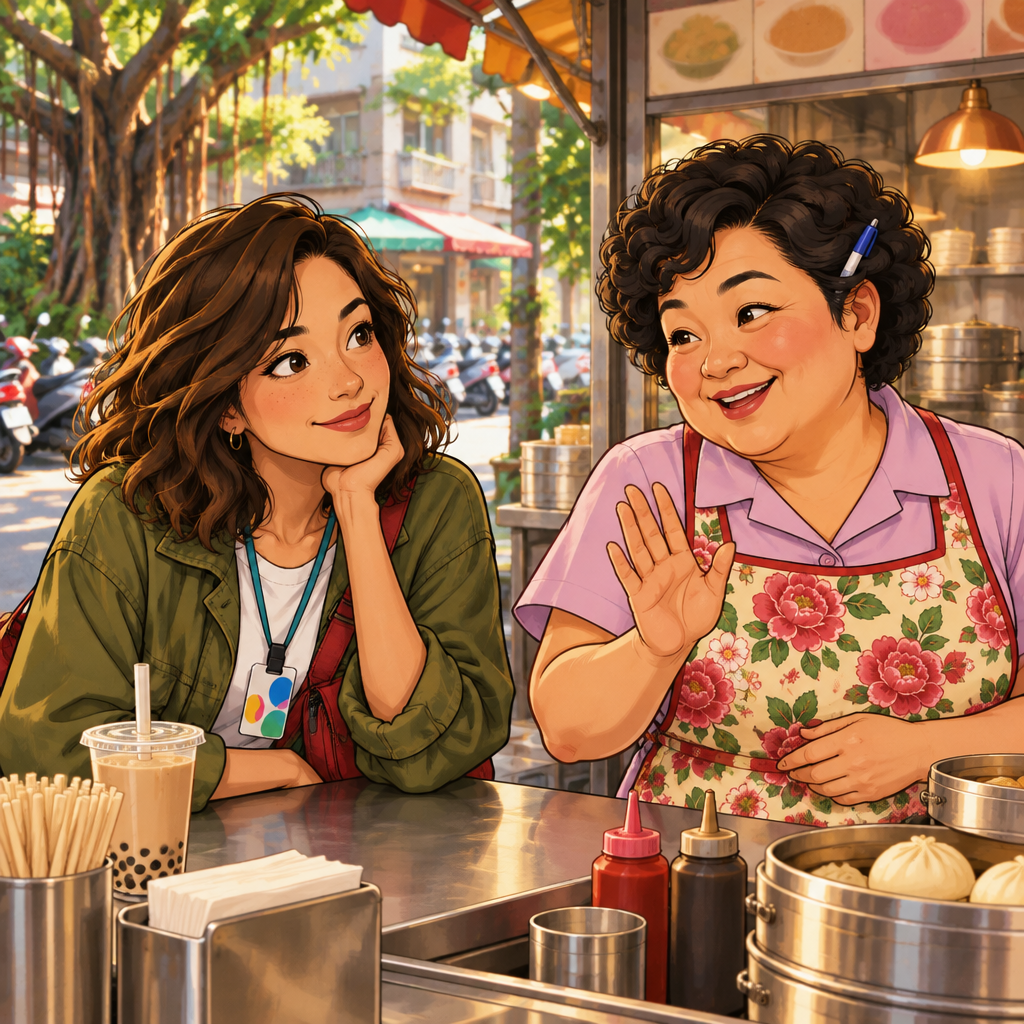
On your first morning in Taipei, Auntie Lin calls you 美女 before you can speak. A polite yak at the back table greets you as if he knows your order.
Learn simple greetings for hello, morning, afternoon, and asking how someone is. Then answer warmly and politely.
Listen for the changing sound in 你好. You will meet the same neighbors at breakfast, with A-Li's soy milk still unfinished.
By the end of this lesson
Greet someone, say good morning or good afternoon, ask how they are, and answer politely.
- 你好Hello.
- 您好Hello, politely.
- 早安Good morning.
- 午安Good afternoon.
- 你好嗎?How are you?
- 我很好,謝謝I'm good, thanks.
Scene — a first morning
Morning light reaches the counter at Banyan Breakfast in Da'an. Auntie Lin welcomes Maya, while A-Li sits at the back with his soy milk beside him.
He knows the shop well, but Maya has only just arrived. The greetings are ordinary; A-Li's unfinished drink is not a mystery to solve.
Learn — greetings for the day
Here are six greetings for meeting people at different times of day. Listen to each line, then say it out loud.
Notice the sound change in 你好. 您好 is a polite greeting and keeps its tones unchanged.
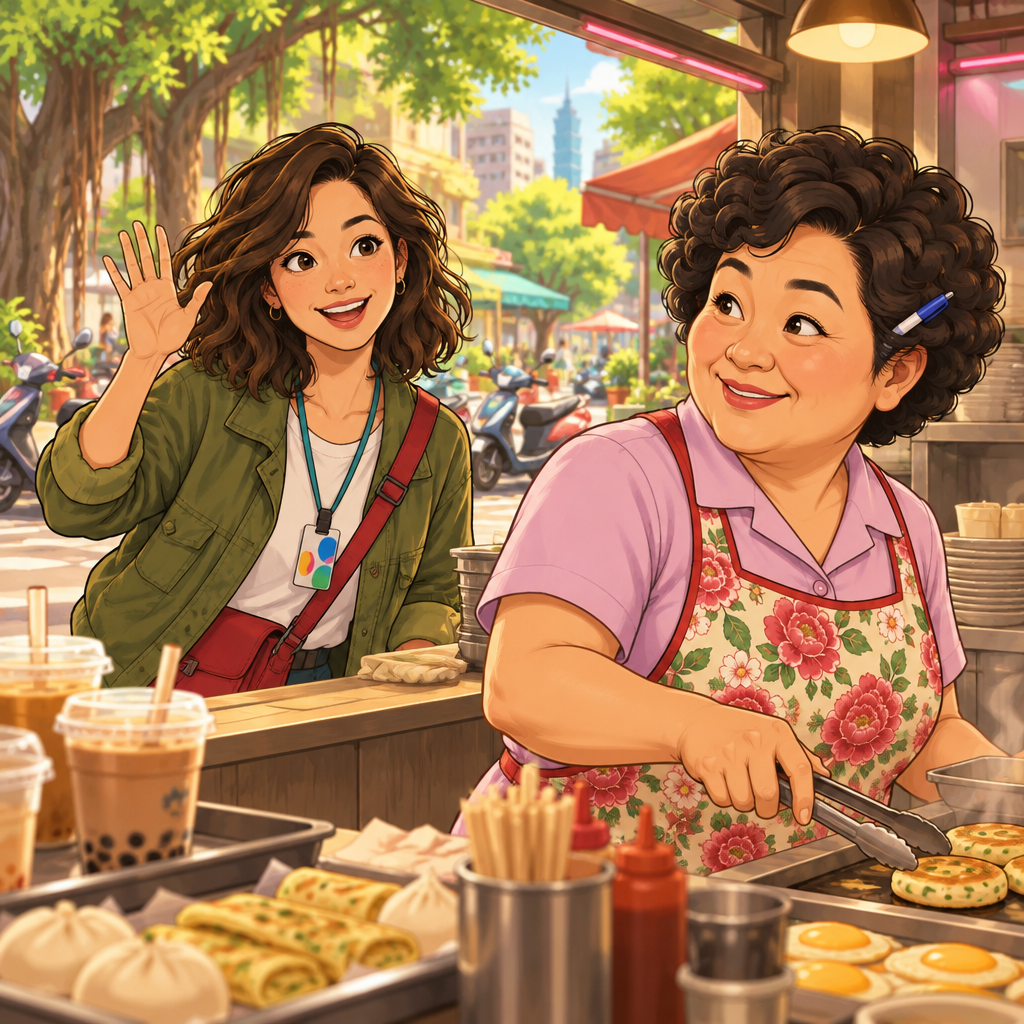
你好
Hello.
When to use it: Use this casual hello with friends or people you know.
Say it: The first third tone rises before the second third tone.
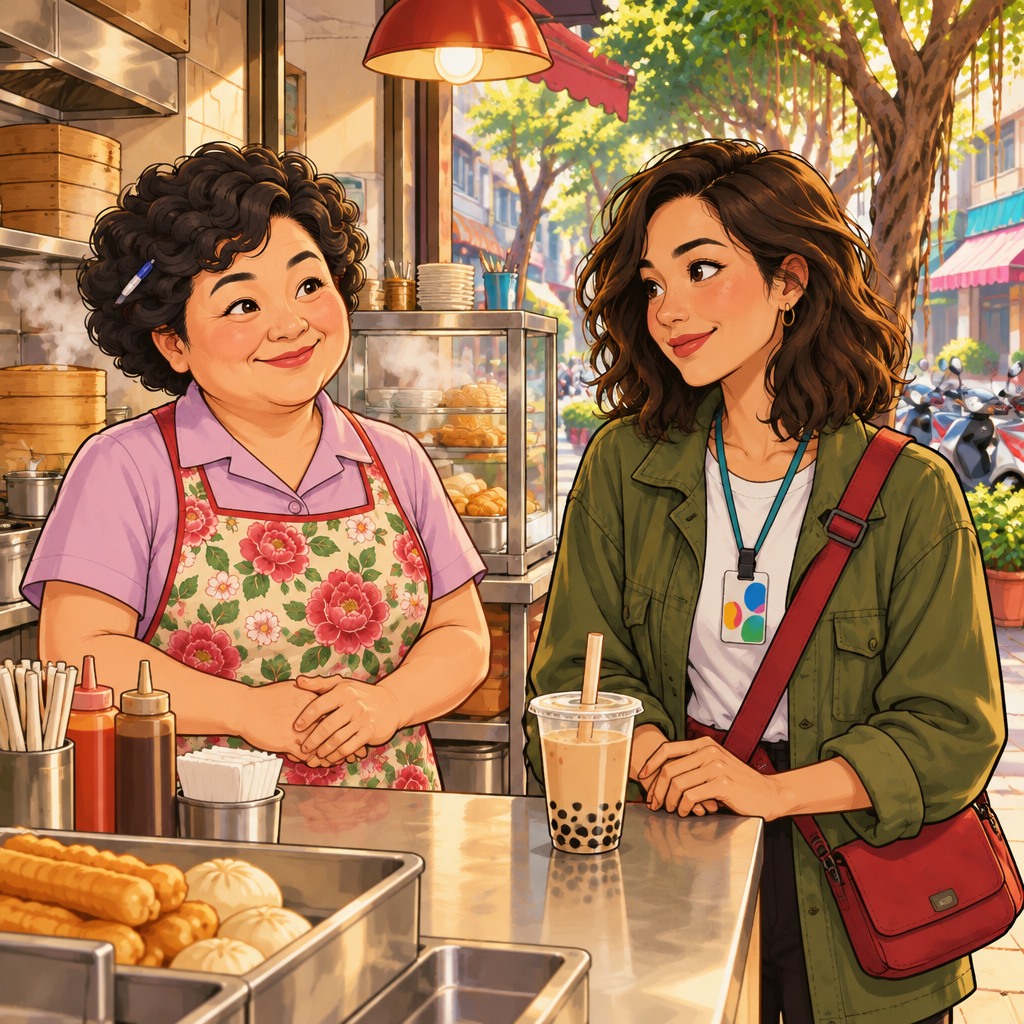
您好
Hello, politely.
When to use it: Use this polite hello with someone you are meeting or addressing formally.
Say it: Unlike 你好, 您好 does not change its tones.

早安
Good morning.
When to use it: Use this greeting in the morning.
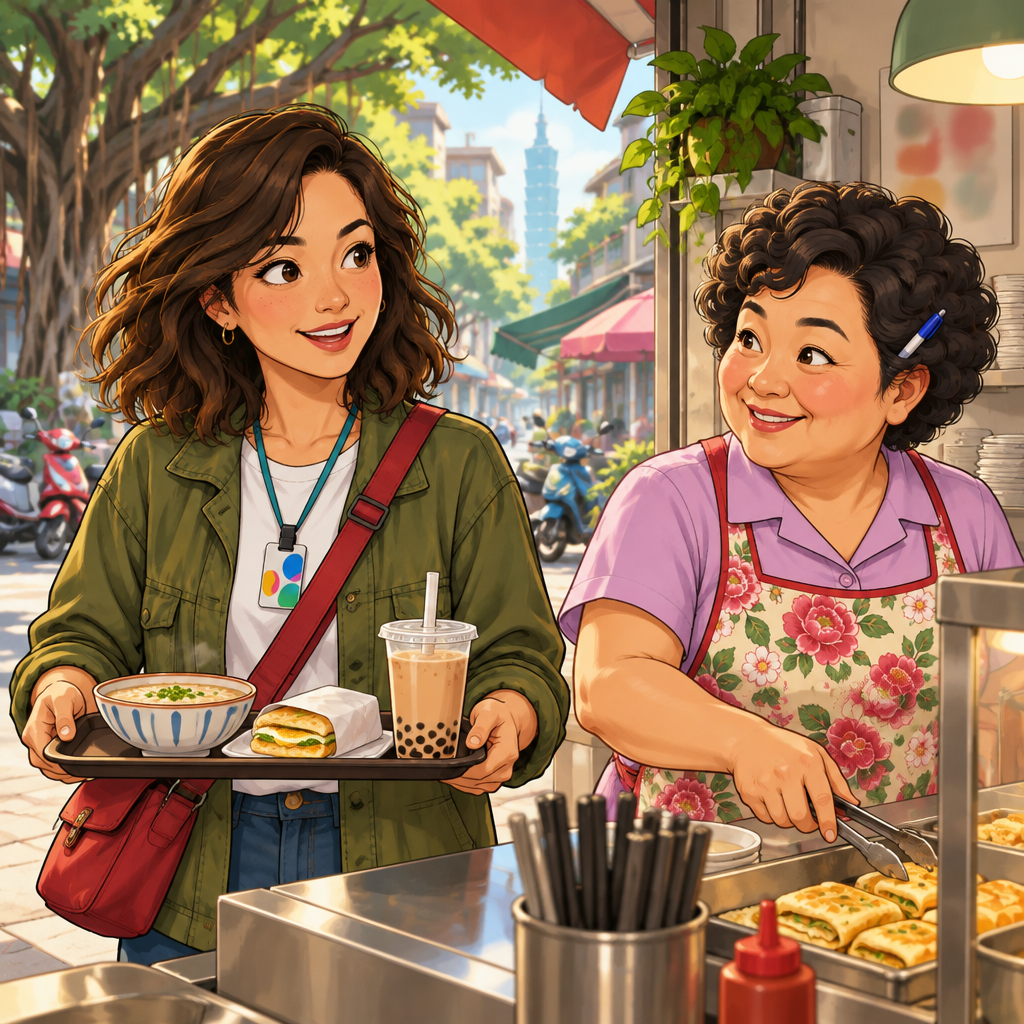
午安
Good afternoon.
When to use it: Use this greeting in the afternoon.

你好嗎?
How are you?
When to use it: Ask this after greeting someone you know.
我很好,謝謝
I'm good, thanks.
When to use it: Say this when someone asks how you are.
Story — a greeting at breakfast
Listen to Maya's first greetings at Banyan Breakfast. Auntie Lin welcomes her, and A-Li is already at the back table.
Later, Maya returns to the shop in the afternoon.
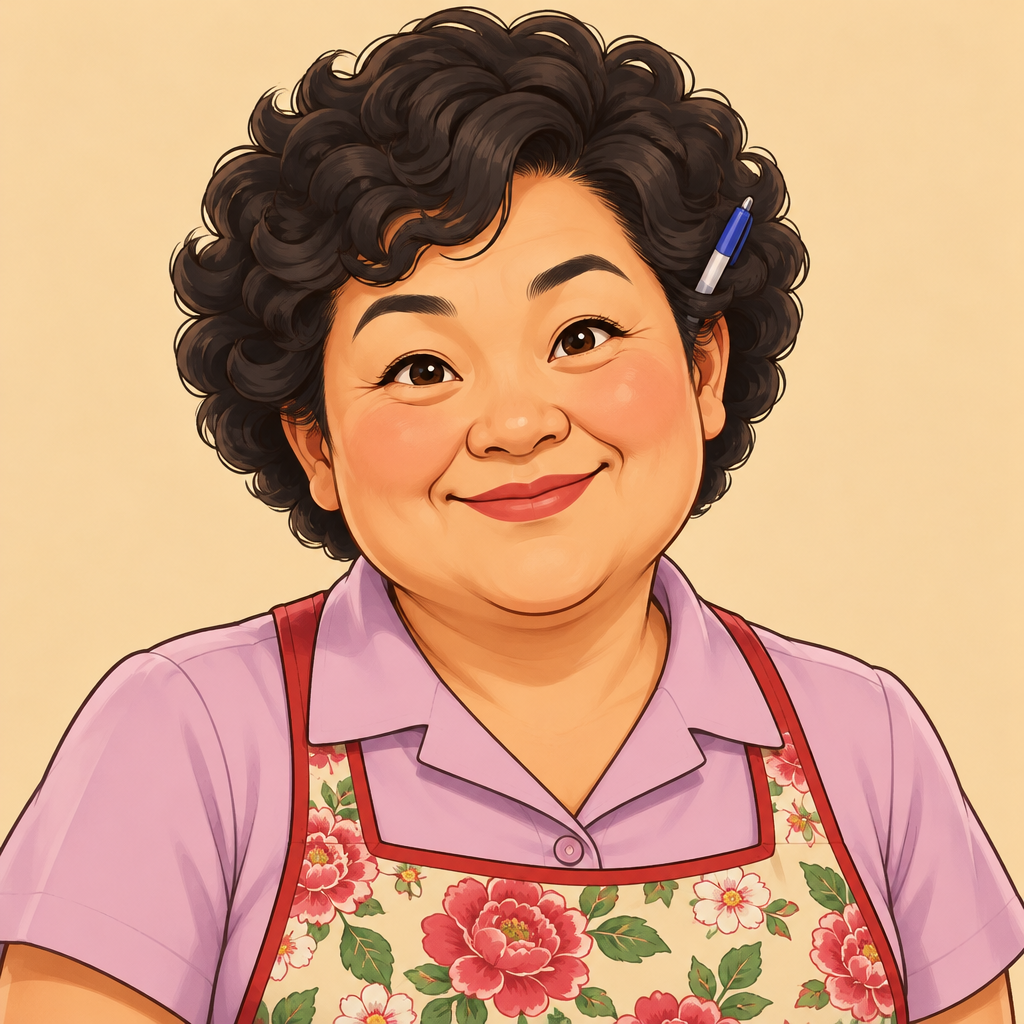 Auntie Lin美女,早安!Good morning, beautiful!
 Maya您好。Hello.
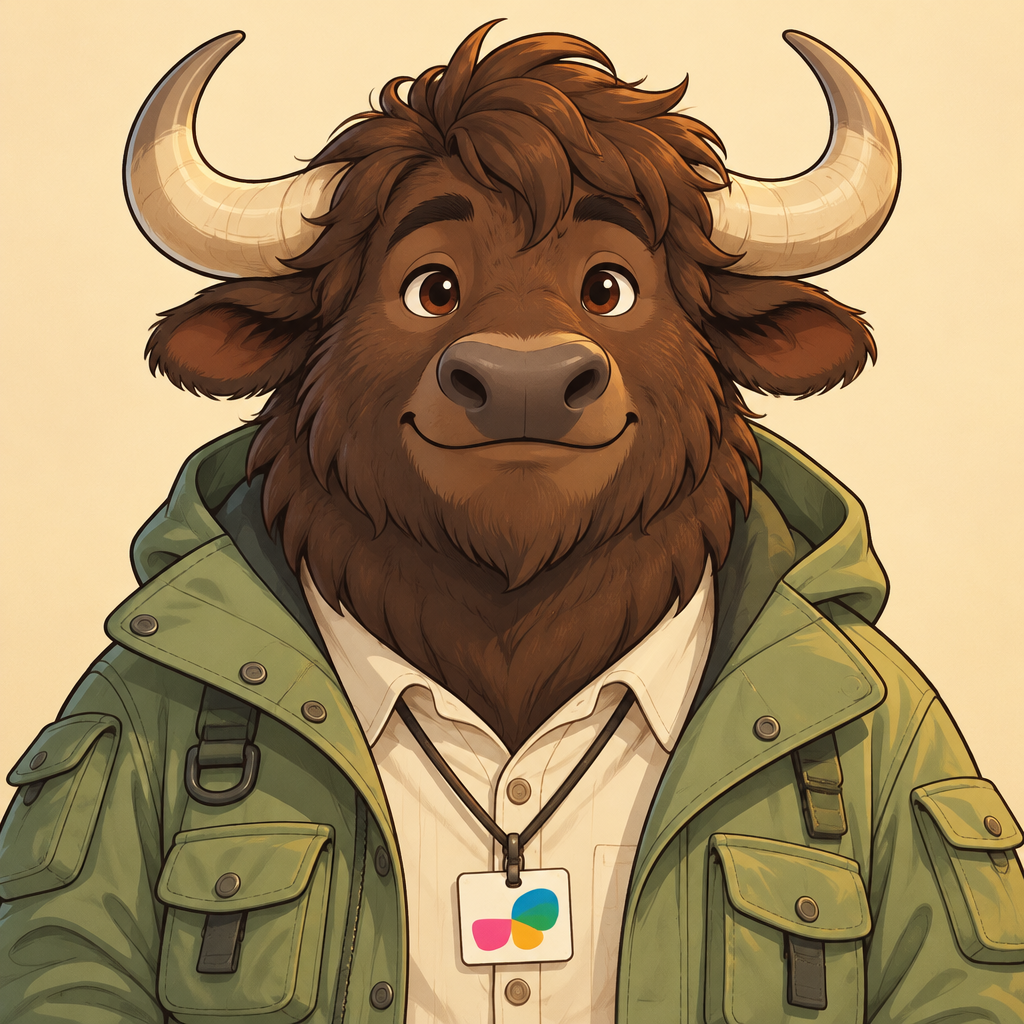 A-Li早安。Good morning.
- Maya你好。Hello.
- Auntie Lin你好嗎?How are you?
- Maya我很好,謝謝I'm good, thanks.
- Later that afternoon, Maya returns to the shop.
- Auntie Lin午安!Good afternoon!
- A-Li豆漿還沒喝完。The soy milk still isn't finished.
Practice — say hello
Try eight quick exercises to greet people and ask how they are. Choose the line that fits each small moment.
After each answer, check the explanation and try saying the line again.
0 of 8 done
What does it mean?
What does it mean?
你好
What do you say?
What do you say?
You meet Auntie Lin for the first time in the morning. Greet her politely.
Build the line
Build the line
I'm good, thanks.
,
Tap the words in order.
Fill the gap
Fill the gap
How are you?
你好____?
Match the pairs
Traditional Chinese
你好Drop the English here您好Drop the English here早安Drop the English here午安Drop the English hereEnglish
What did you hear?
What did you hear?
Pick the reply
Auntie Lin says:
Pick the reply
你好嗎?
How are you?
And you reply with:
What do you say?
What do you say?
You arrive at the shop in the afternoon. Greet Auntie Lin.
Say it — your greetings
You play Maya and speak to the people at Banyan Breakfast. Listen to each cue, then say the greeting or answer out loud.
Tap the microphone to speak. You can replay the other person's line before your turn.
- Maya greets Auntie Lin on her first morning at the shop.
- Maya (you)Greet Auntie Lin politely.
Greet Auntie Lin politely.
您好
Hello, politely.
0 of 4 said
Recap — what you can say now
| Traditional Chinese | English | Play |
|---|---|---|
| 你好 | Hello. | |
| 您好 | Hello, politely. | |
| 早安 | Good morning. | |
| 午安 | Good afternoon. | |
| 你好嗎? | How are you? | |
| 我很好,謝謝 | I'm good, thanks. |
Save your progress — it’s free
Keep your place in the course and see which lines you’ve learned.
Want the next lesson in your inbox?
Get the next lesson by email, one a day.
Join the newsletterDaily lesson emails are coming soon. Newsletter subscribers get them first.
Keep practicing with Yak Cards
Today's greetings are in Yak Cards with more useful lines for meeting people.
Review a few greeting cards each day so the words come easily.
Open Yak Cards