Traditional Chinese - Public Transport

Lesson 108 of 152

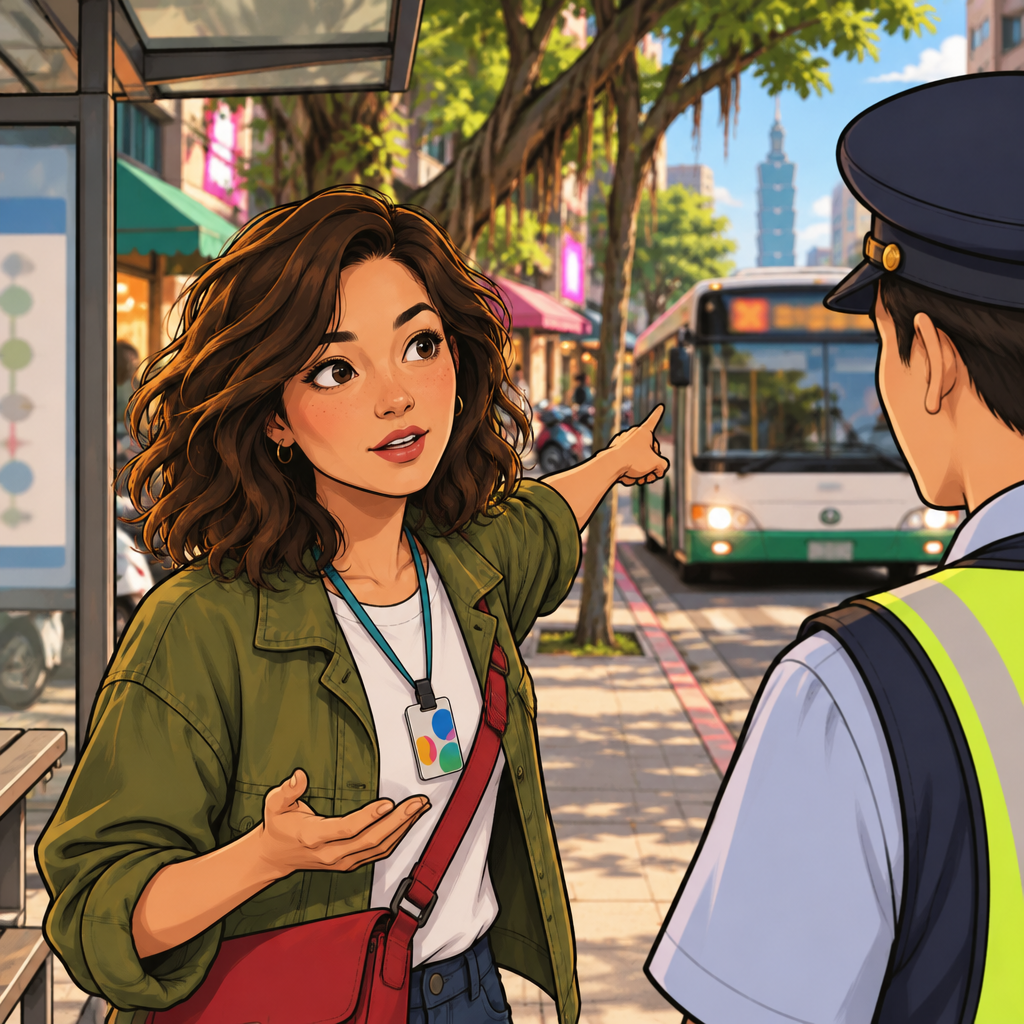
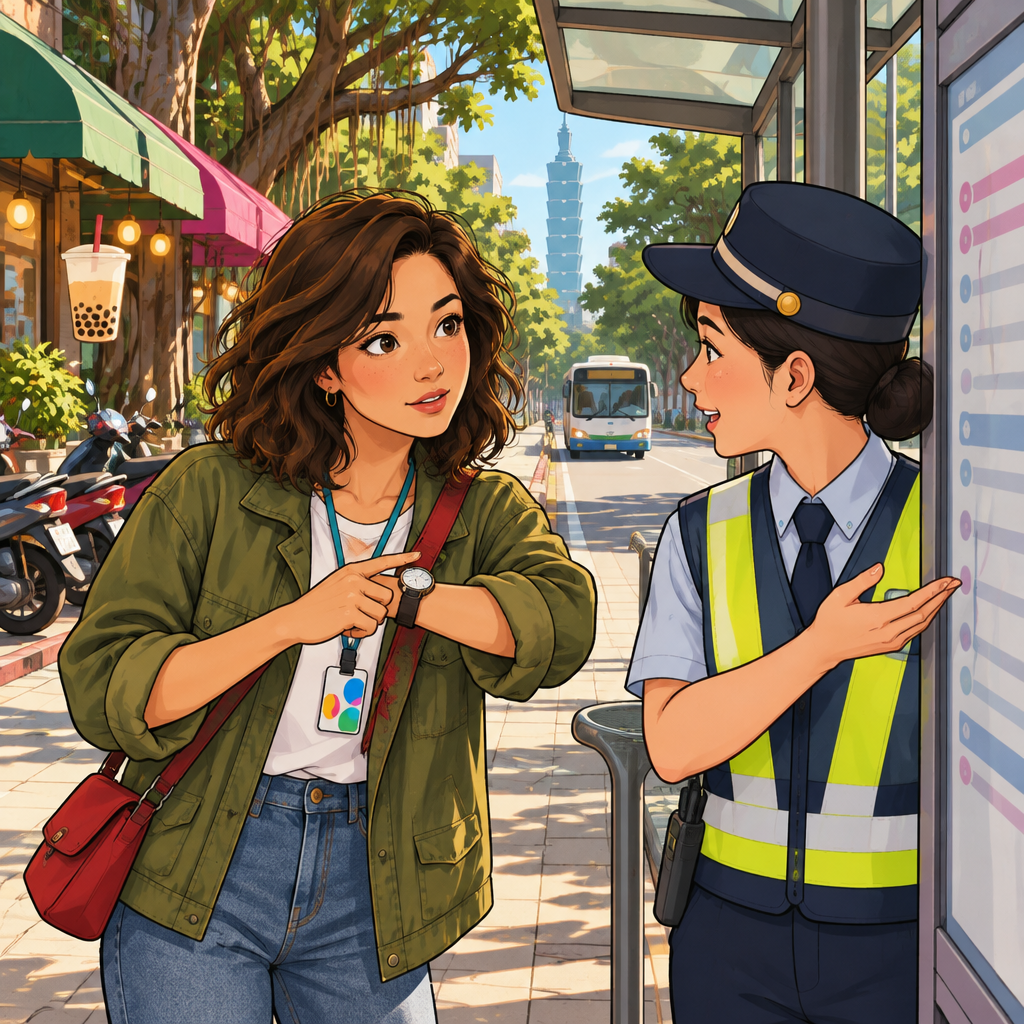
A traveler checks a bus schedule at a busy Taiwan bus stop, with Traditional Chinese signs nearby. The scene introduces Taiwan Mandarin phrases for asking about public transport routes and tickets.

Goal: Ask the right question, find the right ride.

Free traditional Chinese lessons with Taiwan Mandarin audio and speaking practice.

Buses, trains, platforms, tickets… public transport can feel like a tiny adventure with a schedule. Good news: a few friendly questions can save you a lot of wandering.

Level A2: In this lesson, you’ll practice asking which bus or train to take, where to get off, how many stops to ride, and how much a ticket costs. These phrases are especially useful around Taiwan’s bus stops, train stations, MRT platforms, and ticket windows. Tiny Yak Yacker travel tip: when in doubt, ask early—your future self at the correct platform will thank you.

After this lesson you'll be able to:

  • Ask which vehicle goes to a destination with 請問,去___要搭哪一班公車? (Qǐngwèn, qù ___ yào dā nǎ yì bān gōngchē?) and 請問,這班火車會到___嗎? (Qǐngwèn, zhè bān huǒchē huì dào ___ ma?)
  • Check stops, platforms, and transfers using 我應該在哪裡下車? (Wǒ yīnggāi zài nǎlǐ xiàchē?), 去___要到哪個月台? (Qù ___ yào dào nǎge yuètái?), and 需要轉車嗎? (Xūyào zhuǎnchē ma?)
  • Buy or ask about tickets with 請問,到___的票多少錢? (Qǐngwèn, dào ___ de piào duōshǎo qián?) and 我要一張到___的票,謝謝。 (Wǒ yào yì zhāng dào ___ de piào, xièxie.)
  • Talk about departure, arrival, and delays in simple A2 travel situations.
A bright train station in Taiwan with platforms, ticket machines, and Traditional Chinese departure boards. The image supports a Taiwan Mandarin lesson on buses, trains, transfers, and arrival times.

Ready? Let's go!

When you tap play on phrases, we track your progress through this lesson.

1. Reading + Listening Practice

Hear core phrases, repeat aloud.

請問,去___要搭哪一班公車?

Qǐngwèn, qù ___ yào dā nǎ yì bān gōngchē?

Which bus goes to ___?

Meaning: 請問,去___要搭哪一班公車? (Qǐngwèn, qù ___ yào dā nǎ yì bān gōngchē?) — Which bus goes to ___?

When to use: Use this at a bus stop or visitor center when you need to know which city bus to take. In Taiwan, 公車 means a local or city bus.

Tip: Don’t use 搭 for walking directions; 搭 is for taking a vehicle.

請問,去故宮要搭哪一班公車?

Qǐngwèn, qù Gùgōng yào dā nǎ yì bān gōngchē?

Excuse me, which bus goes to the National Palace Museum?
請問,去台北車站要搭哪一班公車?

Qǐngwèn, qù Táiběi Chēzhàn yào dā nǎ yì bān gōngchē?

Excuse me, which bus goes to Taipei Main Station?

請問,這班火車會到___嗎?

Qǐngwèn, zhè bān huǒchē huì dào ___ ma?

Does this train go to ___?

Meaning: 請問,這班火車會到___嗎? (Qǐngwèn, zhè bān huǒchē huì dào ___ ma?) — Does this train go to ___?

When to use: Use this at a train station or platform to confirm the train reaches your destination.

請問,這班火車會到花蓮嗎?

Qǐngwèn, zhè bān huǒchē huì dào Huālián ma?

Excuse me, does this train go to Hualien?
請問,這班火車會到台南嗎?

Qǐngwèn, zhè bān huǒchē huì dào Táinán ma?

Excuse me, does this train go to Tainan?

我應該在哪裡下車?

Wǒ yīnggāi zài nǎlǐ xiàchē?

Where should I get off?

Meaning: 我應該在哪裡下車? (Wǒ yīnggāi zài nǎlǐ xiàchē?) — Where should I get off?

When to use: Use this on buses, trains, or the MRT when you are not sure which stop is best.

Tip: 下車 can mean getting off a bus, train, MRT, or taxi—not only a car.

去夜市的話,我應該在哪裡下車?

Qù yèshì de huà, wǒ yīnggāi zài nǎlǐ xiàchē?

If I’m going to the night market, where should I get off?
我應該在哪裡下車?

Wǒ yīnggāi zài nǎlǐ xiàchē?

Where should I get off?

下一站是哪裡

Xià yí zhàn shì nǎlǐ?

What is the next stop?

Meaning: 下一站是哪裡? (Xià yí zhàn shì nǎlǐ?) — What is the next stop?

When to use: Use this when you want to check the next stop while riding public transport.

不好意思,下一站是哪裡?

Bù hǎoyìsi, xià yí zhàn shì nǎlǐ?

Excuse me, what is the next stop?
下一站是哪裡?是西門嗎?

Xià yí zhàn shì nǎlǐ? Shì Xīmén ma?

What is the next stop? Is it Ximen?

請問,___幾點出發?

Qǐngwèn, ___ jǐ diǎn chūfā?

What time does the ___ leave?

Meaning: 請問,___幾點出發? (Qǐngwèn, ___ jǐ diǎn chūfā?) — What time does the ___ leave?

When to use: Use this for buses, trains, ferries, or any scheduled departure.

請問,這班車幾點出發?

Qǐngwèn, zhè bān chē jǐ diǎn chūfā?

Excuse me, what time does this vehicle leave?
請問,去台中的火車幾點出發?

Qǐngwèn, qù Táizhōng de huǒchē jǐ diǎn chūfā?

Excuse me, what time does the train to Taichung leave?

幾點會到

Jǐ diǎn huì dào?

When does it arrive?

Meaning: 幾點會到? (Jǐ diǎn huì dào?) — When does it arrive?

When to use: Use this after the vehicle or trip is already understood from context.

這班火車幾點會到?

Zhè bān huǒchē jǐ diǎn huì dào?

When will this train arrive?
去高雄的車幾點會到?

Qù Gāoxióng de chē jǐ diǎn huì dào?

When will the vehicle to Kaohsiung arrive?

請問,到___的票多少錢?

Qǐngwèn, dào ___ de piào duōshǎo qián?

How much is a ticket to ___?

Meaning: 請問,到___的票多少錢? (Qǐngwèn, dào ___ de piào duōshǎo qián?) — How much is a ticket to ___?

When to use: Use this at a ticket window, ticket machine area, or information counter to ask the fare.

Tip: 多少錢 asks price; don’t use 幾點 for price because 幾點 asks time.

請問,到台南的票多少錢?

Qǐngwèn, dào Táinán de piào duōshǎo qián?

Excuse me, how much is a ticket to Tainan?
請問,到基隆的票多少錢?

Qǐngwèn, dào Jīlóng de piào duōshǎo qián?

Excuse me, how much is a ticket to Keelung?

我要一張到___的票,謝謝。

Wǒ yào yì zhāng dào ___ de piào, xièxie.

I'd like a ticket to ___, please.

Meaning: 我要一張到___的票,謝謝。 (Wǒ yào yì zhāng dào ___ de piào, xièxie.) — I’d like a ticket to ___, please.

When to use: Use this when buying one ticket. It sounds natural and polite in Taiwan.

我要一張到台中的票,謝謝。

Wǒ yào yì zhāng dào Táizhōng de piào, xièxie.

I’d like a ticket to Taichung, please.
我要一張到左營的票,謝謝。

Wǒ yào yì zhāng dào Zuǒyíng de piào, xièxie.

I’d like a ticket to Zuoying, please.

需要轉車嗎

Xūyào zhuǎnchē ma?

Do I need to change trains?

Meaning: 需要轉車嗎? (Xūyào zhuǎnchē ma?) — Do I need to change trains?

When to use: Use this to ask if you need to transfer between trains, MRT lines, buses, or other vehicles.

去淡水需要轉車嗎?

Qù Dànshuǐ xūyào zhuǎnchē ma?

Do I need to transfer to go to Tamsui?
需要轉車嗎

Xūyào zhuǎnchē ma?

Do I need to transfer?

公車誤點了

Gōngchē wùdiǎn le.

The bus is late.

Meaning: 公車誤點了。 (Gōngchē wùdiǎn le.) — The bus is late.

When to use: Use this when the bus is delayed. 誤點 is a common Taiwan transport word for running late.

公車誤點了,我們等一下。

Gōngchē wùdiǎn le, wǒmen děng yíxià.

The bus is late; let’s wait a bit.
不好意思,公車誤點了。

Bù hǎoyìsi, gōngchē wùdiǎn le.

Sorry, the bus is late.

這班公車有到___嗎?

Zhè bān gōngchē yǒu dào ___ ma?

Is this the right bus for ___?

Meaning: 這班公車有到___嗎? (Zhè bān gōngchē yǒu dào ___ ma?) — Is this the right bus for ___?

When to use: Use this before boarding a bus to confirm it passes or reaches your destination. In Taiwan, 有到 is very natural for checking routes.

這班公車有到九份嗎?

Zhè bān gōngchē yǒu dào Jiǔfèn ma?

Is this the right bus for Jiufen?
這班公車有到台北車站嗎?

Zhè bān gōngchē yǒu dào Táiběi Chēzhàn ma?

Does this bus go to Taipei Main Station?

去___要到哪個月台?

Qù ___ yào dào nǎge yuètái?

Which platform do I need for ___?

Meaning: 去___要到哪個月台? (Qù ___ yào dào nǎge yuètái?) — Which platform do I need for ___?

When to use: Use this in train, high-speed rail, or MRT stations when you need the correct platform or track.

去高雄要到哪個月台?

Qù Gāoxióng yào dào nǎge yuètái?

Which platform do I need for Kaohsiung?
去花蓮要到哪個月台?

Qù Huālián yào dào nǎge yuètái?

Which platform do I need for Hualien?

到___要坐幾站?

Dào ___ yào zuò jǐ zhàn?

How many stops is it to ___?

Meaning: 到___要坐幾站? (Dào ___ yào zuò jǐ zhàn?) — How many stops is it to ___?

When to use: Use this for buses, MRT, and trains when you want to count stops until your destination.

到西門要坐幾站?

Dào Xīmén yào zuò jǐ zhàn?

How many stops is it to Ximen?
到台北車站要坐幾站?

Dào Táiběi Chēzhàn yào zuò jǐ zhàn?

How many stops is it to Taipei Main Station?

2. Conversational Listening Practice

Hear phrases in a real mini-conversation.

Anna and David are at a bus stop in Taipei, trying to get to Taipei Main Station.

Two travelers compare a bus route and platform information using Taiwan Mandarin, surrounded by Traditional Chinese public transport signs. The scene shows practical travel questions in action.

Where are Anna and David trying to go?

Portrait of Anna in a Traditional Chinese lesson dialogue

Anna

請問,去台北車站要搭哪一班公車?

Qǐngwèn, qù Táiběi Chēzhàn yào dā nǎ yì bān gōngchē?

Excuse me, which bus goes to Taipei Main Station?

Portrait of David in a Traditional Chinese lesson dialogue

David

這班公車有到台北車站嗎?我看一下。

Zhè bān gōngchē yǒu dào Táiběi Chēzhàn ma? Wǒ kàn yíxià.

Does this bus go to Taipei Main Station? Let me check.

Portrait of Anna in a Traditional Chinese lesson dialogue

Anna

公車誤點了。下一站是哪裡?

Gōngchē wùdiǎn le. Xià yí zhàn shì nǎlǐ?

The bus is late. What is the next stop?

Portrait of David in a Traditional Chinese lesson dialogue

David

下一站是善導寺。到台北車站要坐幾站?

Xià yí zhàn shì Shàndǎosì. Dào Táiběi Chēzhàn yào zuò jǐ zhàn?

The next stop is Shandao Temple. How many stops is it to Taipei Main Station?

Portrait of Anna in a Traditional Chinese lesson dialogue

Anna

大概兩站。需要轉車嗎?

Dàgài liǎng zhàn. Xūyào zhuǎnchē ma?

About two stops. Do we need to transfer?

Portrait of David in a Traditional Chinese lesson dialogue

David

不用。我應該在哪裡下車?

Búyòng. Wǒ yīnggāi zài nǎlǐ xiàchē?

No need. Where should I get off?

3. Guided Practice

Quizzes and matching to lock in meaning.

You want to ask which bus goes to Tamsui. What should you say?

You are on a platform and want to confirm: “Does this train go to Hualien?”

Which phrase asks if you need to transfer?

At a ticket counter, how do you ask the price of a ticket to Tainan?

Excuse me, which bus goes to Taipei Main Station?

請問,我要去台北車站,___?

Where should I get off?

司機先生,我要去台北車站,我應該___?

I’d like a ticket to Taichung, please.

在售票口:你好,我要___,謝謝。

Match the core phrases

Match the extra phrases

4. Speaking Practice

Say phrases yourself (mic/recording).

Recording stays on your device only. Check speech uses your browser's speech tools when available.

Say this phrase out loud:

請問,去___要搭哪一班公車?

Qǐngwèn, qù ___ yào dā nǎ yì bān gōngchē?

Which bus goes to ___?

Say this phrase out loud:

請問,這班火車會到___嗎?

Qǐngwèn, zhè bān huǒchē huì dào ___ ma?

Does this train go to ___?

Say this phrase out loud:

我應該在哪裡下車?

Wǒ yīnggāi zài nǎlǐ xiàchē?

Where should I get off?

Say this phrase out loud:

下一站是哪裡

Xià yí zhàn shì nǎlǐ?

What is the next stop?

Say this phrase out loud:

請問,___幾點出發?

Qǐngwèn, ___ jǐ diǎn chūfā?

What time does the ___ leave?

Say this phrase out loud:

幾點會到

Jǐ diǎn huì dào?

When does it arrive?

Say this phrase out loud:

請問,到___的票多少錢?

Qǐngwèn, dào ___ de piào duōshǎo qián?

How much is a ticket to ___?

Say this phrase out loud:

我要一張到___的票,謝謝。

Wǒ yào yì zhāng dào ___ de piào, xièxie.

I'd like a ticket to ___, please.

Say this phrase out loud:

需要轉車嗎

Xūyào zhuǎnchē ma?

Do I need to change trains?

Say this phrase out loud:

公車誤點了

Gōngchē wùdiǎn le.

The bus is late.

Say this phrase out loud:

這班公車有到___嗎?

Zhè bān gōngchē yǒu dào ___ ma?

Is this the right bus for ___?

Say this phrase out loud:

去___要到哪個月台?

Qù ___ yào dào nǎge yuètái?

Which platform do I need for ___?

Say this phrase out loud:

到___要坐幾站?

Dào ___ yào zuò jǐ zhàn?

How many stops is it to ___?