
New here? This is lesson 41 of a free 240-lesson Traditional Chinese course.
Straight, left, right in Traditional Chinese
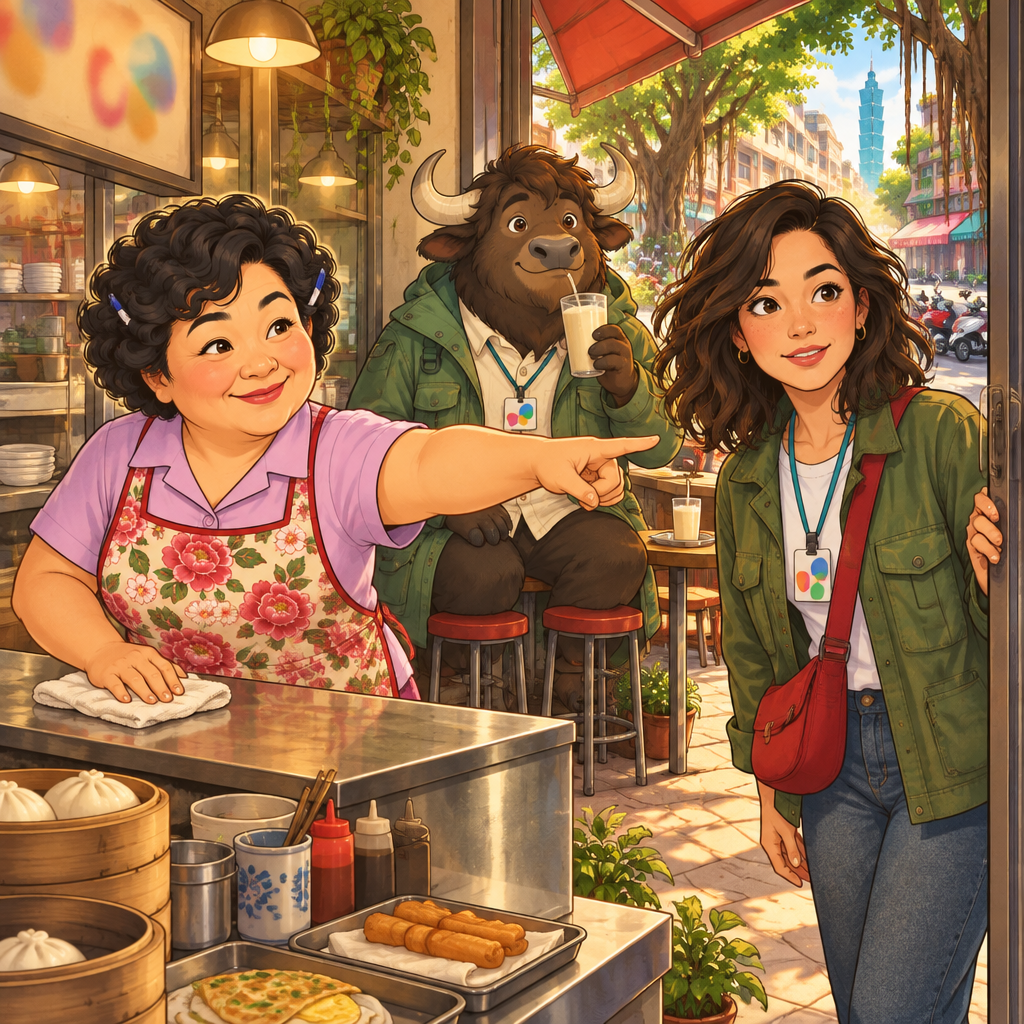
On a Taipei morning, Auntie Lin wipes the counter and points Maya toward the MRT station. Maya keeps one hand on the door as she listens.
Learn to go straight, turn left or right, cross the street, and say where a landmark is. These short directions help you find your way.
Listen for the tone change in the left-turn phrase. A-Li is at the back table with his soy milk, still unfinished.
By the end of this lesson
Give simple directions to go straight, turn, cross the street, and locate a landmark on the way.
- 直走Go straight.
- 左轉Turn left.
- 右轉Turn right.
- 在第一個路口轉Turn at the first intersection.
- 在你的左邊On your left.
- 過馬路Cross the street.
Scene — directions at the breakfast shop
Morning light falls across the counter at Banyan Breakfast. Auntie Lin wipes it clean while giving Maya directions to the nearby MRT station.
Maya follows along with one hand on the door. A-Li sits at the back with his soy milk, which is still unfinished.
Learn — simple directions
These six useful chunks can help you follow a short route around Taipei. Listen to each one, then say it aloud.
Notice the tone change when the two third tones in the left-turn phrase come together.

直走
Go straight.
When to use it: Use this to tell someone to continue straight ahead.
Learn it as one piece.

左轉
Turn left.
When to use it: Use this to tell someone to turn to the left.
Learn it as one piece.
Say it: The first third tone rises before the next third tone.

右轉
Turn right.
When to use it: Use this to tell someone to turn to the right.
Learn it as one piece.

在第一個路口轉
Turn at the first intersection.
When to use it: Use this to give a direction at the first intersection.
Learn it as one piece.

在你的左邊
On your left.
When to use it: Use this to say a place is on someone's left.
Learn it as one piece.
過馬路
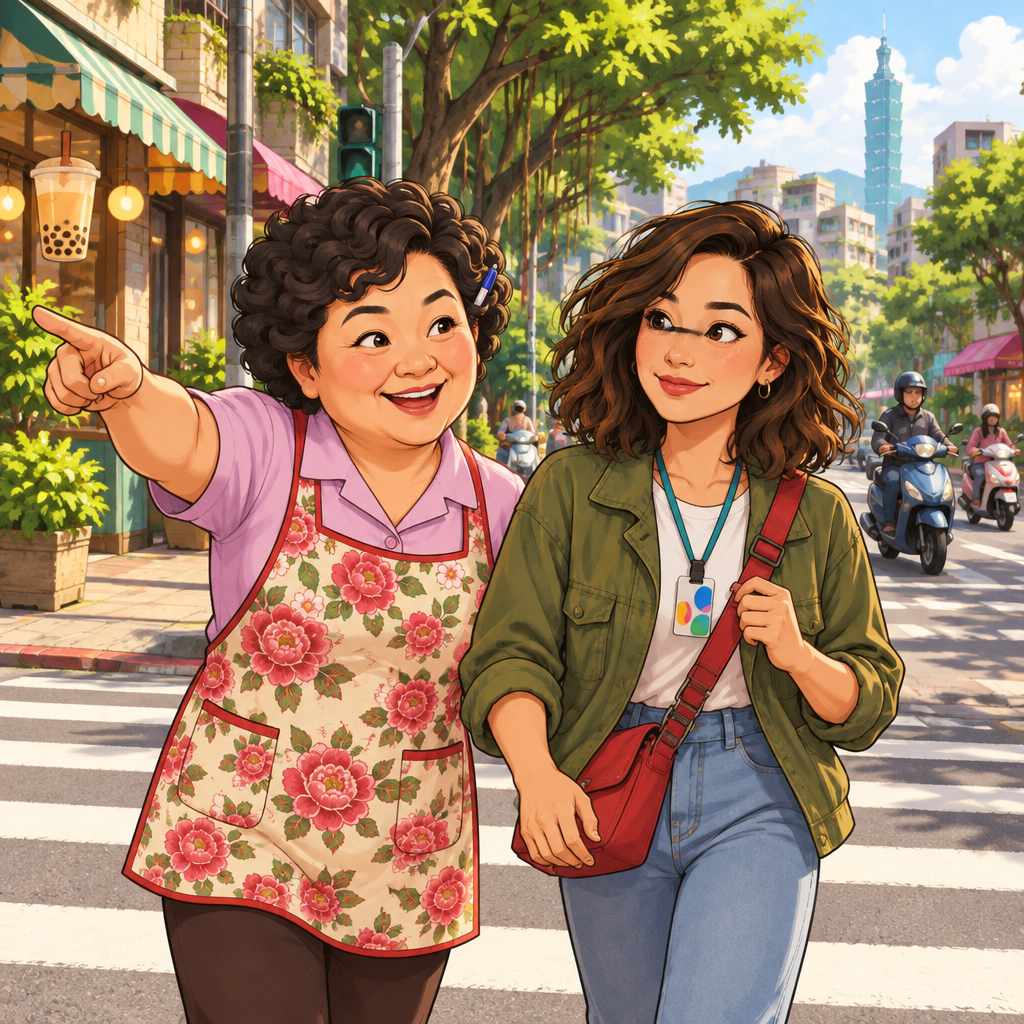
Cross the street.
When to use it: Use this to tell someone to cross the street.
Learn it as one piece.
Story — the way to the station
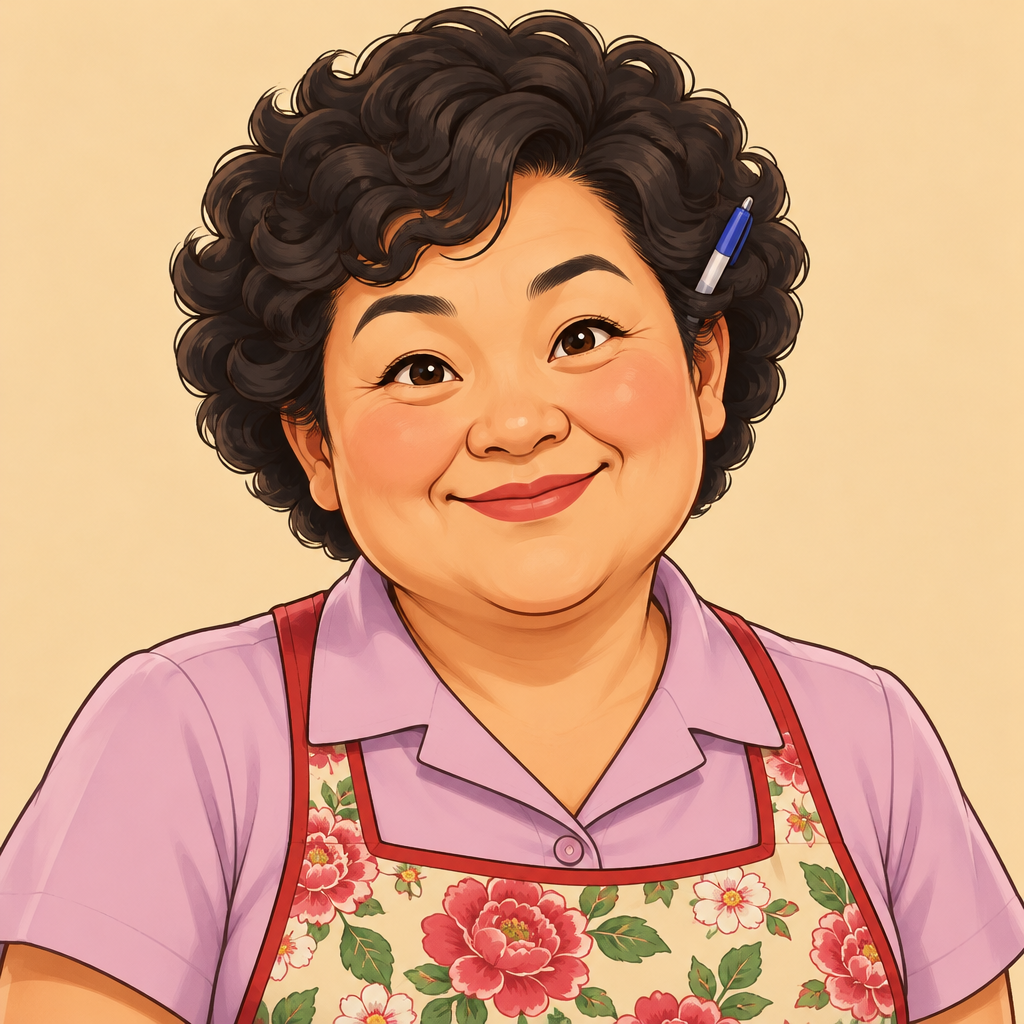
Auntie Lin gives Maya directions while wiping the breakfast-shop counter. Maya listens with one hand on the door.
The MRT station is nearby, and A-Li is still taking his time with his soy milk.
 Auntie Lin早安,瑪雅!Good morning, Maya!
 Maya請問,捷運站在哪裡?Excuse me, where is the MRT station?
- Auntie Lin捷運站在前面。直走,過馬路。The MRT station is ahead. Go straight and cross the street.
- Maya好喔,謝謝。Okay, thanks.
- Auntie Lin在第一個路口轉,左轉。Turn at the first intersection; turn left.
- Maya右轉嗎?Turn right?
- Auntie Lin不是,左轉。捷運站在你的左邊。No, turn left. The MRT station is on your left.
 A-Li我的豆漿還沒喝完。I still haven't finished my soy milk.
Practice — follow the route
Try eight quick exercises to recognize directions and place a landmark on the route. Choose or build the line that fits each moment.
Check each explanation, then say the correct direction aloud.
0 of 8 done
What did you hear?
What did you hear?
What do you say?
What do you say?
Auntie Lin tells you to turn to the left. What direction do you hear?
Build the line
Build the line
Turn at the first intersection.
Tap the words in order.
Fill the gap
Fill the gap
On your left.
在你的____
What did you hear?
What did you hear?
What do you say?
What do you say?
Auntie Lin asks you to repeat her direction to cross the street. Say the action.
Pick the reply
Auntie Lin says:
Pick the reply
早安!
Good morning!
And you reply with:
True or false?
True or false?
This line fits the moment you are in.
Say it — give directions
You play Maya and follow Auntie Lin's directions near Banyan Breakfast. Listen to each cue, then say the direction aloud.
Speak clearly and take the route one step at a time. Finish by confirming what to do at the street.
- Auntie Lin points Maya toward the MRT station.
- Auntie Lin直走。Go straight.
- Maya (you)Confirm that you should go straight.
Confirm that you should go straight.
直走
Go straight.
0 of 4 said
Recap — what you can say now
| Traditional Chinese | English | Play |
|---|---|---|
| 直走 | Go straight. | |
| 左轉 | Turn left. | |
| 右轉 | Turn right. | |
| 在第一個路口轉 | Turn at the first intersection. | |
| 在你的左邊 | On your left. | |
| 過馬路 | Cross the street. |
Save your progress — it’s free
Keep your place in the course and see which lines you’ve learned.
Want the next lesson in your inbox?
Get the next lesson by email, one a day.
Join the newsletterDaily lesson emails are coming soon. Newsletter subscribers get them first.
Keep practicing with Yak Cards
Today's directions are in Yak Cards with more useful lines for finding your way.
Review a few direction cards each day so the route feels familiar.
Open Yak Cards