
New here? This is lesson 102 of a free 240-lesson Traditional Chinese course.
Hotel booking in Traditional Chinese
The Tainan weekend is booked, and Maya has arrived at a small hotel with her bag.
She needs to find her reservation, check in, and confirm the practical details before heading out.
Learn how to give the name on a booking, ask whether breakfast is included, and check the nightly price and departure time.
Then ask the front desk to hold your luggage while you explore.
By the end of this lesson
Check in under your name, confirm breakfast and the nightly price, ask the check-out time, and request luggage storage.
- 我有訂房,名字是___I have a booking under ___.
- 我想辦理入住I'd like to check in.
- 有含早餐嗎?Is breakfast included?
- 請問幾點退房?What time is check-out?
- 一晚多少錢?How much per night?
- 可以把行李寄放在這裡嗎?Can I leave my luggage here?
Scene — at the hotel desk
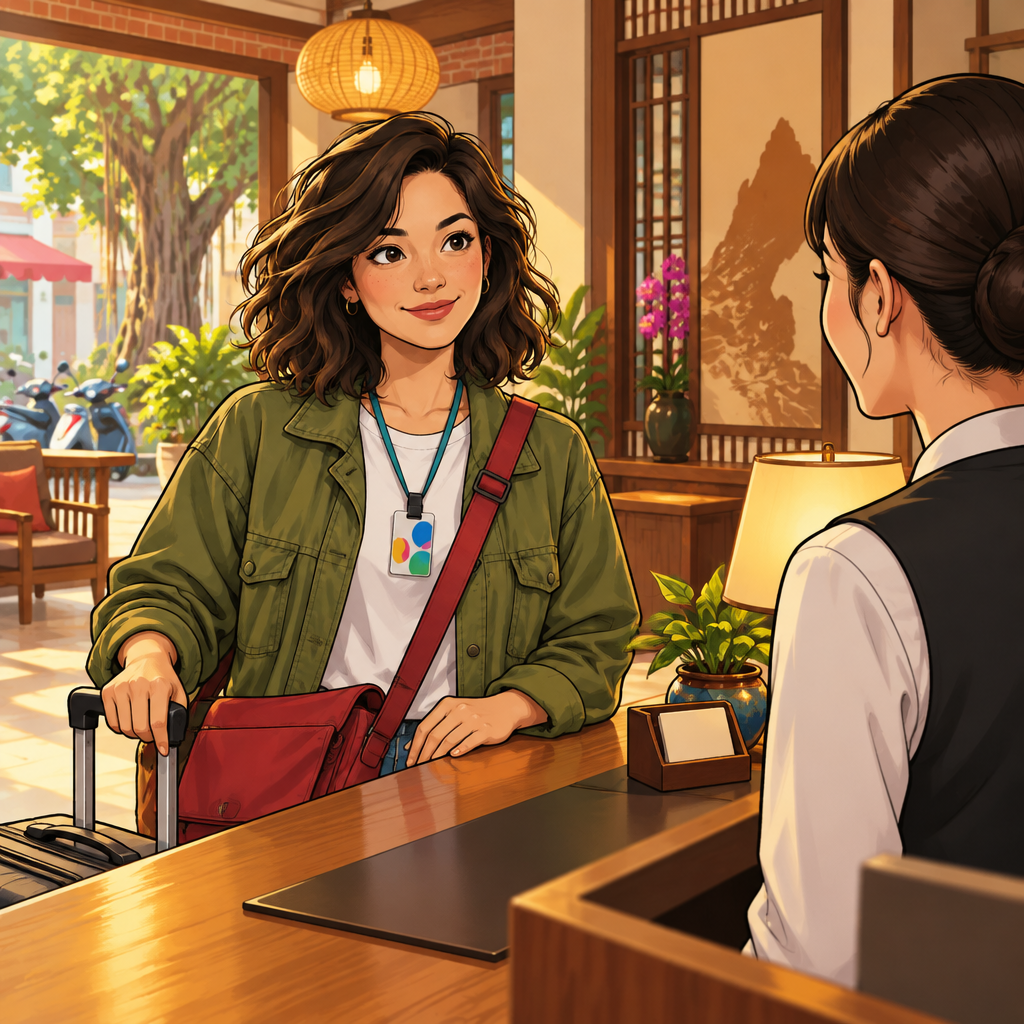
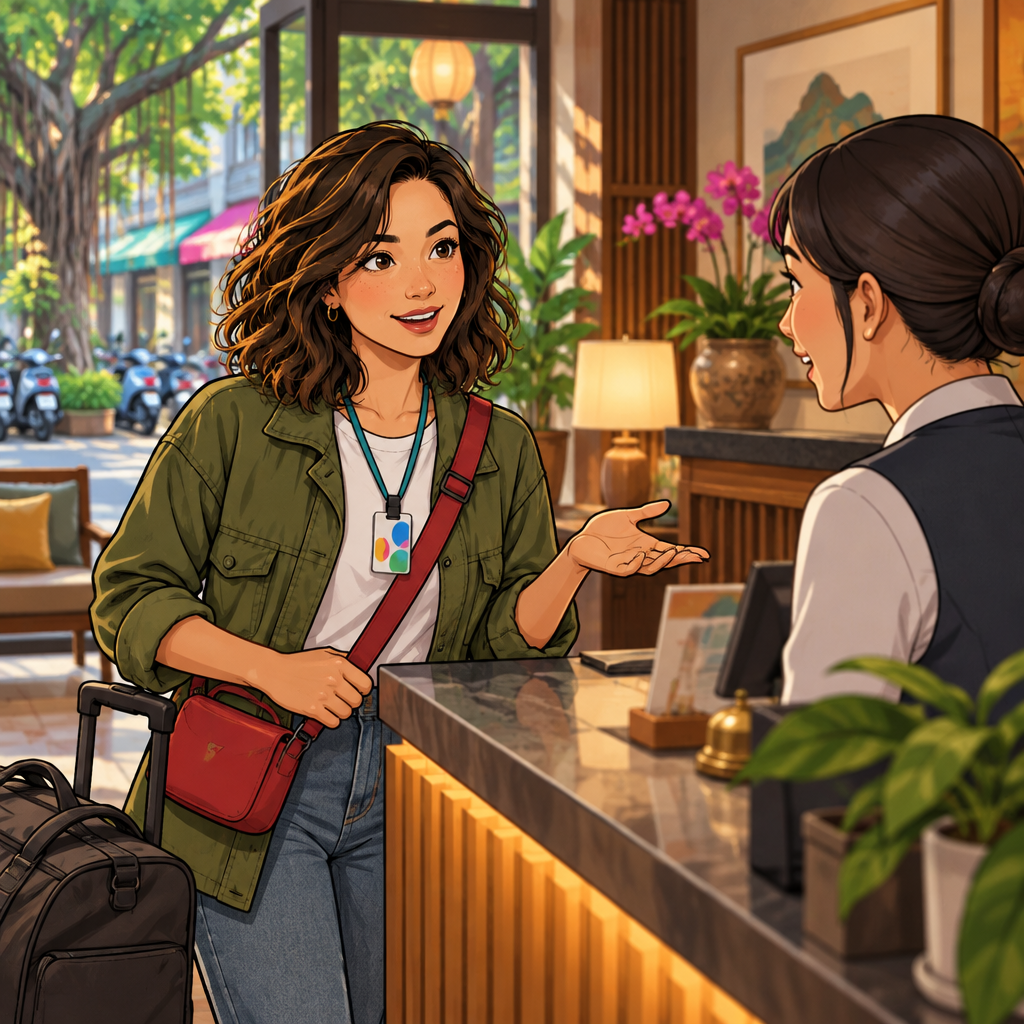
Maya reaches the front desk of a small hotel in Tainan with her weekend bag. The room is already booked, but she still needs to check in and confirm a few details.
A receptionist is ready to help. Maya wants to leave her bag safely before going out.
Learn — check-in essentials
These six lines take you from finding your booking to planning your departure. Listen first, then say each request as if you were standing at the front desk.
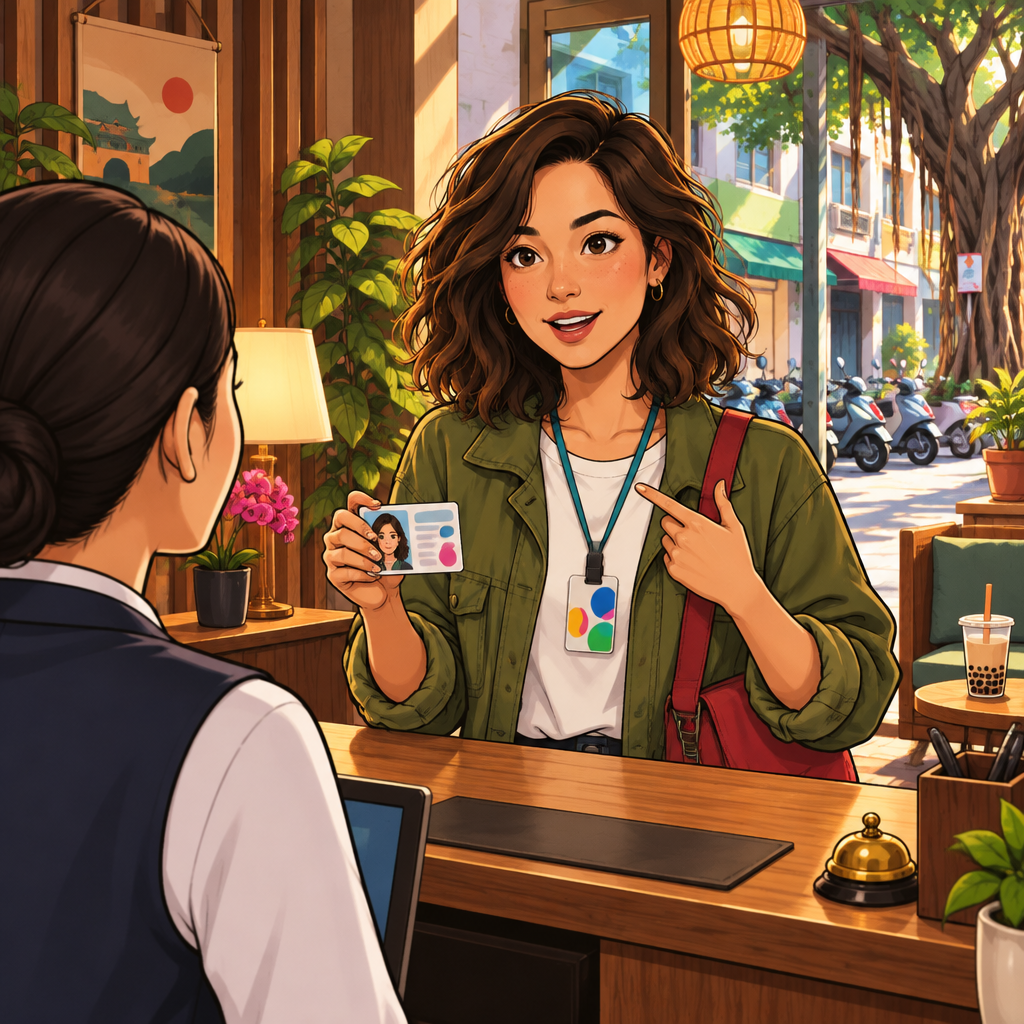
我有訂房,名字是___
I have a booking under ___.
When to use it: Give the name on your hotel booking when you reach the front desk.
Fill the blank with the name used for the reservation.
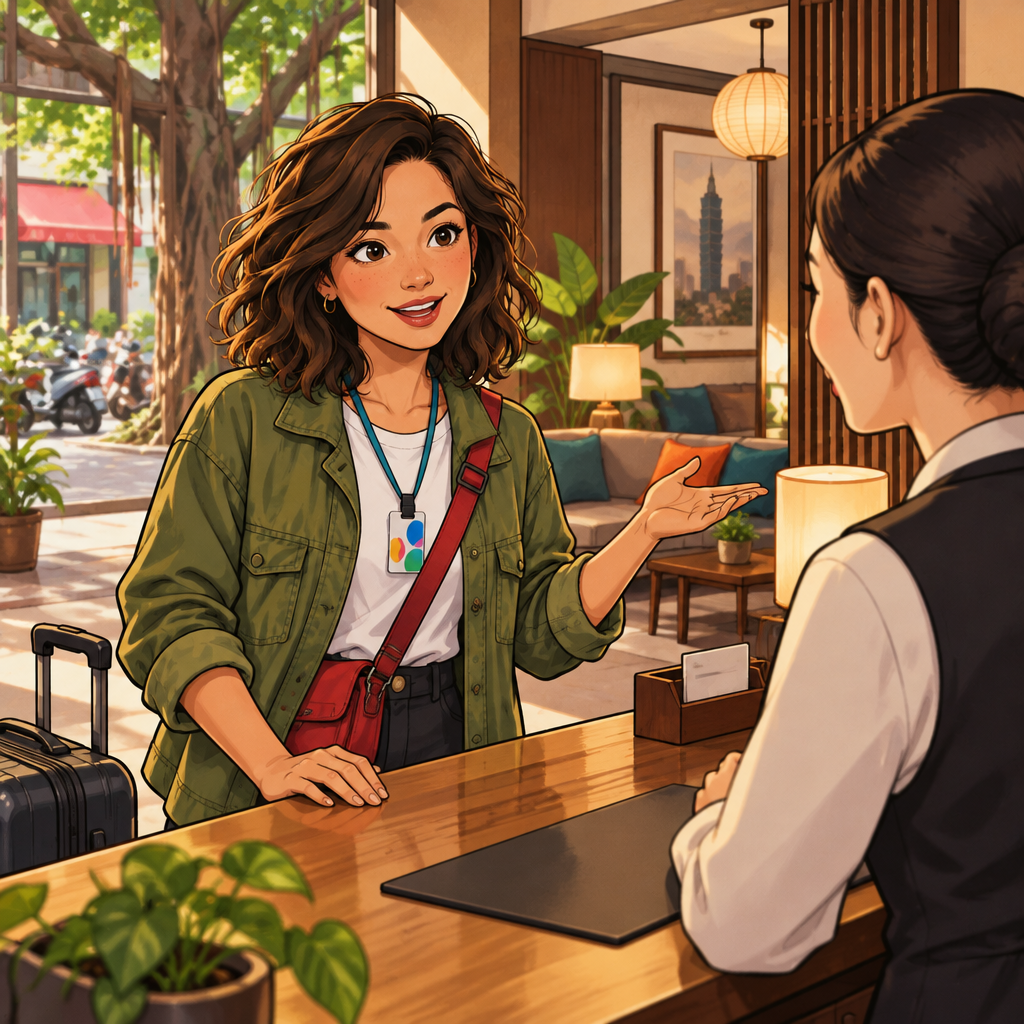
我想辦理入住
I'd like to check in.
When to use it: Say this when you are ready to get your room.
想 makes this request sound less direct.

有含早餐嗎?
Is breakfast included?
When to use it: Ask this when you are unsure whether your room rate includes breakfast.
嗎 turns this into a yes-or-no question.
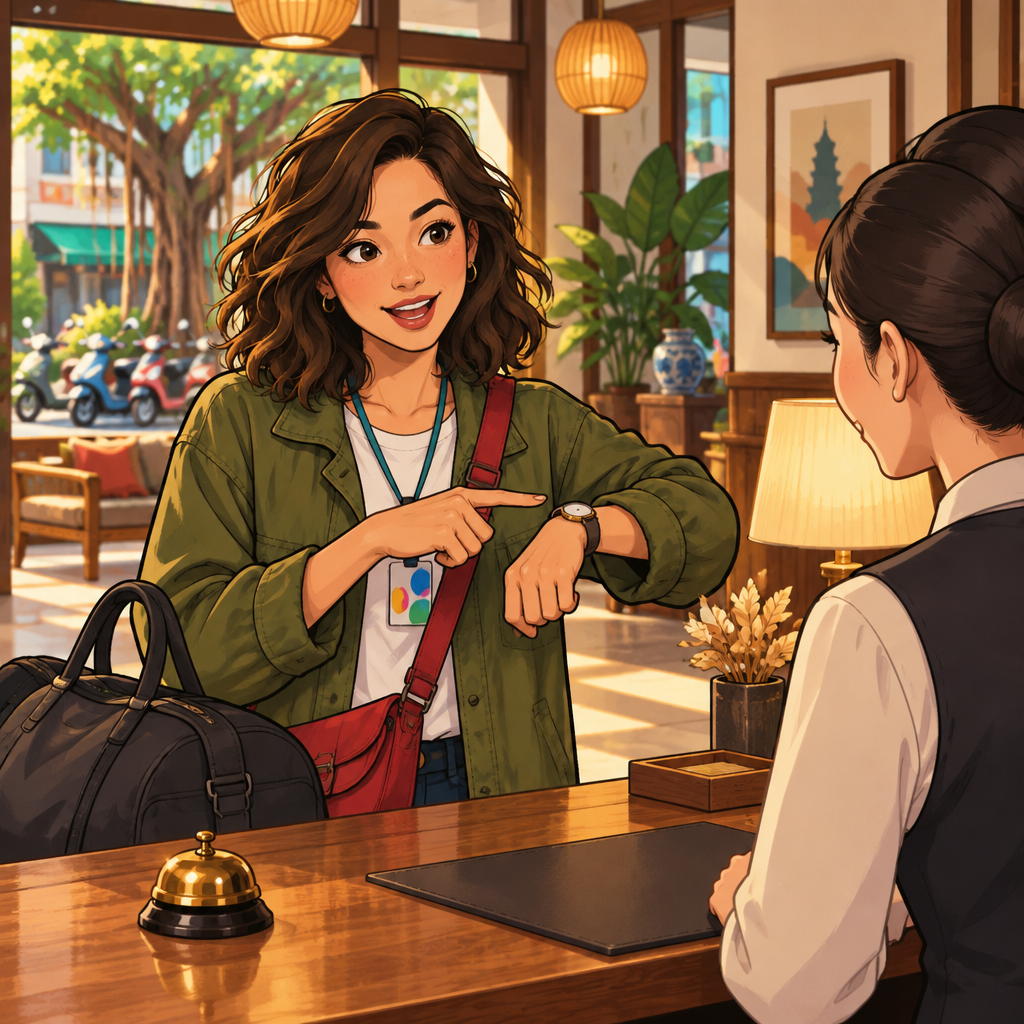
請問幾點退房?
What time is check-out?
When to use it: Ask the receptionist when you must leave your room.
請問 politely introduces your question.
一晚多少錢?
How much per night?
When to use it: Ask for the price of one night at a hotel.
一晚 means one night when talking about a room price.

可以把行李寄放在這裡嗎?
Can I leave my luggage here?
When to use it: Ask the front desk to keep your luggage while you go out.
寄放 means leaving something with someone for safekeeping.
Story — a room in Tainan
Listen as Maya checks in for her Tainan weekend. She gives the name on her booking and asks what she needs to know before leaving the hotel to explore.
- Hotel receptionist歡迎光臨。Welcome.
 Maya我有訂房,名字是瑪雅。I have a booking under Maya.
- Hotel receptionist好的,找到了。Okay, I found it.
- Maya我想辦理入住。I'd like to check in.
- Hotel receptionist好,這是房卡。Sure. Here's your room key card.
- Maya有含早餐嗎?Is breakfast included?
- Hotel receptionist有,早上七點開始。Yes. It starts at seven in the morning.
- Maya請問幾點退房?What time is check-out?
- Hotel receptionist上午十一點。Eleven in the morning.
- Maya一晚多少錢?How much per night?
- Hotel receptionist一晚兩千塊。Two thousand dollars per night.
- Maya可以把行李寄放在這裡嗎?Can I leave my luggage here?
- Hotel receptionist可以,這邊請。Yes. This way, please.
- Maya謝謝。Thank you.
Practice — ask at the front desk
Work through short hotel situations, word tiles, and listening choices.
Pay attention to whether you are asking about breakfast, the room price, or the time you must leave.
0 of 10 done
What do you say?
What do you say?
At the hotel desk, tell the receptionist that your booking is under your name.
Build the line
Build the line
I'd like to check in.
Tap the words in order.
Fill the gap
Fill the gap
Is breakfast included?
有含____嗎?
What did you hear?
What did you hear?
What does it mean?
What does it mean?
一晚多少錢?
Build the line
Build the line
Can I leave my luggage here?
?
Tap the words in order.
Pick the reply
Hotel receptionist says:
Pick the reply
這是你的房卡。
Here's your room key card.
And you reply with:
What do you say?
What do you say?
You are showing your friend the way from the lobby to the elevator. Invite her to follow you.
Fill the gap
Fill the gap
How much per night?
一____多少錢?
What do you say?
What do you say?
Your room is ready, but you want to go out first. Ask whether the hotel can hold your bag.
Say it — your check-in
You play Maya at the hotel front desk. Answer the receptionist and ask each practical question aloud as your check-in moves forward.
Take your time with the longer luggage request.
- Hotel receptionist你好,請問需要什麼服務?Hello. How can I help you?
- Maya (you)Say you have a booking under your name.
Say you have a booking under your name.
我有訂房,名字是___
I have a booking under ___.
0 of 6 said
Recap — what you can say now
| Traditional Chinese | English | Play |
|---|---|---|
| 我有訂房,名字是___ | I have a booking under ___. | |
| 我想辦理入住 | I'd like to check in. | |
| 有含早餐嗎? | Is breakfast included? | |
| 請問幾點退房? | What time is check-out? | |
| 一晚多少錢? | How much per night? | |
| 可以把行李寄放在這裡嗎? | Can I leave my luggage here? |
Save your progress — it’s free
Keep your place in the course and see which lines you’ve learned.
Want the next lesson in your inbox?
Get the next lesson by email, one a day.
Join the newsletterDaily lesson emails are coming soon. Newsletter subscribers get them first.
Keep practicing with Yak Cards
Review your hotel questions in Yak Cards before your next trip.
Practise the check-in and check-out questions together so they are easy to recall at the desk.
Open Yak Cards