
New here? This is lesson 133 of a free 240-lesson Traditional Chinese course.
What's in the flat in Traditional Chinese
Your new flat in Da’an is small, and the landlord is helping you check each room. Learn the names of five useful home fixtures, then say when one is broken.
Four things work, but one makes a noise at night. Point to the problem, describe it simply, and ask for help without turning the visit into a mystery.
A-Li is elsewhere at breakfast; his soy milk is still unfinished.
By the end of this lesson
Name common fixtures in an apartment, say what works, and point out something that is broken.
- 冷氣Air conditioner.
- 洗衣機Washing machine.
- 熱水器Water heater.
- 馬桶Toilet.
- 插座Outlet.
- 這個壞掉了This is broken.
Scene — a check around the flat
Mr. Wang visits Maya’s small apartment on Banyan Lane to check the fixtures. Maya tests the washing machine, water heater, toilet, and outlet; each one works.
The air conditioner makes a noise at night, though, so Maya points it out to him. The flat is ordinary, and the fortune slip remains unsolved.

Learn — things at home
Learn the everyday Taiwan words for appliances and fixtures in a home. Listen to each word and picture where you might find it.
Then use one short sentence to point out something that is broken.
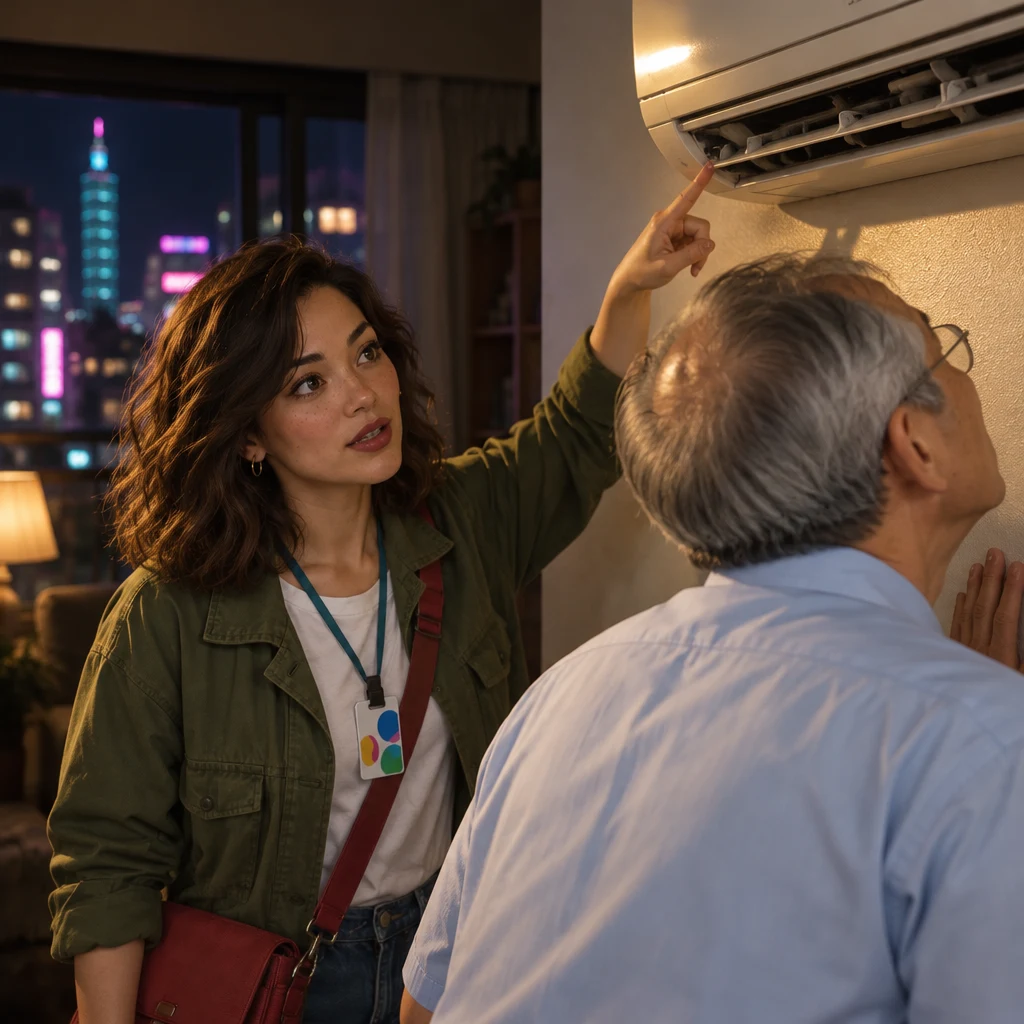
冷氣
Air conditioner.
When to use it: Use this word for the air conditioner in a home or room.
In Taiwan, 冷氣 is the everyday word for an air conditioner.

洗衣機
Washing machine.
When to use it: Use this word when you mean the machine that washes clothes.
洗衣機 names the machine used to wash clothes.

熱水器
Water heater.
When to use it: Use this word for the appliance that heats water.
熱水器 is the appliance that supplies hot water at home.

馬桶
Toilet.
When to use it: Use this everyday word for the toilet in a bathroom.
馬桶 refers to the toilet, not the whole bathroom.
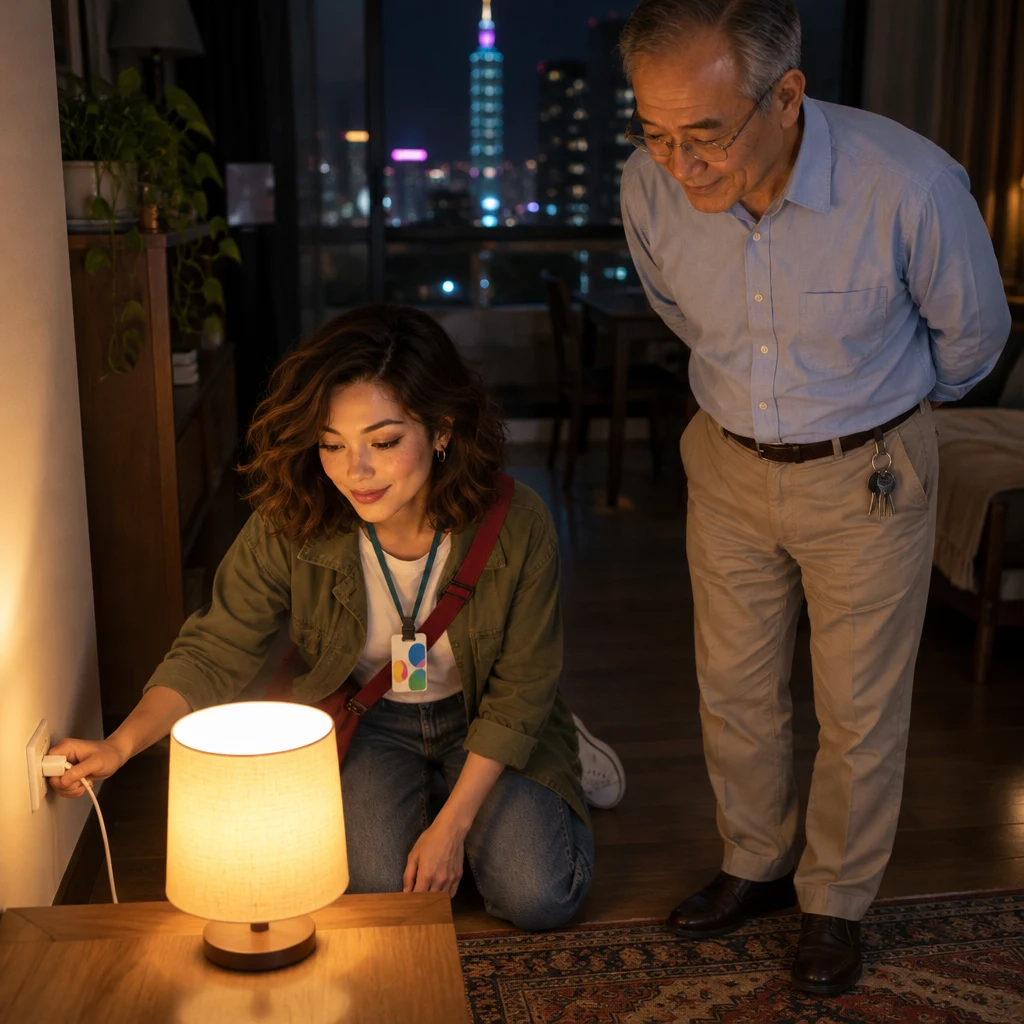
插座
Outlet.
When to use it: Use this word for the place where you plug in an appliance.
插座 is the wall outlet where you connect a plug.
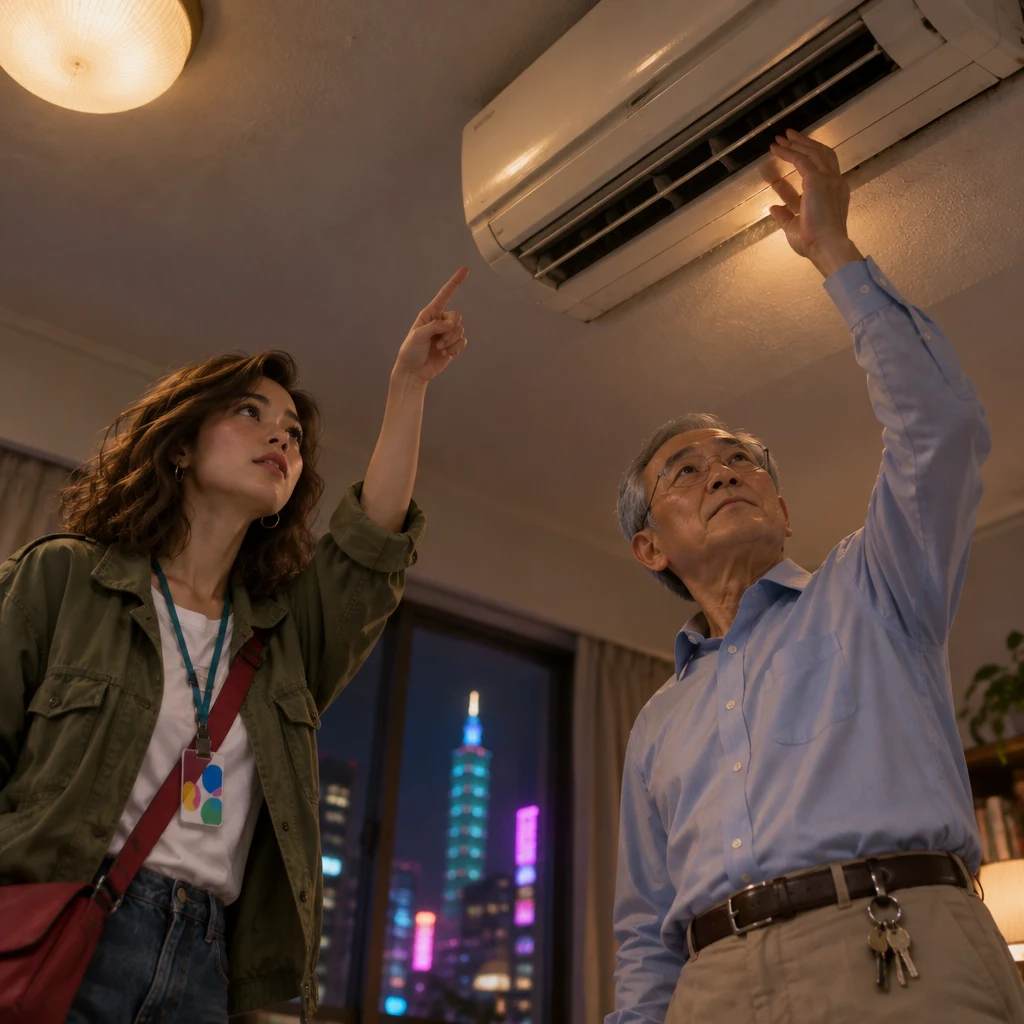
這個壞掉了
This is broken.
When to use it: Point to an item and use this when it has stopped working.
了 marks the change to a broken state.
Say it: The final 了 is a light, neutral-tone particle.
Story — a noisy night
Mr. Wang checks Maya’s flat with her. Four fixtures work, but one makes a noise at night.
Maya points out the problem and listens to Mr. Wang’s practical advice.
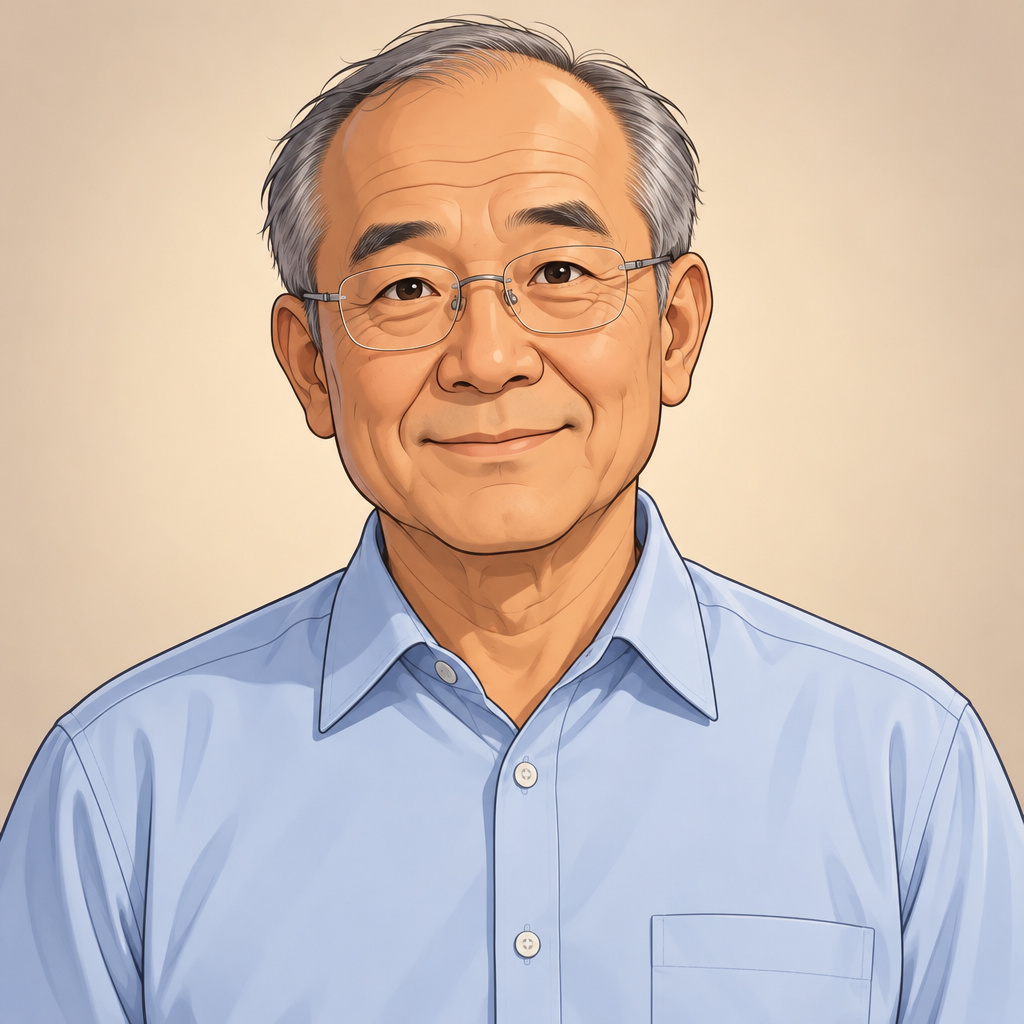 Mr. Wang這個房間不大。This room isn't big.
 Maya冷氣晚上會有聲音。The air conditioner makes a noise at night.
- Maya這個壞掉了。This is broken.
- Mr. Wang好,我記下來。Okay, I'll make a note of that.
- Mr. Wang洗衣機可以用。The washing machine works.
- Maya熱水器也可以用。The water heater works too.
- Mr. Wang馬桶呢?What about the toilet?
- Maya馬桶可以用。The toilet works.
- Mr. Wang插座呢?What about the outlet?
- Maya插座可以用。The outlet works.
- Mr. Wang有問題再打給我。Call me if there's a problem.
- Maya好喔,謝謝。Okay, thanks.
Practice — name the fixtures
Try ten exercises about checking the fixtures in a flat. Listen, identify things, and build a short report about a problem.
Some questions review useful lines for talking with your landlord.
0 of 10 done
What does it mean?
What does it mean?
冷氣
What do you say?
What do you say?
Your landlord asks you to name the machine that washes clothes.
What did you hear?
What did you hear?
What do you say?
What do you say?
You are checking the appliance that heats the water for a shower. Name it.
What do you say?
What do you say?
In the bathroom, point to the toilet and name it.
Build the line
Build the line
This is broken.
Tap the words in order.
Fill the gap
Fill the gap
This is broken.
這個壞掉____
What do you say?
What do you say?
Tell Mr. Wang that this room is small.
Match the pairs
Traditional Chinese
冷氣Drop the English here洗衣機Drop the English here熱水器Drop the English here馬桶Drop the English here插座Drop the English hereEnglish
What does it mean?
What does it mean?
有問題再打給我
Say it — report a problem
You are Maya, checking the flat with Mr. Wang. Listen to his questions and answer with a fixture name or a short report.
Speak clearly as you point out what works and what makes a noise. The landlord is ready to help with any problem.
- Mr. Wang asks Maya to name the things she checked.
- Mr. Wang你檢查了什麼?What did you check?
- Maya (you)Name the machine that washes clothes.
Name the machine that washes clothes.
洗衣機
Washing machine.
0 of 4 said
Recap — what you can say now
| Traditional Chinese | English | Play |
|---|---|---|
| 冷氣 | Air conditioner. | |
| 洗衣機 | Washing machine. | |
| 熱水器 | Water heater. | |
| 馬桶 | Toilet. | |
| 插座 | Outlet. | |
| 這個壞掉了 | This is broken. |
Save your progress — it’s free
Keep your place in the course and see which lines you’ve learned.
Want the next lesson in your inbox?
Get the next lesson by email, one a day.
Join the newsletterDaily lesson emails are coming soon. Newsletter subscribers get them first.
Keep practicing with Yak Cards
Review these apartment words in Yak Cards and practise naming things around your home.
Name a few fixtures at home and describe one thing that needs attention.
Open Yak Cards