
New here? This is lesson 176 of a free 240-lesson Traditional Chinese course.
The story grows in Traditional Chinese
Back in Taipei, Yi-Jun retells the Tainan train mix-up for the fourth time. Each telling, the train gets a little faster.
Learn how to start a retelling, push back when a story grows, and notice when two versions do not match.
Then practise those lines at breakfast, where A-Li's soy milk is still unfinished.
By the end of this lesson
Retell an event, compare two versions, and push back when a story grows.
- 其實沒那麼誇張It wasn't actually that dramatic.
- 你講得好像真的一樣You're telling it like it's true.
- 事情是這樣的Here's what happened.
- 我昨天聽到的版本不一樣The version I heard yesterday was different.
- 越說越大It gets bigger the more you tell it.
- 不是這樣的啦That's not how it was.
Scene — a fourth telling
At Banyan Breakfast, Yi-Jun leans in and starts the Tainan story again. Maya heard a quieter version yesterday, and A-Li listens from the back table.
The train in this telling is already faster. Nobody solves the fortune slip; A-Li's soy milk stays unfinished.

Learn — when stories grow
These six lines help you retell a story and push back when it grows. Listen first, then say each one out loud.
Notice how 得 marks degree after a verb, and how 越…越… shows something getting bigger.

其實沒那麼誇張
It wasn't actually that dramatic.
When to use it: Use this when a retelling makes a small event sound huge.
沒那麼 plus an adjective scales a claim down.

你講得好像真的一樣
You're telling it like it's true.
When to use it: Use this when a story sounds too polished to believe.
得 after a verb introduces how the action is done.
Say it: The 得 after the verb is usually a light tone.

事情是這樣的
Here's what happened.
When to use it: Use this to start a retelling from the beginning.
This set phrase introduces the account you are about to tell.

我昨天聽到的版本不一樣
The version I heard yesterday was different.
When to use it: Use this when two tellings of the same event do not match.
的 links the earlier clause to the noun 版本.
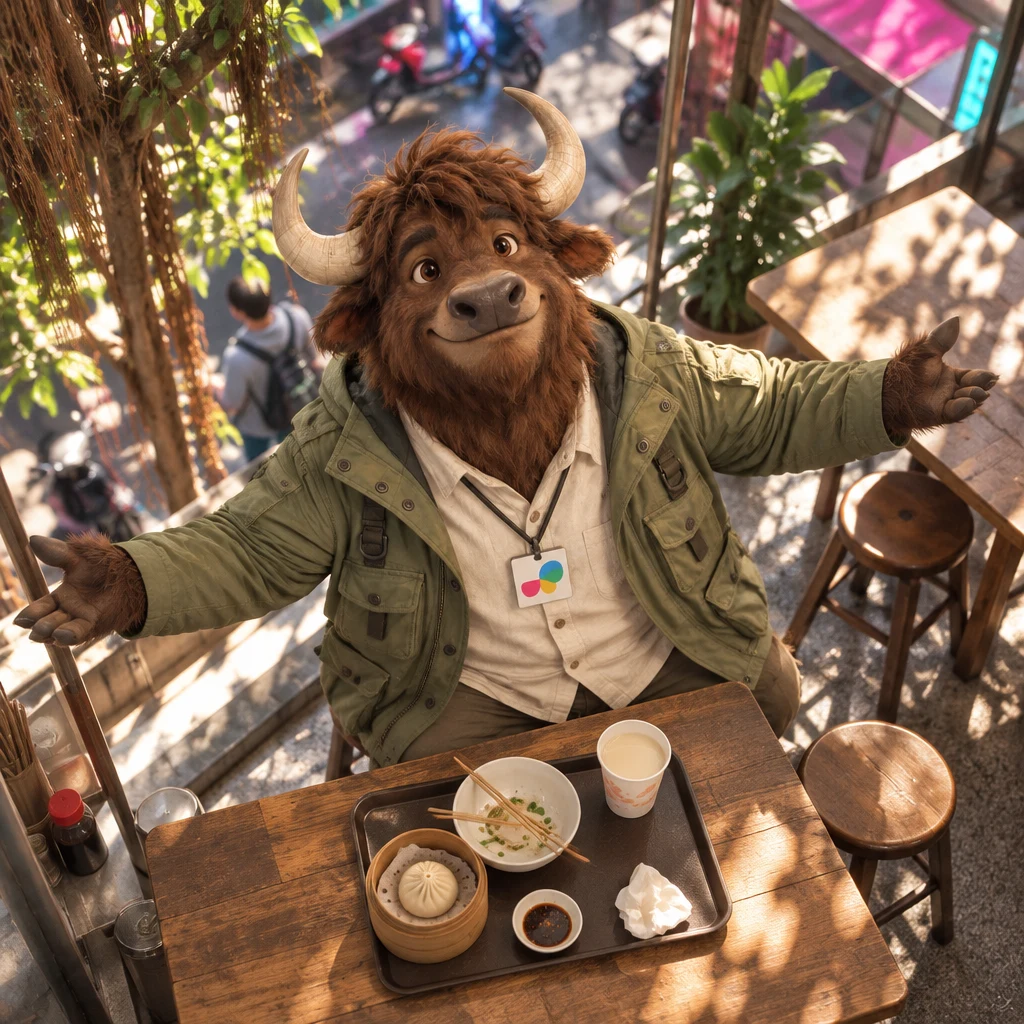
越說越大
It gets bigger the more you tell it.
When to use it: Use this when each retelling adds extra drama.
越…越… shows one thing growing as another continues.

不是這樣的啦
That's not how it was.
When to use it: Use this to reject a version that has grown too far.
啦 softens a disagreement so it still sounds friendly.
Say it: 啦 at the end is a short, light tone.
Story — the train gets faster
Listen as Yi-Jun tells the wrong-train story again at breakfast. Maya heard it yesterday, and this version is already larger.
A-Li stays at the back table with his unfinished drink.
 Yi-Jun欸,事情是這樣的。Hey, here's what happened.
 Maya後來呢?And then?
- Yi-Jun那班車很快,我們坐過站了。That train was so fast we went past our stop.
- Maya真的嗎?Really?
- Yi-Jun對啊,車門都還沒關好就開走了。Yeah, it left before the doors had even closed.
- Maya你講得好像真的一樣。You're telling it like it's true.
 A-Li我昨天聽到的版本不一樣。The version I heard yesterday was different.
- Yi-Jun不會吧!這次比較準。No way! This time is more accurate.
- Maya其實沒那麼誇張。It wasn't actually that dramatic.
- Yi-Jun可是車真的越來越快啊。But the train really is getting faster.
- Maya越說越大。It gets bigger the more you tell it.
- Yi-Jun我哪有?就是這樣啊。I am not! That's how it was.
- Maya不是這樣的啦。That's not how it was.
- A-Li豆漿還沒喝完。The soy milk still isn't finished.
Practice — retell and push back
Work through short exercises that ask you to start a retelling, compare versions, and cool a story down.
After each answer, read why the other choice does not fit.
0 of 9 done
What does it mean?
What does it mean?
真的嗎?
What do you say?
What do you say?
Yi-Jun asks you to tell the Tainan mix-up from the start.
Build the line
Build the line
The version I heard yesterday was different.
Tap the words in order.
Fill the gap
Fill the gap
It gets bigger the more you tell it.
越說越____
What did you hear?
What did you hear?
Pick the reply
Yi-Jun says:
Pick the reply
我們那天是坐飛機去的。
That day we went by plane.
And you reply with:
Swap the word
Swap the word
Yi-Jun makes the Tainan mix-up sound huge. Scale the claim down.
其實沒那麼____
What do you say?
What do you say?
Yi-Jun says the train left before the doors had even closed. React with shock.
Pick the reply
Yi-Jun says:
Pick the reply
我們上錯車以後……
After we boarded the wrong train...
And you reply with:
Say it — your retelling
You play Maya and talk with Yi-Jun about the growing train story. Listen to each cue, then say the line out loud.
Tap the microphone to speak. You can replay her line before your turn.
- Back at Banyan Breakfast, Yi-Jun wants the Tainan story again.
- Yi-Jun你那天記得什麼?What do you remember from that day?
- Maya (you)Start the retelling from the beginning.
Start the retelling from the beginning.
事情是這樣的
Here's what happened.
0 of 6 said
Recap — what you can say now
| Traditional Chinese | English | Play |
|---|---|---|
| 其實沒那麼誇張 | It wasn't actually that dramatic. | |
| 你講得好像真的一樣 | You're telling it like it's true. | |
| 事情是這樣的 | Here's what happened. | |
| 我昨天聽到的版本不一樣 | The version I heard yesterday was different. | |
| 越說越大 | It gets bigger the more you tell it. | |
| 不是這樣的啦 | That's not how it was. |
Save your progress — it’s free
Keep your place in the course and see which lines you’ve learned.
Want the next lesson in your inbox?
Get the next lesson by email, one a day.
Join the newsletterDaily lesson emails are coming soon. Newsletter subscribers get them first.
Keep practicing with Yak Cards
Today's retelling lines are in Yak Cards with more ways to compare versions.
Review a few of these cards after you hear a story told twice.
Open Yak Cards