
New here? This is lesson 43 of a free 240-lesson Traditional Chinese course.
Top up your EasyCard in Traditional Chinese
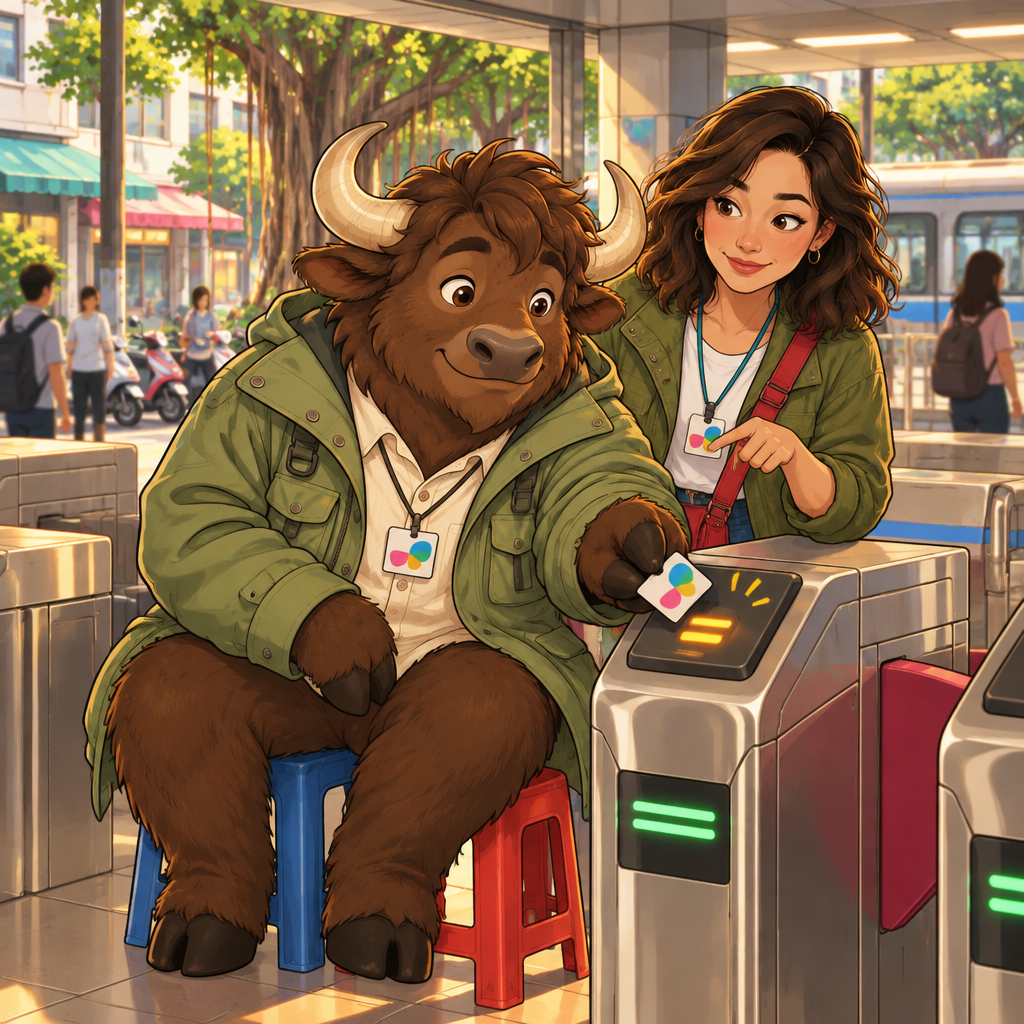
At the MRT gate, A-Li's EasyCard beeps twice. He blames the gate, but Maya notices his low balance and helps him top up without making a fuss.
Learn to ask where to add value, say how much you want to add, and understand a low-balance message. You can also ask about a card refund.
Listen for the light ending of a question, then practise a short instruction to tap a card. A-Li's soy milk is still waiting back at the shop.
By the end of this lesson
Ask where to top up an EasyCard, say how much you want to add, and handle a low balance.
- 我要加值___元I'd like to top up ___ dollars.
- 餘額不足Insufficient balance.
- 在哪裡可以加值?Where can I top up?
- 便利商店可以加值You can top up at convenience stores.
- 這張卡可以退嗎?Can I get a refund on this card?
- 感應一下Tap it.
Scene — a beep at the gate
At an MRT station near Banyan Lane, A-Li's EasyCard beeps twice at the gate. He blames the gate, while Maya notices the low balance.
They stop at a nearby convenience store. Maya helps him top up and pretends not to notice his explanation.
Learn — top up your card
These six lines help you add value to an EasyCard and handle a low balance. Listen to each expression, then say it aloud.
One line has a blank for the amount. Fill it with a real amount when you speak.
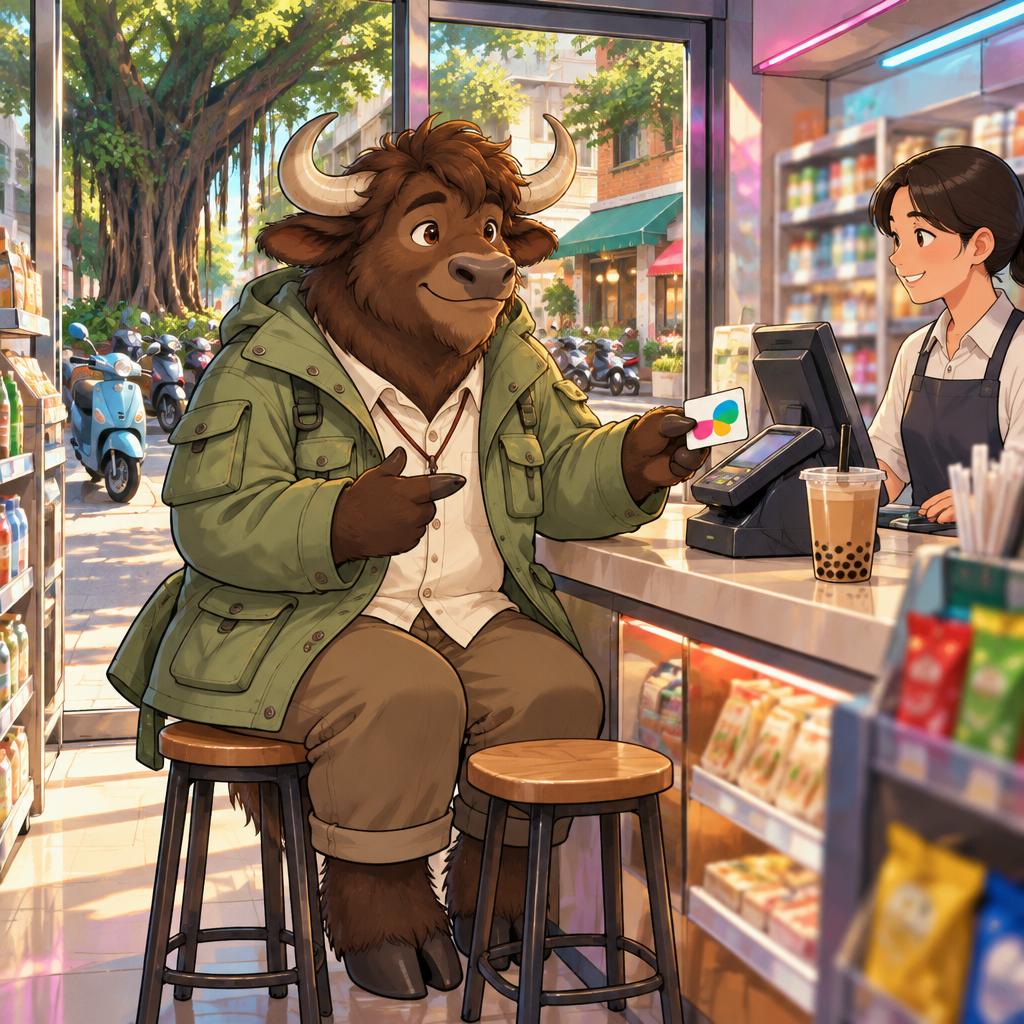
我要加值___元
I'd like to top up ___ dollars.
When to use it: Use this to say how much value you want to add to a card.
Learn this as one piece, and replace the blank with an amount.
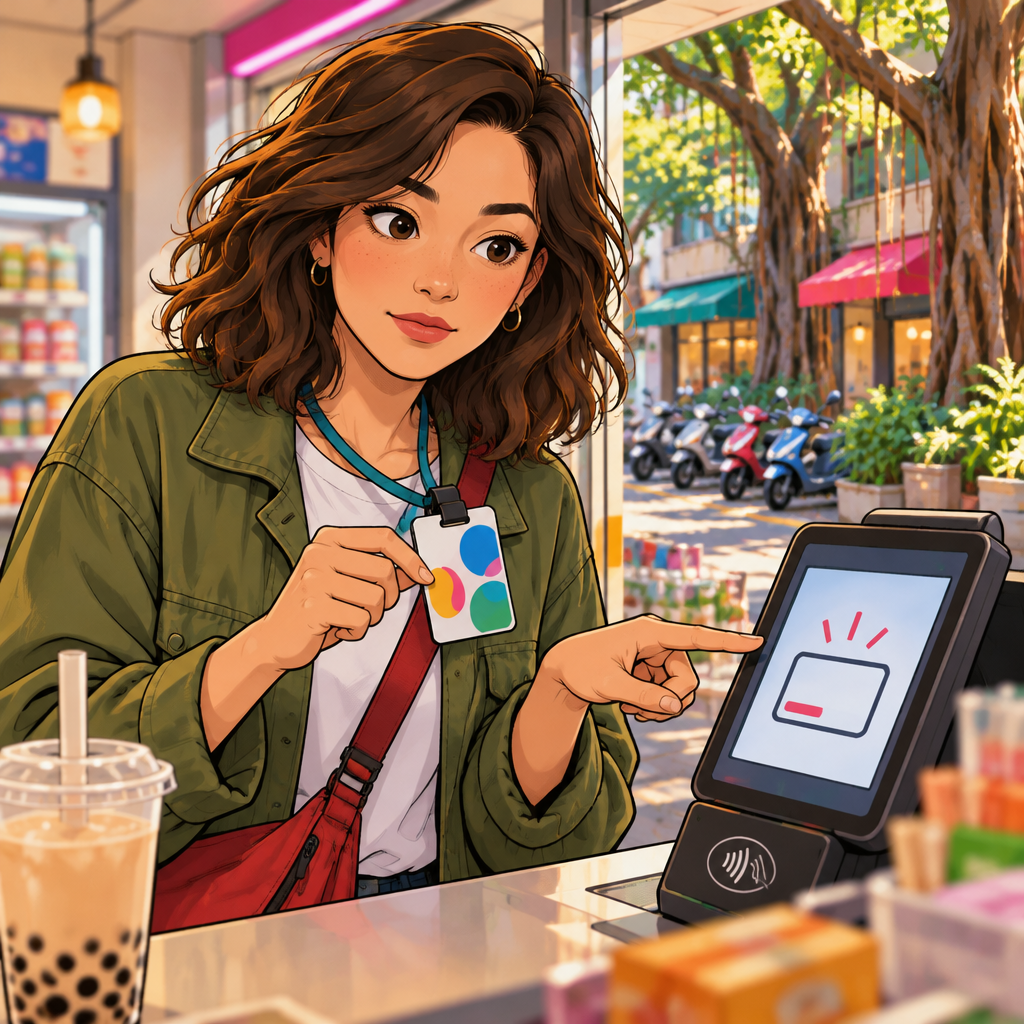
餘額不足
Insufficient balance.
When to use it: Use this when a card does not have enough value for a ride.
Learn this as one piece.
Say it: In 不足, 不 keeps its fourth tone before a second-tone syllable.

在哪裡可以加值?
Where can I top up?
When to use it: Ask this when you need to find a place to add value.
Learn this as one piece.
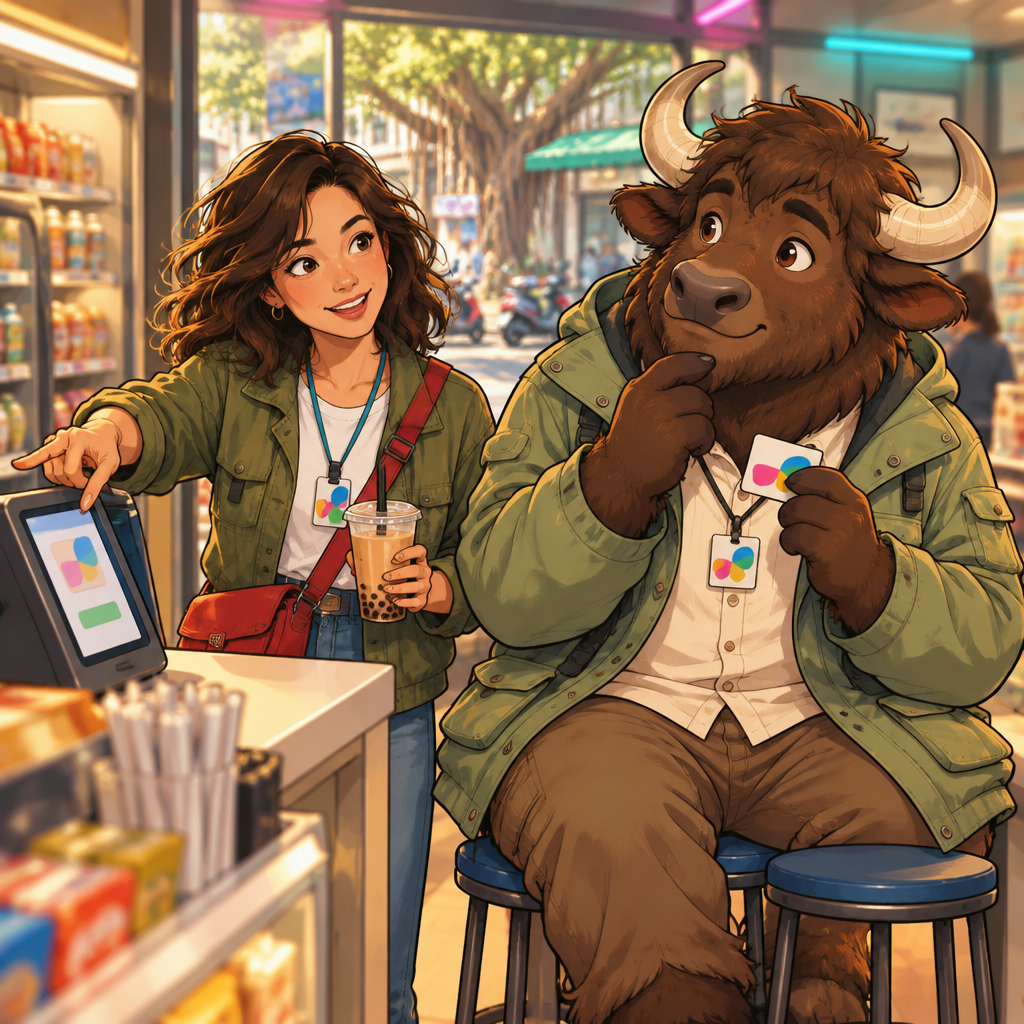
便利商店可以加值
You can top up at convenience stores.
When to use it: Use this to tell someone where they can add value.
Learn this as one piece.
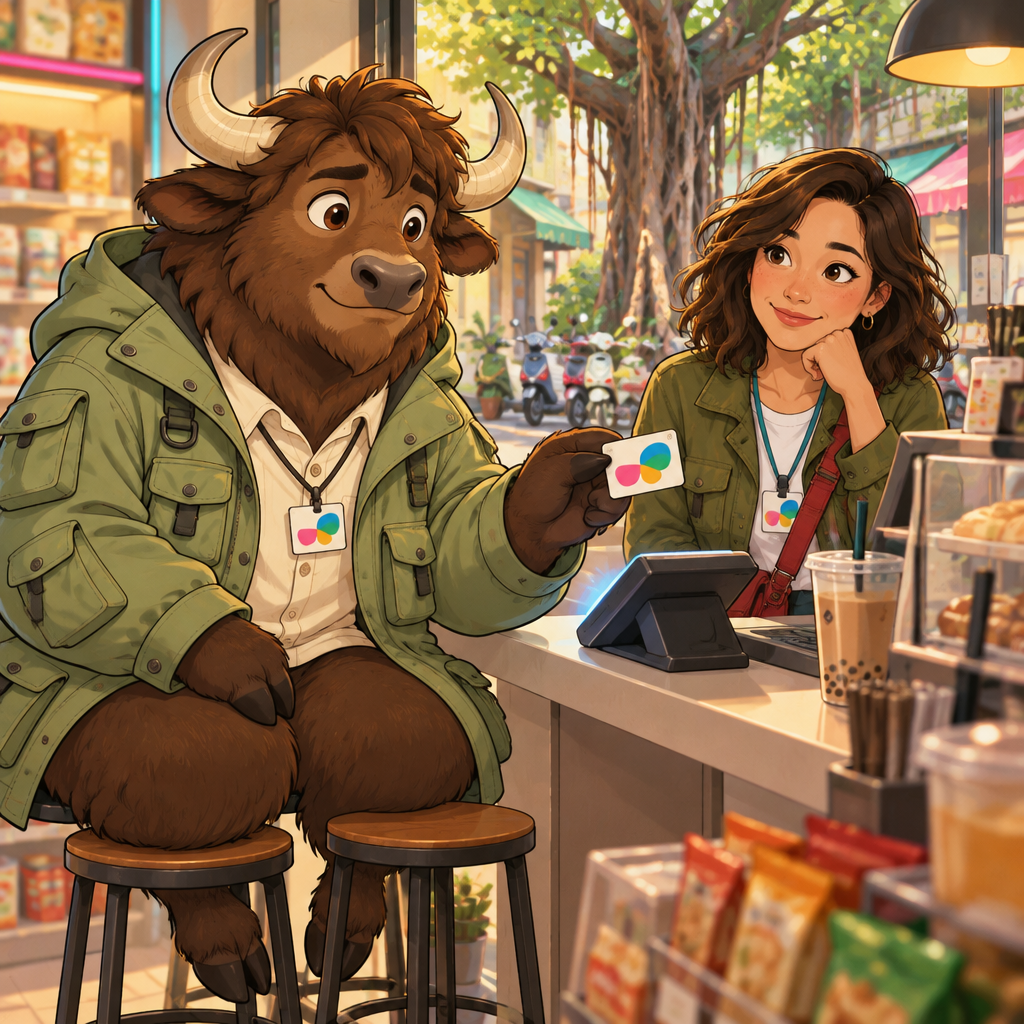
這張卡可以退嗎?
Can I get a refund on this card?
When to use it: Ask this when you want to know whether a card can be refunded.
Learn this as one piece.
Say it: The question particle 嗎 is light and neutral.
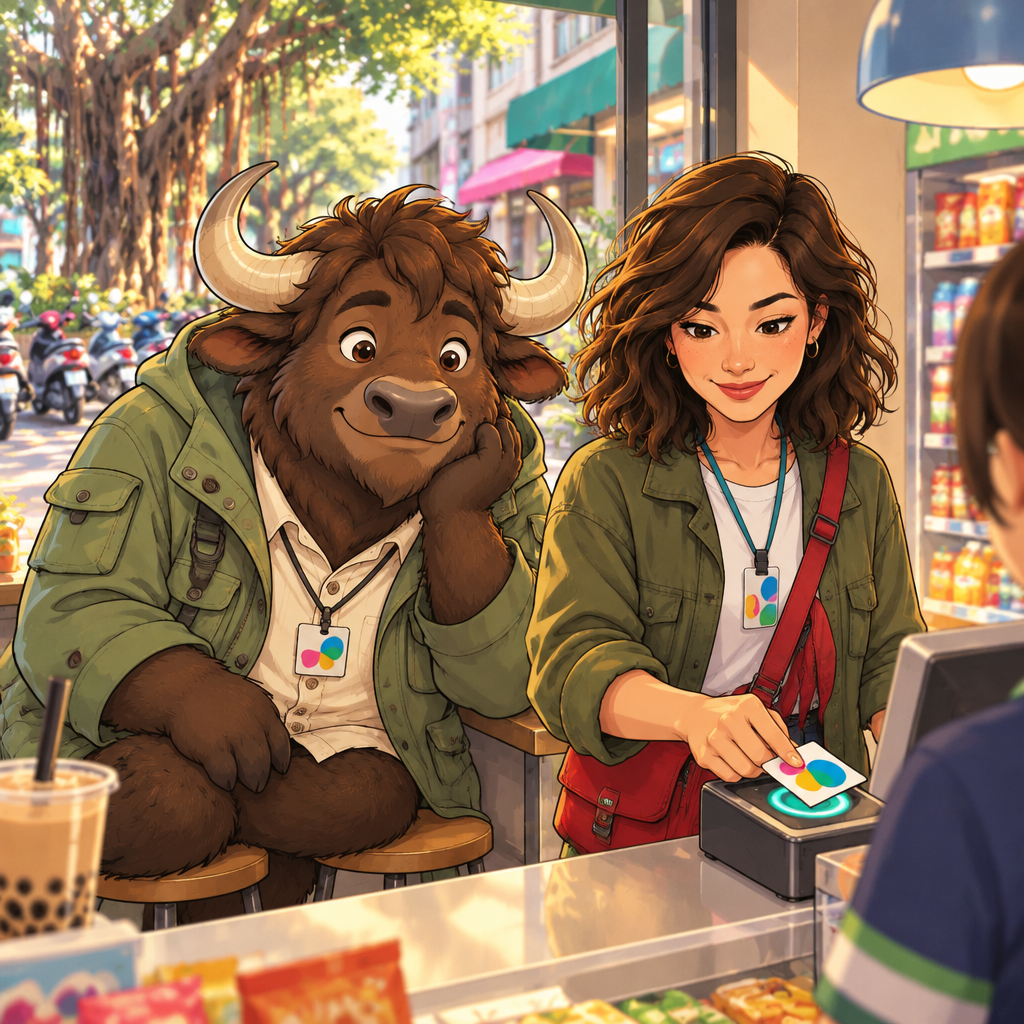
感應一下
Tap it.
When to use it: Say this as a brief instruction to tap a card on a reader.
Learn this as one piece.
Story — A-Li blames the gate
Maya and A-Li are at the MRT gate when his card beeps twice. A-Li blames the gate, and Maya quietly helps him.
They find a nearby convenience store to top up. Maya pretends not to notice his explanation, and his soy milk remains unfinished.
- Station staff您好。Hello, politely.
 Maya在哪裡可以加值?Where can I top up?
- Station staff便利商店可以加值。You can top up at convenience stores.
 A-Li餘額不足?Insufficient balance?
- A-Li一定是閘門的問題。It must be a problem with the gate.
- They walk to a nearby convenience store, where Maya tops up A-Li's card.
- Maya我要加值五百元。I'd like to top up five hundred dollars.
- Convenience store clerk感應一下。Tap it.
- Maya這張卡可以退嗎?Can I get a refund on this card?
- Convenience store clerk可以問捷運站的服務台。You can ask at the MRT station service counter.
- A-Li謝謝。Thank you.
- Maya不客氣。You're welcome.
- A-Li豆漿還沒喝完。The soy milk still isn't finished.
Practice — handle a low balance
Try nine short exercises about topping up and using a transit card. Choose the phrase that fits, then build and complete a few useful lines.
Maya helps A-Li, who is sure the gate is at fault.
0 of 10 done
What do you say?
What do you say?
Enter 500 in the amount field, then say the completed request to the cashier.
What does it mean?
What does it mean?
餘額不足
What do you say?
What do you say?
Ask a station worker where you can add value to your card.
Build the line
Build the line
You can top up at convenience stores.
Tap the words in order.
Fill the gap
Fill the gap
Where can I top up?
在____可以加值?
Match the pairs
Traditional Chinese
在哪裡可以加值?Drop the English here便利商店可以加值Drop the English here這張卡可以退嗎?Drop the English here感應一下Drop the English hereEnglish
What did you hear?
What did you hear?
Swap the word
Swap the word
Ask whether you can get a refund for this card.
這張卡可以____?
What do you say?
What do you say?
A-Li has helped you, and you want to thank him.
What did you hear?
What did you hear?
Say it — help at the station
You play Maya as she helps A-Li near the MRT gate. Listen to the other person, then say the phrase that fits your part.
Ask a station worker where to top up, then help A-Li use the reader at a nearby convenience store.
- At the station, Maya asks a worker where she can add value.
- Maya (you)Ask where you can top up your card.
Ask where you can top up your card.
在哪裡可以加值?
Where can I top up?
0 of 3 said
Recap — what you can say now
| Traditional Chinese | English | Play |
|---|---|---|
| 我要加值___元 | I'd like to top up ___ dollars. | |
| 餘額不足 | Insufficient balance. | |
| 在哪裡可以加值? | Where can I top up? | |
| 便利商店可以加值 | You can top up at convenience stores. | |
| 這張卡可以退嗎? | Can I get a refund on this card? | |
| 感應一下 | Tap it. |
Save your progress — it’s free
Keep your place in the course and see which lines you’ve learned.
Want the next lesson in your inbox?
Get the next lesson by email, one a day.
Join the newsletterDaily lesson emails are coming soon. Newsletter subscribers get them first.
Keep practicing with Yak Cards
Review today's useful transit phrases in Yak Cards.
Practise one top-up phrase each day so it comes to mind at the gate.
Open Yak Cards