
New here? This is lesson 26 of a free 240-lesson Traditional Chinese course.
In front, behind, beside in Traditional Chinese
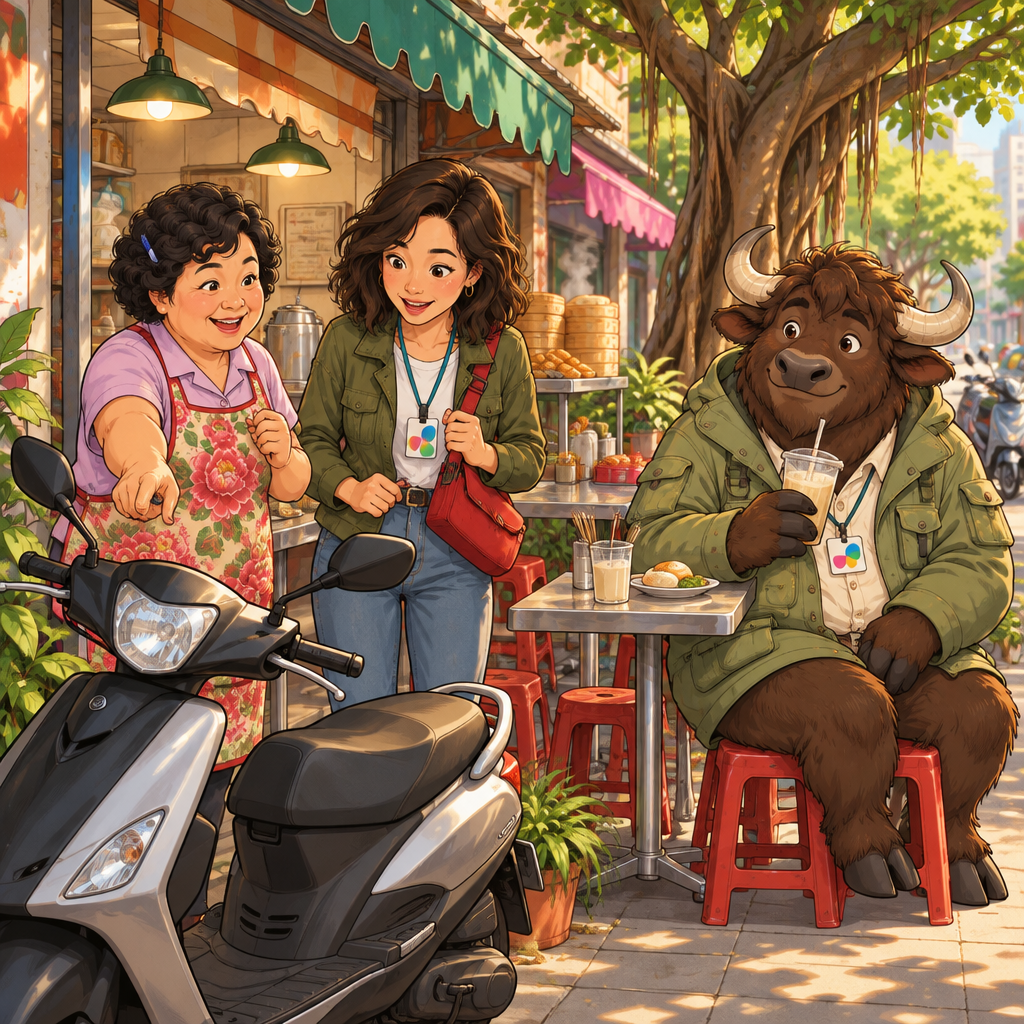
At Banyan Breakfast, a scooter is parked in front of the shop, and Maya spots a bag under a stool.
Learn six short ways to say where something is: in front, behind, beside, on top, underneath, and in the middle.
Listen for each location phrase, then try it in a tiny conversation with Auntie Lin and A-Li. The drink on the table is still unfinished.
By the end of this lesson
Say where one thing is in relation to another.
- 在前面In front.
- 在後面Behind.
- 在旁邊Beside.
- 在上面On top.
- 在下面Underneath.
- 在中間In the middle.
Scene — a spot by the shop
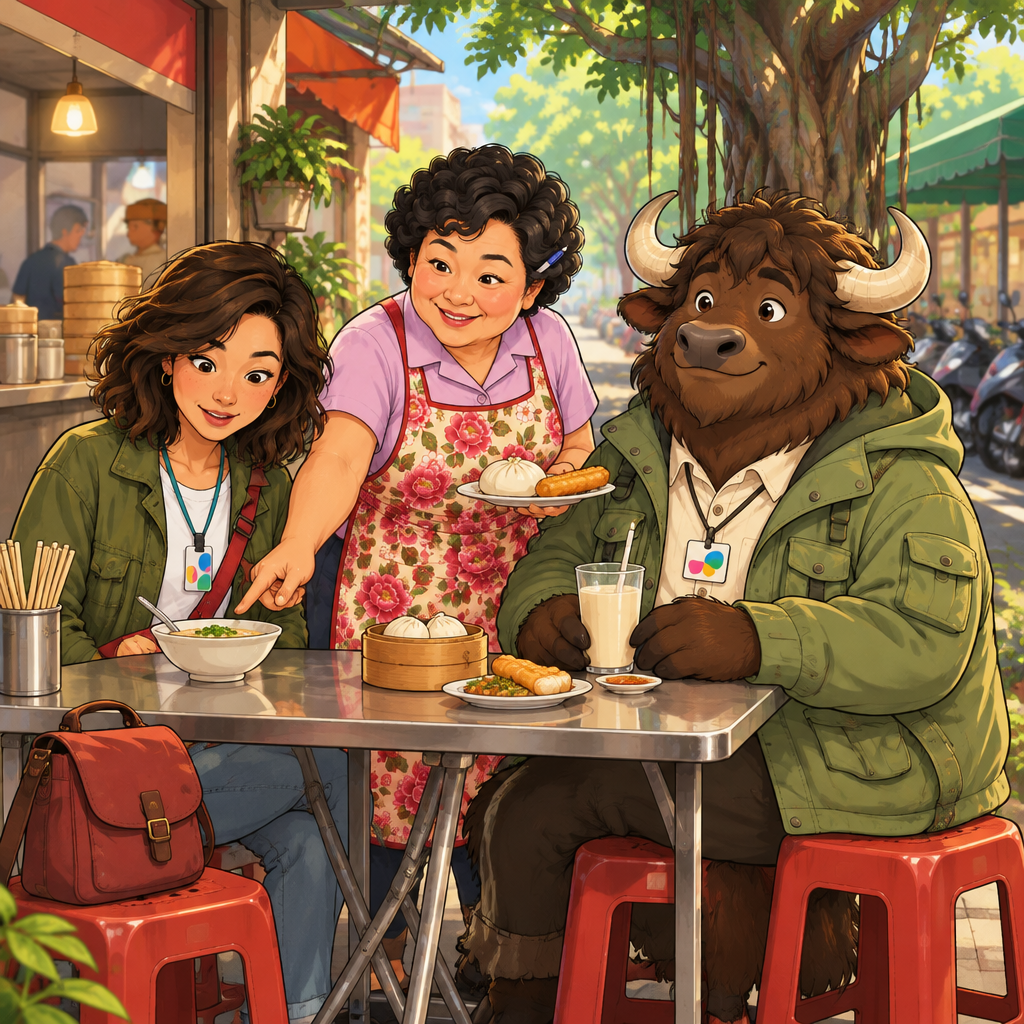
At Banyan Breakfast, a scooter is parked in front of the shop. Near the stools, a bag is tucked underneath one, while A-Li's soy milk sits on the table.
Auntie Lin points out a few other things as Maya looks around. A-Li's drink is still unfinished, as usual.

Learn — where things are
These short phrases help you point out where an object is. Listen to each one and connect it to a familiar place around the breakfast shop.
Learn each phrase as one piece, then notice it in the story.
在前面
In front.
When to use it: Use this to say something is in front.
Learn it as one piece.

在後面
Behind.
When to use it: Use this to say something is behind.
Learn it as one piece.
在旁邊
Beside.
When to use it: Use this to say something is beside another thing.
Learn it as one piece.

在上面
On top.
When to use it: Use this to say something is on top.
Learn it as one piece.

在下面
Underneath.
When to use it: Use this to say something is underneath.
Learn it as one piece.

在中間
In the middle.
When to use it: Use this to say something is in the middle.
Learn it as one piece.
Story — the scooter and the bag
Maya looks around Banyan Breakfast while Auntie Lin points out the scooter, an umbrella, and the shop's stools.
A-Li notices the soy milk and the number card, but his drink remains unfinished.
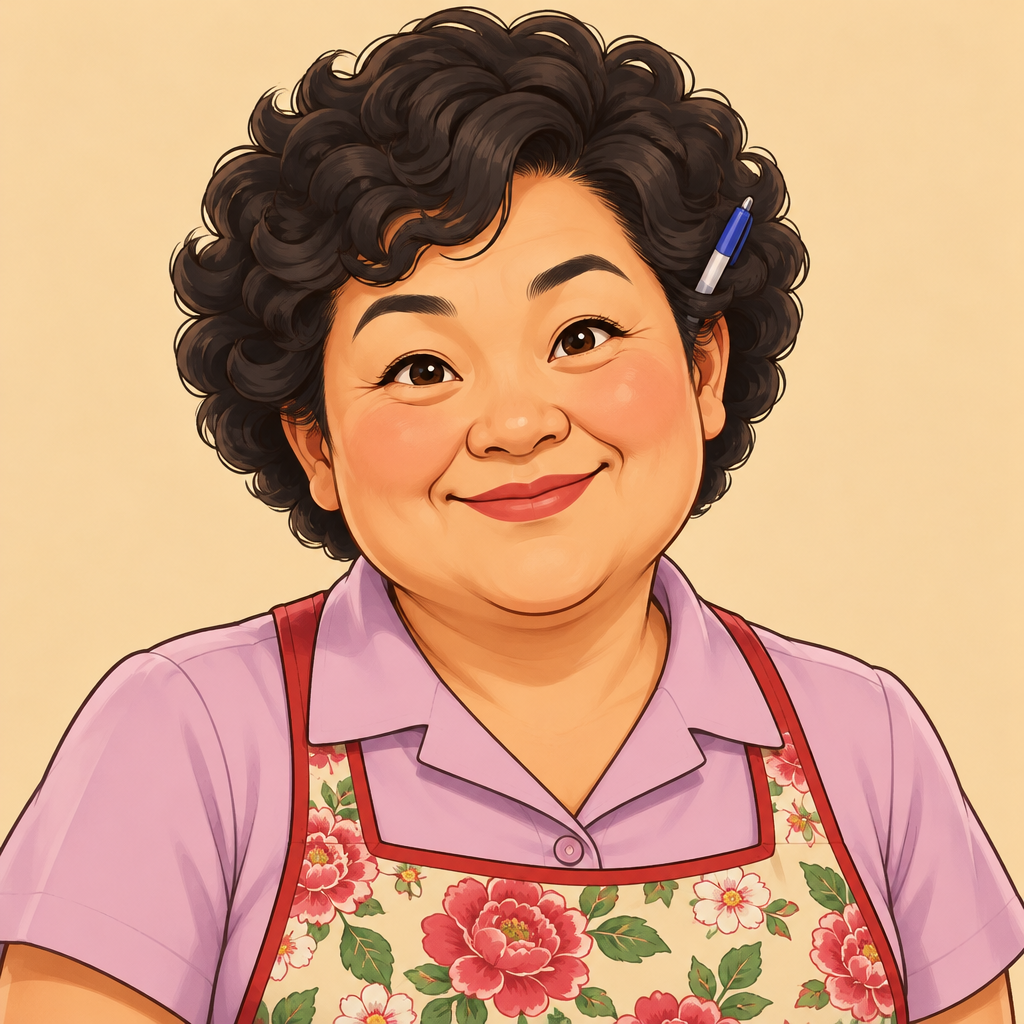 Auntie Lin請坐,美女。Please sit down, beautiful.
 Maya你好,阿犛。雨傘呢?Hello, A-Li. Where's the umbrella?
- Auntie Lin機車在前面,雨傘在旁邊。The scooter is in front, and the umbrella is beside it.
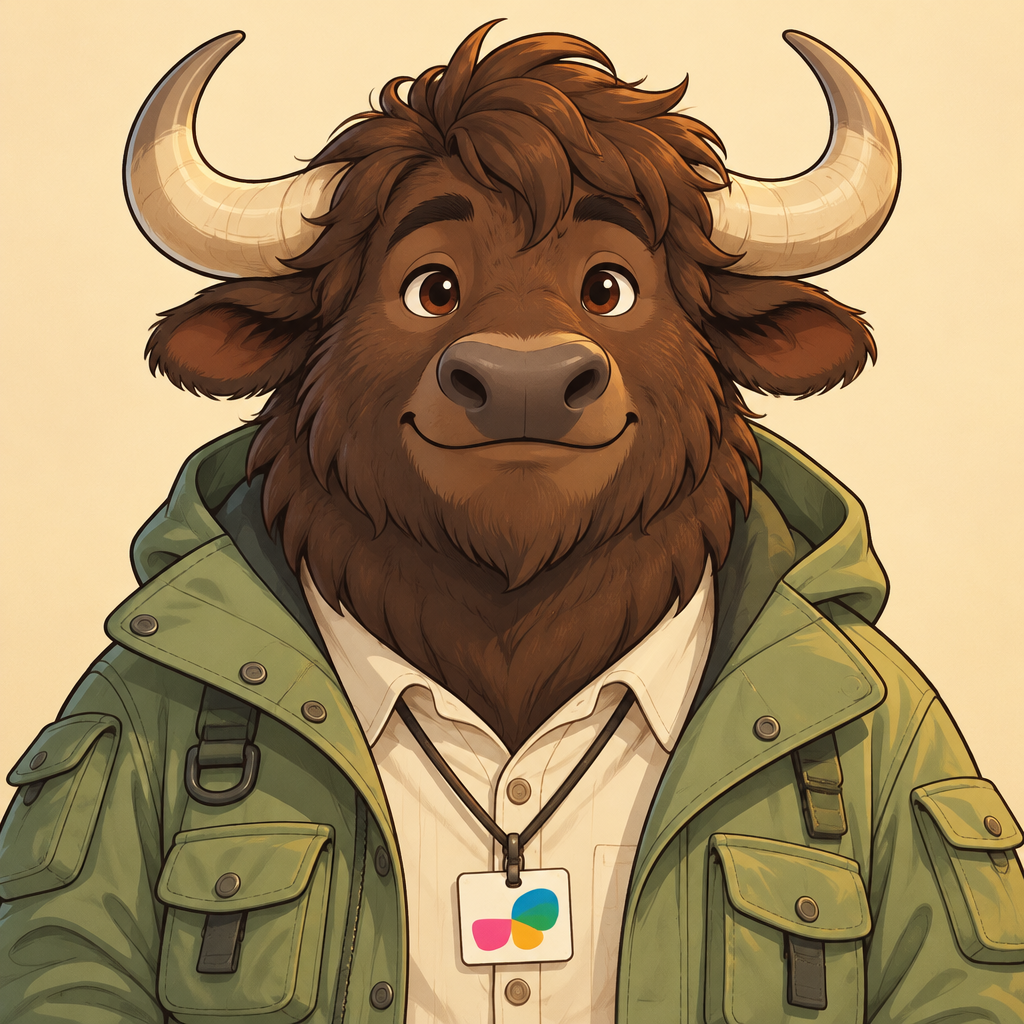 A-Li安全帽在後面。The helmet is behind.
- Auntie Lin阿犛,你的豆漿呢?A-Li, where's your soy milk?
- A-Li豆漿在上面。The soy milk is on top.
- Auntie Lin瑪雅,包包呢?Maya, where's your bag?
- Maya包包在下面。The bag is underneath.
- Auntie Lin號碼牌呢?And the number card?
- Maya號碼牌在中間。The number card is in the middle.
- A-Li豆漿還沒喝完。The soy milk still isn't finished.
Practice — find the right place
Try eight quick activities about things around the shop. Listen, build phrases, fill a missing word, and choose what fits each situation.
The scooter, stools, and breakfast-shop objects will help you picture each location.
0 of 8 done
What does it mean?
What does it mean?
在前面
Build the line
Build the line
Behind.
Tap the words in order.
Fill the gap
Fill the gap
Beside.
在____
What do you say?
What do you say?
Auntie Lin asks where the soy milk is. Say it is on top.
What did you hear?
What did you hear?
What do you say?
What do you say?
Auntie Lin asks where the number card is. Say it is in the middle.
What does it mean?
What does it mean?
你好
What do you say?
What do you say?
A friend arrives at the shop. Invite them to sit down.
Say it — tell where it is
You are Maya, looking around the breakfast shop with Auntie Lin and A-Li. Listen to each question, then tell them where the object is.
Say each phrase clearly before moving on to the next object.
- Maya and Auntie Lin look at the scooter outside the shop.
- Auntie Lin機車呢?Where's the scooter?
- Maya (you)Say it is in front.
Say it is in front.
在前面
In front.
0 of 4 said
Recap — what you can say now
| Traditional Chinese | English | Play |
|---|---|---|
| 在前面 | In front. | |
| 在後面 | Behind. | |
| 在旁邊 | Beside. | |
| 在上面 | On top. | |
| 在下面 | Underneath. | |
| 在中間 | In the middle. |
Save your progress — it’s free
Keep your place in the course and see which lines you’ve learned.
Want the next lesson in your inbox?
Get the next lesson by email, one a day.
Join the newsletterDaily lesson emails are coming soon. Newsletter subscribers get them first.
Keep practicing with Yak Cards
Review these location phrases in Yak Cards and practise them around your home.
Try describing where a few everyday objects are each day.
Open Yak Cards