
New here? This is lesson 150 of a free 240-lesson Traditional Chinese course.
Come in, go out, go up in Traditional Chinese
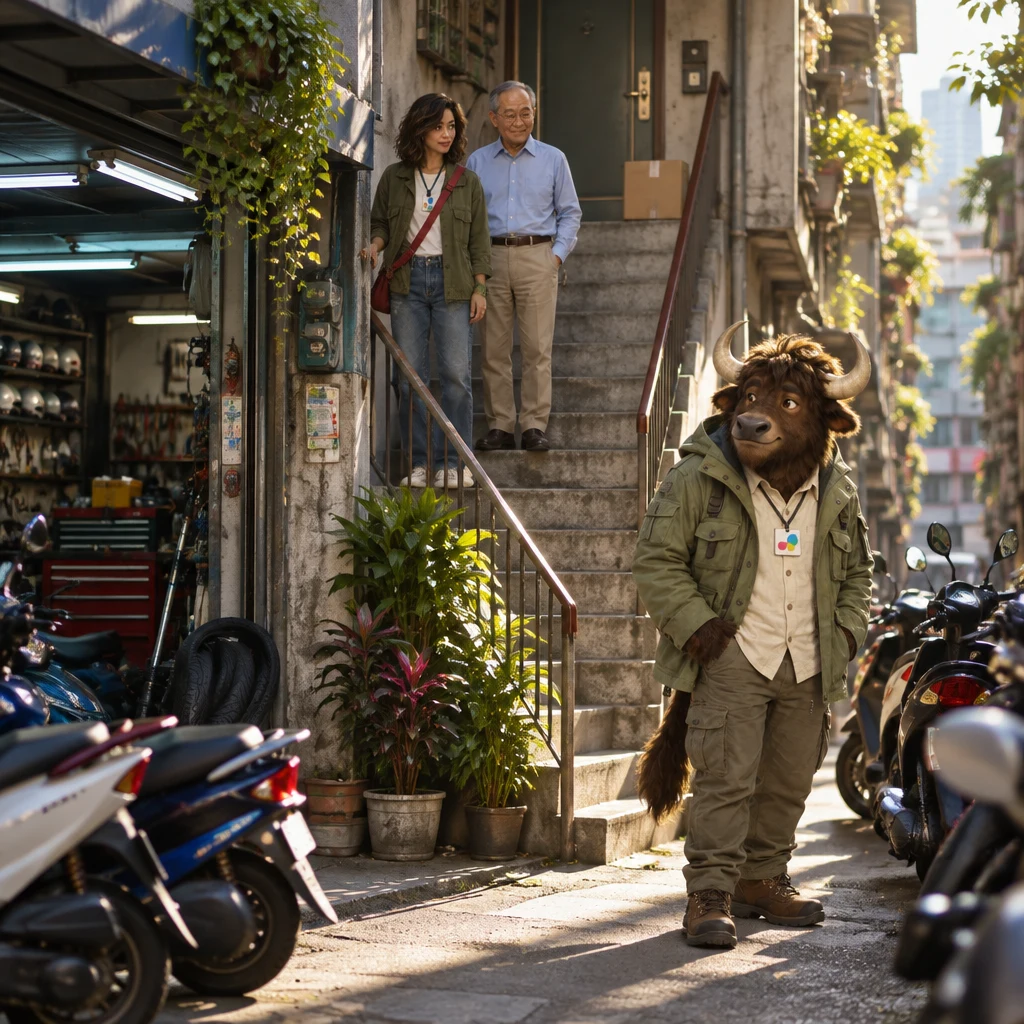
Mr. Wang meets Maya in the stairwell on Banyan Lane. Her flat is upstairs, and he still has the keys.
A delivery is due downstairs, and A-Li waits on the lane, looking for an umbrella he cannot find.
Learn direction words after a verb: come in, go out, come up, run down, bring back, and take someone over.
Listen for these six chunks. You will use them on the stairs, at the door, and on the lane.
By the end of this lesson
Ask someone in, out, up, or down, and say when a person brings a thing back or takes you over.
- 你進來吧Come on in.
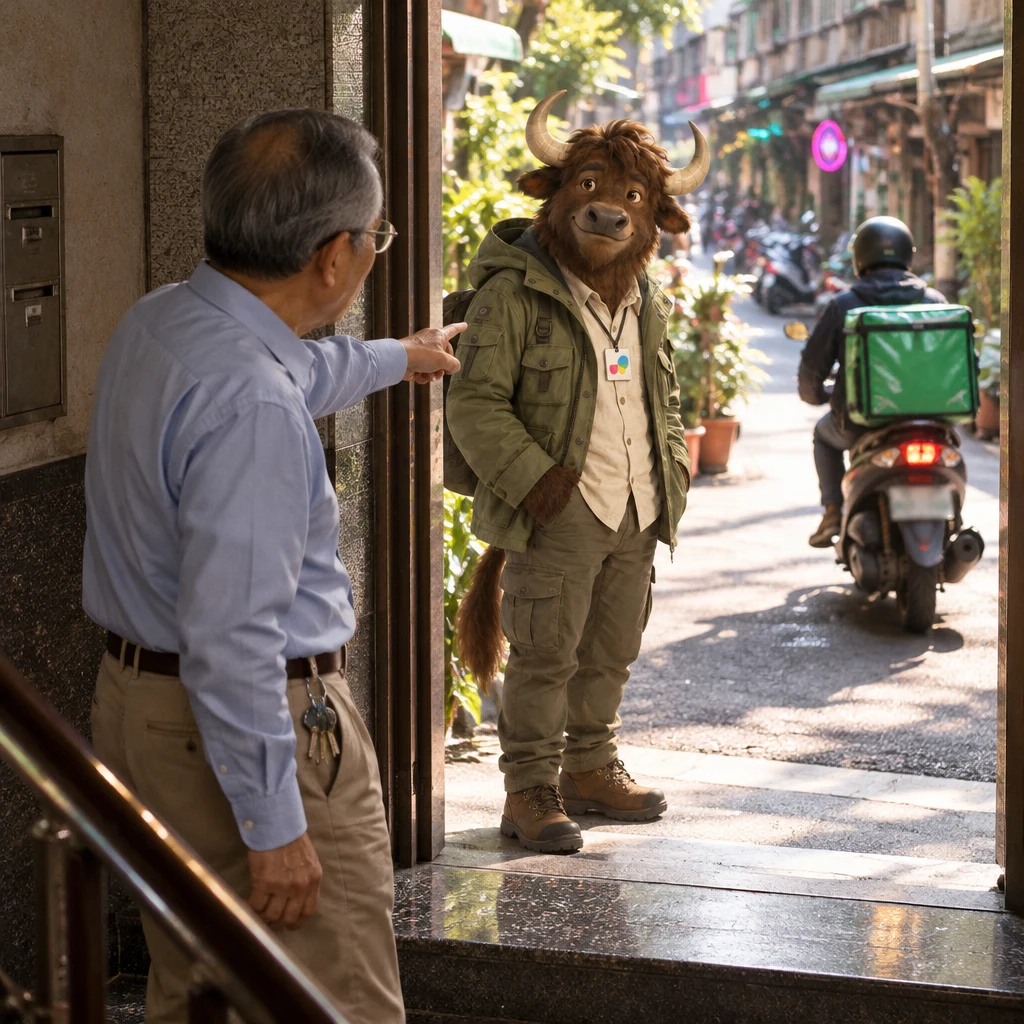
- 他走出去了He went out.
- 請上來Please come up.
- 我跑下去看看I'll run down and take a look.
- 他把包包拿回來了He brought the bag back.
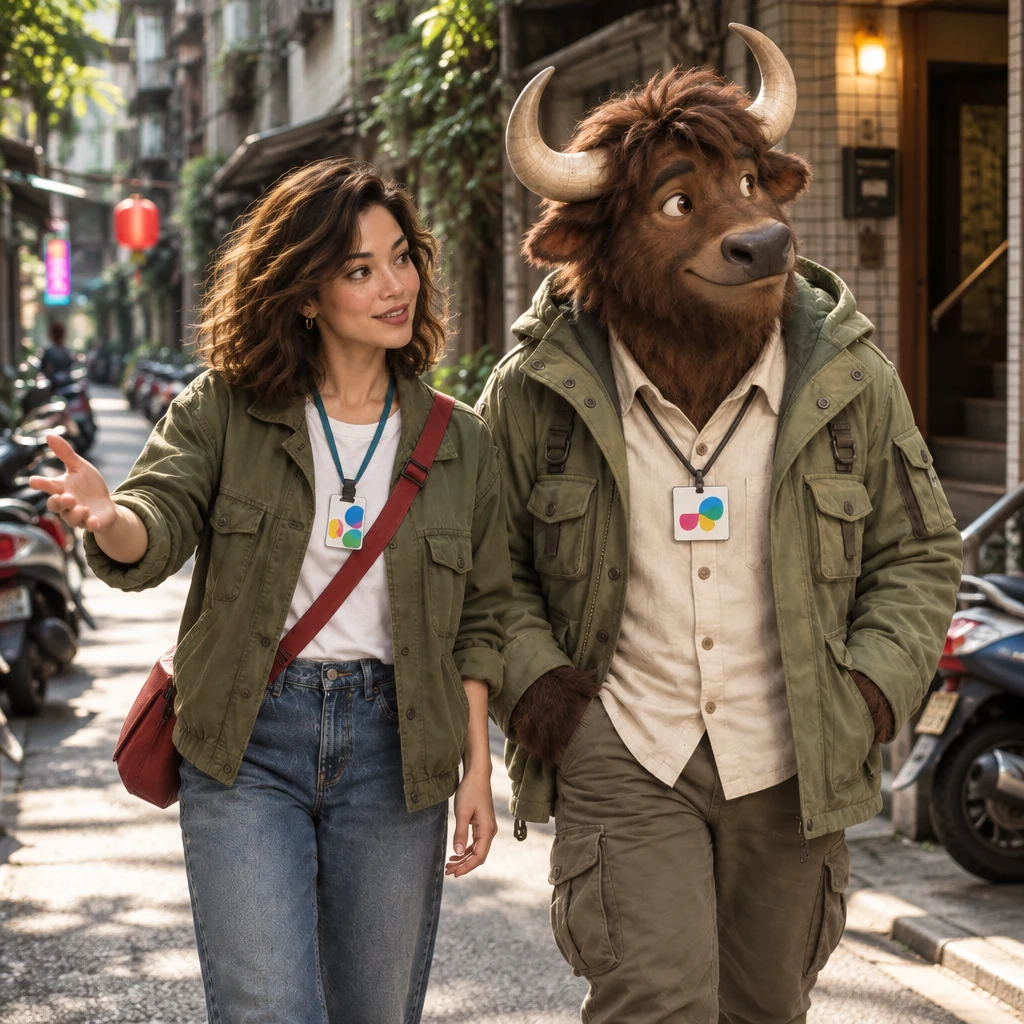
- 我帶你過去I'll take you over.
Scene — up the stairs
Maya and Mr. Wang stand in the stairwell of her building above the scooter shop on Banyan Lane. Her door is one flight up, and a parcel is due at the entrance.
A-Li waits on the lane, looking around for an umbrella he cannot find. The fortune slip stays in the till; nobody is solving it today.
Learn — in, out, up, and down
These six lines add a direction after the verb. Listen, then say each one out loud.
Notice how 來 moves toward you and 去 moves away. 上 and 下 send the action up or down the stairs.

你進來吧
Come on in.
When to use it: Invite someone at the door to step inside.
進來 means come in toward you, and 吧 makes the invite sound softer.
Say it: 吧 is a neutral tone at the end.
他走出去了
He went out.
When to use it: Say someone has already left the room or building.
了 shows the leaving already happened.
Say it: 了 is a neutral tone after the movement.

請上來
Please come up.
When to use it: Ask someone below you to come up the stairs.
上來 means come up toward where you are standing.

我跑下去看看
I'll run down and take a look.
When to use it: Offer to hurry downstairs and check on something.
下去 means go down, away from where you are now.
Say it: The second 看 is a neutral tone.

他把包包拿回來了
He brought the bag back.
When to use it: Say someone fetched a bag and returned with it.
把 puts the bag before the verb so the bringing back can follow.
Say it: 把 is a third tone before 包包.
我帶你過去
I'll take you over.
When to use it: Offer to lead someone a short way to another spot.
過去 means go over there, away from where you stand.
Story — a parcel and an umbrella
Listen to Maya, Mr. Wang, and A-Li on the stairs and the lane. A delivery arrives, and A-Li is still looking for his umbrella.
Watch who moves in, out, up, down, back, and across the street.
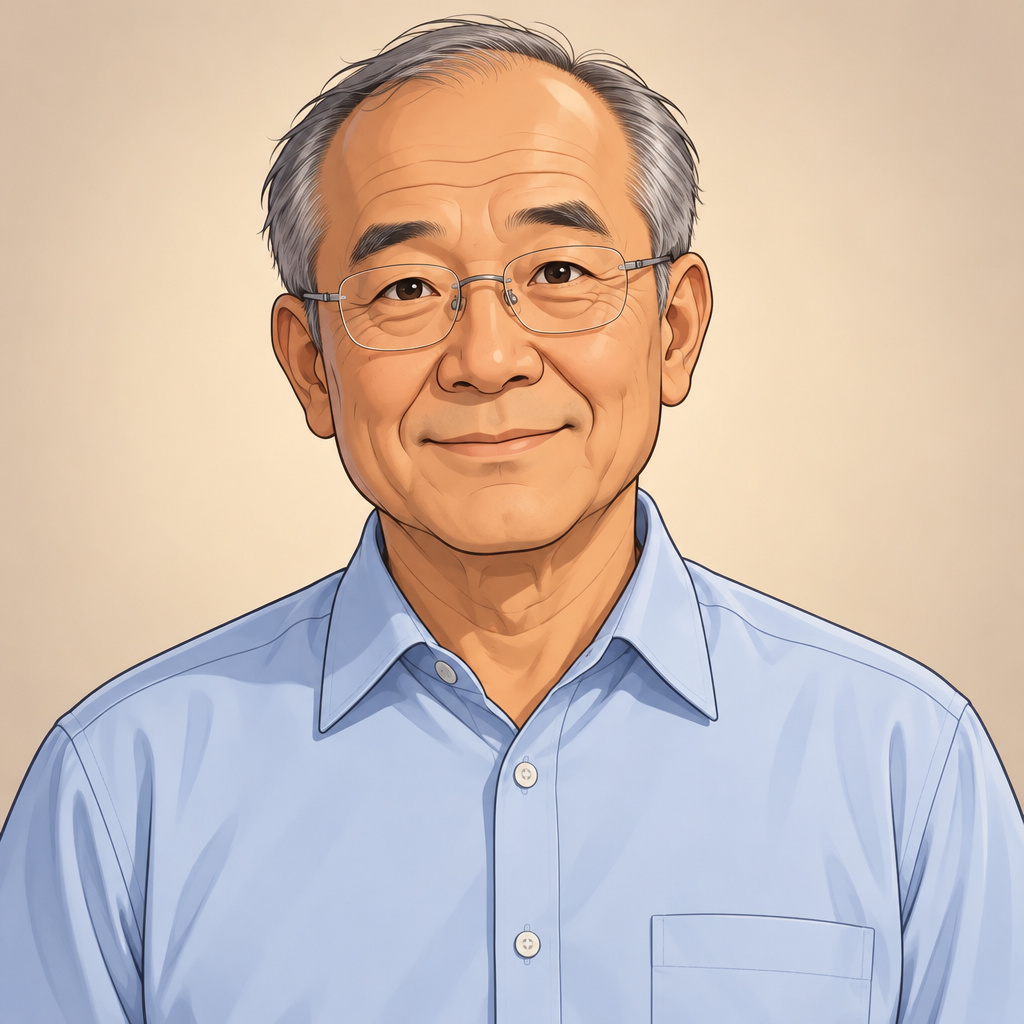 Mr. Wang我帶你過去。I'll take you over.
 Maya好喔。Okay.
- Mr. Wang請上來。Please come up.
- Maya我可以進來嗎?May I come in?
- Mr. Wang你進來吧。Come on in.
- A scooter horn sounds downstairs.
- Mr. Wang外送員快到了。The delivery person is almost here.
- Maya我跑下去看看。I'll run down and take a look.
- Maya reaches the lobby. The rider had come in for the parcel, then walked back out the door.
 A-Li欸,他走出去了。Hey, he went out.
- The rider comes back around the corner with a bag.
- Maya他把包包拿回來了。He brought the bag back.
- A-Li is empty-handed. He has been searching the doorway for his umbrella.
- A-Li我的傘不見了。My umbrella is missing.
- Maya我帶你過去。I'll take you over.
- A-Li好喔,謝謝。Okay, thanks.
Practice — which way they move
Try eleven short exercises on coming in, going out, and moving up or down. Pick the line that fits each moment.
After each answer, read why the others fail, then say the right line again.
0 of 11 done
What does it mean?
What does it mean?
你進來吧
What do you say?
What do you say?
Mr. Wang is at the bottom of the stairs. You are on your landing. Ask him to come up.
Build the line
Build the line
I'll take you over.
Tap the words in order.
Fill the gap
Fill the gap
He went out.
他____了
What did you hear?
What did you hear?
What do you say?
What do you say?
You are at your flat door. Mr. Wang is already inside. Ask if you may come in.
Swap the word
Swap the word
You are at the street door. The rider fetched the bag and came back here with it.
他把包包拿____了
Pick the reply
Mr. Wang says:
Pick the reply
我可以進來嗎?
May I come in?
And you reply with:
What does it mean?
What does it mean?
外送員快到了
What does it mean?
What does it mean?
我的傘不見了
Match the pairs
Traditional Chinese
請上來Drop the English here他走出去了Drop the English here他把包包拿回來了Drop the English here我帶你過去Drop the English hereEnglish
Say it — your directions
You play Maya on the stairs and on the lane. Listen to each cue, then say the movement line out loud.
Tap the microphone to speak. You can replay the other person's line before your turn.
- Maya is on the landing. Mr. Wang is still at the street door.
- Maya (you)Ask Mr. Wang to come up the stairs.
Ask Mr. Wang to come up the stairs.
請上來
Please come up.
0 of 5 said
Recap — what you can say now
| Traditional Chinese | English | Play |
|---|---|---|
| 你進來吧 | Come on in. | |
| 他走出去了 | He went out. | |
| 請上來 | Please come up. | |
| 我跑下去看看 | I'll run down and take a look. | |
| 他把包包拿回來了 | He brought the bag back. | |
| 我帶你過去 | I'll take you over. |
Save your progress — it’s free
Keep your place in the course and see which lines you’ve learned.
Want the next lesson in your inbox?
Get the next lesson by email, one a day.
Join the newsletterDaily lesson emails are coming soon. Newsletter subscribers get them first.
Keep practicing with Yak Cards
Today's movement lines are in Yak Cards with more chunks for going in, out, up, and down.
Review a few direction cards each day so coming and going feel automatic.
Open Yak Cards