
New here? This is lesson 217 of a free 240-lesson Traditional Chinese course.
Steer the conversation in Traditional Chinese
The neighborhood meeting at Banyan Breakfast starts on parking, then drifts to the night market and A-Li's unfinished drink.
Learn six lines for taking the lead: go on to a point, flag a short digression, add one more thing, and bring people back.
Use them when talk wanders. Maya keeps the agenda moving without shutting anyone down.
By the end of this lesson
Take the lead when a conversation wanders: go on to a point, add a detail, digress briefly, and return to the main topic.
- 我們接著談___Let's go on to ___.
- 先岔開一下Let me digress for a moment.
- 關於___,再補充一點About ___, one more thing.
- 回到正題Back to the main topic.
- 這就讓我想到___That reminds me of ___.
- 話說回來Having said that.
Scene — a lane meeting
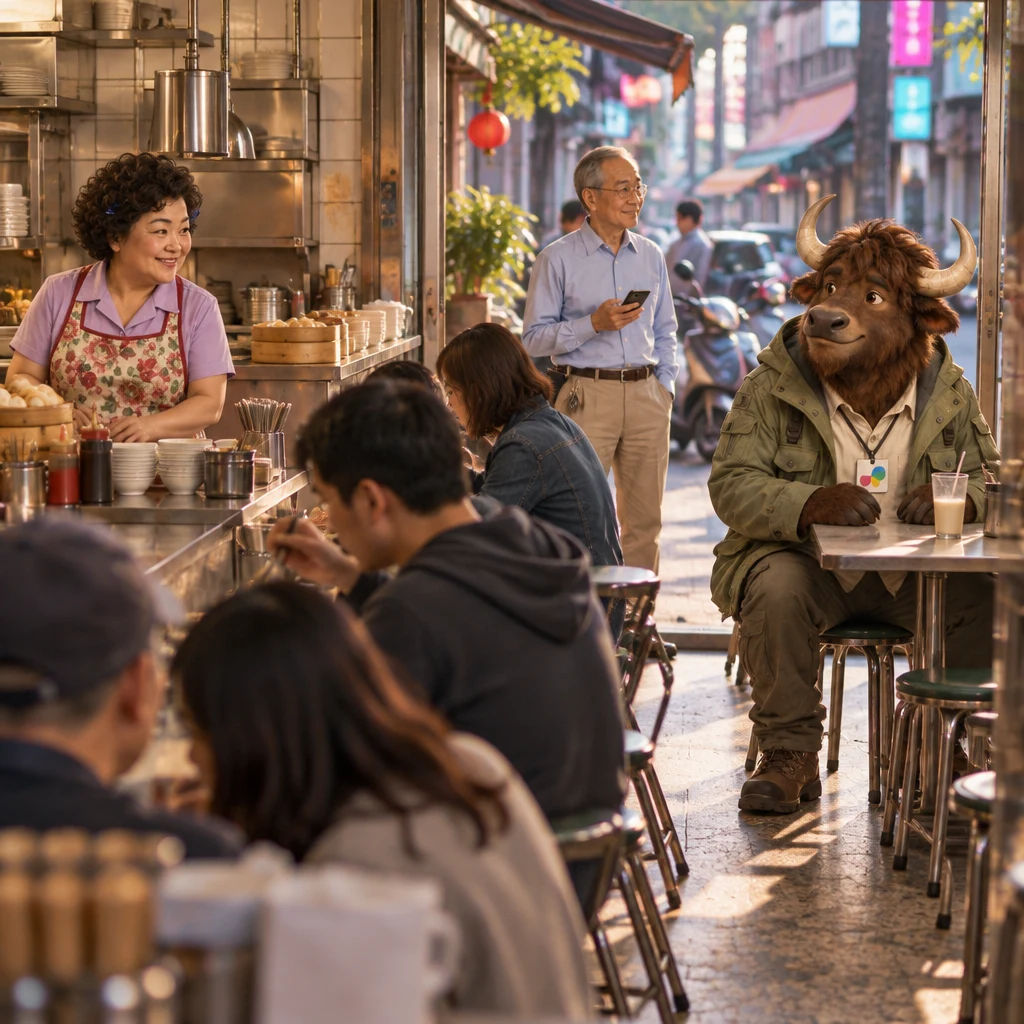
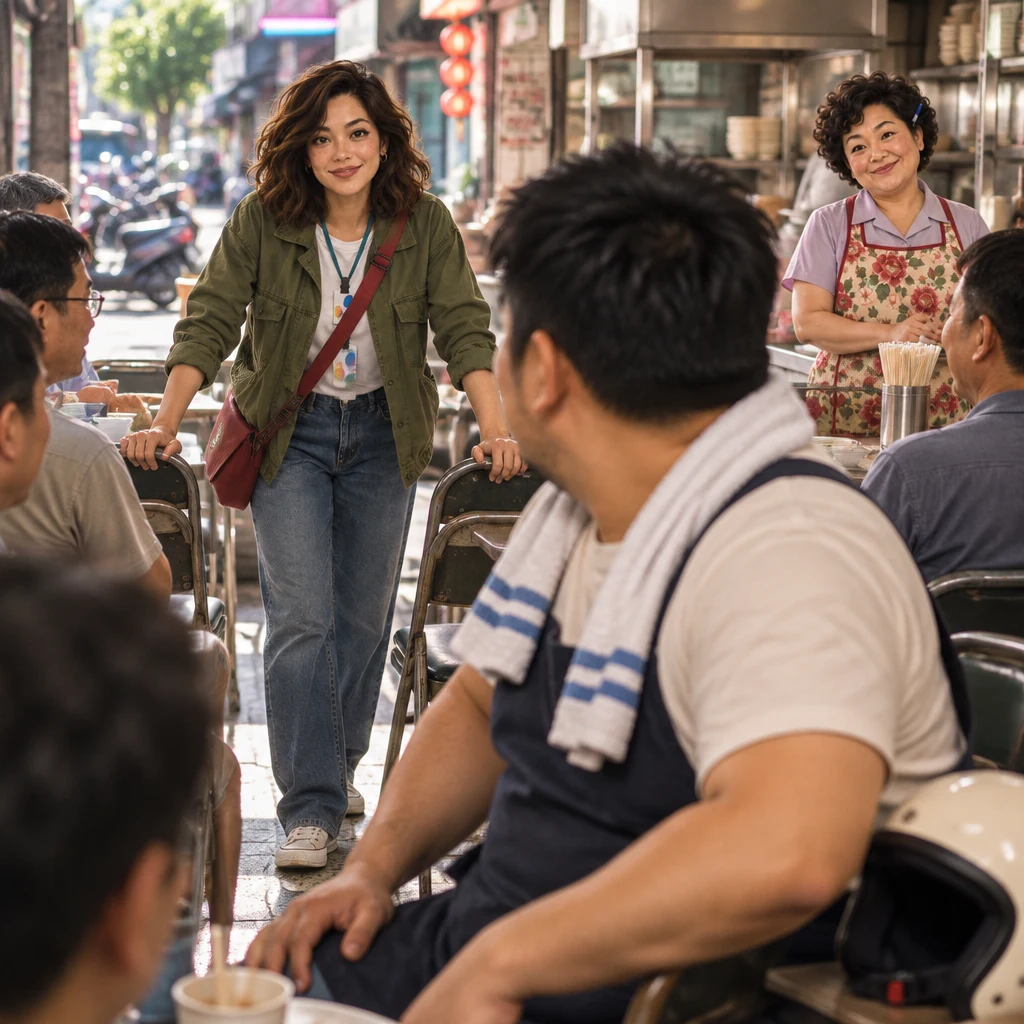
Folding chairs fill the aisle at Banyan Breakfast after the lunch rush. Auntie Lin called a lane meeting about scooter parking, and Mr. Wang stands near the door with his phone.
A-Jie talks about the night market. A-Li has two stools and a soy milk he still has not finished. Maya keeps the talk on the agenda.
Learn — steering the talk
These six lines help you steer a meeting when people wander. Listen, then say each one.
Notice how a short side remark can be polite if you come back to the point.
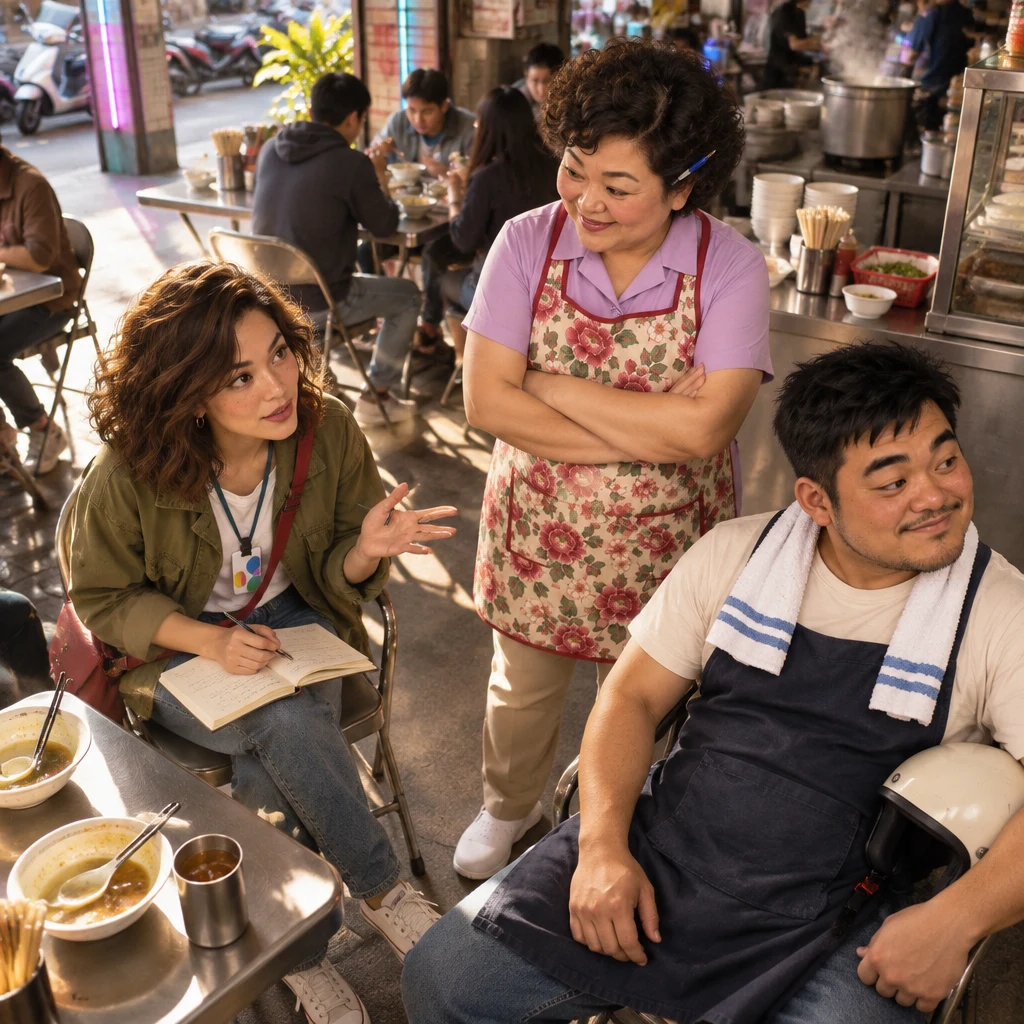
我們接著談___
Let's go on to ___.
When to use it: Use this to move a meeting or talk on to the next point.
接著 shows you are continuing, not opening a brand-new chat.
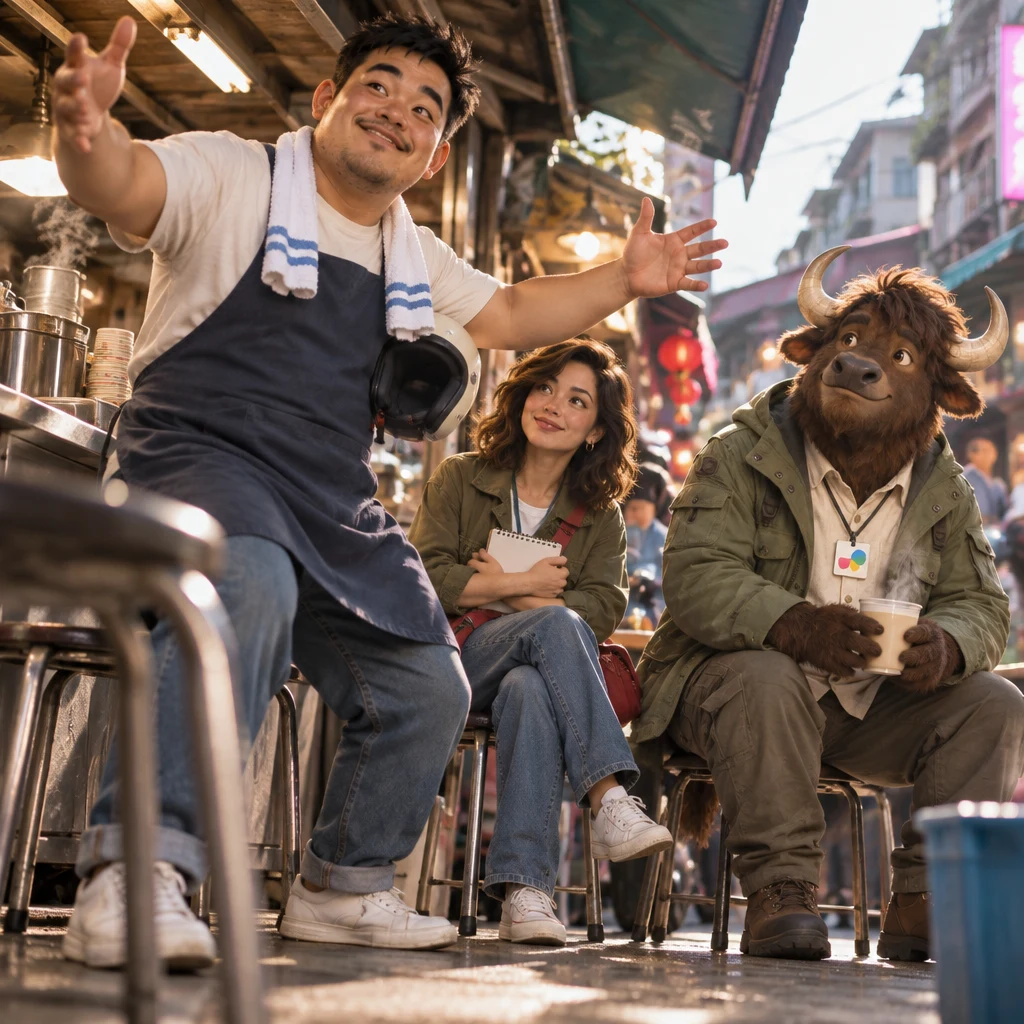
先岔開一下
Let me digress for a moment.
When to use it: Use this before a short side remark so people know you will come back.
一下 makes the side track sound brief and polite.
Say it: In 一下, 一 rises to second tone before a fourth tone.
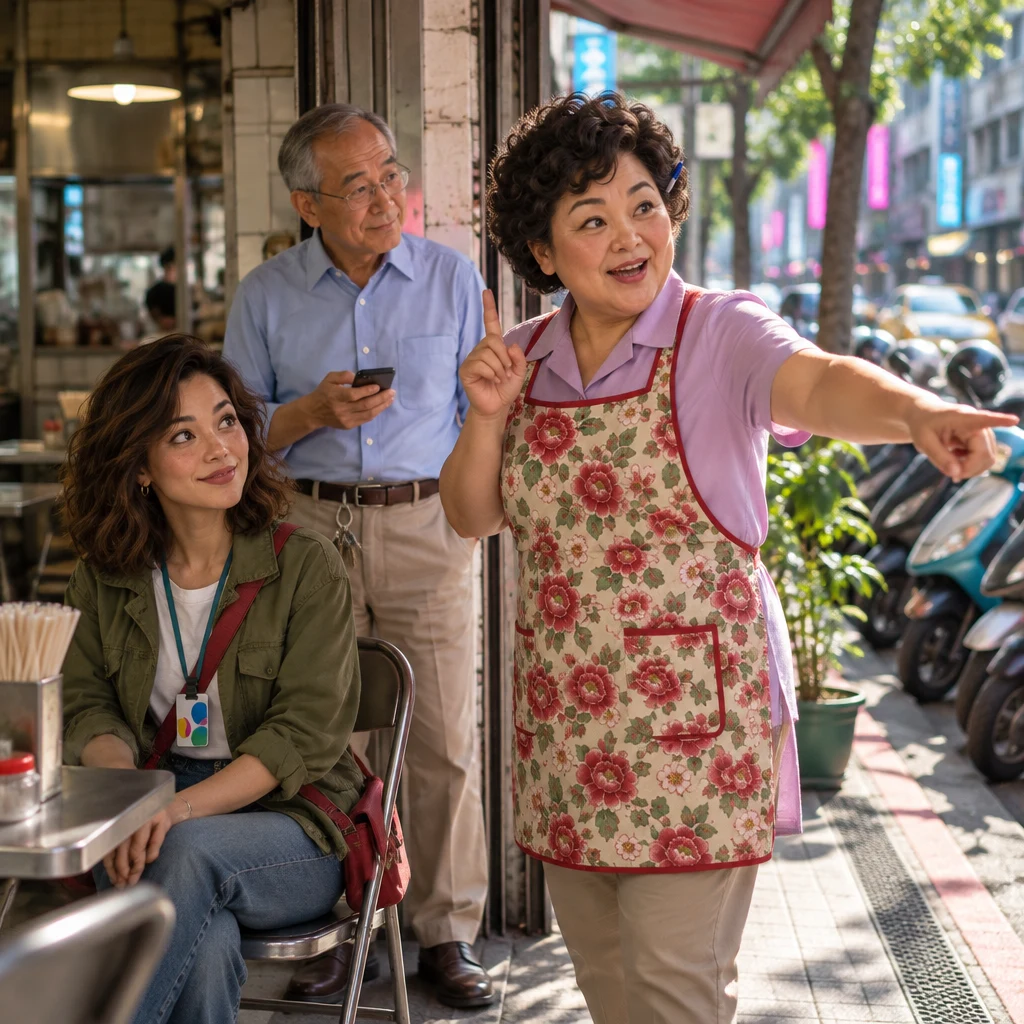
關於___,再補充一點
About ___, one more thing.
When to use it: Use this to add one extra detail on a topic already in play.
關於 names the topic, then 再補充一點 adds a small extra point.
回到正題
Back to the main topic.
When to use it: Use this when the talk has wandered and you need the agenda back.
正題 is the agenda item you agreed to discuss, not any loose subject.

這就讓我想到___
That reminds me of ___.
When to use it: Use this when the last remark sparks a related memory or example.
就 ties this new thought to the remark you just heard.

話說回來
Having said that.
When to use it: Use this after a side comment when you return without cutting anyone off.
This set phrase softens the return and sounds less sharp than a hard cut back.
Say it: The 來 in 回來 is second tone, not a neutral tone.
Story — the meeting wanders
Listen as the lane meeting drifts off the parking agenda. Maya takes the lead and steers people back.
A-Li's soy milk stays on the table, unfinished.
 Auntie Lin好,我們開始吧。今天要談榕樹巷的停車。All right, let's begin. Today we're talking about parking on Banyan Lane.
 Maya我們接著談停車的規定。Let's go on to the parking rules.
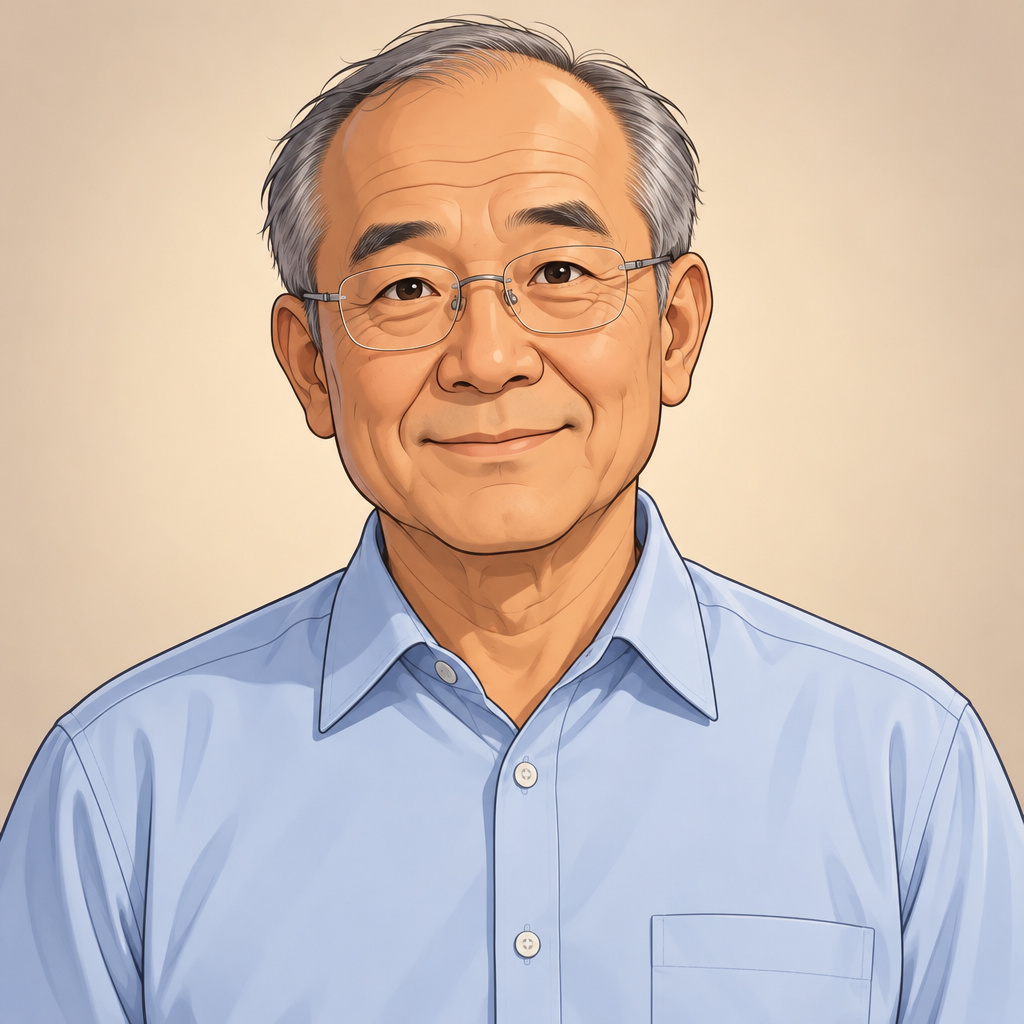 Mr. Wang機車常常停在店門口,進出很不方便。Scooters often stop at the shop door, and it's hard to get in and out.
 A-Jie先岔開一下,夜市油煙也有人抱怨欸。Let me digress for a moment; people have also been complaining about the night-market smoke.
- Auntie Lin夜市的事我知道,可是今天先講停車。I know about the night market, but today we talk parking first.
- Maya回到正題。Back to the main topic.
- Mr. Wang我希望白天門口能空出來。I hope the doorway can stay clear during the day.
- Maya關於停車,再補充一點。晚上也要留通道。About parking, one more thing. We need a passageway at night too.
 A-Li這就讓我想到豆漿。That reminds me of soy milk.
- Auntie Lin阿犛,你那杯還沒喝完。A-Li, you still haven't finished that cup.
- A-Li好啊,等一下。Sure, in a bit.
- A-Li looks at his cup, then loses the thread again.
- A-Jie這讓我想到卸貨。That reminds me of unloading.
- Maya話說回來,通道還是要留著。Having said that, we still need to keep a passageway.
- A-Jie這有點離題,不過攤位也需要位子。This is a bit off topic, but the stall needs a spot too.
- Mr. Wang卸貨可以,不要擋早餐店。Unloading is fine, as long as it doesn't block the breakfast shop.
- Maya我們接著談晚上的時間。Let's go on to the evening hours.
- Auntie Lin十點以前,門口不要停。Before ten, don't park in the doorway.
- A-Jie我們換個話題吧。Let's change the subject.
- Maya時間先講完。回到正題。Finish the hours first. Back to the main topic.
- Auntie Lin好喔,那就這樣。All right, that's settled.
- A-Li豆漿還是熱的。The soy milk is still warm.
Practice — take the lead
Work through short tasks on taking the lead and bringing a talk back. Pick the line that fits each small moment.
After each answer, check the explanation and try saying the line again.
0 of 11 done
What does it mean?
What does it mean?
這就讓我想到___
What do you say?
What do you say?
Parking is the next item. Open that point and move the meeting on.
Build the line
Build the line
Let me digress for a moment.
Tap the words in order.
Fill the gap
Fill the gap
About ___, one more thing.
關於___,再____一點
Swap the word
Swap the word
The talk has wandered. Bring everyone back to the agenda.
____正題
What did you hear?
What did you hear?
Pick the reply
A-Jie says:
Pick the reply
先岔開一下,夜市油煙也有人抱怨欸。
Let me digress for a moment; people have also been complaining about the night-market smoke.
And you reply with:
Match the pairs
Traditional Chinese
我們接著談___Drop the English here先岔開一下Drop the English here回到正題Drop the English here話說回來Drop the English hereEnglish
What do you say?
What do you say?
The parking agenda is still open, but you want to drop it and talk about something else entirely.
What does it mean?
What does it mean?
這讓我想到___
Fill the gap
Fill the gap
This is a bit off topic, but ___.
這有點____,不過___
Say it — keep it on track
You play Maya at the neighborhood meeting. Listen to each cue, then steer the talk or flag a short side point.
Tap the microphone to speak. You can replay the other person's line before your turn.
- Maya is keeping the lane meeting on parking.
- Auntie Lin今天要談榕樹巷的停車。Today we're talking about parking on Banyan Lane.
- Maya (you)Go on to the parking rules.
Go on to the parking rules.
我們接著談___
Let's go on to ___.
0 of 5 said
Recap — what you can say now
| Traditional Chinese | English | Play |
|---|---|---|
| 我們接著談___ | Let's go on to ___. | |
| 先岔開一下 | Let me digress for a moment. | |
| 關於___,再補充一點 | About ___, one more thing. | |
| 回到正題 | Back to the main topic. | |
| 這就讓我想到___ | That reminds me of ___. | |
| 話說回來 | Having said that. |
Save your progress — it’s free
Keep your place in the course and see which lines you’ve learned.
Want the next lesson in your inbox?
Get the next lesson by email, one a day.
Join the newsletterDaily lesson emails are coming soon. Newsletter subscribers get them first.
Keep practicing with Yak Cards
Today's steering lines are in Yak Cards with more phrases for meetings that wander.
Review a few steering cards before your next meeting so they come quickly.
Open Yak Cards