
New here? This is lesson 236 of a free 240-lesson Traditional Chinese course.
Retelling the year in Traditional Chinese
Neighbors at Banyan Breakfast give you two minutes to tell the year. Yi-Jun will jump in with a few corrections, and A-Li is still at the back table.
Learn openers that move from arrival to what you found out, what surprised you, and the one thing you would keep.
Finish with a point: in the end, people matter more than the events. Do not explain the fortune slip; A-Li's soy milk stays unfinished.
By the end of this lesson
Tell the story of your year with a point, from first arrival to what still matters.
- 這一年發生了很多事A lot has happened this year.
- 剛來的時候,我什麼都不懂When I first got here, I knew nothing.
- 後來才發現___Later I found out ___.
- 最讓我意外的是___What surprised me most was ___.
- 如果要說一件事,那就是___If I had to pick one thing, it's ___.
- 說到底,重點是人In the end, what matters is people.
Scene — a two-minute year
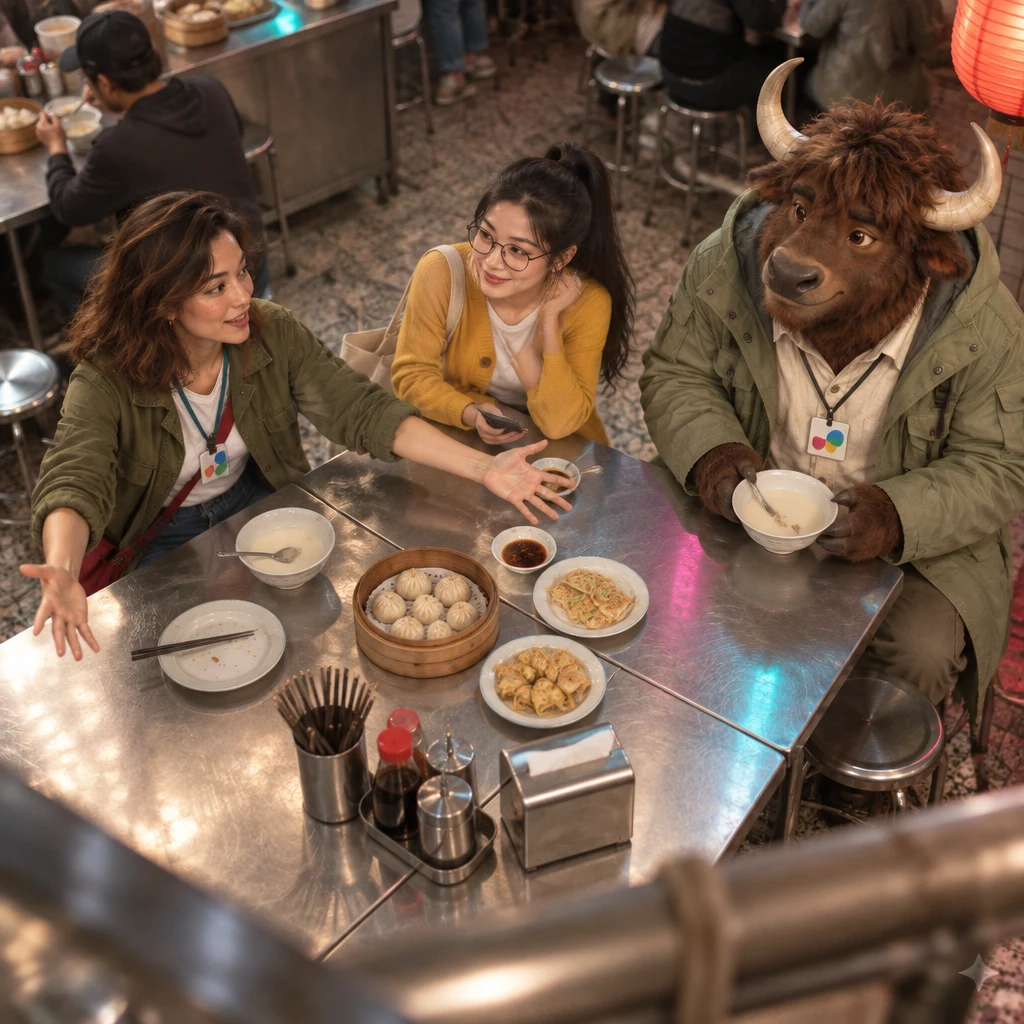
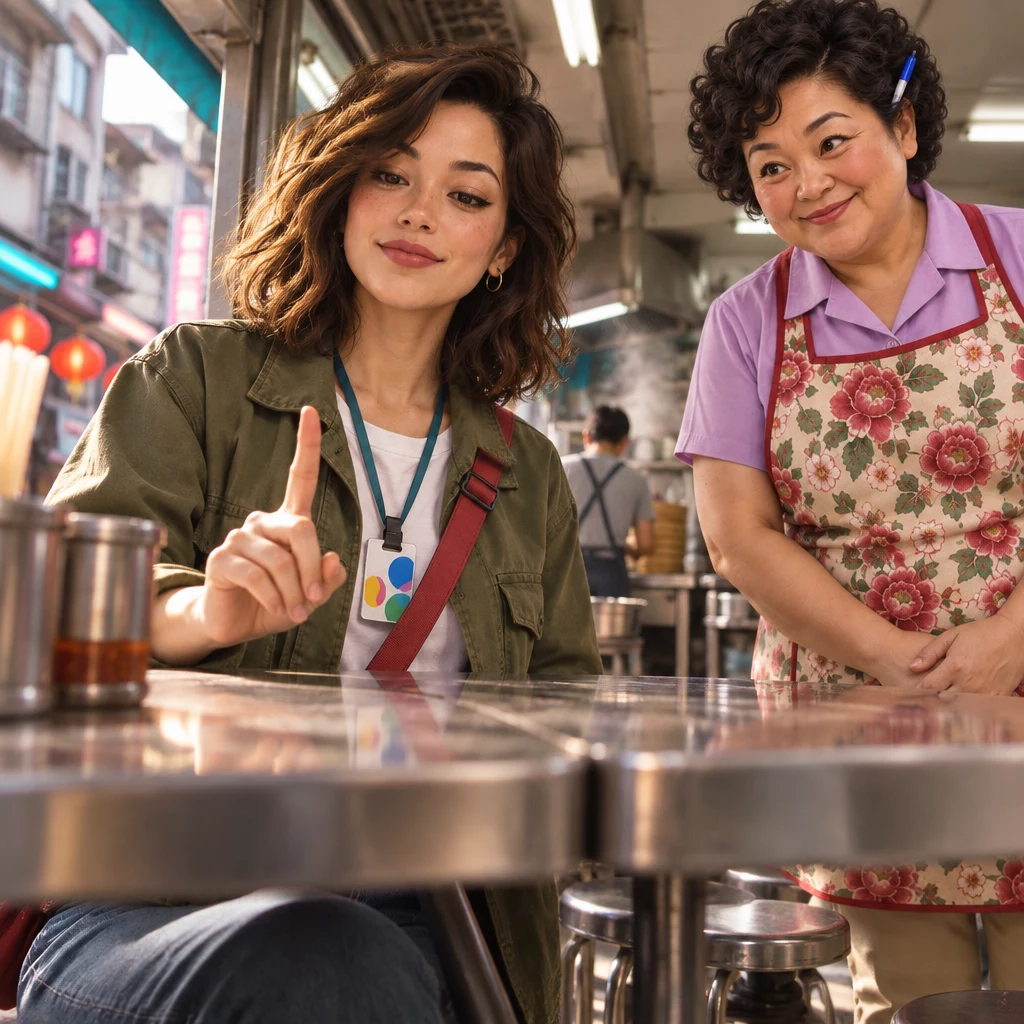
Saturday afternoon at Banyan Breakfast in Da'an. Auntie Lin has pushed two tables together, and Yi-Jun sets a two-minute timer on her phone.
Maya is asked to tell the year with a point. A-Li sits on two stools with his soy milk still unfinished. Yi-Jun will offer three small corrections, nothing more.

Learn — telling the year with a point
These six lines help you retell a year and land on a point. Listen, then say each one aloud.
Notice 才 in the third line: it means the discovery came later, not at the start.
這一年發生了很多事
A lot has happened this year.
When to use it: Use this to open a year-in-review before the details.
了 here marks a finished change: many things have already taken place this year.
Say it: The 一 in 一年 is fourth tone before the second-tone 年.

剛來的時候,我什麼都不懂
When I first got here, I knew nothing.
When to use it: Use this to look back at your first days in a new place.
什麼都 plus a negative means none of it at all.
Say it: 懂 is a third tone, so 不 stays fourth.
後來才發現___
Later I found out ___.
When to use it: Use this when a fact only became clear later.
才 here means only then: you did not see it at first.
Say it: 才 is second tone in this line.

最讓我意外的是___
What surprised me most was ___.
When to use it: Use this to name the part of the story that surprised you.
最…的是 names what surprised you most, then you fill the blank.

如果要說一件事,那就是___
If I had to pick one thing, it's ___.
When to use it: Use this when you must pick one event and leave the rest.
件 is the measure word for a matter or event in 一件事.
Say it: The 一 in 一件 is second tone before a fourth tone.

說到底,重點是人
In the end, what matters is people.
When to use it: Use this to close a retelling with the real point.
說到底 means after all the details, this is what actually matters.
Story — two minutes at breakfast
Listen as Maya tries to tell the year in two minutes at Banyan Breakfast. Yi-Jun keeps her honest with three small corrections.
A-Li is at the back table. His soy milk is still not finished.
- Saturday afternoon, tables pulled together at Banyan Breakfast.
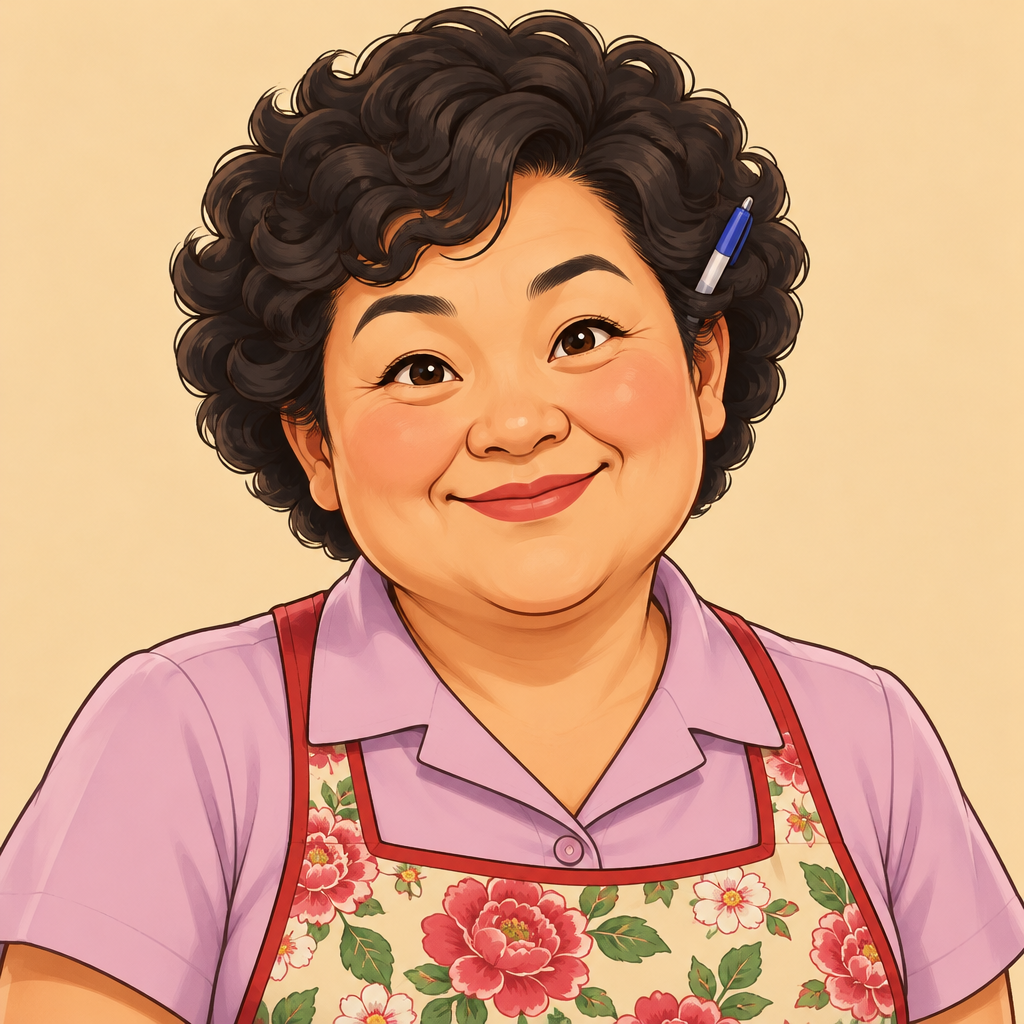 Auntie Lin美女,你來講這一年吧。Beautiful, come tell us about this year.
 Yi-Jun瑪雅,你有兩分鐘,開始吧。Maya, you have two minutes, go ahead.
 Maya好喔,如果我說錯,請糾正我。Okay, if I get it wrong, please correct me.
- Yi-Jun好,開始。Okay, start.
- Maya這一年發生了很多事。A lot has happened this year.
- Maya剛來的時候,我什麼都不懂。When I first got here, I knew nothing.
- Yi-Jun才沒有,你第一週就會點豆漿了。No way, you could already order soy milk in the first week.
- Maya後來才發現這條巷子裡的人很照顧我。Later I found out the people on this lane look after me.
- Yi-Jun後來呢?And then?
- Maya最讓我意外的是大家會記得我點什麼。What surprised me most was that everyone remembers what I order.
- Yi-Jun林阿姨本來就記得每個客人啊。Auntie Lin already remembers every customer.
- Auntie Lin對啊,你幾乎每天都來。Right, you come almost every day.
 A-Li豆漿還是沒喝完。The soy milk still isn't finished.
- Maya如果要說一件事,那就是我交到了朋友。If I had to pick one thing, it's that I made friends.
- Yi-Jun是我們交到你這個朋友才對啦。It's that we made a friend in you, actually.
- Maya說到底,重點是人。In the end, what matters is people.
- A-Li我剛來的時候也一樣。I was the same when I first arrived.
- Yi-Jun時間到了,講得很好。Time's up, that was really good.
Practice — retell and land a point
Try eleven short exercises on opening a year-in-review and choosing a point. Match each line to the moment it fits.
Read why an answer is wrong, then say the right line once more.
0 of 11 done
What does it mean?
What does it mean?
這一年發生了很多事
What do you say?
What do you say?
You start the year at the moment you arrived, when nothing made sense.
Fill the gap
Fill the gap
In the end, what matters is people.
說到底,重點是____
Fill the gap
Fill the gap
What surprised me most was ___.
最讓我____的是___
What did you hear?
What did you hear?
Match the pairs
Traditional Chinese
這一年發生了很多事Drop the English here後來才發現___Drop the English here如果要說一件事,那就是___Drop the English here說到底,重點是人Drop the English hereEnglish
Pick the reply
Yi-Jun says:
Pick the reply
如果你說錯了,希望我們怎麼做?
If you get it wrong, what do you want us to do?
And you reply with:
What did you hear?
What did you hear?
What do you say?
What do you say?
Maya pauses after the first part of her year. Ask what happened next.
Swap the word
Swap the word
Looking back at arrival, you knew nothing, not everything.
剛來的時候,我什麼都____懂
What do you say?
What do you say?
A newer neighbor says she understands nothing yet. Tell her you were the same when you first arrived.
Say it — your two minutes
You play Maya at the gathering. Yi-Jun gives you two minutes; listen to each cue and tell the year with a point.
Tap the microphone to speak. You can replay the other person's line before your turn.
- Yi-Jun starts the two-minute timer at Banyan Breakfast.
- Maya (you)Open by saying a lot has happened this year.
Open by saying a lot has happened this year.
這一年發生了很多事
A lot has happened this year.
0 of 6 said
Recap — what you can say now
| Traditional Chinese | English | Play |
|---|---|---|
| 這一年發生了很多事 | A lot has happened this year. | |
| 剛來的時候,我什麼都不懂 | When I first got here, I knew nothing. | |
| 後來才發現___ | Later I found out ___. | |
| 最讓我意外的是___ | What surprised me most was ___. | |
| 如果要說一件事,那就是___ | If I had to pick one thing, it's ___. | |
| 說到底,重點是人 | In the end, what matters is people. |
Save your progress — it’s free
Keep your place in the course and see which lines you’ve learned.
Want the next lesson in your inbox?
Get the next lesson by email, one a day.
Join the newsletterDaily lesson emails are coming soon. Newsletter subscribers get them first.
Keep practicing with Yak Cards
Today's year-in-review lines are in Yak Cards with more ways to tell a story with a point.
Replay the closer a few times so the point lands cleanly.
Open Yak Cards